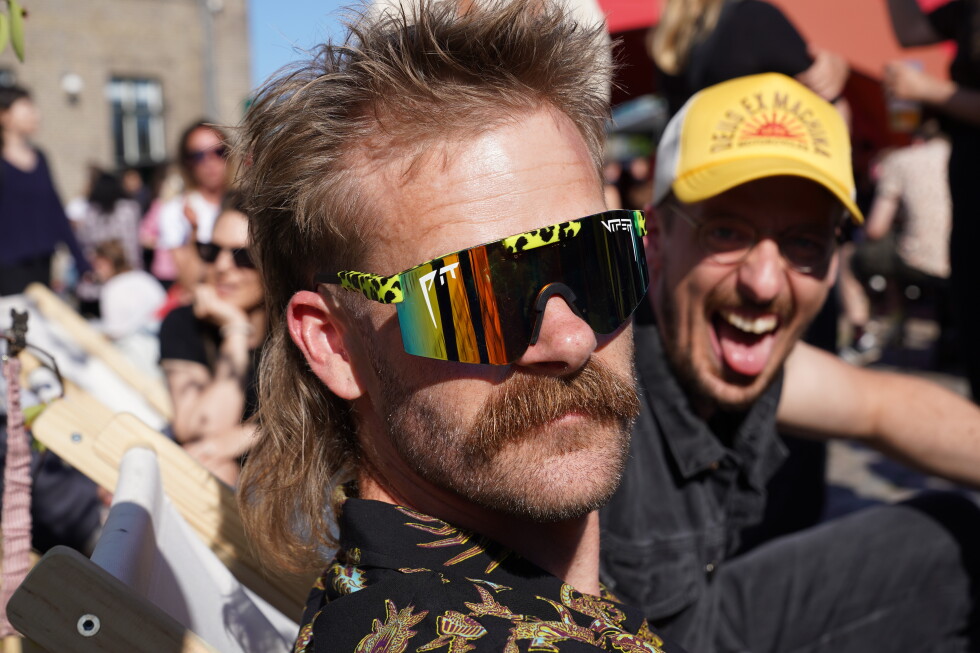
On a vibrant outdoor stage in the heart of Copenhagen, more than 1,000 cheering spectators packed together on Saturday to honor one of fashion’s most divisive yet enduring looks: the mullet. The iconic cut, defined by its sharp contrast of cropped strands at the front and flowing length at the back, took center stage at the 2026 Danish Mullet Championship, the fourth iteration of an event born from one enthusiast’s personal passion.
The competition traces its roots back to organizer Steffen Stiw Weber, a 37-year-old electrician who launched the national contest after a hair transplant left him growing his own mullet. When Weber discovered he was ineligible to enter an existing mullet competition in the United States as a non-U.S. citizen, he took matters into his own hands. “I was like, OK, I have to do it on my own here in Denmark,” he recalled with a grin. For Weber, the celebration of the mullet fills a unique niche in modern digital culture: amid social media pressures to present polished, perfect appearances, the mullet stands out as a deliberate act of breaking the mold. “I think that’s why people have to stand out from the crowd,” he explained.
Twelve carefully coiffed contestants stepped into the spotlight on Saturday, vying for the top title under the judging criteria that extended far beyond just the cut itself. Judges evaluated each competitor on style, originality, stage presence and what event organizers call “mullet moves” — the personal flair competitors bring to their on-stage showcase. Bobby Agren, a Copenhagen-based salon owner and one of the event’s judges, explained the ethos that guides the competition: “I like the finesse, the twist, the nostalgia. I like it if it looks ridiculous or maybe ugly in a beautiful way.” Each contestant got 60 seconds alone on the stage to show off their cut and their personality, leading to a lineup of over-the-top, memorable performances. The evening featured everything from beer-swilling theatrical bits and sharp body-popping dance routines to an impromptu live saxophone performance. One competitor even crafted their mullet to mimic the pattern of the Danish flag, drawing roars of approval from the crowd.
The audience’s loud chants and cheers fueled the energy of every performer, with the crowd’s enthusiasm building with each routine. After each set, judges held up handwritten scorecards to tally points, building tension for the final announcement. When the scores were counted, 43-year-old construction worker Thomas Berg claimed the first-place title after a showstopping performance: clad in neon green athletic wear, he wowed judges by bouncing frantically on a trampoline mid-set, finishing off his mullet with a bright orange headband. After accepting his prize, Berg called the event what it is at its core: a lighthearted celebration of self-expression. “I think it’s just funny. It’s just a big party,” he said. “It’s just nice to be a bit outside the box.”
While the mullet has experienced a sharp resurgence in global popularity in recent years, its history stretches back decades, even centuries. Though the style likely predates modern barbering as we know it, the Oxford English Dictionary credits iconic hip-hop group the Beastie Boys with popularizing the term “mullet” after they released their track “Mullet Head” on the 1994 album *Ill Communication*. The cut rose to mainstream popularity in the 1980s, embraced by professional ice hockey players and rock musicians alike, before falling out of mainstream fashion favor. Famously, fashion bible Vogue once labeled the mullet “history’s most divisive hairstyle.”
The COVID-19 pandemic sparked a new wave of mullet enthusiasm around the world, when widespread salon closures left lockdown-weary people growing out their hair without professional trims. British culture magazine i-D even declared 2020 “the year of the mullet,” cementing the cut’s comeback. Today, mullet competitions are held across the globe, with Belgium hosting the European Mullet Cup just one month before the Danish event. For Agren, this cycle is nothing new for fashion trends. “It comes back every 20-30 years. There’s always a circular motion in fashion,” he noted, pointing to the mullet’s enduring ability to capture public attention decades after its first moment in the spotlight.