
When news broke that Marie-Louise Eta would take the helm of Union Berlin’s women’s first team ahead of their 2025-26 top-flight debut, the landmark appointment made headlines across global football. Yet for everyone inside the ambitious German club, the move came as no shock — it was simply the next logical step in Union Berlin’s years-long, industry-leading push to elevate women’s football to full parity with the men’s program.
作者: admin
-
Democrats eye Virginia gains in war with Trump over US voting map
As the United States gears up for November’s critical midterm elections, all eyes are turning to Virginia, where voters head to the polls Tuesday for a high-stakes referendum that could upend the balance of power in the U.S. House of Representatives. What began as a redistricting push championed by former President Donald Trump to shore up Republican advantages has evolved into a major liability for the GOP, with Democrats positioned to pick up four additional congressional seats if the measure passes.
The fight over this ballot initiative sits at the heart of a broader national battle over gerrymandering, the longstanding and widely decried practice of manipulating electoral district boundaries to favor the controlling political party. This clash has emerged as one of the defining issues of the 2024 midterm campaign cycle.
If approved, the measure would allow Virginia to redraw its congressional districts years ahead of the next scheduled nationwide redistricting, which is tied to the decennial U.S. census and not set to occur until 2030. Currently, Democrats hold a narrow 6-5 advantage in the state’s 11 House seats; the new map would boost that edge to 10 out of 11 districts, delivering a major boost to Democratic efforts to flip or retain control of the chamber.
Control of the House currently hangs by a thread, making the Virginia referendum outcome potentially decisive for the trajectory of Donald Trump’s remaining term in office. A Democratic majority would empower the party to block Trump’s legislative agenda and launch new investigations into his administration, while a continued Republican majority would leave Trump with a compliant congressional body aligned with his policy priorities.
The current national redistricting fight traces back to Trump’s 2023 call on Republican-led states to redraw district maps mid-decade, a move designed to protect the GOP’s fragile House majority. That call triggered a tit-for-tat response, with both parties racing to secure additional congressional seats ahead of November’s vote.
Texas was the first major state to act, approving a new map that could net Republicans up to five extra seats. California quickly countered with its own ballot measure aimed at delivering five new seats for Democrats. Now, Virginia represents one of the Democratic Party’s last major opportunities to gain ground through redistricting before voters cast their ballots nationwide.
Democratic Party organizations have poured unprecedented sums of money into the Virginia campaign, turning the referendum into one of the costliest redistricting fights in U.S. history. Combined, the two leading opposing campaigns have raised nearly $100 million, a large share of which comes from so-called “dark money” groups: non-profit organizations that can spend heavily on political activity without revealing the identities of their donors to the public.
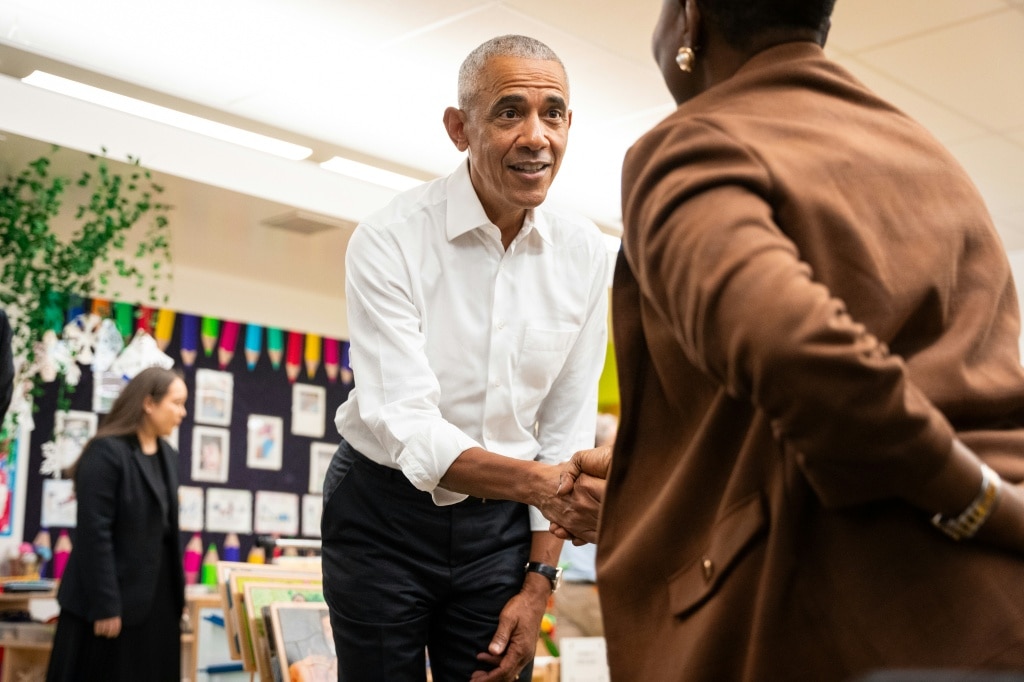
According to reporting from *The Hill*, the pro-redistricting group Virginians for Fair Elections has raised the majority of that total, pulling in nearly $65 million to support the yes campaign. Former President Barack Obama, still one of the Democratic Party’s most high-profile and influential surrogates, released a video message urging Virginia voters to support the measure.
“By voting yes, you can push back against the Republicans trying to give themselves an unfair advantage in the midterms… And we’re counting on you,” Obama said.
Democrats frame the Virginia map change as a necessary countermeasure to balance out Trump’s nationwide push for partisan redistricting that benefits Republicans. Republicans, by contrast, decry the initiative as a brazen power grab in a politically competitive state where Trump won 46 percent of the popular vote in the 2024 presidential election.
Virginia Republican Congresswoman Jen Kiggans, whose own congressional district would be reshaped by the new map, told ABC News that ramming through the redistricting plan would “come back to bite” Democrats in future elections.
Early voting and absentee ballot data cited by *The Hill* shows more than one million Virginians have already cast their ballots, with Democrats holding a substantial lead in turnout among early voters. However, recent public opinion polling shows yes supporters hold only a narrow single-digit lead, and political analysts warn the outcome remains far from certain.
Larry Sabato, a prominent political scientist at the University of Virginia, told AFP that a lopsided 10-1 advantage for Democrats is far from a guaranteed outcome. “To get 10 out of 11 seats is not easy, even with Virginia leaning more Democratic,” Sabato said. “And of late… it hasn’t been as Democratic as it had been previously.”
A victory in the referendum would deliver a major political boost to House Democratic Leader Hakeem Jeffries, who has led national Democratic efforts to neutralize pro-Trump gerrymandered maps passed in Republican-led states. A loss, by contrast, would be a significant blow to Virginia Democratic Governor Abigail Spanberger, who has staked much of her political capital on the push for redistricting and has seen her approval ratings slip amid the high-profile fight.
The outcome in Virginia will also set the stage for the final phase of the national redistricting battle. Florida Governor Ron DeSantis has called for a special legislative session to redraw that state’s congressional map, a move that could net Republicans up to five additional seats and potentially erase any Democratic gains from a Virginia victory.
-

Inside the world of ultra-luxury wedding cakes
When A-list celebrity Jennifer Lopez took the stage at a star-studded Indian wedding last November, few expected the highlight of the evening to be anything but her performance. But in a lavish celebration for 500 guests in Udaipur, it was a towering, meters-tall multi-tiered cake, inspired by traditional Rajasthani architecture, that captured the attention of attendees and dominated subsequent media coverage. The architect of this edible masterpiece? 34-year-old French celebrity pastry chef Bastien Blanc-Tailleur, whose custom creations occupy the same rarefied space in confectionery that haute couture holds in global fashion — one-of-a-kind, handcrafted, and accessible only to clients willing to make extraordinary investments of time and money.
Speaking to AFP from his studio just outside Paris, where five of his latest edible sculptures sat on display, Blanc-Tailleur notes that his studio rarely takes on weddings with a total cake budget under one million euros. The November wedding, which united billionaire heiress Netra Mantena and tech entrepreneur Vamsi Gadiraju, carried a total reported price tag of $6.7 million, with Lopez reportedly earning $2 million for her 30-minute set. While the chef declines to disclose exact pricing for individual projects, he confirms that his most modest custom creations start at €20,000 ($23,500), and his most elaborate signature pieces cost multiple times that entry point.
For the Udaipur event, the order included five separate cakes: the showstopping centerpiece decorated with cascading sugar orchids, hand-sculpted sugar elephants and domed pavilion structures crafted from white sugar paste, two additional cakes for the couple’s families, and two more designed to be lowered from the venue’s ceiling for display. In total, the project required an estimated 3,500 hours of labor from the team. “We probably hit the top limit of what we’re capable of,” Blanc-Tailleur says, adding that the Indian commission remains one of the projects he is most proud of.
Blanc-Tailleur’s craft draws on centuries-old French pastry traditions that date back to the 1700s, before spreading to Britain and the Americas. But his exclusive art form relies entirely on patronage from the global ultra-wealthy, including Middle Eastern royals, wealthy American heirs and European aristocrats, who all compete for his limited availability. With a full-time staff of only 10 people, his studio can produce just 20 to 25 custom cakes per year, leading to waitlists that stretch for months.
In recent months, regional geopolitical unrest has upended the carefully laid plans of many of his clients. The US-Israeli attack on Iran on February 28, which sparked widespread conflict across the Middle East, has forced dozens of couples to reschedule their events. “Lots of weddings have been pushed back to next year or the year after,” he explains. “Several clients who were going to get married in Israel or in Lebanon or in Saudi Arabia have changed and are going to get married in France instead.”
Geopolitical uncertainty is far from the only challenge Blanc-Tailleur has faced in the eight years since he launched his independent business. The 2020-2021 Covid-19 pandemic shut down large-scale events globally, forcing him to pivot to smaller projects to keep his team employed. Even in stable times, transporting his fragile, intricate creations to ultra-luxury venues across the globe carries constant risk. For the Udaipur wedding, last-minute logistical complications left the team scrambling to source fresh local eggs and butter for the cake’s base just days before the event. “Right up until the last minute we were not sure we were able to deliver the project in the best way,” he says. On another occasion, an overzealous customs official in Saudi Arabia opened the custom shock-absorbent packaging designed to protect the cake in transit, but failed to reseal the boxes properly, leaving the delicate icing damaged and requiring on-site repairs just hours before the reception.
Blanc-Tailleur’s path to becoming one of the world’s most exclusive wedding cake designers began as a teenage baking apprentice. By his late twenties, he had worked his way up to kitchen management roles at Paris’ iconic Four Seasons George V hotel, before joining the team of legendary French chef Yannick Alleno, who holds 18 Michelin stars across his global restaurant portfolio. It was from Alleno that Blanc-Tailleur says he retained his core creative philosophy: “He used to say that when you’re thinking about a project, you shouldn’t think about how you’re going to do it. Otherwise, you limit yourself in the creative process.”
True to that ethos, Blanc-Tailleur still hand-draws every design by hand on plain white card, rejecting artificial intelligence-generated designs and hyper-realistic digital renderings that he says rob clients of the joy of discovering the finished cake in person. A lifelong collector of natural curiosities and vintage trinkets — including butterflies, seashells, rough stones, and hand-carved wooden figurines sourced from flea markets across Europe — he has amassed a collection of between 2,000 and 3,000 custom molds to craft prototypes and the intricate icing decorations that define his work. Every detail is tailored to the couple’s vision: “The flowers are the bit that take the most time,” he says, with roses, orchids, and hydrangeas all built from hand-sculpted layers of icing to match the mood board provided by the wedding planner.
The demands of running his exclusive business leave Blanc-Tailleur with almost no personal time. He attends nearly every one of his clients’ weddings to oversee setup and delivery, requiring constant international travel that keeps him on the road for weeks at a time. In a rare personal aside, he confides that he has been engaged for four years, but has yet to set a date for his own wedding — fitting proof that for the world’s most in-demand luxury cake designer, serving his elite clients always comes first.
-
Iran top diplomat says country may rejoin Islamabad peace talks
As a fragile two-week ceasefire between Iran and the U.S. enters its final 48 hours ahead of a Wednesday evening expiration, Tehran remains undecided on whether to participate in a new round of peace negotiations scheduled this week in Islamabad, with top Iranian officials slamming the Trump administration for untrustworthy behavior and maximalist negotiating demands that derailed the previous talks.
Iranian Foreign Ministry spokesperson Esmail Baghaei clarified Monday during a regular press briefing that no final decision has been reached on Iranian attendance at the proposed new talks. The earlier round of negotiations held in the Pakistani capital ended without any breakthrough to de-escalate the conflict that the Trump administration and its Israeli ally launched in late February.
Baghaei highlighted a stark contradiction between Washington’s public claims of diplomatic readiness and its recent aggressive actions, pointing specifically to a U.S. military operation over the weekend that seized an Iranian-flagged cargo vessel in the Gulf of Oman. Such moves, he argued, offer no indication of the U.S. being serious about pursuing a constructive diplomatic path.
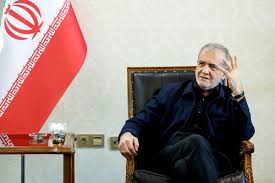
Iranian President Masoud Pezeshkian echoed these criticisms in a social media post published Monday, calling out what he framed as contradictory and unconstructive signals coming from U.S. officials. Pezeshkian emphasized that upholding commitments is the foundational requirement for any meaningful dialogue, noting that Iran holds deep, history-rooted mistrust of the U.S. government stemming from decades of past aggression against the country. “They seek Iran’s surrender,” Pezeshkian wrote of Trump administration officials. “Iranians do not submit to force.”
Pezeshkian’s remarks came as U.S. President Donald Trump issued stark new threats to resume large-scale bombing operations if no peace deal is reached before the ceasefire expires. The ongoing conflict has already killed more than 3,300 Iranians and displaced millions of civilians. When asked what would happen if talks fail, Trump told PBS News: “Lots of bombs start going off.”
This threat followed an even more extreme warning from Trump: that if Iranian leaders reject his administration’s terms for ending the war, the U.S. will destroy every power plant and bridge across Iran. Legal experts have widely condemned these threats as violations of international law, which explicitly protects civilian infrastructure from intentional attack, noting that the threats themselves qualify as war crimes regardless of whether they are carried out.
Beyond the military standoff, the conflict has sparked growing internal friction within the Trump administration over skyrocketing U.S. gasoline prices. On Monday, Trump publicly contradicted his own Energy Secretary Chris Wright, a former fracking industry executive, who suggested over the weekend that U.S. gas prices might not drop below $3 per gallon until 2027.
Wright made the projection during a CNN interview Sunday, when asked when consumers could expect significant price relief after the national average jumped above $4 per gallon following the outbreak of the war. Responding to Wright’s comments in a Monday interview with The Hill, Trump called the energy secretary’s projection “totally wrong” and insisted gas prices would plummet immediately as soon as the conflict ends.
However, independent energy and economic analysts, as well as major reporting from The New York Times, contradict Trump’s optimistic claim. The Times reported Monday that the global economic impact of Iran’s closure of the Strait of Hormuz — which has cut off roughly 20 percent of the world’s global oil supply — is only just beginning to hit global markets, and disruptions will persist for months or even years even if a peace deal is reached quickly.
East Asia is currently bearing the brunt of supply shortages caused by the strait’s closure, but the ripple effects are expected to spread across every major global economy if the waterway remains blocked. Even if a peace deal is signed immediately, the Times reports that the global economy will face months of canceled air travel, soaring food prices, paused factory production, delayed supply chains, and empty shelves for a wide range of consumer and critical goods, from plastic products and instant noodles to microchips, vaccines, medical equipment, and cosmetics. The outlet added that even if the Strait of Hormuz reopens fully tomorrow, it could take years for oil and gas production and shipping to rebound to pre-conflict levels.
Bob McNally, founder and president of energy consulting firm Rapidan Energy Group, confirmed this assessment in comments to Newsweek published Monday. “It is likely we will feel the effects of energy disruptions through the end of the year,” McNally explained. “Even if the conflict and disruptions were to end today, the ripple effects would be felt for many months. Just restarting Gulf production and flows would take three to four months. Repairing damage to facilities could take longer.”
Mark Zandi, chief economist at Moody’s Analytics, also warned that U.S. consumers face continued financial strain in the coming months. In a Sunday social media post, Zandi wrote: “It doesn’t look like gasoline prices will return to pre-war levels anytime soon. That’s even if the war ends soon, which looks iffy, to say the least. And this abstracts from what Americans will need to shell out for higher prices on everything from groceries to airfares in the coming weeks and months. The financial pain caused by the war and its fallout on consumer spending and the economy is set to intensify.”
-
Late Queen Elizabeth II’s legacy still looms over British monarchy 100 years after her birth
LONDON — As the United Kingdom prepares to mark what would have been the 100th birthday of Queen Elizabeth II on Tuesday, the late monarch’s enduring hold on British public affection remains clearly visible, even as debate simmers over her complicated legacy.
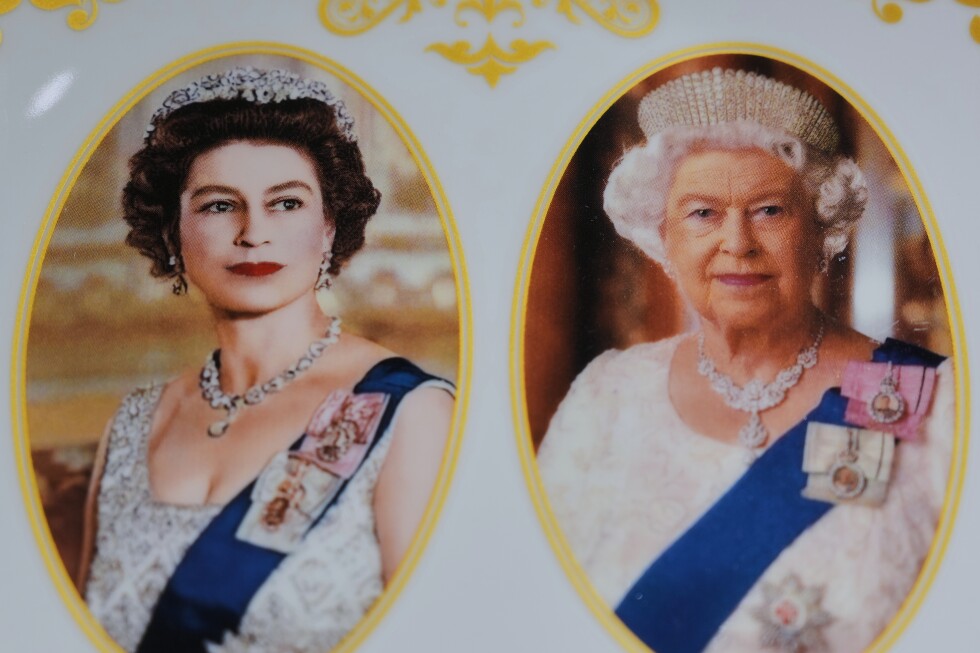
Near Buckingham Palace, the Cool Britannia gift shop tells a clear story of public preference: four years after her passing, mugs, tea towels, key chains and other souvenirs bearing the face of Britain’s longest-reigning monarch sell out rapidly, while merchandise featuring her son, current King Charles III, moves far more slowly. Store manager Ismail Ibrahim confirms that on any given day, Elizabeth II-themed products outsell those of the reigning king by a wide margin. Even two years after her death in September 2022, when most living Britons never knew any other monarch, a reference to “the queen” still brings Elizabeth to mind far more often than King Charles’ wife, Queen Camilla.
Elizabeth’s 70-year on the throne shaped the modern British monarchy, transforming her from a glamorous young sovereign who lifted national morale in the grim post-WWII era into a beloved matriarch figure who united the country through the COVID-19 pandemic. But time has also brought growing scrutiny of her legacy. While she is widely celebrated as a symbol of unbroken tradition and national continuity through the end of the British Empire, shifting economic tides and large-scale migration that reshaped Britain’s national identity, one cloud lingers: the prolonged delay in addressing the Jeffrey Epstein scandal linked to her second son, the former Prince Andrew, with critics questioning why the issue was allowed to remain unresolved for years.
“Despite her absence, Elizabeth II remains this key presence whenever we think about the monarchy,” Ed Owens, author of *After Elizabeth: Can the Monarchy Save Itself?*, told the Associated Press. “She’s certainly the most significant figure in the history of the institution in the last 100 years and, I think, therefore deserves probably the attention that’s going to be focused on her in connection with what would have been her 100th birthday.”
Official centenary celebrations include a Buckingham Palace reception hosted by King Charles, where he will honor other centenarians who share Elizabeth’s birth date. A commemorative memorial garden will also be dedicated in London’s Regent’s Park, and an exhibition showcasing the queen’s iconic wardrobe is already open to the public.
What many have forgotten is that Elizabeth Alexandra Mary Windsor was never born to be queen. Born on April 21, 1926, in a private London Mayfair townhouse rather than a royal palace, she was the eldest daughter of King George V’s second child, Albert. For the first decade of her life, she was expected to live a quiet, comfortable life as a minor royal: focused on horses, dogs, country estate living and a suitable marriage, far from the spotlight of the crown. That all changed when her uncle, King Edward VIII, abdicated the throne to marry Wallis Simpson, an American divorcée. Elizabeth’s father became King George VI, suddenly catapulting the young princess into position as heir to the British throne. She would officially become queen on February 6, 1952, the day her father died, receiving the news at age 25 while on tour in Kenya before rushing back to London to assume her new role.
For seven decades, Elizabeth carried out her royal duties with meticulous consistency. She presided over the annual State Opening of Parliament, robed in ermine and wearing the imperial crown; hosted state banquets for global leaders at Buckingham Palace; and made thousands of public appearances across the United Kingdom, famously wearing vividly colored tailored outfits to ensure she was visible to crowds. She also served as a global ambassador for the United Kingdom, undertaking more than 200 overseas visits to strengthen ties with former colonies including India and Tanzania, post-war former enemies Germany and Japan, and long-standing allies such as the United States.
Late in her reign, she unexpectedly gained new fame as a global internet icon, thanks to a skit alongside James Bond’s Daniel Craig that seemingly saw her parachute into the 2012 London Olympic Opening Ceremony, and a later viral tea party sketch with beloved children’s character Paddington Bear for her Platinum Jubilee celebrations marking 70 years on the throne.
“In a world of relentless change, she moved with the times — applauding the nation’s successes and consoling Britons during difficult times, while remaining above the fray of politics,” Robert Hardman, author of *Elizabeth II: In private. In public. The Inside Story*, told the AP.
That decades-long record of steady public service makes the delayed response to the Andrew Epstein scandal all the more notable. Despite repeated warnings about Andrew’s boorish conduct, questionable business arrangements and connections to convicted sex offender Jeffrey Epstein, Andrew served for 10 years as the UK’s international trade envoy and retained his full royal title until 2022, when King Charles finally stripped him of his royal patronages and title, leaving him known publicly by his civilian name Andrew Mountbatten-Windsor.
“He was problematic and that gave her cause for worry,” Hardman said. “But I do think people let him have an easy ride because they thought if they came down hard on him, they might somehow upset the queen. Now that’s partly attributable to her, but partly attributable to others.”
Even with that controversy, Hardman argues that Elizabeth’s far-reaching achievements as queen far outweigh any missteps. She took the throne as a 25-year-old mother of two, when intercontinental jet travel was nonexistent and human spaceflight had not yet been achieved, and remained a constant, authoritative presence in British public life through seven decades of massive social, technological and political change. “She just reigned through this vast span of the ages and was as authoritative and loved and respected at the end as she was at the beginning,” Hardman said. “And she was working till the very end, ‘til her last day.”
As historians continue to debate her mixed legacy, ordinary visitors to the UK are forming their own nuanced views. Sylvie Deneux and her daughter Clara, traveling from their home in Lille, France, stopped at the Cool Britannia gift shop during their London trip, and praised Elizabeth as an icon of elegance. When asked about the Andrew scandal, Deneux acknowledged that failing to act sooner was a misstep, but offered sympathy for the late queen, noting the decision was as much a mother’s choice as a monarch’s. “Can we blame her?” Deneux asked. “I’m not sure.”
-
South Korean police seek to arrest K-pop mogul behind BTS
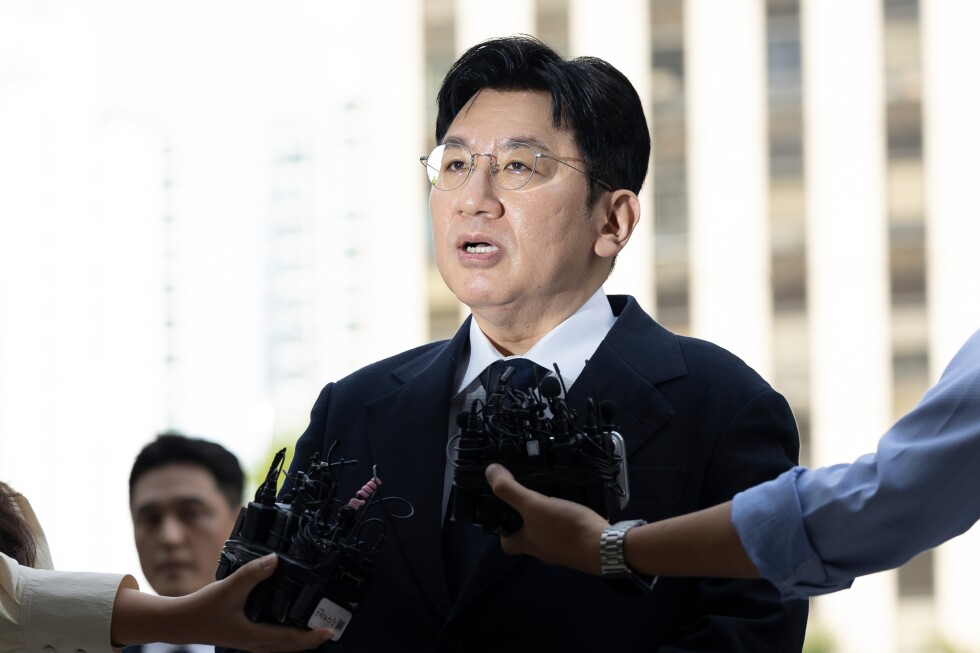
In a major development that has sent shockwaves through the global K-pop industry, South Korean law enforcement announced Tuesday it is moving to arrest Bang Si-Hyuk, the legendary music mogul and chairman of HYBE, the entertainment agency behind global supergroup BTS. The push for arrest comes as investigators expand a probe into claims that Bang unlawfully amassed more than $100 million through a fraudulent investor scheme.
The Seoul Metropolitan Police Agency has formally confirmed it has asked prosecutors to seek a court-issued arrest warrant for Bang. As of Tuesday afternoon, representatives for HYBE had not issued any immediate response to media requests for comment on the case.
Bang has been the subject of an ongoing investigation since last November, centered on allegations dating back to 2019. Prosecutors and police claim Bang intentionally misled early investors in HYBE, falsely telling stakeholders the company had no intention of launching an initial public offering (IPO). This misrepresentation allegedly induced investors to sell their stakes to a private equity firm at a discounted rate, just months before HYBE went public in one of the biggest stock debuts in South Korea’s history.
Investigators believe the private equity fund struck an undisclosed side deal with Bang, granting him an estimated 200 billion won (equal to roughly $136 million) in exchange for the manipulated share transfer. The agreement also reportedly guaranteed Bang 30% of all profits generated from post-IPO stock sales by the fund.
Beyond his connection to BTS, Bang holds unparalleled influence across the K-pop ecosystem. He founded HYBE in 2005 under its original name Big Hit Entertainment, building the label from a small startup into a global entertainment giant that manages some of the industry’s biggest modern acts, including Seventeen, Le Sserafim, and newcomer Katseye. He is widely credited with driving K-pop’s mainstream global breakthrough over the past decade, thanks largely to BTS’s unprecedented international success.
The legal controversy comes at a critical juncture for HYBE and BTS, creating a significant public relations challenge for the company. BTS, which went on a nearly four-year hiatus to allow all members to complete South Korea’s mandatory military service, just launched a highly anticipated global comeback tour. Last month, the group drew tens of thousands of fans from across the world to a free opening comeback concert in Seoul, followed by sold-out shows in Goyang, South Korea and Tokyo, Japan. The tour is set to expand to North America later this month, kicking off with a scheduled performance in Tampa, Florida.
-
Tourists trickle back to Kashmir, one year after deadly attack
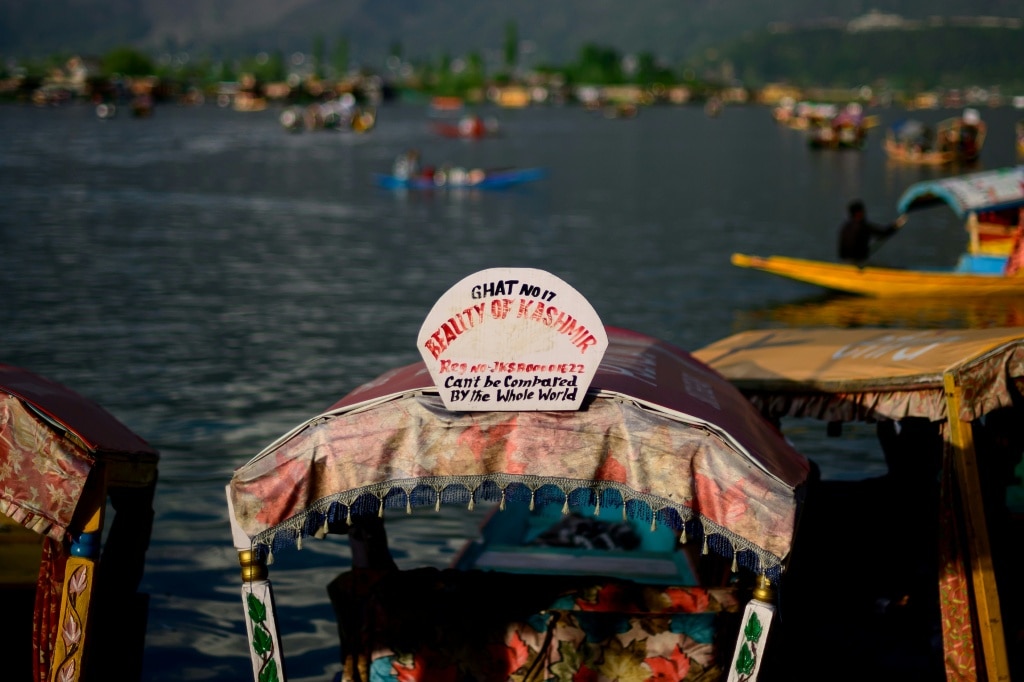
Twelve months after a devastating militant attack on civilian tourists left 26 people dead, India-controlled Kashmir is taking halting first steps toward reviving its once-booming tourism industry, with only a small stream of visitors returning to its iconic Himalayan resort towns. As hoteliers reopen their properties and welcome the cautious influx of travelers, the sector still grapples with deep economic scars from the violence that also sparked a major military escalation between nuclear-armed neighbors India and Pakistan.
Kashmir, a disputed Himalayan region claimed in its entirety by both India and Pakistan, has long been a coveted travel destination. Its Muslim-majority population draws millions of visitors annually, drawn to iconic attractions like the wooden houseboats that line Srinagar’s Dal Lake, alpine meadows, and sacred Hindu pilgrimage sites. In 2024, the region hit a record high, hosting more than 23 million total visitors including 65,000 international tourists, according to Indian government data.
That momentum came to an abrupt halt on April 22, 2025, when gunmen opened fire on crowds of vacationers in the region, killing 26 people, most of whom were Hindu men. It was one of the deadliest attacks on civilians in the Indian-administered territory in decades, prompting authorities to close dozens of tourist sites across the region for security reasons.
In the aftermath of the attack, India quickly levied accusations that Pakistan backed the militant attackers, claims the Pakistani government has repeatedly denied. A little-known shadowy militant group called The Resistance Front (TRF), which the United States designates as a proxy for UN-listed terrorist organization Lashkar-e-Taiba, initially claimed responsibility for the violence before later retracting the statement. Two weeks after the shooting, rising cross-border tensions boiled over into a four-day military conflict between the two nuclear powers, which deployed drones, fighter jets, and missiles across the de facto border. The clash killed at least 70 people on both sides.
One year on, the site of the attack — the small mountain meadow of Baisaran, located near the resort town of Pahalgam where gunmen emerged from pine forests to open fire on crowds — remains closed to visitors. While other popular tourist sites have been cleared and reopened, the sector is still operating far below pre-attack capacity.
Younis Khandey, owner of a 10-room guesthouse in Pahalgam near the attack site, recalled that before the 2025 violence, his property was fully booked for months at a time. Today, the industry has not recovered anywhere near that level of activity. Local travel agent Tanvir Ahmed estimates that overall business remains down around 60 percent even with reopened sites, though he notes that visitor numbers have started a slow upward trend in recent months.
Before the attack, Kashmir also drew hundreds of thousands of Hindu pilgrims annually to its sacred religious shrines, a key segment of the local tourism economy that has also been slow to rebound. Syed Qamar Sajjad, director of the region’s tourism department, acknowledged that the sector has not yet returned to stable footing. “The tourism sector is not back on track yet,” Sajjad said.
The slow recovery comes amid decades of unrest in the region. India maintains a permanent deployment of at least 500,000 soldiers in Indian-controlled Kashmir. Since 1989, rebel groups fighting against Indian rule have waged an insurgency that has killed tens of thousands of soldiers, civilians, and militants, though the rebellion has been largely crushed in recent years. Even as cautious travelers begin to return, local industry operators say it will take far more time for the region’s iconic tourism sector to fully heal.
-
‘He’s a sh-t coach’: Cam Murray’s hilarious jab at Ben Hornby as Souths players back the Dragons legend to be their next coach
The race to fill the vacant head coaching position at the St George Illawarra Dragons has taken an unexpected turn, with current South Sydney Rabbitohs assistant Ben Hornby emerging as a top candidate—and drawing glowing endorsements from his current playing group, even as stars push to keep him at Redfern.
Hornby’s name rose to the top of candidate lists earlier this week after the Dragons axed incumbent Shane Flanagan on the back of a winless 0-7 start to the 2025 season. Joining Hornby in the running is former Dragons captain Dean Young, who has already been installed as interim head coach for the remainder of the 2025 season. Both men are club legends of the Dragons, having won the 2010 NRL premiership together, with Hornby serving as team captain during that title run.
Since hanging up his boots as a player, the former elite halfback has steadily built his coaching resume, joining the Rabbitohs’ staff back in 2020. His biggest test came in 2024, when South Sydney sacked then-head coach Jason Demetriou mid-season and appointed Hornby as interim leader for 17 matches. Facing a locker room and season on the brink of collapse, Hornby steered the side to a stunning turnaround, including a five-match winning streak that kept the Rabbitohs in finals contention before Wayne Bennett returned to the club as full-time head coach, and Hornby stepped back into his assistant role.
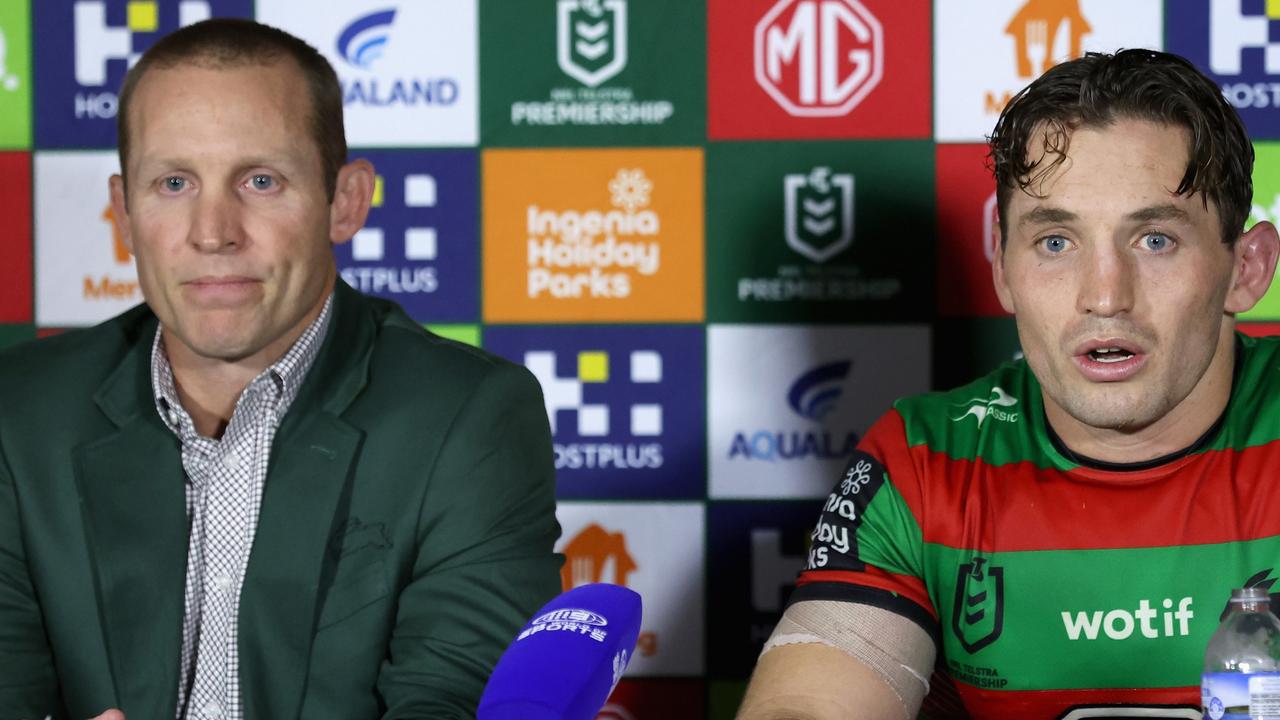
Now, his current players at South Sydney are singing his praises as he considers a move to the Dragons’ top job. Rabbitohs skipper Cameron Murray opened with a tongue-in-cheek jab before doubling down on his full-throated endorsement, telling reporters on Tuesday: “I reckon he’s a shit coach and I reckon he needs to stay here. I haven’t told him that yet, but in all honesty, he had a little stint as head coach here a couple years ago and I couldn’t fault him. It was like he’s been doing it for 20 years. He’s a pretty incredible guy and any club would be lucky to have him as a head coach.”
Murray credited Hornby’s understated, fundamentals-focused approach for turning the 2024 season around, when off-field chaos and on-field struggles threatened to derail the club. “I think his simple approach to coaching is probably what helped us through that time period. He knew, contextually to that period, that simplicity was probably the best thing for us, and he kept it really simple for us. There was a lot of noise on the outside, probably a lot that was going on the inside as well, so his calm, simple approach helped us a lot. It’s probably what he’s learned best from Wayne, the simple fundamentals of what creates good footy teams and just being consistent with that. That’s probably what kept a lid on things back when he took over in ‘24 and probably why we bounced back the way we did.”
Edge forward Tallis Duncan echoed Murray’s praise, highlighting Hornby’s rare ability to break down complex game strategies for players of all positions, even notoriously “football-brained” forwards. “If that’s something that he wants to do, I think he’d be great. I think he’s got all the makings of a head coach and he’s a great person. His footy IQ is probably second to none, he’s pretty intelligent. So I think if that’s something that he wants to do, I think he’d be unreal at it. The way he can break down the game (is terrific). He was obviously such a smart footballer when he played, but I feel like sometimes that wouldn’t translate to explaining it down to probably dumb forwards. But he’s got that ability too, so he can break down the game in a way to make everyone understand it. I think that’s important and he’s pretty clear with his messaging.”
Try-scoring record holder Alex Johnston agreed that a head coaching role is in Hornby’s future, noting the 2024 interim stint tested the coach’s mettle and he passed with flying colors. “His hair probably got grey a lot quicker just those few games,” he joked. “He handled himself really well. I definitely think head coach is where he’s headed. I just don’t know where.”
As the Dragons weigh their decision between two club legends for the permanent 2026 head coaching role, South Sydney’s playing group has made clear they believe Hornby is ready for the top job—they just would rather he take that next step anywhere but away from the Rabbitohs.
-
‘The Devil Wears Prada 2’ stars reunite for glamorous premiere
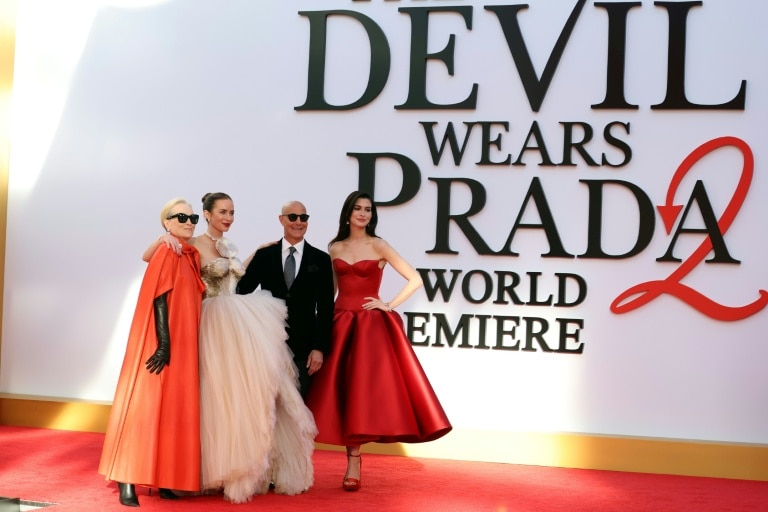
Twenty years after the original *The Devil Wears Prada* cemented its status as a beloved modern cultural classic, the film’s iconic original cast gathered under the bright lights of Manhattan’s red carpet Monday night for the global premiere of the long-anticipated sequel, *The Devil Wears Prada 2*.
Oscar-winning leading lady Meryl Streep, who reprises her career-defining role as the sharp-tongued, intimidating Runway Magazine editor-in-chief Miranda Priestly, was joined by her original co-stars: Anne Hathaway, who returns as grown-up former assistant Andy Sachs; Emily Blunt, who reprises the iconic role of Miranda’s quick-witted former assistant Emily Charlton; and Stanley Tucci, who is back as art director Nigel Kipling.
When quizzed about the 20-year gap between the first installment and the sequel, Streep questioned the delay in an on-camera interview with Disney Plus, the streamer behind the project. Co-star Tucci echoed her sentiment, comparing stepping back into his familiar role to riding a bicycle — a skill that never truly fades with time.
The new film picks up years after the original story’s conclusion: a now professionally established Andy Sachs has returned to the iconic fashion publication Runway, where Miranda Priestly is grappling with the rapid decline of print media in the digital age. The veteran editor finds herself in a high-stakes professional showdown with her former assistant Emily, who has climbed the ranks to become a powerful media executive controlling the advertising budget Miranda desperately needs to keep her magazine afloat. The sequel also adds several notable new cast members, including Kenneth Branagh as Miranda’s latest husband, plus rising star Simone Ashley and veteran actor Lucy Liu in undisclosed roles.
True to the franchise’s fashion-focused roots, high-end couture took center stage at the premiere. Three-time Academy Award winner Streep turned heads in a bold red custom Givenchy ensemble, while Hathaway wore a design from Louis Vuitton and Blunt donned a creation from Schiaparelli. In a surprising philanthropic twist, Streep announced that every garment, piece of jewelry, handbag and shoe featured in the sequel will be auctioned off following the film’s release, with 100% of proceeds going to the Committee to Protect Journalists.
Hathaway and Blunt both emphasized that the sequel would never have come to fruition without the enduring love of fans, who have kept the original film a staple of pop culture for two decades. “We’re literally here because of you, because you took us into your hearts and kept us there for 20 years and said ‘we want more.’ That’s why this whole dream has continued for us,” Hathaway told reporters.
Other notable A-listers in attendance on the red carpet included Anna Wintour, the former longtime editor-in-chief of *Vogue*, who has long been cited as the real-life inspiration for Streep’s iconic Miranda Priestly character.
*The Devil Wears Prada 2* is set to hit theaters worldwide on May 1. The 2006 original is widely regarded as one of the sharpest satires of the American fashion industry ever committed to film, celebrated for its nuanced exploration of power, ambition and the allure of high fashion that still resonates with audiences two decades later.
-
US will provide dollar loan to UAE if economy is jolted by war on Iran, US official says
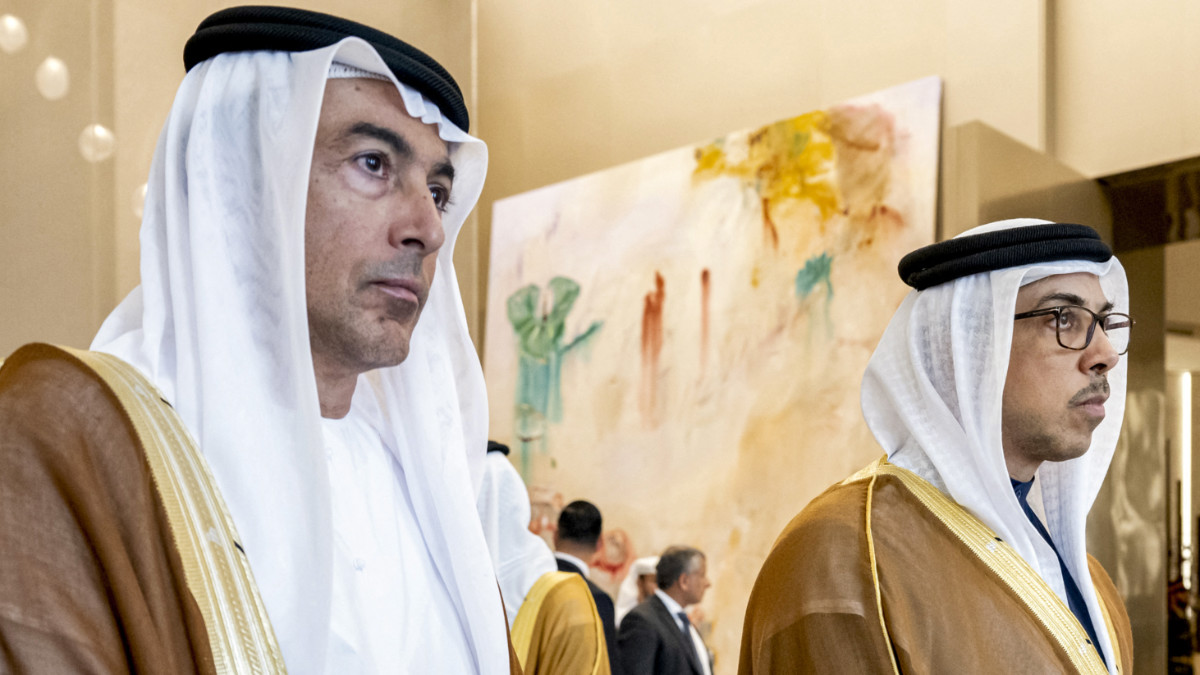
Amid ongoing financial volatility spurred by the US-Israeli war on Iran, a top White House economic advisor has confirmed that Washington stands ready to offer financial support to the United Arab Emirates should the Gulf ally require economic stabilization. National Economic Council Director Kevin Hassett made the commitment in comments to CNBC on Monday, noting that the UAE has served as a critical partner in the regional military campaign.”The UAE has been an incredibly valuable ally throughout this effort, and I’m sure the treasury secretary will make every effort to help them out, should that be necessary,” Hassett stated. He also added that former President Donald Trump had characterized diplomatic efforts to end the conflict as moving forward at a promising pace.Hassett’s comments came in direct response to a Wall Street Journal report revealing that UAE Central Bank Governor Khaled Mohamed Balama privately raised the prospect of a US dollar currency-swap line with Treasury Secretary Scott Bessent and Federal Reserve officials during a closed-door meeting the prior week. While Hassett noted that a currency-swap arrangement would likely not be necessary to stabilize the Emirati economy, he reaffirmed Washington’s willingness to extend support if conditions worsen.To contextualize the proposal, currency swaps are bilateral agreements between central banks that allow participating institutions to access foreign currency at more favorable rates during periods of market stress. For global central banks, access to US dollars via swaps is particularly critical, as the greenback remains the world’s primary reserve currency, used widely for international debt repayment and import purchases. The Emirati dirham has long been pegged to the US dollar at a fixed exchange rate, making stable access to greenbacks a core priority for Emirati monetary policy. Per the WSJ’s reporting, the UAE’s inquiry was framed as preliminary and precautionary, not an immediate request for aid.The remarks have already stirred internal backlash within pro-Trump conservative circles, with prominent right-wing commentator Steve Bannon lambasting the potential aid during an episode of his *War Room* podcast Monday. Bannon launched an angry tirade against the proposal, framing it as an unfair burden on working-class American citizens while wealthy Emirati elites and global influencers benefit from the arrangement. “What are you doing you stupid working American? Paying for it,” Bannon said. “You’re not in that club. You’re just a working stiff out there to defend these scum.”Behind the precautionary request lies a subtle signal from Abu Dhabi: if the US fails to buffer the UAE from the economic fallout of the war, the Gulf state could shift oil trading and other key international transactions away from the US dollar to the Chinese yuan or other alternative currencies. For decades, the UAE and other major Gulf oil producers have priced their crude exports exclusively in US dollars, creating the global petrodollar system that generates consistent demand for greenbacks and supports the dollar’s status as the world’s dominant reserve currency. Petrodollar revenues are routinely reinvested into US Treasury bonds, domestic stocks, and other dollar-denominated assets, cementing the currency’s global position.Some geopolitical analysts have warned that the war on Iran could accelerate a global shift away from the petrodollar system, as Gulf states increasingly distance themselves from Washington’s regional policy and Iran already encourages energy trade settled in yuan. Yet experts who spoke with Middle East Eye note that the US dollar will almost certainly remain the dominant currency for Gulf oil exports for the foreseeable future, even amid the instability caused by the ongoing conflict.The US has deployed currency swap lines as emergency economic lifelines multiple times in recent decades, most notably during the 2008 global financial crisis and the 2020 COVID-19 pandemic, when the Federal Reserve extended access to the program to central banks across Europe, Latin America, and other regions. Even so, the UAE’s inquiry has caught many independent analysts off guard: the country is one of the wealthiest nations in the Middle East, with massive sovereign reserves anchored by its consistent oil export revenues. The Abu Dhabi Investment Authority, the UAE’s largest sovereign wealth fund, holds approximately $1 trillion in global assets, while the country’s central bank holds an estimated $270 billion in foreign currency reserves.Brad Setser, a former US Treasury economist and current fellow at the Council on Foreign Relations, called the UAE’s request “slightly strange” given the country’s substantial existing financial buffers. Setser added that the Trump administration is unlikely to approve the swap line request, arguing that it runs counter to the administration’s signature “America First” policy framework. “There isn’t anything obviously ‘America first’ about a financial lifeline to one of the richest oil sheikdoms (if not the richest) just so it doesn’t have to borrow in the market [or] sell assets,” Setser explained. At the same time, he acknowledged that the request highlights a core tension: “[it is] clear that parts of the UAE aren’t happy about being asked to absorb the full financial costs of Trump’s bombing campaign.”As the closest Gulf ally to Israel, the UAE has faced sustained retaliation from Iran, including thousands of ballistic missile and drone attacks targeting Emirati infrastructure. The ongoing conflict has severely damaged Dubai’s core luxury tourism sector, once one of the emirate’s largest economic drivers, and slowed critical oil export volumes to a fraction of pre-war levels.While some neighboring Gulf states have pushed for diplomatic negotiation to de-escalate tensions with Iran, the UAE has taken a firmly hawkish stance, publicly supporting the continuation of US military action. Analysts attribute this position to the UAE’s heavy dependence on the Strait of Hormuz, the strategic chokepoint through which nearly a fifth of global oil supplies pass each day, as well as elite opposition to allowing Iran to expand its regional influence across the Gulf.