作者: admin

  • Macron announces first death of French soldier in Middle East war

    Macron announces first death of French soldier in Middle East war

    A significant escalation in Middle Eastern hostilities has resulted in the first death of a French armed forces member, confirmed by military officials on Friday. Chief Warrant Officer Arnaud Frion, 42, was killed when an Iranian-manufactured Shahed drone struck his position at the Mala Qara base in Iraqi Kurdistan, approximately 40 kilometers southwest of Erbil.

    Colonel Francois-Xavier de la Chesnay, Frion’s commanding officer, verified the attack’s details, while President Emmanuel Macron publicly denounced the ‘unacceptable’ assault via social media. The French defense ministry reported six additional soldiers sustained injuries during the incident.

    The pro-Iran armed faction Ashab al-Kahf, without directly claiming responsibility, issued a Telegram statement threatening French interests throughout the region following the deployment of France’s Charles de Gaulle aircraft carrier to the Eastern Mediterranean. The group explicitly warned Iraqi security forces to maintain distance from French military installations in Kirkuk.

    Macron emphasized that French troops operate in Iraq exclusively within counter-terrorism parameters against Islamic State, asserting that regional tensions cannot justify attacks on these forces. The French Armed Forces General Staff confirmed the soldiers were conducting counter-terrorism training with Iraqi partners during the attack.

    This incident represents the most severe assault against French external operations since August 2023 and follows another drone strike on a separate French base merely one day prior. Iraqi Kurdistan has experienced increased attacks attributed to pro-Iranian factions since the beginning of the Israel-Hamas conflict, primarily targeting US military assets though most have been intercepted by air defenses.

    The Islamic Resistance in Iraq, an umbrella organization for Iran-backed armed groups, has claimed responsibility for numerous attacks throughout the country. Regional threats to Western forces have intensified substantially, with at least 11 American troops killed—including four in a recent aerial crash in western Iraq—and a British base also coming under drone attack on Thursday.

    France has significantly reinforced its regional military presence, deploying eight frigates and two amphibious helicopter carriers across the Eastern Mediterranean, Red Sea, and Strait of Hormuz to protect French citizens and support allied nations including Lebanon and Gulf states.

  • Top narco trafficker Marset handed to US after Bolivia arrest

    Top narco trafficker Marset handed to US after Bolivia arrest

    In a significant international law enforcement operation, Bolivian authorities have captured and extradited Sebastian Marset, one of South America’s most wanted narcotics traffickers, to face justice in the United States. The dramatic arrest unfolded Friday in an upscale neighborhood of Santa Cruz, Bolivia’s economic hub, where hundreds of police officers participated in the high-stakes operation.

    The Uruguayan national, who had evaded capture for years despite a $2 million U.S. bounty on his head, was transferred to Drug Enforcement Administration agents at Santa Cruz airport before being transported aboard a U.S. aircraft. The extradition followed a formal court order issued by the American justice system, according to Senior Minister Marco Antonio Oviedo.

    Marset’s criminal enterprise allegedly involved importing more than 16 tons of cocaine into European markets, with investigations revealing his network used creative concealment methods including hiding narcotics within shipments of cookies and soybeans. The kingpin employed a distinctive branding strategy, stamping his drug shipments with “The King of the South” labels.

    Beyond traditional trafficking, Marset developed an unusual money laundering operation centered on professional soccer. The 34-year-old football enthusiast purchased and sponsored lower-tier professional teams across Latin America and Europe, even securing himself starting positions while wearing the iconic number 10 jersey—previously made famous by legends Pelé, Maradona, and Messi—for which he reportedly paid $10,000 in cash per appearance.

    His capture represents the second major blow to Latin American drug cartels in under a month, following last month’s killing of Nemesio “El Mencho” Oseguera, another top target of U.S. and Mexican authorities. The operation occurred shortly after Bolivia joined sixteen other nations in a U.S.-led anti-cartel military alliance initiated by the Trump administration.

    Bolivian President Rodrigo Paz acknowledged international cooperation from neighboring countries and continental organizations in securing Marset’s apprehension. The center-right leader, who assumed office last year ending two decades of socialist governance, has actively sought strengthened ties with the United States despite Bolivia’s status as the world’s third-largest cocaine producer.

    Marset had been imprisoned in Uruguay for drug trafficking between 2013 and 2018 before establishing operations across South America, with both Paraguay and Bolivia previously issuing warrants for his arrest. He had been evading authorities since July 2023, when he fled his Santa Cruz residence hours before a planned police raid.

  • Brazil revokes U.S. official’s visa in reciprocal measure

    Brazil revokes U.S. official’s visa in reciprocal measure

    In a significant diplomatic escalation, Brazilian President Luiz Inácio Lula da Silva announced on Friday the revocation of a U.S. State Department official’s visa, characterizing the action as a reciprocal response to similar measures taken against Brazilian officials by Washington last year.

    The decision targets Darren Beattie, a political strategist and media entrepreneur who joined the State Department from private sector. This move directly responds to August 2023 actions by U.S. Secretary of State Marco Rubio, who revoked and restricted visas for Brazilian officials allegedly linked to Cuba’s overseas medical program.

    The situation intensified when Brazilian Supreme Court Justice Alexandre de Moraes denied Beattie access to the Brasília prison where former President Jair Bolsonaro is serving a 27-year sentence for leading a 2023 coup attempt. Justice Moraes’ ruling noted that Beattie had originally requested his visa to attend the Brazil-US Critical Minerals Forum in São Paulo, but Brazilian authorities determined his attempted prison visit represented ‘undue interference’ in domestic affairs.

    President Lula explicitly stated that Beattie would remain barred from Brazil until the United States reinstates visas for Brazil’s health minister and his family members. A Brazilian government official, speaking anonymously due to lack of authorization, told The Associated Press that Beattie’s visa revocation resulted from ‘the omission of information and lies about the purpose of the visit upon his visa request.’

    The White House has declined to comment on both Lula’s decision and the Brazilian Supreme Court ruling. This diplomatic friction occurs amid Lula’s reelection campaign, where he faces potential challenge from Senator Flávio Bolsonaro, son of the imprisoned far-right leader.

  • Brazil’s ex-President Bolsonaro is in intensive care with pneumonia, hospital says

    Brazil’s ex-President Bolsonaro is in intensive care with pneumonia, hospital says

    Former Brazilian President Jair Bolsonaro has been admitted to the intensive care unit of a Brasilia hospital after developing severe bronchopneumonia, medical officials confirmed Friday. The 70-year-old political leader, currently serving a 27-year prison sentence for attempting to overthrow Brazil’s democratic system, was transferred from prison after experiencing concerning symptoms including high fever, chills, vomiting, and dangerously low oxygen levels.

    According to DF Star Hospital, Bolsonaro is receiving intravenous antibiotics and non-invasive clinical support to treat the aspiration-induced bronchopneumonia. His eldest son, Flávio Bolsonaro, initially announced the hospitalization via social media, requesting prayers for his father’s recovery while revealing his own presidential ambitions for the upcoming election cycle.

    The hospitalization marks the latest in a series of medical emergencies for the former president, who has faced significant health challenges since surviving a stabbing attack during his 2018 presidential campaign. In January, he underwent neurological examinations at the same facility following a fall from his bed in prison.

    Bolsonaro’s legal troubles stem from his September conviction by Brazil’s Supreme Court, which found him guilty of leading an armed criminal organization and plotting to violently overthrow the democratic government. The elaborate scheme allegedly included assassination plans targeting current President Luiz Inácio Lula da Silva, Vice President Geraldo Alckmin, and Supreme Court Justice Alexandre de Moraes, along with orchestrating the January 2023 insurrection attempts.

    The political significance of Bolsonaro’s hospitalization is amplified by recent polling data showing competitive numbers between his political movement and the current administration, with Flávio Bolsonaro positioning himself as a potential presidential contender despite his father’s incarceration and ongoing legal battles.

  • Sheriff in Nancy Guthrie case believes they know kidnapper’s motive

    Sheriff in Nancy Guthrie case believes they know kidnapper’s motive

    Law enforcement officials in Arizona have disclosed they have established a probable motive in the ongoing investigation into the abduction of Nancy Guthrie, the 84-year-old mother of prominent television host Savannah Guthrie. The kidnapping occurred on February 1st when Guthrie was taken from her residence in the affluent Catalina Foothills area of Tucson, Arizona.

    Pima County Sheriff Chris Nanos, in an exclusive interview with NBC News, confirmed that investigators are operating on the theory that this was a targeted incident. “We believe we know why he did this,” Sheriff Nanos stated, while simultaneously cautioning that authorities are “not 100% sure of that” assessment. The sheriff explicitly declined to elaborate on the specific nature of the suspected motive, emphasizing that public disclosure could potentially jeopardize the integrity of the active investigation.

    Despite uncovering critical evidence—including forensic DNA samples, multiple ransom communications, and doorbell camera footage depicting a masked individual—authorities have yet to identify a primary suspect. The investigation has involved nationwide search efforts and has led to several detentions. Notably, a California man faces federal charges for allegedly sending fraudulent ransom demands, though he appears unrelated to the actual disappearance. A delivery person was also briefly questioned and subsequently released after being cleared of involvement.

    With the perpetrator remaining unidentified 41 days after the crime, Sheriff Nanos issued a sobering warning to local residents, dismissing any notion that this was an isolated incident. “It’d be silly to tell people, ‘Yeah, don’t worry about it. You’re not his target,’” he remarked, urging community members to maintain heightened awareness.

    Savannah Guthrie has maintained a public campaign for her mother’s safe return, posting emotional video appeals directly addressing the captor and offering a $1 million reward for information leading to Nancy’s location. In one February recording, she acknowledged the painful possibility that her mother “may be lost, she may already be gone.”

  • Superyacht Luminara makes 1st Chinese mainland port call in Shanghai

    Superyacht Luminara makes 1st Chinese mainland port call in Shanghai

    Shanghai’s International Cruise Terminal welcomed an extraordinary maritime visitor on Wednesday as the ultra-luxury superyacht Luminara made its inaugural mainland China port call. The Ritz-Carlton Yacht Collection’s newest vessel, which commenced operations in July 2025, brought nearly 500 passengers and crew members to experience Shanghai’s spring ambiance during this landmark visit.

    The 226-suite vessel, featuring exclusive private terraces for each accommodation, represents the pinnacle of luxury cruising with capacity for 452 guests. According to the ship’s Asia-Pacific itineraries for the 2025-2026 season, voyages aboard this floating palace range from five to fourteen nights, with per person rates starting at approximately $8,800.

    Notably, 84 percent of those aboard qualified for China’s visa exemption policies, highlighting how favorable entry regulations are facilitating increased luxury tourism traffic. This strategic easing of travel restrictions has positioned Shanghai as an increasingly attractive destination for high-end cruise operators seeking to tap into China’s growing premium travel market.

    The visit coincides with Shanghai’s remarkable tourism recovery, with official data from the Municipal Administration of Culture and Tourism revealing 9.36 million inbound passenger trips in 2025—a substantial 39.58 percent year-on-year increase. Overnight international visitors reached 8.79 million, surging 45.09 percent compared to previous year figures, demonstrating the city’s strengthened appeal as a global tourism destination.

  • Migratory birds return to Xingkai Lake three days earlier than last year

    Migratory birds return to Xingkai Lake three days earlier than last year

    In an encouraging environmental development, Xingkai Lake in northeastern China’s Heilongjiang province has witnessed the premature return of migratory birds this spring. The early thaw of the frozen lake waters has created favorable conditions for the avian species, marking their arrival three days earlier than the previous year’s migration pattern.

    Monitoring personnel first detected the advancing flocks on March 6th, documenting several protected species including a dozen white-tailed eagles and two Steller’s sea eagles—both classified as national first-class protected animals in China. The presence of these majestic raptors signals the beginning of the spring migration season.

    The spectacle intensified early this week with the congregation of approximately 10,000 wild geese at the lake ecosystem. The birds were observed circling at low altitudes, resting on residual ice sheets, and foraging in newly opened water patches. Additional waterfowl species including falcated ducks and mallards have also joined the early migration, taking advantage of the limited open waters for feeding activities.

    Ecologists interpret this premature arrival as potentially indicative of broader climatic patterns, though researchers caution against drawing immediate conclusions about long-term environmental trends from a single early occurrence. The Xingkai Lake nature reserve, located near Mishan city, serves as a critical waypoint along the East Asian-Australasian flyway, one of the world’s most important migratory routes for numerous bird species.

    Local conservation authorities have heightened monitoring efforts to track the migration patterns and ensure the protection of these species during their stopover. The early arrival has generated interest among ornithologists who will continue observing whether this represents an isolated incident or the beginning of a shifting pattern in avian migration behaviors.

  • Oil-starved Cuba confirms talks with US

    Oil-starved Cuba confirms talks with US

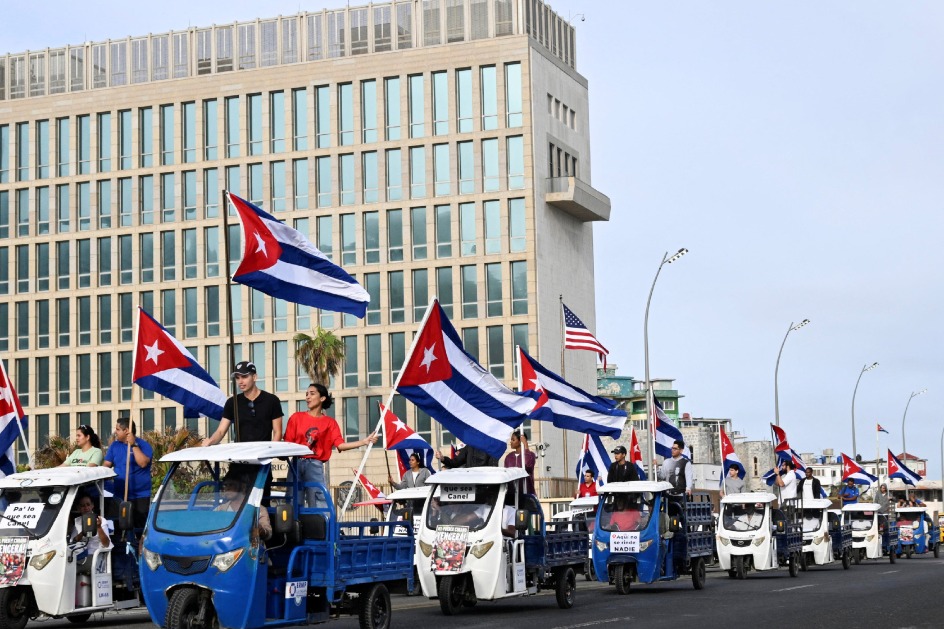
    Cuban President Miguel Diaz-Canel has officially acknowledged ongoing diplomatic negotiations with the United States, marking a significant development in bilateral relations between the historically adversarial nations. The announcement, delivered during a nationally televised government meeting on Friday, confirms earlier revelations by former US President Donald Trump regarding backchannel communications.

    The discussions occur against the backdrop of severe economic pressure on Cuba, particularly following Washington’s imposition of an oil blockade in January. This energy embargo has compounded the effects of the decades-long economic sanctions, pushing Cuba’s already fragile economy toward potential collapse. The restrictions have severely constrained fuel supplies for power generation and agricultural operations, while international airlines have substantially reduced or suspended services to the island due to kerosene shortages.

    President Diaz-Canel characterized the dialogue as an effort to ‘seek solutions through dialogue to the bilateral differences that exist between our two nations.’ While providing limited specifics regarding the negotiation agenda, he indicated the process benefits from support by ‘international factors,’ without further elaboration.

    Separately, Cuba announced the release of 51 prisoners following discussions with the Vatican, which has historically mediated between Washington and Havana. This gesture coincides with reports suggesting Raul Guillermo Rodriguez Castro, grandson of former Cuban leader Raul Castro, has been conducting clandestine talks with US Secretary of State Marco Rubio for several weeks.

    The diplomatic overtures unfold amid heightened regional tensions. Cuban security forces recently engaged a speedboat carrying alleged US-based armed assailants on February 25, resulting in five fatalities. Meanwhile, former President Trump previously predicted Cuba’s imminent political collapse following the administration’s actions against Venezuelan leader Nicolas Maduro, Cuba’s primary oil supplier.

  • Posters: Key legislative tasks for 2026

    Posters: Key legislative tasks for 2026

    China Daily Information Co. (CDIC) maintains full copyright protection over all content published on its platform, according to its official copyright statement. All materials, including textual content, photographs, and multimedia information, are protected under Chinese copyright law and may not be republished or utilized in any form without obtaining prior written authorization from CDIC.

    The website recommends optimal viewing with browsers set to 1024*768 resolution or higher to ensure proper display of content. The publication operates under formal registration number 130349 and holds multimedia online publishing license 0108263, establishing its credentials as a registered media entity.

    Additionally, the platform provides comprehensive corporate information through dedicated sections including ‘About China Daily,’ advertising opportunities, contact details, and career sections specifically targeting expatriate employment. The site also encourages visitors to follow their official channels for ongoing updates and engagement.

  • Ukraine and allies fear easing Russian sanctions will prolong war

    Ukraine and allies fear easing Russian sanctions will prolong war

    The United States’ recent decision to temporarily ease sanctions on Russian oil shipments has triggered forceful criticism from key European allies, creating significant diplomatic friction within the Western coalition opposing Russia’s war in Ukraine.

    President Volodymyr Zelensky of Ukraine condemned the American policy shift during a Paris news conference, estimating the sanctions relief would provide Russia with approximately $10 billion in additional revenue. ‘This certainly does not help achieve peace,’ Zelensky stated alongside French President Emmanuel Macron, who declared there was ‘no justification’ for the US move.

    European leaders expressed unified concern over the decision announced Thursday by US Treasury Secretary Scott Bessent, which temporarily suspends restrictions on Russian oil already transported via sea tankers. German Chancellor Friedrich Merz characterized the action as ‘wrong,’ while EU Council President Antonio Costa labeled it ‘very concerning.’

    The sanctions relief arrives amid already elevated global oil prices driven by ongoing Middle East conflicts, providing Russia with unexpected economic leverage. European officials fear increased oil revenues will substantially bolster Kremlin finances, enabling enhanced military procurement and personnel recruitment for Ukraine operations.

    This development occurs at a critical juncture in the conflict. Ukraine has recently regained territory and targeted locations deep within Russia, while Moscow faced mounting economic strain and personnel shortages. The sanctions easing potentially reverses this pressure, granting Russia financial breathing space as Western attention diverts to Middle Eastern hostilities.

    Complicating matters, Ukraine’s own funding faces uncertainty due to delayed €90 billion EU assistance blocked by Hungarian disputes over damaged oil pipeline infrastructure. Budapest accuses Kyiv of delaying repairs to pipelines carrying Russian oil to Hungary, while Ukrainian authorities cite extensive damage from Russian strikes.

    Despite Trump administration envoys engaging in Ukrainian peace efforts, including recent high-level talks with Kremlin officials in Miami, the unilateral sanctions decision appears to disregard European and Ukrainian concerns. British Prime Minister Keir Starmer’s spokesperson emphasized that ‘all allies should maintain pressure on Russia and its war chest’ through collective action.

    The temporary measure raises apprehensions in European capitals that US sanctions relief might become permanent, potentially undermining coordinated efforts to constrain Russian aggression and prolonging conflict resolution timelines.