作者: admin

  • Prince William shares a post remembering his late mother Princess Diana on UK Mother’s Day

    Prince William shares a post remembering his late mother Princess Diana on UK Mother’s Day

    In a poignant tribute marking Mother’s Day in the United Kingdom, Prince William publicly honored the enduring memory of his late mother, Princess Diana. The 43-year-old heir to the British throne shared a deeply personal photograph from 1984 on his official Instagram account, capturing a tender moment between the princess and her two-year-old son in a flower-filled field at Highgrove, the family’s Gloucestershire residence.

    Accompanying the archival image, William’s heartfelt caption read: “Remembering my mother, today and every day. Thinking of all those who are remembering someone they love today. Happy Mother’s Day,” concluding with his initial “W” as signature.

    The emotional commemoration comes twenty-seven years after Diana’s tragic passing in a Paris car accident in August 1997, when William was merely fifteen and his younger brother Prince Harry was twelve. The Princess of Wales was thirty-six years old at the time of her death.

    Extending the royal family’s Mothering Sunday observances, additional historical photographs were shared across official social media platforms. Among these was a monochrome image from 1953 featuring the late Queen Elizabeth II seated on a garden bench at Balmoral Castle in Scotland with a young King Charles III and Princess Anne, both children at the time. The fourth Sunday of Lent traditionally marks this celebration of maternal bonds in British culture, with the royal family’s participation highlighting the continuity of family remembrance across generations.

  • ‘Best racing ever’ or ‘a joke’? The row over the new F1

    ‘Best racing ever’ or ‘a joke’? The row over the new F1

    The 2026 Formula 1 regulatory overhaul has ignited a profound philosophical divide within the sport, starkly highlighted by polarized driver reactions following the Chinese Grand Prix. The new hybrid power units—featuring a 50-50 split between internal combustion and electrical energy—have fundamentally altered racing dynamics, creating both exhilarating wheel-to-wheel action and significant technical frustrations.

    Lewis Hamilton, celebrating his first Ferrari podium, described his intense duel with teammate Charles Leclerc as ‘the best racing I’ve ever experienced in F1,’ praising the respectful, go-kart-like battling. Conversely, Red Bull’s Max Verstappen—who retired due to energy recovery system failure—dismissed the new format as ‘terrible’ and akin to ‘Mario Kart,’ arguing it undermines genuine racing purity. Fernando Alonso, recalling Honda’s past power deficits, wryly termed it ‘the battery world championship.’

    Technically, the regulations introduce ‘boost’ modes that provide temporary electrical overtaking assistance but subsequently leave drivers energy-deficient and vulnerable to counter-attacks. This has created dramatic position-swapping sequences, as seen between the Ferraris and the dominant Mercedes of rookie winner Kimi Antonelli and George Russell. However, these changes come at a cost: drivers now must prioritize energy management over pure cornering skill, with iconic challenges like Suzuka’s Esses and Spa’s Pouhon no longer taken at the grip limit due to energy harvesting requirements.

    Team principals remain divided. Mercedes’ Toto Wolff emphasized fan engagement and entertainment value, citing social media positivity and increased overtaking. McLaren’s Andrea Stella acknowledged ‘counterintuitive’ driving techniques, where mistakes might inadvertently improve sector times through energy conservation. With cancelled races in Bahrain and Saudi Arabia, F1 executives now have additional time to evaluate potential adjustments, including revising energy recovery limits, while grappling with the core question: should Formula 1 prioritize entertainment or preserve its traditional driving purity?

  • Swedish court orders detention of Russian captain of tanker boarded off Sweden

    Swedish court orders detention of Russian captain of tanker boarded off Sweden

    A Swedish district court has ordered the detention of a Russian ship captain following allegations of maritime deception in the Baltic Sea. The judicial ruling came Sunday from Ystad District Court, upholding prosecutors’ request to hold the commander of the Sea Owl 1 tanker in custody.

    The vessel, previously identified on EU sanctions lists for transporting oil between Brazil and Russia, became the subject of intensive scrutiny when Swedish coast guard authorities conducted a boarding operation off Trelleborg on Sweden’s southern coastline. Although traveling without cargo during this transit, the tanker’s historical operations have drawn regulatory attention.

    Investigators determined the ship was allegedly sailing under fraudulent registration from the Comoros Islands—an East African archipelago nation—despite evidence suggesting the vessel lacked proper registration within that country’s shipping registry. This absence of legitimate flag state representation means no authoritative entity could verify onboard safety standards or assume jurisdictional responsibility.

    This incident represents the second maritime investigation within Swedish territorial waters involving suspected false flag operations within a single week. Another vessel, the cargo ship Caffa operated primarily by Russian crew members, faces parallel allegations including transportation of stolen grain while appearing on Ukraine’s sanctions list. Both captains now face detention under similar suspicions of document fraud.

    Sweden’s intensified maritime surveillance reflects broader strategic measures announced last year to strengthen insurance verification protocols for foreign vessels. These policies specifically target Russia’s ‘shadow fleet’—aging tankers frequently employed to circumvent international sanctions through transportation of Russian oil, gas, and allegedly stolen Ukrainian agricultural products.

  • Spain-Argentina Finalissima in Qatar cancelled

    Spain-Argentina Finalissima in Qatar cancelled

    The highly anticipated Finalissima match between reigning Copa America champions Argentina and European champions Spain has been officially cancelled due to escalating geopolitical tensions in the Middle East. The prestigious intercontinental showdown was originally scheduled for March 26th in Qatar but has been called off following security concerns stemming from regional conflicts.

    European football’s governing body Uefa announced that despite exploring multiple alternative arrangements, no viable solution could be agreed upon with the Argentine Football Association (AFA). Proposed alternatives included hosting the match at Real Madrid’s Bernabéu Stadium in Spain or organizing a two-legged fixture split between Madrid and Buenos Aires. However, these proposals were ultimately rejected by Argentine officials.

    In a detailed response, Conmebol (South American football’s governing body) and AFA revealed they had counter-proposed moving the match to March 31st at a neutral venue in Italy. Uefa declined this four-day postponement, citing scheduling conflicts with the Spanish national team. The European body further noted that Argentina’s alternative suggestion to reschedule after the World Cup was impossible due to Spain’s packed international calendar.

    The Spanish Football Federation emphasized their willingness to play under any circumstances, stating they had ‘worked intensively’ to facilitate the match without preconditions. This cancellation follows similar security-driven decisions in other sports, including the recent cancellation of Formula 1 races in Bahrain and Saudi Arabia originally planned for April.

    The Finalissima, a quadrennial event co-organized by Uefa and Conmebol, last took place in 2022 when Argentina defeated Italy 3-0 at London’s Wembley Stadium. The tournament was designed to showcase elite intercontinental football competition between South American and European champions.

  • Vietnam opens polls for 16th NA, local council elections

    Vietnam opens polls for 16th NA, local council elections

    Vietnam initiated a significant democratic process on Sunday, March 15, 2026, as polling stations nationwide opened for the dual elections of deputies to the 16th National Assembly and members of People’s Councils across all administrative levels. This electoral event, reported by Vietnam News Agency, marks a crucial political milestone for the country’s governance structure for the 2026-2031 term.

    The extensive electoral operation commenced at 7:00 AM local time with an anticipated 79 million registered voters expected to participate across 72,195 established polling stations. These facilities will remain accessible until 7:00 PM, allowing citizens ample opportunity to exercise their democratic rights.

    Voters face substantial choices in both electoral contests. For the National Assembly, citizens will select 500 parliamentary deputies from a competitive field of 864 pre-qualified candidates. Simultaneously, they will determine the composition of People’s Councils at communal, district, and provincial levels, creating a comprehensive renewal of local governance structures.

    National Assembly Chairman Tran Thanh Man has established a clear electoral timeline, mandating that official results must be formally announced by March 25, 2026. Following the conclusion of the electoral process, the newly constituted 16th National Assembly is scheduled to convene its inaugural session commencing April 6, 2026, marking the beginning of Vietnam’s next legislative chapter.

  • Base effect: US power projection and the danger of dispersion

    Base effect: US power projection and the danger of dispersion

    The recent escalation between the US-Israel alliance and Iran has highlighted a critical geopolitical reality: America’s extensive network of overseas military installations now stands squarely in the crosshairs of Middle Eastern conflicts. This confrontation traces its roots to a transformative journey from isolationism to global military dominance that began over a century ago.

    America’s military expansion commenced following its Civil War era, marked by westward expansion and the philosophical shift toward Manifest Destiny. The pivotal Spanish-American War of 1898 served as the catalyst for overseas territorial acquisitions, establishing foundational bases in Guam, Puerto Rico, and the Philippines. Most significantly, Cuba’s Guantanamo Bay became America’s oldest continuous overseas military installation following the conflict.

    The Second World War precipitated unprecedented growth in US global presence through the Destroyers-for-Bases agreement with Britain. This strategic arrangement secured 99-year leases for installations across Newfoundland, Bermuda, the Caribbean, and South America, primarily safeguarding vital trade routes including the Panama Canal and Mississippi River Delta.

    Cold War geophetics dramatically accelerated base expansion, influenced by Nicholas Spykman’s Rimland Theory which advocated containing Soviet power through peripheral military presence. At its peak, the US maintained over 1,000 overseas installations through Status of Forces Agreements (SOFA) with allied nations, creating a global network that largely persists today.

    The post-9/11 era witnessed renewed Middle Eastern focus with permanent installations established in Qatar (Al Udeid Air Base), Bahrain (Naval Station Bahrain), and Kuwait (Camp Arifjan). These facilities enabled power projection throughout critical regions while simultaneously creating vulnerable targets, as demonstrated by Iran’s recent retaliatory strikes against multiple US installations.

    Current tensions underscore the strategic necessity and vulnerability of forward-deployed forces. While proximity enables rapid response capabilities and reduced operational limitations, it also positions personnel and assets within range of regional adversaries’ weapon systems. The recent conflict has already produced combat casualties at Kuwaiti installations, highlighting the inherent risks of forward deployment.

    The architectural framework of America’s global military presence reflects evolving geopolitical strategies across three centuries. From isolationist beginnings to superpower status, these installations represent both instruments of influence and potential vulnerabilities in an increasingly volatile international landscape.

  • Iran women’s football captain withdraws Australia asylum bid: state media

    Iran women’s football captain withdraws Australia asylum bid: state media

    In a significant reversal, Iranian women’s football team captain Zahra Ghanbari has withdrawn her application for asylum in Australia, becoming the fifth member of the national squad to abandon sanctuary claims. According to state media reports from Iran, Ghanbari will travel from Australia to Malaysia before returning to her home country, joining three players and one staff member who previously reversed their asylum decisions.

    The developments follow the team’s participation in the Women’s Asian Cup in Australia, where seven delegation members initially sought refuge after facing domestic criticism for refusing to sing Iran’s national anthem during tournament matches. Iranian state media celebrated Ghanbari’s decision as a ‘patriotic’ return ‘to the embrace of the homeland,’ while rights organizations have repeatedly alleged that Iranian authorities pressure athletes abroad through threats against relatives or property confiscation.

    Australian Home Affairs Minister Tony Burke confirmed that government officials provided team members with comprehensive opportunities to explore their options, describing the decisions facing players as ‘incredibly difficult.’ The Australian government maintained that it offered genuine choices and safe future possibilities, with Prime Minister Anthony Albanese previously praising the bravery of the women involved.

    Iranian football authorities have conversely accused Australia of effectively kidnapping players and coercing them to abandon their homeland. The situation unfolds against heightened geopolitical tensions in the Middle East, with the initial silent anthem protest widely interpreted as symbolic defiance against Iran’s government. Following the captain’s withdrawal, only two delegation members are expected to remain in Australia seeking asylum.

  • Prince Harry and Meghan slam author of new book on royals for ‘deranged conspiracy’

    Prince Harry and Meghan slam author of new book on royals for ‘deranged conspiracy’

    The Duke and Duchess of Sussex have launched a vehement counterattack against author Tom Bower following the publication of extracts from his latest book on the British royal family. In an unusually forceful statement released Saturday, Prince Harry and Meghan Markle characterized Bower’s writing as “deranged conspiracy and melodrama” that crosses into unhealthy fixation.

    The controversy stems from excerpts published in The Times of London on Friday, which included sensational claims about royal dynamics. Among the most incendiary allegations was an assertion that Queen Camilla had privately told a friend that Meghan had “brainwashed” Prince Harry. The book further suggested that Prince William and Catherine, Princess of Wales, perceived Meghan as a “threat rather than an ally” during the period leading to the Sussexes’ departure from royal duties and relocation to the United States.

    In their response, the Sussexes highlighted Bower’s previous public statement that “the monarchy in fact depends on actually obliterating the Sussexes from our state of life,” which they presented as evidence of his biased approach. The statement accused Bower of building his career on “constructing ever more elaborate theories about people he does not know and has never met,” explicitly directing truth-seeking readers to look elsewhere for factual information.

    The extracts also contained criticism spanning multiple aspects of the couple’s post-royal life, including their financial arrangements, philanthropic initiatives, and even Harry’s Invictus Games foundation for wounded military veterans. This represents Bower’s second literary examination of the Sussexes, following his 2022 publication “Revenge: Meghan, Harry, And the War Between the Windsors.” The ongoing public feud underscores the deepening rift between the Sussexes and certain media portrayals of their relationship with the institution they left behind.

  • Ugandan opposition leader goes abroad after two months in hiding

    Ugandan opposition leader goes abroad after two months in hiding

    Ugandan opposition leader and former presidential candidate Bobi Wine has emerged from a two-month period in hiding to announce his departure from the country, citing the need for “critical international engagements” and to mobilize global support against President Yoweri Museveni’s administration. The pop star-turned-politician, whose legal name is Robert Kyagulanyi Ssentamu, maintains that the January presidential election was systematically rigged to ensure Museveni’s continued rule.

    In his first public appearance in weeks, conveyed through a five-minute video statement on social media platform X, the 44-year-old opposition leader reiterated his claim to victory in the contested polls. President Museveni, 81, who has governed Uganda since 1986, officially secured 72% of the vote according to election authorities and has accused opposition factions of attempting to violently overturn the results.

    The political climate has grown increasingly tense with reports of military operations targeting Wine’s supporters. Wine alleges that authorities have conducted repeated raids on homes of his associates and established nationwide roadblocks in pursuit of him. His residence in Kampala remains under military siege, a situation that has persisted since election day.

    General Muhoozi Kainerugaba, Museveni’s son and head of Uganda’s military, previously issued alarming threats against Wine on social media, including a since-deleted post describing him as “wanted dead or alive” and threatening castration. While some government officials have denied security forces are actively hunting Wine, Kainerugaba—widely perceived as a potential presidential successor—also claimed that 30 “terrorists” from Wine’s party were killed during post-election protests.

    Expressing gratitude to Ugandans who protected him during his concealment, Wine emphatically stated: “Running for president is not a crime.” He has called for targeted international sanctions against Museveni’s government while continuing to assert his legitimate claim to the presidency amid ongoing political turmoil.

  • Pope escalates call for ceasefire in Iran by addressing those responsible for the war

    Pope escalates call for ceasefire in Iran by addressing those responsible for the war

    In his most forceful diplomatic intervention to date, Pope Leo XIV delivered an impassioned plea for an immediate cessation of hostilities in the Middle East during his Sunday noon blessing at the Vatican. Addressing conflict leaders directly, the pontiff declared, “On behalf of Middle Eastern Christians and all people of goodwill, I implore those responsible: cease fire to reopen diplomatic channels. Violence can never achieve the justice, stability, and peace that citizens desperately await.

    Though refraining from explicitly naming the United States or Israel, the first American pope in history made unambiguous references to targeted attacks on educational institutions. This appeared to reference the devastating missile strike on an Iranian elementary school during the conflict’s initial phase, which claimed over 165 lives including numerous children. U.S. authorities have acknowledged that potentially outdated intelligence may have contributed to this tragic incident, with investigations currently underway.

    The Vatican has amplified global awareness of the conflict’s human cost through its official newspaper, L’Osservatore Romano, which featured a striking aerial photograph of mass graves being prepared for young victims on its March 6 front page under the headline “The Face of War.”

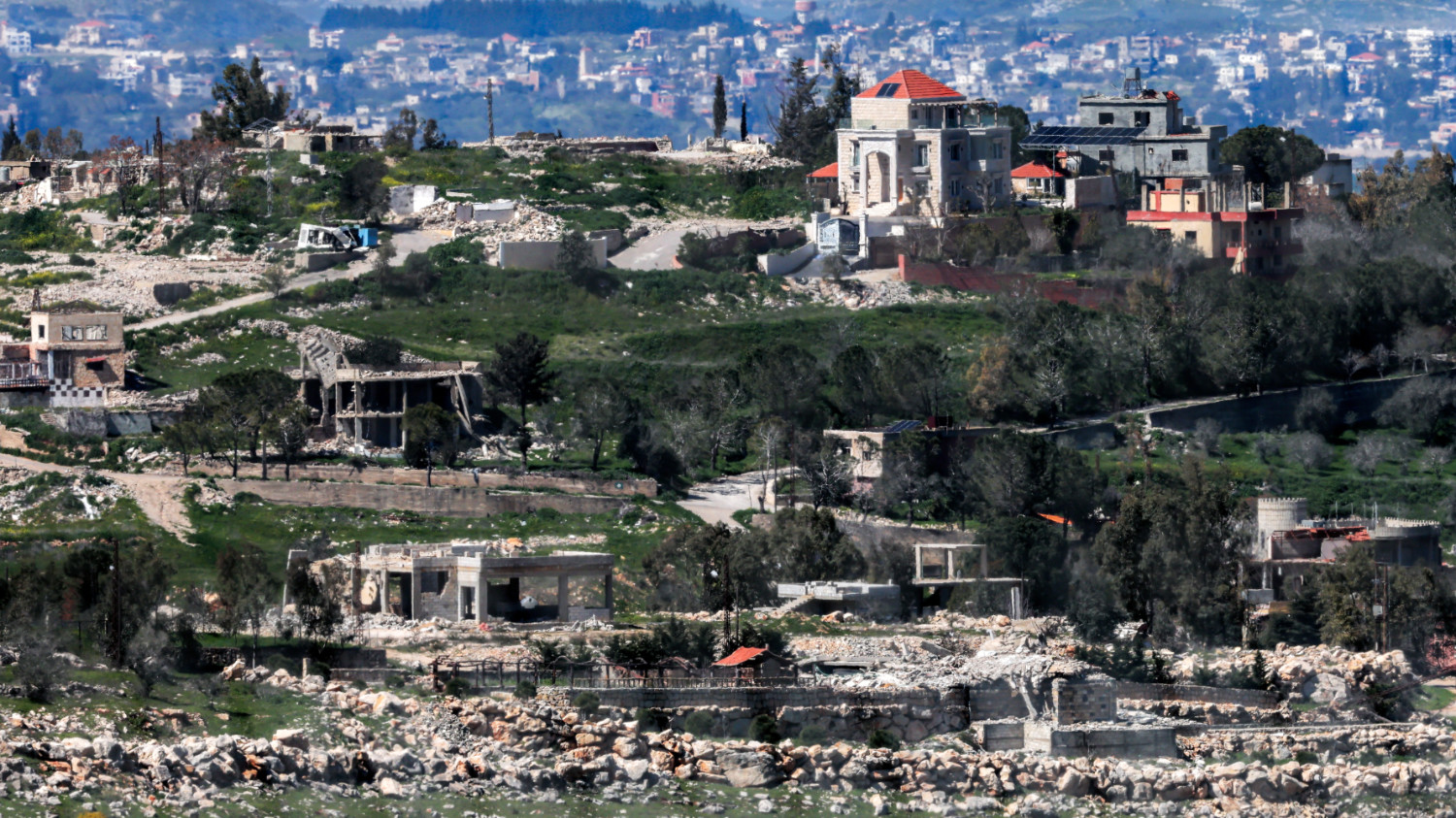
    Expressing particular concern for Lebanon’s deteriorating humanitarian situation, Pope Leo emphasized his spiritual closeness to families affected by attacks on schools, hospitals, and residential centers. The Vatican maintains special concern for Christian communities in southern Lebanon, historically significant as cultural strongholds within the predominantly Muslim region.

    While maintaining the Holy See’s traditional diplomatic neutrality through two weeks of measured appeals for dialogue, the pope’s latest remarks represent a significant escalation in diplomatic pressure. His rhetorical shift contrasts with earlier attempts to avoid direct confrontation with U.S. President Donald Trump’s administration.

    This measured approach hasn’t been uniformly adopted within Vatican leadership. Cardinal Robert McElroy of Washington denounced the conflict as “morally unjustifiable,” while Chicago’s Cardinal Blase Cupich condemned White House social media strategies incorporating video game imagery as “sickening.” Vatican Secretary of State Cardinal Pietro Parolin explicitly rejected Washington’s “preventive war” justification while affirming continued diplomatic engagement with all parties, stating: “The Holy See speaks with everyone, including Americans and Israelis, presenting what we believe are viable solutions.”