作者: admin

  • Israel says to partially reopen Rafah Crossing on Wednesday

    Israel says to partially reopen Rafah Crossing on Wednesday

    Israeli authorities have confirmed the partial reopening of the Rafah border crossing, a critical transit point for Gaza’s population, following an extensive security evaluation. The Coordinator of Government Activities in the Territories (COGAT) declared Sunday that the crossing would resume limited operations this Wednesday.

    The reactivated crossing will facilitate bidirectional movement exclusively for individuals, with stringent security protocols remaining in effect. COGAT emphasized that the decision followed comprehensive threat assessment and examination of operational conditions, noting that necessary security restrictions would persist due to ongoing regional threats.

    Crossing operations will be conducted through trilateral coordination involving Egyptian authorities, Israeli security approval mechanisms, and supervision by European Union monitoring personnel. This arrangement aims to balance humanitarian access with security imperatives.

    The Rafah crossing had been shuttered since February 28th following joint US-Israeli military actions against Iranian targets. Israeli forces initially assumed control of the strategic border point in May 2024, severing Gaza’s primary connection to the outside world and intensifying humanitarian challenges. A brief resumption of operations occurred February 2nd under the ceasefire agreement that took effect October 10, 2025, before the recent closure.

    Situated at Gaza’s southern extremity, Rafah represents the territory’s sole non-Israeli controlled border crossing, making its operational status particularly significant for civilian movement and aid delivery.

  • Authorities intensify crackdown on counterfeit goods

    Authorities intensify crackdown on counterfeit goods

    In a significant move preceding the 44th World Consumer Rights Day, China’s judicial and market regulatory authorities have launched coordinated efforts to combat counterfeit and substandard goods nationwide. The Supreme People’s Procuratorate (SPP) and Supreme People’s Court (SPC) have released landmark case studies demonstrating their intensified approach to protecting consumer rights and punishing offenders involved in production and distribution of fraudulent products.

    Prosecutorial data reveals substantial enforcement actions throughout 2025, with nationwide organs approving arrests of 5,745 suspects involved in counterfeit goods operations while prosecuting 18,376 individuals. Food and drug safety received particular emphasis, with prosecutors bringing charges in 5,026 food-related criminal cases involving 9,595 people and 2,135 drug-related cases involving 4,043 individuals.

    One illustrative case from Jiangsu province involved a criminal enterprise that established two companies between 2021-2023 to produce and distribute snacks containing illegal additives with laxative effects. The operation distributed products through e-commerce platforms to over 20 provincial regions, generating approximately 26 million yuan ($3.77 million) in sales. In March 2025, three primary perpetrators received prison sentences ranging from 5.5 to 11.5 years alongside substantial financial penalties.

    The SPP has committed to tracing complete upstream and downstream supply chains of counterfeit operations, dismantling criminal networks through enhanced inter-agency coordination and improved administrative-criminal justice linkages. Simultaneously, the SPC released typical consumer protection cases, including one where courts upheld punitive damages equal to ten times the purchase price against a merchant selling weight-loss products containing prohibited ingredients after the associated company had lost its business license over a decade prior.

    Concurrently, the State Administration for Market Regulation and Ministry of Public Security have initiated a specialized nationwide campaign targeting fraud in traditional crafts markets. This initiative addresses widespread misconduct including forged inspection certificates,虚假 marketing schemes, counterfeit institutions, and inferior products misrepresented as premium goods in sectors such as jewelry, precious metals, and rosewood artifacts.

    Judicial authorities emphasize that creating a safe, fair, and trustworthy consumption environment remains a priority, with continued focus on emerging challenges in online commerce, new business sectors, and food and drug safety through timely judicial interpretations and standardized development protocols.

  • Expansion of elderly care robots mooted

    Expansion of elderly care robots mooted

    Chinese policymakers are championing robotic technology as a transformative solution to the nation’s escalating elderly care challenges. During the recent Two Sessions political gatherings, national legislators and political advisors emphasized the urgent need for technological innovation to compensate for severe nursing labor shortages.

    Professor Zhao Xiaoguang, member of the Chinese People’s Political Consultative Conference National Committee, articulated the vision: “As China progresses into moderate aging, we anticipate robots becoming the cornerstone of elderly care infrastructure. They will address critical gaps in nursing labor while mitigating issues like caregiver impatience and attention deficiency.”

    The proposed humanoid robots, featuring advanced joint flexibility and problem-solving capabilities, are designed to perform physically demanding tasks including patient transfers between beds and wheelchairs, feeding assistance requiring sustained patience, and providing emotional companionship through storytelling services.

    While China currently leads global humanoid robot development in key technologies and performance metrics, large-scale implementation remains exploratory worldwide. Unlike industrial robots with seven decades of evolution, humanoid robotics have accelerated rapidly through AI large model advancements, yet face significant hurdles in technical maturity, social acceptance, liability frameworks, and privacy security.

    Academician Lu Jianhua of the Chinese Academy of Sciences emphasized the complementary role of robotics: “Elderly care robots should function as partners to human caregivers rather than replacements.” Current institutional implementations remain limited to basic functions, requiring substantial upgrades to achieve their potential.

    Medical expert Chen Wei advocated for an “AI + human” hybrid model to ensure dignified end-of-life care, urging increased R&D investment toward elderly-specific robotics and smart home technologies. Chen additionally proposed government policies to enhance affordability through price reduction mechanisms and standardized age-friendly technological guidelines.

    The urgency stems from demographic data revealing China’s 323 million citizens aged 60+ (23% of population) in 2025, projected to exceed 400 million (30+%) by 2035. In response, both the Government Work Report and 15th Five-Year Plan outline proactive aging strategies emphasizing expanded inclusive elderly services and industry integration, supported by intelligent service systems and assistive equipment across nursing institutions, households, communities, and medical facilities.

  • Starmer talks to Trump on importance of reopening of Strait of Hormuz

    Starmer talks to Trump on importance of reopening of Strait of Hormuz

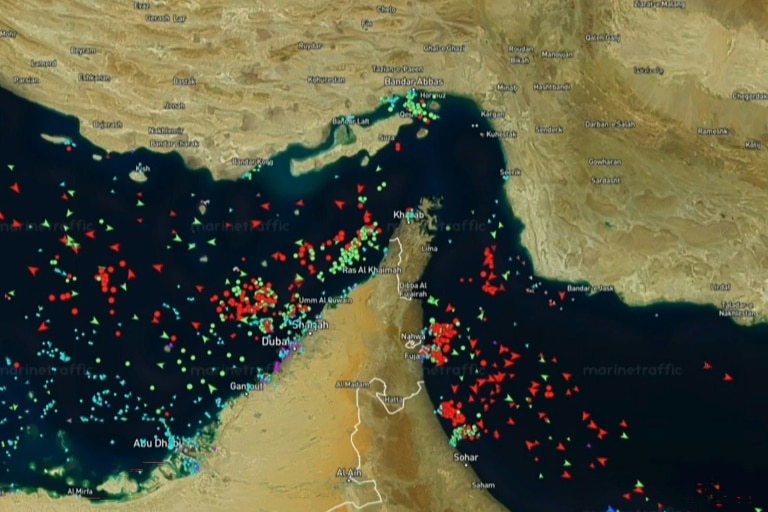
    British Prime Minister Keir Starmer engaged in a critical telephone discussion with US President Donald Trump on Sunday evening, addressing the escalating Middle Eastern crisis and its severe repercussions on global maritime commerce following the closure of the Strait of Hormuz.

    According to an official statement from 10 Downing Street, Prime Minister Starmer emphasized the urgent necessity of restoring access to the strategic maritime corridor to normalize shipping operations and mitigate spiraling global economic costs. Both leaders committed to maintaining close coordination as regional developments unfold.

    The dialogue follows earlier comments from British Energy Secretary Ed Miliband, who identified conflict resolution as the most definitive solution to reopening the vital waterway. Miliband warned that the ongoing closure—affecting approximately 20% of global oil transit—is already inflicting substantial damage on the world economy, evidenced by sharp increases in oil and gas prices.

    President Trump had previously announced on social media that multiple nations were preparing naval deployments to secure the strait, though specific details remained undisclosed.

    The current crisis originated from February 28th joint Israeli-American operations against Iranian targets, which resulted in the death of Supreme Leader Ali Khamenei, numerous military officials, and over 1,300 civilians. Iran retaliated with extensive missile and drone attacks against US and Israeli installations throughout the region.

    Now entering its third week, the conflict has effectively shut down one of the world’s most critical energy corridors, with new Iranian leadership under Mojtaba Khamenei vowing to maintain control over the strategic waterway as the economic consequences continue to mount globally.

  • Leukemia therapy tackles relapse risks

    Leukemia therapy tackles relapse risks

    Chinese researchers have pioneered a groundbreaking biomimetic platform that significantly enhances the effectiveness of CAR-T therapy for leukemia patients. This innovative approach, described as ‘molecular double-sided tape,’ addresses the critical challenge of cancer relapse that affects over 50% of patients following conventional treatment.

    The technology, detailed in the prestigious journal Cell, centers on the discovery that CD71—a protein responsible for iron transport—shows consistently high expression across various leukemia types and disease stages. Leveraging this biological feature, scientists from the Chinese Academy of Sciences’ Institute of Process Engineering developed the Ferritin Aggregation Cell Engager (FACE) platform through precisely controlled solvent-induced self-assembly.

    Unlike traditional methods that require complex genetic reengineering of CAR-T cells, the FACE platform integrates seamlessly with existing treatment protocols. During the 30-minute preparation phase, FACE anchors to CAR-T cells via CD71 receptors. Upon administration, it simultaneously attaches to leukemia cells, creating a reinforced connection that dramatically improves cancer cell recognition and elimination.

    In preclinical trials using patient-derived leukemia models, the technology demonstrated remarkable efficacy. The FACE-enhanced therapy achieved equivalent therapeutic outcomes using only 20% of the conventional CAR-T cell dosage while substantially reducing adverse effects. Most notably, the platform remained effective even when cancer antigens dropped below 10% of normal levels—a condition that typically renders leukemia cells undetectable to standard CAR-T cells.

    The researchers further advanced the technology by developing a drug-loaded variant that delivers chemotherapy directly to cancer cells. This combined approach proves particularly effective against antigen-negative escapees that commonly evade conventional treatments.

    Professor Wei Wei, corresponding author of the study, emphasized the clinical advantages: ‘Our FACE platform utilizes endogenous proteins and FDA-approved polymer derivatives, manufactured through a simple, scalable process. It integrates seamlessly into existing CAR-T workflows without additional genetic engineering.’

    The technology has been validated across multiple leukemia subtypes and treatment-resistant scenarios using both mouse models and human patient samples. The research team has additionally established an efficacy database and AI-powered predictive framework to support clinical translation and treatment optimization.

    Peer reviewers at Cell have endorsed the approach as ‘a promising translational strategy’ with potential applications across various blood cancers, highlighting its adaptability to diverse clinical settings and capacity to address leukemia antigen variability.

  • Thailand elects new House speaker

    Thailand elects new House speaker

    Thailand’s political landscape witnessed a significant milestone on Sunday as the House of Representatives elected Sophon Saram as its new speaker, marking the inaugural step toward establishing a new government. The Bhumjaithai Party parliamentarian secured the position with an overwhelming 289 votes, defeating his rival Parit Wacharasindhu from the People’s Party, who garnered 123 votes.

    Sophon Saram brings extensive governmental experience to his new role, having previously served as transport minister, deputy prime minister, and chairman of multiple parliamentary committees. In his inaugural address, the newly elected speaker outlined his vision for a proactive legislative body committed to modernizing obsolete laws, strengthening executive oversight, and rebuilding public confidence in Thailand’s political institutions.

    The election process featured both candidates presenting their governance philosophies before representatives proceeded with an anonymous ballot. The Bhumjaithai Party further consolidated its parliamentary influence with Mallika Jiraphanwanich elected unopposed as first deputy speaker, while Lertsak Phattanachaiyakul of the Pheu Thai Party assumed the position of second deputy speaker.

    This leadership selection represents a critical assessment of coalition stability, with the ruling alliance reportedly commanding approximately 291 seats in the 27th House of Representatives. Bhumjaithai Party leader Anutin Charnvirakul confirmed the coalition’s numerical strength to effectively manage both legislative affairs and national administration.

    Political analysts emphasize that the speaker’s primary responsibility will involve orchestrating parliamentary procedures and convening the prime ministerial vote scheduled for Thursday. A seamless transition is anticipated to signal political stability, potentially reducing investment risks and enhancing business confidence.

    Meanwhile, experts warn that the incoming administration must navigate complex challenges including geopolitical tensions, trade conflicts, and rapid technological transformation. Thailand Development Research Institute President Somkiat Tangkitvanich identified additional domestic constraints such as sluggish economic growth, demographic aging, and systemic corruption.

    The tourism sector specifically requires policy consistency, according to Tourism Council of Thailand President Chai Arunanondchai, who noted four different ministers had overseen the industry in the past year alone. Stable governance is considered essential for restoring the tourism sector’s growth trajectory amid global economic uncertainties.

  • Innovation elevates gold exploration

    Innovation elevates gold exploration

    A 30-meter drilling rig stands prominently against the agricultural landscape of Wuchengdaren village in Laizhou, Shandong province, signaling a technological revolution in mineral exploration. This sophisticated apparatus represents the vanguard of China’s ambitious campaign to probe nearly 3 kilometers beneath the Earth’s surface in search of new gold deposits, with core samples expected within six months.

    The Shandong Provincial Bureau of Geology and Mineral Resources has initiated a comprehensive exploration program comprising 36 separate projects with a total investment of 76 million yuan ($11 million). This strategic effort aims to augment gold reserves in the Jiaodong peninsula by 20 to 50 metric tons within a single year—a significant undertaking given that the region already contains approximately one-quarter of China’s proven gold reserves, ranking it as the world’s third-largest gold district.

    After centuries of extensive mining that exhausted surface and shallow deposits, the bureau has pioneered advanced drilling technologies capable of reaching unprecedented depths. While previous exploration typically stopped at 2,000 meters, the organization now leads 83% of China’s scientific drilling projects exceeding 3,000 meters. Their expertise was demonstrated recently when they established a new global record by achieving full core extraction at 2,843.17 meters during marine scientific drilling operations.

    The technological transformation extends beyond mere depth penetration. Modern prospecting begins months before drilling commences, integrating sophisticated geological research with physical detection methods including electrical and magnetic surveys, complemented by chemical analysis. This multi-faceted approach identifies subsurface anomaly zones with remarkable precision.

    “We’re fundamentally changing how gold exploration operates,” explained Ma Xiaopeng, deputy director of the exploration engineering division at the bureau’s No. 6 geological team. “Through targeted drilling based on comprehensive data analysis, we can progressively narrow our search parameters. Subsequent laboratory analysis of extracted cores provides critical information about ore body conditions, grade quality, and depth positioning.”

    Innovation continues with the adaptation of 2D reflection seismic technology—traditionally land-based—for marine exploration in Laizhou Bay. The most significant advancement, however, comes through digital integration. The bureau is developing comprehensive models that synthesize geological, geophysical, geochemical, and drilling data with artificial intelligence capabilities.

    “We’re transitioning gold prospecting from experience-driven operations to intelligence-driven models,” stated Zhang Chengwei, Party secretary and director of the provincial bureau. This shift aligns with Shandong’s implementation plan for high-quality development of the gold industry (2025-2027), jointly issued by ten provincial departments, which specifically emphasizes deep exploration in the Jiaodong region.

    The intensified exploration occurs against a backdrop of evolving gold demand dynamics in China. Recent market analysis reveals that demand for gold bars and coins surpassed gold jewelry for the first time last year, while industrial applications—particularly in electronics and renewable energy sectors—show steadily increasing consumption patterns.

    “Ensuring national resource and energy security remains the paramount responsibility of our geological and mineral system,” Zhang emphasized, underscoring the strategic importance of these technological advancements for China’s broader economic and security objectives.

  • Gulf bases targeted as US hits Iran’s oil hub

    Gulf bases targeted as US hits Iran’s oil hub

    The strategic Persian Gulf region has become the epicenter of intensifying military confrontations as US forces launched targeted strikes on Iran’s critical oil infrastructure. The attacks focused on Kharg Island, a vital petroleum export terminal handling approximately 90% of Iran’s crude oil shipments, marking a significant escalation in the ongoing conflict between Iran, the United States, and Israel.

    According to military reports, American forces conducted precision strikes against more than 90 Iranian military targets on the small coral island located 30 kilometers off Iran’s southwestern coast. The assault represents a dangerous new phase in the three-week conflict that shows no signs of de-escalation despite international concerns.

    Iranian Foreign Minister Seyed Abbas Araghchi confirmed the attacks originated from two locations within the United Arab Emirates, characterizing the situation as “extremely dangerous.” Iranian authorities have subsequently designated three major UAE ports as “legitimate targets” and urged civilian evacuations from these areas.

    Gulf Arab states find themselves increasingly embroiled in a conflict they neither initiated nor endorsed, with Bahrain, Saudi Arabia, and the UAE all activating defense systems to intercept incoming projectiles. Debris from an intercepted Iranian drone struck an oil facility at Fujairah Port, producing plumes of thick black smoke visible in television footage.

    Behind the diplomatic scenes, resentment is mounting among Gulf Cooperation Council members who are bearing unexpected economic and security costs. Anwar Gargash, diplomatic adviser to the UAE president, emphasized his nation’s commitment to “reason and de-escalation” while maintaining the right to self-defense.

    The conflict has expanded to include allegations of false-flag operations, with Iran’s joint military command accusing the US and Israel of using replica Iranian drones to attack neighboring countries and shift blame to Tehran. The Revolutionary Guards separately vowed to hunt down Israeli Prime Minister Benjamin Netanyahu, promising to “track down and eliminate him with all our strength.”

    As the strategic Strait of Hormuz remains virtually blocked by the threat of Iranian attacks, Washington has called for international naval assistance to protect global oil supplies. Meanwhile, diplomatic efforts continue, with Iran’s Araghchi urging other nations to “refrain from any action that could lead to escalation and expansion of the conflict” during discussions with French Foreign Minister Jean-Noel Barrot.

    Despite the extensive attacks, Iranian officials maintain that oil exports from Kharg Island continue normally, though independent verification remains challenging amid the ongoing hostilities.

  • War in the Middle East: latest developments

    War in the Middle East: latest developments

    The Middle East conflict escalated dramatically on Monday with a series of significant military and geopolitical developments. Explosions rocked central Tehran as Iranian air defense systems activated, though the specific targets remained unclear. This occurred shortly after Israel confirmed conducting large-scale overnight strikes.

    In southern Lebanon, the Israeli Defense Forces initiated what they described as “limited ground operations” against Hezbollah strongholds, aiming to enhance their forward defense perimeter.

    The United Arab Emirates faced multiple security incidents. Dubai International Airport gradually resumed operations following a suspension caused by a drone-related fuel tank fire nearby. Simultaneously, the Emirati defense ministry reported intercepting waves of Iranian drones and missiles. Separate attacks targeted the Fujairah oil industry zone and the outskirts of Abu Dhabi, where a Palestinian civilian was killed by a missile strike.

    Global energy markets reacted strongly, with Brent Crude oil prices surging 3% to $106.50 per barrel amid the heightened tensions.

    Diplomatic efforts intensified as EU foreign ministers considered extending their Red Sea naval mission to the strategically vital Strait of Hormuz. U.S. President Donald Trump pressured NATO allies and China to contribute to securing the oil transport conduit, warning of a “very bad” future for the alliance if they failed to assist. However, both Japan and Australia subsequently ruled out naval deployments to the region.

    Despite the escalating conflict, the Iranian men’s football team maintained plans to participate in the upcoming World Cup in North America, according to Asian Football Confederation officials.

    Iranian Foreign Minister Abbas Araghchi condemned Israeli strikes on Tehran fuel depots as “ecocide,” citing long-term health risks to residents. While Trump claimed the U.S. was in discussions with Iran, Tehran denied any ongoing talks between the nations.

  • China launches new remote sensing satellite

    China launches new remote sensing satellite

    China has achieved another milestone in its space exploration program with the successful deployment of the Yaogan-50 02 remote sensing satellite. The launch occurred at precisely 9:22 PM on Sunday from the Taiyuan Satellite Launch Center, located in Shanxi Province of northern China.

    The advanced satellite was propelled into orbit using an enhanced Long March-6 carrier rocket, marking a significant accomplishment in China’s aerospace capabilities. Mission control confirmed that the satellite successfully reached its predetermined orbital path, with all systems functioning optimally.

    This newly deployed satellite represents China’s growing expertise in Earth observation technology, with specialized applications in terrestrial mapping, agricultural productivity assessment, and disaster management operations. The sophisticated imaging and data collection systems aboard the Yaogan-50 02 will provide critical information for environmental monitoring and emergency response coordination.

    The mission holds particular significance as it constitutes the 633rd flight operation within the Long March rocket family, demonstrating China’s consistent progress in space technology and launch reliability. This achievement reinforces China’s position as a major participant in the global space community, with continuously expanding capabilities in satellite deployment and Earth observation infrastructure.