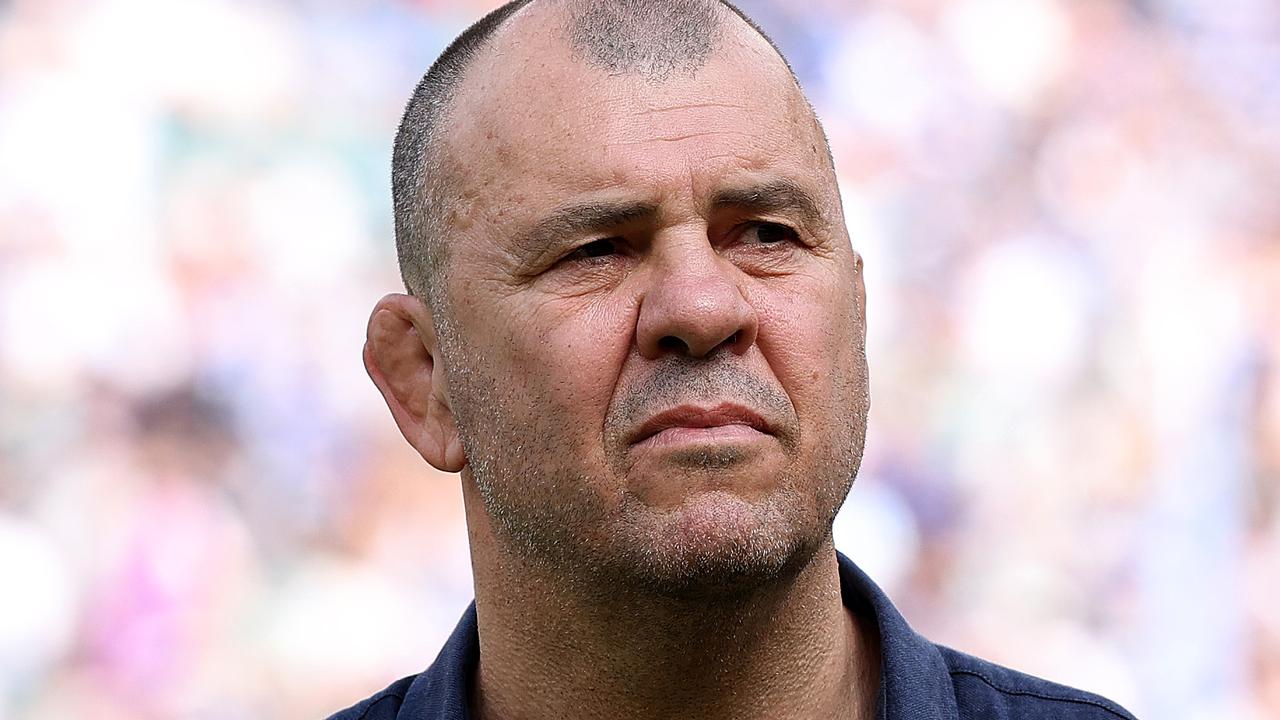
As the St. George Illawarra Dragons search for a permanent replacement for outgoing head coach Shane Flanagan ahead of next season, a high-profile cross-code candidate has received a glowing endorsement from one of the NRL’s most respected club leaders. \n\nTrent Robinson, the long-serving Sydney Roosters head coach, has publicly backed former dual-code international rugby union coach Michael Cheika, confirming the 59-year-old possesses every quality needed to succeed as an NRL head coach — and argued that club CEOs and chairmen simply need to take a chance on him.\n\nCheika’s name has repeatedly circulated as a candidate for NRL head coaching vacancies over the past several years, but the decorated mentor has never been given an opportunity to lead a top-flight NRL side, despite a stellar track record across global rugby union. His resume includes head coaching roles with the Australian Wallabies, Argentina’s Pumas, and the Lebanese rugby league international side, a resume that has kept him on the radar for NRL clubs seeking fresh leadership.\n\nCheika already has deep ties to the Roosters organization: he first joined the club as a consultant back in 2020, and has recently returned to the NRL premiership contenders in a specialist role working with the club’s forward pack. That working experience has given Robinson a first-hand look at what Cheika would bring to any NRL head coaching role.\n\nWhen asked whether NRL clubs would be willing to hire a coach with a primarily rugby union background, Robinson redirected the question to the decision-makers at the top of clubs, but left no doubt about Cheika’s credentials. “He’s a head coach, that’s pretty clear, and he always has been,” Robinson told reporters. “Whenever that comes up, he’ll be a head coach in the future somewhere pretty quickly, so he’ll be ready to go.”\n\nRobinson added that Cheika’s work with the Roosters forwards has been a major boost to the squad, noting that while Cheika continues to familiarize himself with the specific nuances of NRL play, his decades of elite coaching experience have already added immense value to the club. “He works with the forwards a lot and he’s worked really well with that crew. Building that mindset along with the skill set, he’s learning at the same time around the nuances of the game, but the mindset he’s had for a long time, so he’s been a good value add,” Robinson said.\n\nBeyond Cheika, Robinson also praised another product of the Roosters’ coaching pathway: club legend and former NSW captain Boyd Cordner, who recently stepped into a new role as assistant coach for the NSW Blues State of Origin side. Cordner replaced outgoing Dean Young, who stepped up to serve as the Dragons’ interim head coach following Flanagan’s departure announcement.\n\nCordner has already built a strong coaching resume through his work leading the Roosters’ SG Ball Cup youth side, and Robinson said the former premiership-winning forward has all the tools to become a top-level head coach in the future. “He is a great coach. He will be a great coach. And it’s a good step towards his future,” Robinson said. “(He’s got a) deep knowledge of rugby league, so he knows the nuances of the game. He knows how the game should be played, and then he’s got the ability to communicate that. So it’s Boydo’s choice that if he wants to go down that line, then he can, and he’s obviously doing it in part-time roles. But Boyd is and will be a very good coach.”\n\nLooking ahead to the Roosters’ upcoming Anzac Day clash against the Dragons, Robinson said his side is focused on preparing for their opponents rather than being distracted by the Dragons’ ongoing off-field coaching saga. The biggest talking point for the match is the NRL debut of Dragons rookie halfback Kade Reed, who is expected to be a primary target for the Roosters’ aggressive defensive line.\n\nRobinson confirmed that the Roosters have done their full scouting work on Reed, noting that while the young half is making his first NRL appearance, he has extensive experience through the junior and reserve grade pathways. When asked about the strategy of targeting debutant playmakers, Robinson said modern NRL requires all 13 players to step up physically, regardless of position or experience.\n\n“That’s the game, that will always be a part of it. But it won’t just be him,” Robinson said, also confirming Roosters centre Billy Smith will not return to the side for this week’s clash. “The game used to be played where years ago, they (smaller halves) used to play second line (defence) and they used to slot in on the far side of where the defensive lines were or where the ball was and move around. That’s not the case anymore. You need 13 guys aiming up and it’s a physical game.”\n\nRobinson added that the Roosters’ preparation for the match has centered on reviewing their own recent performance and locking in their game plan, rather than making drastic adjustments to target Reed. “Our most important preview for this game was our review, and that’s the things that we want to do and the things that we want to improve on,” he said. “You don’t change direction, but our style of game can double down on some of those areas that we want to attack. We’ve done our work as we do each week, no more than any other player that we face each week. But we’re really clear on the way that he plays the game and what he’ll bring to them, and then also what we need to do. He’s played a lot of footy, and we’ve watched him play a lot of footy. He just hasn’t played NRL yet. He’s played a trial, but he’s played a lot of reserve grade and he’s come through the grades, so as long as you do your work, you know the player.”
作者: admin
-

Raiders take Mendoza with first pick of NFL Draft
The 2026 NFL Draft opened its three-day selection process in dramatic fashion Thursday outside Pittsburgh Steelers’ home stadium, drawing a record crowd of 320,000 fans to the outdoor event, where the Las Vegas Raiders landed highly touted college football star Fernando Mendoza with the first overall pick.
The 22-year-old quarterback was a near-unanimous favorite to claim the top selection after a historic 2025 college season, where he led Indiana to its first ever national championship and claimed the Heisman Trophy. With the selection, Mendoza becomes just the third player in NFL history to earn a Heisman Trophy, a national title, and the first overall draft pick in the same calendar year, joining elite company that includes Cam Newton (2011) and Joe Burrow (2020).
In a break from draft tradition, Mendoza skipped the iconic red carpet walk and opening ceremony in Pittsburgh to share the life-changing moment with his family at his Miami home. In a playful, modern twist on the draft declaration process, the business graduate had previously announced his entry to the draft by updating his LinkedIn status to “Open to Work” — and he refreshed the profile less than 60 minutes after receiving the iconic call from Raiders management to confirm his selection.
The franchise’s minority owner, seven-time Super Bowl champion Tom Brady, who is also Mendoza’s childhood idol, was quick to welcome the rookie to Las Vegas. Posting on social platform X shortly after the pick, Brady wrote: “Welcome to Las Vegas. Time to get to work.” Mendoza, who will join veteran quarterbacks Kirk Cousins and 2023 first-round selection Aidan O’Connell in the Raiders’ quarterback room, noted ahead of the draft that Brady has already committed to mentoring the team’s new signal-caller. “He has mentioned that whatever quarterback they select… he is going to pour into them and give them advice,” Mendoza said. “I’m really looking forward to that.”
While Mendoza’s selection was widely expected, the first round of the 2026 draft was defined by unexpected picks, strategic trades, and heartwarming personal stories from across the league. Analysts had widely labeled the defensive front as the deepest position group in this year’s draft class, and the New York Jets lived up to pre-draft projections by selecting star pass rusher David Bailey with the second overall pick. The next two selections swung back to offense: the Arizona Cardinals took dynamic running back Jeremiyah Love at third, before the Tennessee Titans turned heads with a surprise fourth-round pick of wide receiver Carnell Tate, who appeared just as shocked as fans and analysts by the early selection.
The New York Giants held two of the first 10 selections, and used the picks to shore up both sides of the ball, selecting pass rusher Arvell Reese at fifth and offensive tackle Francis Mauigoa at 10. The 20-year-old Mauigoa, who grew up in American Samoa, paid tribute to his roots with a custom collage of his homeland printed on the back of his draft suit. “I never thought I’d be here,” he said after the pick. “If I can do it, you can do it.”
The Kansas City Chiefs, who missed the playoffs for the first time since 2014 this past season and are in the midst of a roster rebuild, pulled off one of the first major trades of the night, moving up from the ninth selection to sixth to land coveted cornerback Mansoor Delane. “They weren’t really on me too much in this process,” Delane said after the pick. “But they said they just wanted to keep it quiet and make that sneaky move, and they made the best move of the draft so I’m excited.”
Multiple other teams climbed the draft board to target priority prospects: the Dallas Cowboys moved up one spot to select star safety Caleb Downs at 11, while the Los Angeles Rams pulled off the most controversial surprise of the first round by selecting former Alabama quarterback Ty Simpson at 13. Simpson had been projected as a possible first-round pick, but few analysts expected him to be taken as early as the 13th overall selection, after only 15 career college starts. The Rams’ selection has sparked widespread speculation that the team is planning for life after veteran starting quarterback Matthew Stafford, the 2025 league MVP who turned 38 in February and has only committed to one additional season with the franchise.
BBC Radio analyst Rob Staton noted that the Rams’ move hints at a long-term plan that was put in motion a full year ago, when the team traded with Atlanta to acquire the 13th overall pick. “There’d been little expectation that the Alabama quarterback would go that high, given he only started 15 games in college,” Staton explained. “You can’t help but wonder if the Rams, when making that trade a year ago, did so with a plan for the future at quarterback in mind. He does have some excellent throws on tape and he clearly has natural talent, yet his inexperience showed up when he started to feel pressure in the second half of last season. It’ll help that Simpson is working with a head coach like Sean McVay, but there’s no substitute for game experience.”
Elsewhere in the first round, the Philadelphia Eagles pulled off a last-minute trade to jump in front of the host Pittsburgh Steelers and select wide receiver Makai Lemon at 20th overall. The Steelers responded by selecting Nigerian-born offensive tackle Max Iheanachor, who moved to the United States at age 13. First-round picks featured many legacy prospects as well: Washington Commanders selected pass rusher Sonny Styles, the 21-year-old son of Super Bowl-winning linebacker Lorenzo Styles Sr., whose older brother Lorenzo Jr. is also expected to be selected later in the draft. “He’s my best friend, my inspiration,” Sonny Styles said. “We’ve dreamed about this since we were five years old so to see it all happen, we’re living out the dream, but it’s just the beginning.”
Day one of the draft saw eight total trades shake up the selection order, with six teams finishing the first round holding two selections, while the New York Jets ended up with three first-round picks after jumping back into the round to select wide receiver Omar Cooper Jr. The draft will continue Friday with rounds two and three, before concluding Saturday with rounds four through seven.
-
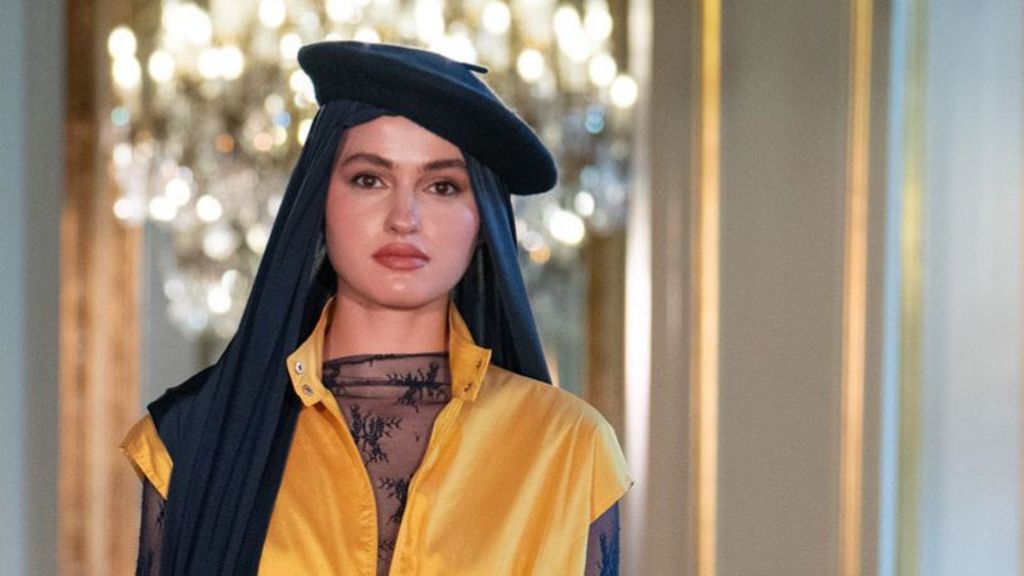
Headscarf with a beret: Muslim designers showcase floral dresses and boxy streetwear in Paris
Against the backdrop of longstanding debates over religious attire in French public life, Paris made history this week with its first-ever Modest Fashion Week, bringing together nearly 30 international designers specializing in loose, full-coverage garments and modest headwear. The event, held at the historic Hôtel Le Marois steps from the Champs-Élysées, showcases the rapidly expanding global modest fashion movement while challenging prevailing narratives around religious clothing in a country with strict secular policies.
Modest clothing, defined by designs that cover arms, legs, and often the hair, is most commonly worn by Muslim women adhering to religious modesty principles, but its appeal has expanded far beyond this demographic in recent years. For organizers, holding the groundbreaking event in France carried unique symbolic weight. France is home to an estimated 5 to 7.5 million Muslims, and Özlem Şahin, head of the organization behind Modest Fashion Week, calls Paris “one of the leading modest fashion capitals in Europe.”
Runway collections spanned a wide range of aesthetics, blending global cultural influences with contemporary design trends. Nature-inspired palettes dominated many presentations: Turkish label Miha founder Hicran Önal centered her collection on romantic themes, pairing fluid silhouettes with water-like teals, soft blues, and delicate floral pinks. Indonesian designer Nada Puspita offered a modern take on modest design with cleaner, more structured lines, while Australian brand Asiyam creator Aisa Hassan drew from warm, earthy natural tones—deep forest greens and autumnal reds—adding a nubby bucket hat as a nod to her Australian heritage. Hassan’s soft, flowing designs stood in stark contrast to the sporty streetwear aesthetic that has grown popular in modern modest fashion, a trend already embraced by global sportswear giants Nike and Adidas.
Local French brands brought a distinctly Parisian Gen Z edge to the event. Soutoura and Nour Turbans presented boxy, jewel-toned nylon streetwear silhouettes, with Nour Turbans making a striking cultural statement by styling a model’s headscarf beneath a classic French beret. Turkish swimwear label Mayovera showcased burkinis—full-coverage swimwear that leaves only the face, hands, and feet exposed—a garment currently banned from most French public swimming pools despite being permitted on public beaches.
The global modest fashion industry has expanded exponentially over the past decade, with research firm DinarStandard projecting global consumer spending on modest clothing will surpass $400 billion by 2025. While the segment initially launched to serve Muslim women, it has increasingly gained traction among other faith groups and secular shoppers seeking full-coverage, stylish clothing options.
For participating designers, the event represents far more than a fashion showcase—it is a milestone for inclusion in a country where religious clothing has faced decades of restrictions. France’s strict interpretation of secularism, known as laïcité, has banned religious symbols including hijabs in state-run schools for over 20 years, with abayas (loose full-length robes) added to the school ban in 2023. Public sector workers including teachers and civil servants are also prohibited from wearing visible religious attire.
Fatou Doucouré, founder and creative director of French label Soutoura, shared that she has long faced challenges related to wearing her hijab in France, but presenting her work at the Paris event left her feeling hopeful. “Exhibiting my designs in Paris made me feel that women who wear headscarves could take on any role in society,” she said. That sentiment was echoed by attendees, many of whom spoke to the BBC about the event’s transformative impact. One young attendee of Malian heritage, who has faced discrimination for wearing a hijab, said the historic event in central Paris filled her with joy and made her “never want to leave France.” Another attendee noted a visible shift in French culture: for the first time, her hijab no longer felt like the center of political debate, both at the event and on city streets, as people are starting to see her as more than her clothing.
-
EU unblocks funds as Ukraine presses for membership progress
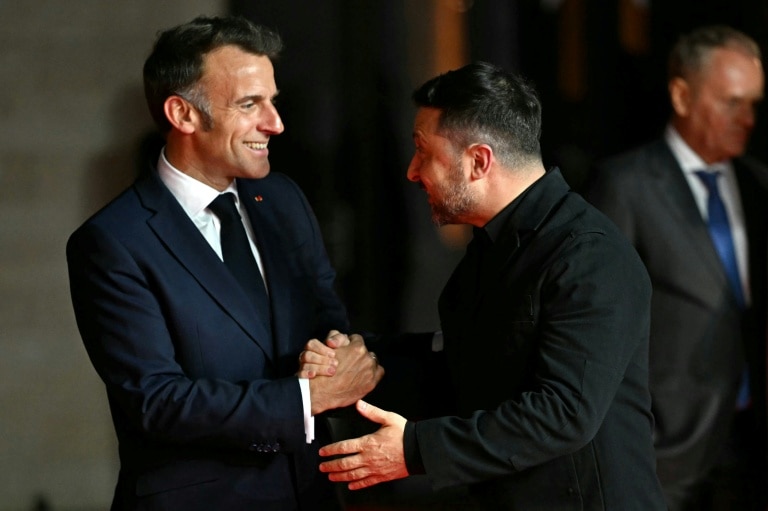
After months of diplomatic gridlock driven by Hungarian opposition, European Union leaders have formally given final approval to a €90 billion ($105 billion) aid package for Ukraine, paired with a new round of anti-Russia sanctions. The breakthrough comes as Ukrainian President Volodymyr Zelensky arrived in the Cypriot coastal resort of Ayia Napa for talks with EU leaders, where he immediately shifted the conversation to advancing Kyiv’s long-held ambition of full European Union membership.
Zelensky opened his remarks by expressing profound gratitude for the long-delayed financial support, noting that the funds would be critical to keeping Ukraine’s military equipped and sending a clear, unified message to Moscow that European backing for Kyiv remains unshaken. But speaking to reporters outside the seaside conference venue, the Ukrainian leader made clear that his priority now is moving accession talks forward, stating bluntly: “We will push everybody.” He added that his ultimate goal is securing full Ukrainian membership in the bloc by 2027.
The path to membership talks has recently cleared significantly, following the electoral defeat of Hungarian nationalist leader Viktor Orban earlier this month, who had spent months blocking progress on both the aid package and the opening of accession negotiating clusters. Orban, who skipped what would have been his final EU summit before leaving office, had wielded his veto over the €90 billion loan as leverage to force Ukraine to repair a pipeline damaged in a Russian strike. With repair work completed this week, Russian oil has resumed flowing through the pipeline to both Hungary and Slovakia, resolving the last sticking point for the aid package.
European Council President Antonio Costa, who represents the bloc’s 27 member states, signaled openness to moving forward, saying the EU must “look forward and prepare the next step”, which would include formally opening the first negotiating clusters for Ukraine’s accession. However, not all EU capitals are on board with accelerating the process. Several senior leaders have pushed back against a fast track, arguing that accession must follow a strict merit-based system that requires Ukraine to meet all membership criteria before advancing. “Fast tracks are not possible,” Belgian Prime Minister Bart De Wever said. Luxembourg Prime Minister Luc Frieden echoed that stance, noting that “you simply cannot become a member of a club without meeting the conditions.”
French President Emmanuel Macron declined to take a position on accelerated membership, but called on the EU executive branch to draft a clear timeline and outline next steps to be completed in the coming weeks. For his part, Zelensky has rejected calls for a lesser, symbolic membership status, reiterating that Ukraine will accept nothing less than full membership in the bloc. Zelensky also outlined plans for the aid, saying the €90 billion will go toward strengthening Ukraine’s military, expanding domestic air defense production, and shoring up the country’s damaged energy grid. He expects the first disbursement of funds to arrive by late May or early June at the latest.
Beyond Ukraine, the summit in Cyprus, which currently holds the rotating EU presidency, will tackle a range of pressing global and internal issues. EU leaders will turn their attention to the ongoing Middle East conflict and its economic fallout, which has driven sharp spikes in global energy prices. The island nation was drawn into the conflict in March when a drone struck a British military base located on Cypriot territory. On Friday, EU leaders will be joined by their counterparts from Lebanon, Egypt, Syria and Jordan for what a senior EU official described as “intensive dialogue” on regional stability.
A top economic priority for the bloc is addressing disruption to global energy supplies linked to tensions around the Strait of Hormuz. A de facto partial closure of the key shipping route has already pushed oil prices sharply higher and reduced jet fuel supplies across Europe. Leaders will also hold their first discussion on the EU’s 2028-2034 multi-year budget. The European Commission has proposed a expanded two trillion euro ($2.3 trillion) budget to account for new priorities including aid for Ukraine and defense spending, but many national governments have already pushed back against calls to increase their national contributions to the bloc.
-
US soldier charged after winning $400,000 betting on removal of Maduro
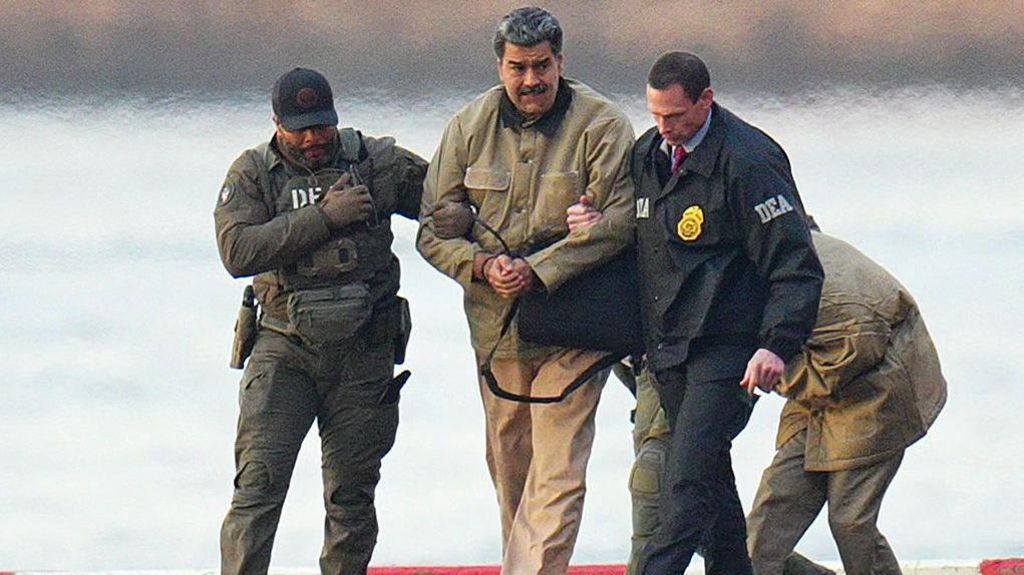
An active-duty U.S. Army special forces soldier has been arrested and charged by the Department of Justice for illegally trading on classified information about the military operation that captured former Venezuelan leader Nicolas Maduro, turning confidential mission details into hundreds of thousands of dollars in illegal profits, federal officials announced Thursday.
Gannon Ken Van Dyke, a soldier stationed at Fort Bragg, North Carolina, used nonpublic classified information about Operation Absolute Resolve — the codename for the night-time raid that seized Maduro and his wife Cilia Flores from their Caracas compound on January 3 — to place targeted bets on Polymarket, a cryptocurrency-based prediction platform, according to the unsealed indictment. Prosecutors allege that Van Dyke, who was involved in the planning and execution of the operation between December 2025 and January 2026, gained authorized access to highly sensitive mission details including the operation’s timing and expected outcome.
In late December 2025, Van Dyke created a Polymarket account and invested more than $33,000 across Venezuela and Maduro-related prediction markets, all with the explicit goal of personal financial gain, the DOJ said. When the operation concluded as planned, Van Dyke walked away with more than $409,000 in winnings from his insider trades.
Polymarket officials confirmed Thursday that after the platform detected suspicious activity tied to classified government information, it immediately referred the case to the Department of Justice and fully cooperated with the ongoing investigation. “Insider trading has no place on Polymarket. Today’s arrest is proof the system works,” the company said in a social media statement.
Van Dyke faces five separate federal charges: unlawful use of confidential government information for personal gain, theft of nonpublic government information, commodities fraud, wire fraud, and making an unlawful monetary transaction. As a member of the U.S. military granted access to classified information, Van Dyke had previously signed binding non-disclosure agreements promising he would never reveal or misuse any classified or sensitive operational information for any unauthorized purpose, DOJ officials noted.
“Our men and women in uniform are trusted with classified information in order to accomplish their mission as safely and effectively as possible, and are prohibited from using this highly sensitive information for personal financial gain,” said acting U.S. Attorney General Todd Blanche. “Widespread access to prediction markets is a relatively new phenomenon, but federal laws protecting national security information fully apply.”
U.S. Attorney Jay Clayton for the Southern District of New York — the judicial district where the case will be tried — echoed that sentiment, emphasizing that prediction markets do not qualify as safe havens for actors looking to profit from misappropriated confidential or classified information. The independent U.S. Commodity Futures Trading Commission also filed a separate civil complaint against Van Dyke on Thursday, bringing additional insider trading allegations against him.
The raid that captured Maduro transferred the former Venezuelan leader and his wife to New York, where they face ongoing charges of weapons trafficking and drug trafficking, allegations the pair have repeatedly denied.
During a press briefing on an unrelated matter Thursday, U.S. President Donald Trump told reporters he had not yet been briefed on the allegations against Van Dyke but would review the case. When asked about growing concerns that unregulated prediction markets create openings for widespread insider trading involving sensitive government information, Trump said he disapproved of the practice. “The whole world, unfortunately, has become somewhat of a casino, and you look at what’s going on all over the world, in Europe and every place, they’re doing these betting things,” he said. “I was never much in favour of it.”
-
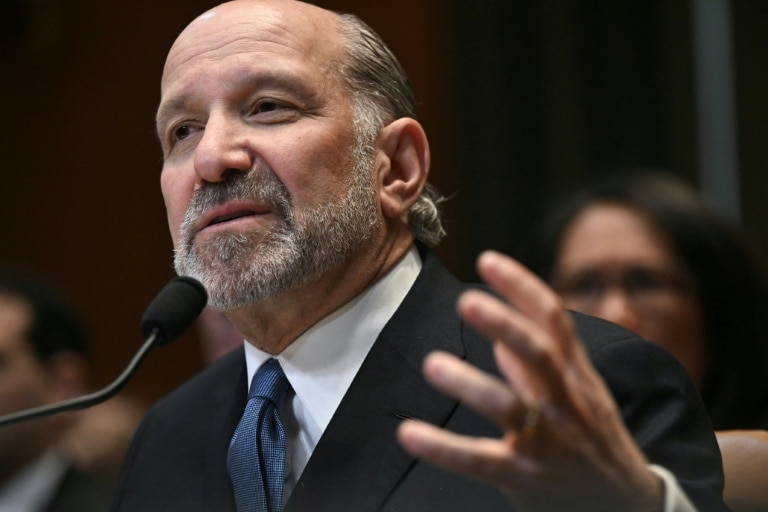
Trump ‘gold card’ visa granted to one person so far: US commerce chief
A high-profile immigration initiative launched by US President Donald Trump has marked its first formal approval, with only one applicant successfully clearing the process for the administration’s signature $1 million ‘gold card’ residency visa to date, the nation’s top commerce official told lawmakers this week.
US Commerce Secretary Howard Lutnick made the disclosure Thursday during a hearing before the US House of Representatives, updating Congress on the status of a program that has sparked intense debate since its unveiling last year. First ordered into creation by Trump in September 2024, the gold card scheme offers permanent US residency in exchange for a flat entry fee. It opened its application portal to prospective candidates in December 2024.
Beyond the single completed approval, Lutnick confirmed that hundreds of additional candidates are currently moving through the multi-stage review pipeline. All applicants face not just the steep financial cost, but also rigorous background screening. The program sets a $1 million fee for individual applicants, while corporate sponsorship of candidates carries a $2 million price tag. Applicants must also cover a separate $15,000 processing fee charged by the US Department of Homeland Security, and all submissions undergo what Lutnick described as ‘most serious vetting and analysis.’
The gold card program was paired with another Trump immigration policy: a new $100,000 annual fee added to the popular H-1B skilled worker visa program for foreign employees. When first announcing the initiative, Trump framed it as a measure that would attract high-impact job creators to the US while generating new revenue to help cut the federal national deficit.
The update on the gold card program comes amid broader shifts in US immigration policy under Trump’s second term. Since returning to the presidency in 2025, the administration has pushed for stricter immigration controls and carried out a series of large-scale, aggressive deportation raids across the country.
-
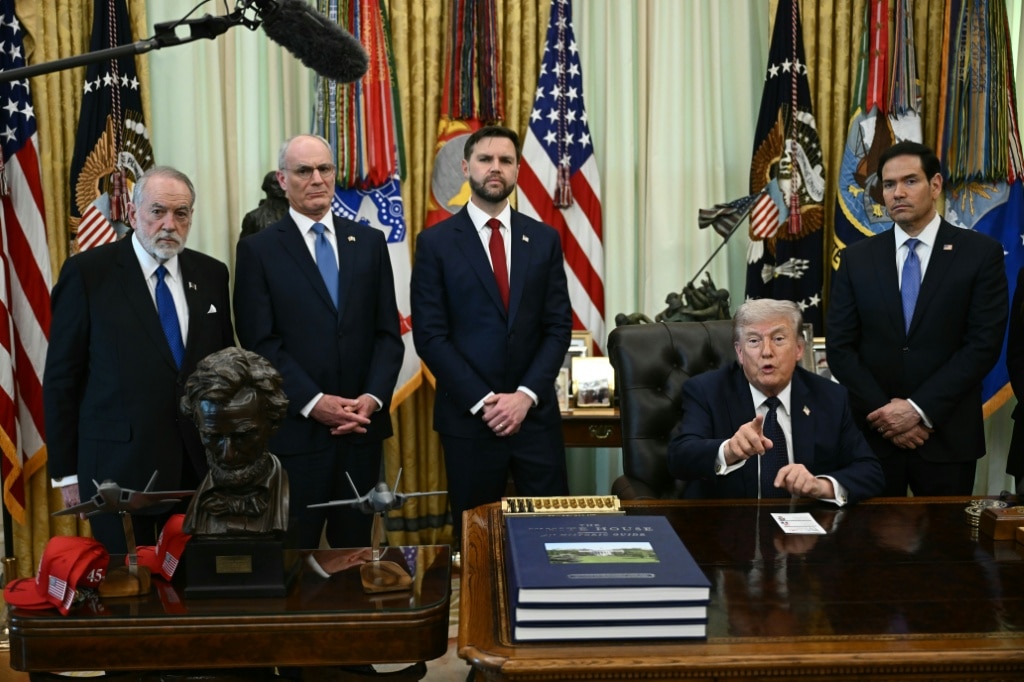
Israel, Lebanon extend ceasefire as Trump hopes for historic deal
In a development that keeps fragile peace hopes alive along the Israel-Lebanon border, US President Donald Trump announced Thursday that the two rival nations have agreed to extend their existing temporary ceasefire for an additional three weeks. The announcement came as the US leader laid out his vision for a landmark three-way summit at the White House to advance a potential full peace deal, even as fresh deadly exchanges of fire underscored the truce’s deep instability.
Speaking alongside Israeli and Lebanese ambassadors at the White House – the first high-level direct encounter between the two states, which have no formal diplomatic relations, since 1993 – Trump struck an optimistic tone about the prospect of ending decades of open conflict between the two nations. “I think there’s a very good chance of having peace. I think it should be an easy one,” he told reporters, adding that he expects Israeli Prime Minister Benjamin Netanyahu and Lebanese President Joseph Aoun to travel to Washington for talks during the newly extended truce window.
The original ceasefire was first agreed on April 14 following initial ambassador-level talks and was set to expire Sunday. Lebanese officials had previously pushed for a one-month extension, with Aoun demanding the truce explicitly include commitments to halt destruction of civilian infrastructure, and end attacks on civilians, places of worship, medical and education facilities, and journalists. The demand gained urgent traction after a Lebanese journalist, Amal Khalil, was killed in an Israeli strike in Lebanon Wednesday, with mourners holding a funeral procession for her in the southern Lebanese town of Bissariye this week.
The current round of open conflict between Israel and Hezbollah dates back to late February, when Israel launched a major offensive in Lebanon in response to Hezbollah rocket fire. The Iran-aligned militant group had pledged retaliation after Israel killed Iran’s supreme leader Ayatollah Ali Khamenei at the opening of the US-Israel war on Iran that began February 28. According to Lebanese authorities, the Israeli offensive has killed more than 2,450 people and displaced over one million, while Israeli forces have occupied a 10-kilometer deep “security zone” along the southern Lebanese border.
Even as the ceasefire extension was being announced at the White House, new violence erupted Thursday: Hezbollah confirmed it had launched a fresh barrage of rockets into northern Israel, saying the attack was retaliation for repeated Israeli violations of the original truce. Israeli officials reported that all incoming rockets were intercepted by their defense systems. The exchange followed a deadly day of Israeli strikes Wednesday that killed five people across Lebanon, including Khalil. On Thursday, Lebanon’s state-run National News Agency reported an Israeli drone strike targeted a vehicle near the southern city of Nabatieh, roughly 35 kilometers north of the Israel-Lebanon border. Israel has repeatedly argued that truce terms allow it to carry out operations against what it frames as imminent or ongoing Hezbollah attacks, while Hezbollah has launched multiple small-scale attacks on Israeli troops and military assets in southern Lebanon in recent days.
Israeli ambassador to the US Yechiel Leiter struck a conciliatory tone Thursday, saying Israel seeks a formal peace agreement with the Lebanese government and claimed the campaign against Iran has significantly weakened Hezbollah’s military capacity. “We’re united with the Lebanese government in wanting to rid the country of this malign influence called Hezbollah,” he said.
The ceasefire extension comes against a backdrop of stalled US-Iran negotiations. Iran had made a full ceasefire in Lebanon a precondition for resuming talks with Washington aimed at ending the ongoing war, but refused to attend a planned second round of negotiations this week in protest of a continuing US naval blockade of Iran. Despite the breakdown, Trump announced Thursday he was extending an existing truce with Iran indefinitely. Notably, Lebanese President Aoun has already pushed back on a prior Trump claim that he would hold a direct telephone call with Netanyahu, signaling ongoing divisions remain even as diplomatic efforts move forward.
-
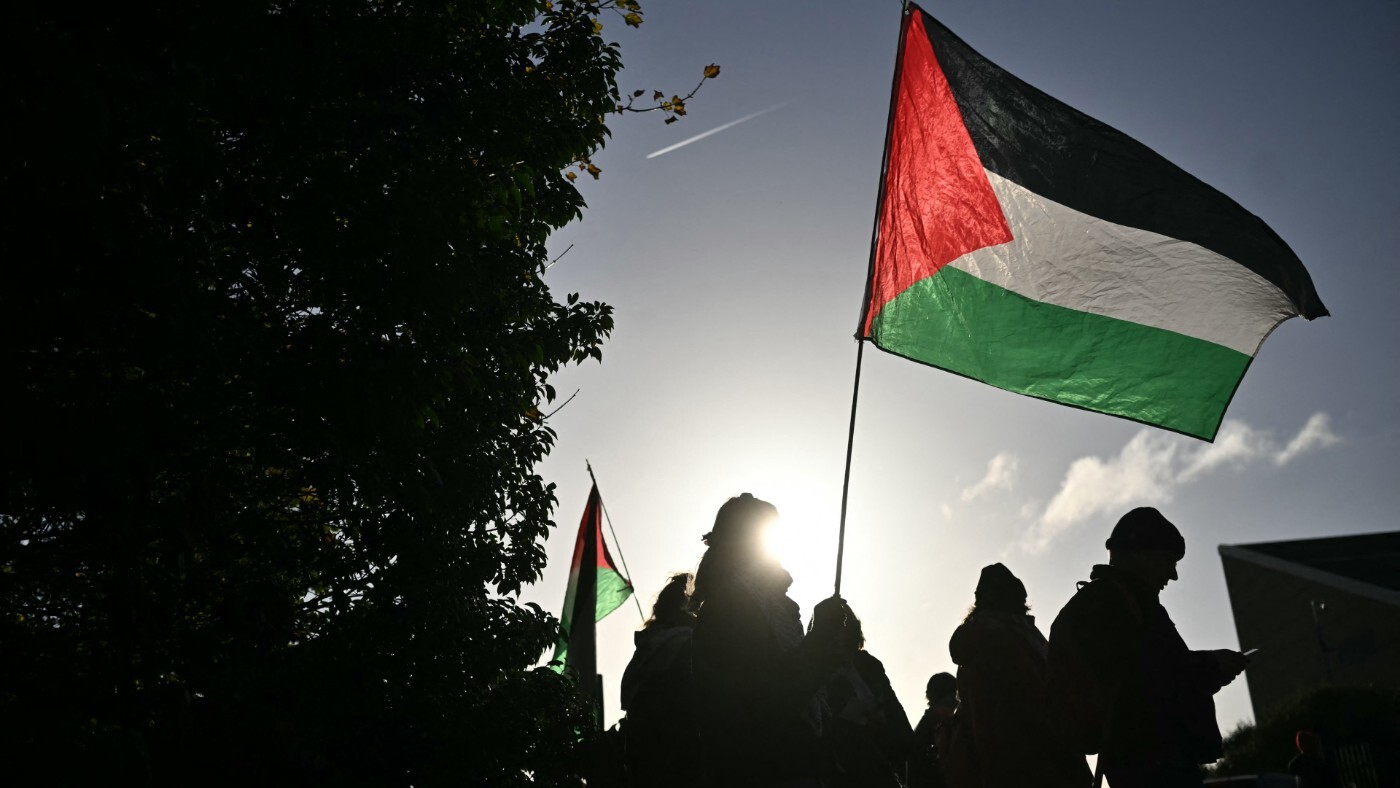
Palestine Action defendant wounded by taser and sledgehammer in raid, court hears
A high-profile trial of six Palestine Action activists opened this week at London’s Woolwich Crown Court, with shocking testimony about police use of force and violent confrontations during an August 2024 raid on an Israeli-owned arms factory near Bristol.
On the first day of witness testimony Thursday, the court heard detailed accounts of the injuries sustained by 30-year-old Leona Kamio, a nursery school teacher from Swansea and one of the six defendants facing joint criminal damage charges linked to the break-in at Elbit Systems’ Filton facility. A medical examination following her arrest documented multiple injuries: taser burns to her right arm and right hip, a bruise to her chin, a small scratch, and a distinct wound to her right hand inflicted by a sledgehammer. Kamio told the court she cannot identify who caused the sledgehammer wound.
Body-worn camera footage from arresting officer PC Peter Adams played in court shows Adams deploying his taser against Kamio during the raid. After being stunned, Kamio was tackled to the ground, where she hit her chin on the floor and went rigid. Kamio described the experience of being tasered as “not good, very painful”, adding that Adams twisted her arm behind her back and attempted to drag her up by her wrist while she screamed in pain. The footage captures Kamio shouting “you’re fucking hitting me” as Adams attempted to place her in handcuffs, calling the officer an “idiot” in response to his own verbal provocation. Kamio emphasized she was not faking her pain or resisting arrest, joking to the court “I failed drama” to underscore the authenticity of her reaction.
Alongside Kamio, the other defendants facing criminal damage charges are Charlotte Head, 29, Jordan Devlin, 31, Fatema Rajwani, 21, Zoe Rogers, 22, and 23-year-old Samuel Corner. Corner faces an additional charge of intentionally causing grievous bodily harm, for allegedly striking two police officers with a sledgehammer during the confrontation.
Testifying earlier on Thursday, Corner – an autistic Oxford graduate with an ADHD diagnosis – explained his actions as a reaction to the panic and disorientation caused by Pava, a synthetic incapacitant pepper spray sprayed at him by PC Aaron Buxton. Corner told the court the spray produced an “all consuming” stinging and burning effect that left him unable to see or focus clearly. He added that he did not initially recognize the approaching responders as police officers, and believed they were aggressive security guards intent on harming him and his fellow activists.
“I was scared about what they were going to do to us, especially the women,” Corner told the court. He explained that when he heard screaming and saw what he believed was a large male security guard attacking a fellow female activist, he acted instinctively. He has since acknowledged the person he struck was Sergeant Kate Evans, a female police officer who was not attacking Rogers, the activist he thought was in danger.
Corner admitted he raised his sledgehammer and struck Evans twice, but said he had no intent to cause her serious harm. When pressed by prosecutor Deanna Heer KC on whether attacking a police officer with a sledgehammer was unreasonable, he responded: “it seemed reasonable to do something and I had to act quite quickly. If I had thought about what it was going to do to her, I agree it would have been unreasonable.” When asked if he understood the severity of harm he could have caused, he replied “I genuinely didn’t.” Footage also shows Corner striking PC Buxton twice with the sledgehammer, though Corner says he has no memory of the encounter.
Multiple character witnesses have described Corner as a gentle, compassionate person with a strong commitment to justice who finds any form of violence abhorrent. The court heard he has even helped fellow prisoners improve their literacy skills while in pre-trial detention.
Kamio, for her part, told the court how she joined Palestine Action in March 2024, after receiving an email from the direct action group about its campaign to close Elbit Systems facilities across the UK. She was soon added to a Signal messaging group to plan the Filton raid, which the group identified as Elbit’s most important UK site, opened in July 2023 by the Israeli ambassador to the United Kingdom.
The activists’ stated goal, Kamio told the court, was to remain inside the facility for as long as possible to destroy as many weapons components as possible. Organizers had told the group security would not enter the facility, but head of security Nigel Shaw burst into the area within the first five minutes, an encounter that left Kamio frightened. “He looked so angry. Everything about his body language and face was just rage. He was charging towards us,” she said, adding that she believed Shaw was holding his umbrella in a position to strike her. She said she shouted at him to “fuck off” and told him confronting activists was “above your paygrade” – that stopping them was a job for police, not private security. She only later realized Shaw had been injured and was bleeding.
Kamio added that a second security guard, Angelo Volante, appeared extremely unpredictable, swinging an angle grinder and holding a hammer. “I panicked because I’m at Elbit, this is a very evil company, the people that work there describe themselves as being the backbone of the Israeli military,” she explained. She stressed she never intended to harm anyone, and had the sledgehammer taken from her before she could use it against anyone. She also reaffirmed her belief that the action was necessary: “I came here to do something to stop people from suffering. Working with children, I would put one of their lives before any property.”
Kamio’s employer at the Swansea nursery where she works submitted a character reference confirming that her extended pretrial detention has “upset and confused” the children in her care, and that “I cannot imagine her ever hurting anyone.”
The trial, which is being closely watched by activists on both sides of the Israeli-Palestinian conflict, is set to continue in the coming days.
-
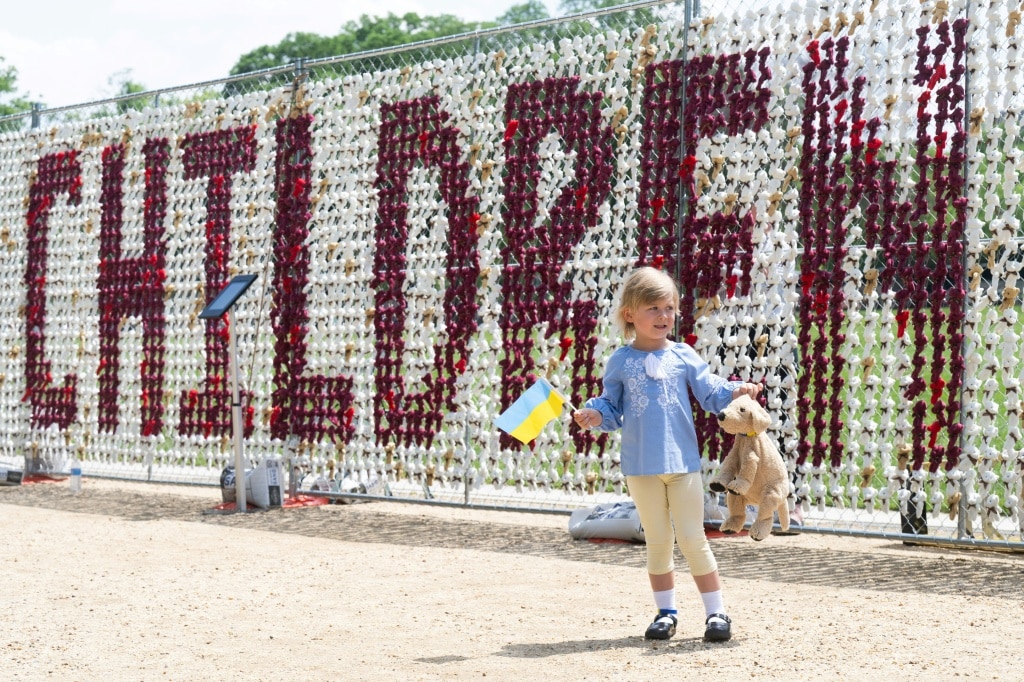
Stuffed toys in US capital symbolize displaced Ukrainian children
In a striking, somber display just steps from the U.S. Capitol in Washington D.C., 20,000 stuffed teddy bears line a National Mall fence, each one standing in for a Ukrainian child Kyiv accuses Russia of abducting since the full-scale invasion began in 2022. On Thursday, Ukrainian activists and U.S. lawmakers gathered at the installation to draw global attention to the missing children, uniting under the urgent rallying cry: “Bring Them Home.”
For 24-year-old Ukrainian activist Mariia Hlyten, the sheer number of toys on display underscores the scale of the crisis unfolding while world powers work toward diplomatic resolution. “When you see the scale… you then start to understand how terrifying this is, and that all this time, while we are waiting for some kind of negotiations, there are children’s lives at stake,” Hlyten said, emphasizing that the abducted children must be repatriated without delay.
The event was organized by Razom for Ukraine, in partnership with the American Coalition for Ukraine. Three senior U.S. lawmakers addressed the crowd, each condemning the alleged abductions as a deliberate act of cultural erasure and a violation of international law. Senate Democrat Richard Blumenthal argued that Russian President Vladimir Putin’s campaign extends far beyond territorial conquest. “What Vladimir Putin is doing here is not trying to take territory alone. He’s not trying to defeat a nation alone,” Blumenthal said. “He’s trying to destroy the people, that is the purpose of abducting children, changing their names, re-education. Killing their identity, if not the children themselves — making sure that they never grow up speaking their own language, knowing their own religion and culture.”
House Democrat Jamie Raskin echoed Blumenthal’s criticism, calling the forced removals a blatant violation of international humanitarian standards and the laws of war. “It’s a war crime and if it’s done intentionally… it is part of the proof of genocide,” Raskin said.
Standing nearby draped in Ukraine’s blue-and-yellow national flag, 28-year-old Arkady Dolina, a Ukrainian and relative of Hlyten, described the mass abductions from Russian-occupied Ukrainian territories as “absolutely horrible.” He framed the campaign as the latest chapter in a long-running Russian policy of forced indoctrination, saying: “This is the continuation of a centuries long Russian policy to abduct, indoctrinate kids and then send them as their cannon fodder to fight their stupid, useless, brutal wars.”
Moscow has repeatedly denied all accusations of forcibly abducting Ukrainian children. Still, claims from Kyiv have gained traction from international bodies and world governments. In February, Ukrainian President Volodymyr Zelensky announced that roughly 2,000 children had been successfully returned to Ukraine from Russia and Russian-held territories, but thousands more remain held captive. In March, the U.S. government launched a $25 million fund to support efforts to reunite displaced Ukrainian children with their families, a cause that former U.S. First Lady Melania Trump has also publicly backed. In 2023, the International Criminal Court issued arrest warrants for Putin and his children’s rights commissioner, charging the pair with the war crime of unlawful deportation of Ukrainian children.
Kyiv alleges that Russia has systematically worked to erase the Ukrainian identity of abducted children, forcing them to undergo pro-Russian indoctrination, compelling many to take Russian citizenship. These claims have been corroborated by firsthand testimony from Ukrainians who have escaped Russian occupation.
-
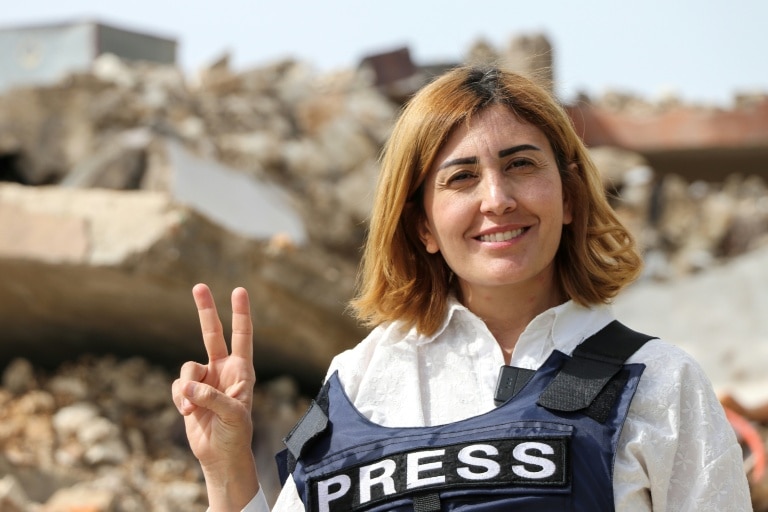
Lebanon leaders accuse Israel of war crime after journalist killed
A fragile 10-day ceasefire between Israel and Hezbollah in southern Lebanon has been thrown into new controversy after an Israeli airstrike killed a seasoned Lebanese journalist and left another injured, triggering sharp accusations of deliberate war crimes from Beirut and condemnation from global human rights and United Nations officials.
On Wednesday, civil defense forces and Amal Khalil’s employer, Lebanese daily newspaper Al-Akhbar, confirmed the 42-year-old correspondent’s death. According to Lebanon’s National News Agency (NNA), Khalil and fellow journalist Zeinab Faraj had fled to a residential home in the border village of Al-Tiri after Israeli forces targeted a car traveling immediately ahead of them. That initial strike killed two people inside the vehicle: the mayor of Bint Jbeil, a nearby town under Israeli occupation, and his companion.
Moments after the pair took shelter, a second Israeli airstrike hit the house they were hiding in. Faraj was evacuated to a local hospital with non-life-threatening wounds, but Khalil was left trapped under rubble. The Lebanese Red Cross confirmed its teams were able to extract Faraj, but were forced to retreat from the area after receiving an imminent strike warning, leaving them unable to reach Khalil. Rescue operations could only resume several hours later after Lebanese authorities coordinated with UN peacekeepers deployed to the southern border region to regain access, with Khalil’s body eventually recovered from the rubble.
Lebanese President Joseph Aoun issued a formal statement Thursday accusing Israel of deliberately targeting journalists to cover up its military actions against Lebanese civilians, calling the killing an unambiguous war crime. Prime Minister Nawaf Salam echoed the condemnation in a post on X, noting that both targeting journalists and blocking access for emergency rescue teams violate international war norms, and confirmed his administration would formally bring the case to international judicial and human rights bodies. Lebanon’s health ministry additionally accused Israeli forces of targeting an ambulance clearly marked with the Red Cross emblem during the incident, a charge the Israeli military has denied.
The Israeli military offered a different account of the incident in its own statements, saying it had targeted two vehicles that departed from a Hezbollah military facility in southern Lebanon. It claimed the vehicles carried individuals classified as terrorists who had crossed the so-called “forward defense line” that Israeli forces established in southern Lebanon and were moving toward Israeli troop positions. An Israeli military spokesperson told Agence France-Presse Thursday that the incident remains under internal review, and denied that Israeli forces had blocked rescue teams from accessing the strike site.
Since the resumption of hostilities between Israel and the Iran-aligned militant group Hezbollah in October 2023, more than 2,400 people have been killed in Lebanon, a majority of them civilians. The 10-day ceasefire that went into effect last Friday was intended to open space for diplomatic negotiations to de-escalate the year-long cross-border conflict, which has displaced hundreds of thousands of Lebanese residents from the southern border region. Israel has maintained a forward presence in southern Lebanon and enforced a “yellow line” that bars displaced residents from returning to their homes in the area.
On Thursday, dozens of colleagues, family members, and supporters gathered in Khalil’s southern hometown of Baysariyeh for her funeral. Her coffin was draped in the Lebanese flag, decorated with flowers, and topped with her press helmet and vest, symbols of her work reporting from the front lines of the conflict. Hundreds more joined a protest in the capital Beirut to demand accountability for her death.
Global and regional rights groups have joined Lebanon’s leadership in condemning the killing, noting that Khalil is at least the fourth Lebanese journalist killed by Israeli strikes in southern Lebanon since the start of the current conflict. Reporters Without Borders (RSF) Middle East head Jonathan Dagher said the sequence of strikes that killed Khalil – the initial attack on the car, followed by the strike on the house where journalists had taken shelter, followed by the delay in rescue access – strongly indicates deliberate targeting of press workers and obstruction of emergency aid, both defined as war crimes under international law. Ramzi Kaiss, Lebanon researcher for Human Rights Watch, called for an independent, credible investigation into the killing, emphasizing that intentional strikes against civilians, including journalists, meet the legal definition of a war crime.
United Nations officials also weighed in on the incident. Stephane Dujarric, spokesperson for UN Secretary-General António Guterres, reaffirmed that targeting civilians and blocking humanitarian and emergency access are clear violations of international humanitarian law. Dujarric added that Guterres has repeatedly stressed that journalists must be allowed to carry out their critical work of documenting conflict without fear of harassment, attack, or death. Back in March, an earlier Israeli airstrike killed three other journalists in southern Lebanon, prompting UN human rights experts to call for a full international investigation into that incident.
Speaking from the Beirut protest honoring Khalil, local journalist Inas Sherri told AFP that international accountability is the only way to end the pattern of press killings. “If we were holding people accountable, Israel would not have continued killing journalists one after another,” Sherri said.