作者: admin

  • ‘Make you pay’: The one area Cronulla must fix after they were exposed by Penrith’s brick wall defence

    ‘Make you pay’: The one area Cronulla must fix after they were exposed by Penrith’s brick wall defence

    Following a stark contrast in early-season performances, the Cronulla Sharks are undertaking a critical strategic reassessment of their offensive approach. Their campaign opened with an explosive 50-point triumph over the Gold Coast Titans, showcasing an attack capable of dismantling opponents. However, this momentum was decisively halted by the Penrith Panthers, the NRL’s reigning powerhouse, in a match that served as a sobering reality check.

    The encounter in Bathurst highlighted a significant disparity in defensive pressure. While the Sharks engineered eight line breaks against the Titans, the Panthers’ formidable defensive structure limited them to a mere two. Compounding this issue, Cronulla’s error count soared to 13 handling errors, providing constant opportunities for a Penrith side renowned for capitalizing on opposition mistakes.

    Five-eighth Braydon Trindall pinpointed the core lesson learned from the defeat. He emphasized that attempting complex attacking plays against an unpressured defensive line, such as Penrith’s, is a futile endeavor. The key, according to Trindall, lies in the methodical building of pressure through disciplined sets, working over the opposition’s defence before unleashing their structured attacking moves.

    The challenge now shifts to applying this refined strategy against the unpredictable Dolphins. Co-captain Blayke Brailey acknowledged the unique threat posed by a team that thrives on unstructured, ad-lib football. However, he stressed that the Sharks’ focus remains internally on perfecting their own systems rather than being drawn into a chaotic, offload-heavy contest. A primary concern is containing the electric Dolphins fullback, Hamiso Tabuai-Fidow, whose blistering pace and individual brilliance have previously punished Cronulla. Brailey underscored that only cohesive team defence and unwavering communication can neutralize such a potent offensive weapon.

  • Venezuela rallies past Italy 4-2 with 3-run 7th and will face US for World Baseball Classic title

    Venezuela rallies past Italy 4-2 with 3-run 7th and will face US for World Baseball Classic title

    In a stunning seventh-inning rally, Venezuela secured its first-ever appearance in the World Baseball Classic championship game with a 4-2 victory over previously undefeated Italy on Monday night at Miami’s loanDepot park.

    The Venezuelan squad, playing before a passionate pro-Venezuelan sellout crowd, mounted a dramatic comeback after trailing 2-0 through four innings. The game-changing sequence occurred in the seventh when Ronald Acuña Jr., Maikel Garcia, and Luis Arraez delivered consecutive run-scoring, two-out singles against Italian reliever Michael Lorenzen.

    Italy, the first European nation to reach a WBC semifinal, had established an early lead in the second inning when Keider Montero issued three consecutive walks, the last forcing in a run against J.J. D’Orazio. Dante Nori added another run with a forceout against Venezuelan pitcher Ricardo Sánchez.

    The Venezuelan comeback began with Eugenio Suárez’s fourth-inning home run off Aaron Nola. The critical defensive moment came in the sixth when reliever Ángel Zerpa escaped a bases-loaded jam by throwing a perfectly placed sinker past Sam Antonacci.

    The seventh-inning rally began with Gleyber Torres drawing a walk, followed by Jackson Chourio’s two-out single that placed runners at the corners. Acuña then beat out an infield hit to score pinch-runner Andrés Giménez, Garcia lined a go-ahead single to left field, and Arraez completed the scoring with another run-scoring single.

    Daniel Palencia secured the victory with a perfect three-out save, striking out Antonacci to end the game and send Venezuela to Tuesday’s championship matchup against the United States.

  • Trump says presidents ‘should not have learning disabilities’ as he mocks Newsom’s dyslexia

    Trump says presidents ‘should not have learning disabilities’ as he mocks Newsom’s dyslexia

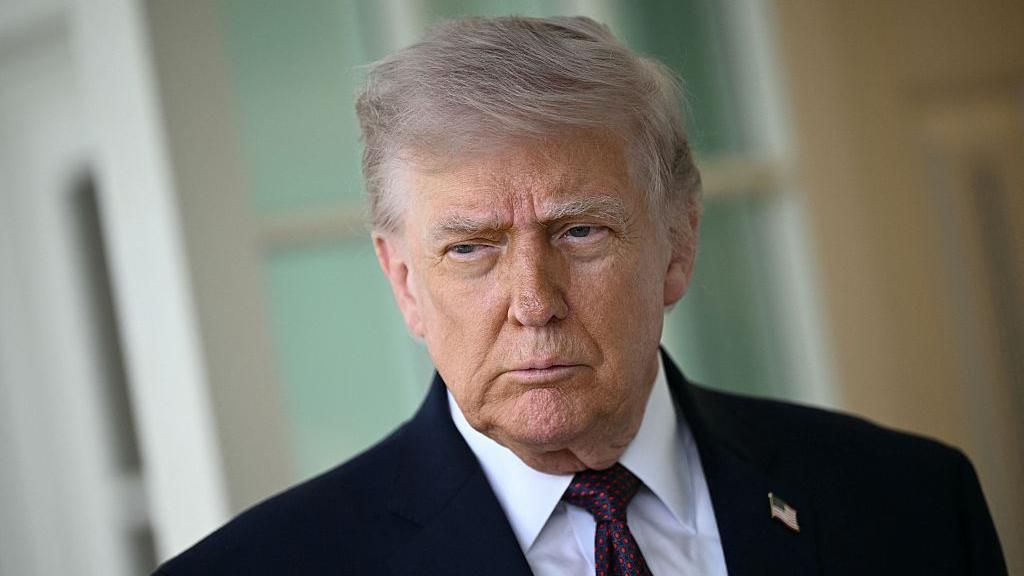
    A political firestorm has erupted following controversial statements made by former President Donald Trump regarding learning disabilities. During an Oval Office address on Monday, Trump launched a personal attack against California Governor Gavin Newsom, a potential Democratic presidential contender, focusing specifically on Newsom’s disclosed dyslexia.

    Trump employed his characteristic nickname ‘Gavin Newscum’ while asserting that individuals with learning disabilities should be disqualified from the presidency. ‘I’m all for people with learning disabilities, but not for my president,’ Trump stated. ‘I think a president should not have learning disabilities.’ He further described the California governor as ‘dumb’ in his remarks to reporters.

    This offensive represents the latest escalation in an ongoing war of words between the two political figures. The conflict intensified last week when Newsom labeled Trump ‘a brain-dead moron’ after the former president mocked his reading difficulties.

    Newsom responded to the latest attack with sarcasm on social media, highlighting Trump’s accidental reference to him as ‘President of the United States’ with the retort: ‘NO THANK YOU, WE BELIEVE IN FREE ELECTIONS!’

    The National Center for Learning Disabilities issued a strong condemnation of Trump’s remarks, telling the BBC they were ‘disturbed by and strongly condemns’ the statements. The organization emphasized that dyslexia, which affects approximately 15-20% of Americans according to federal estimates, does not impair intelligence, judgment, or leadership capabilities.

    ‘People with learning disabilities have risen to the upper echelon of every public office in the United States, including former Presidents,’ said CEO Jackie Rodriguez in an official statement. Historical research suggests several former commanders-in-chief, including George Washington, John F. Kennedy, and Woodrow Wilson, may have had dyslexia.

    The controversy extends beyond learning disabilities, with Trump additionally accusing Newsom of racism following the governor’s recent discussion about his dyslexia with a predominantly Black audience in Atlanta. Newsom had shared personal anecdotes about his academic struggles and reading challenges, which some conservative commentators interpreted as talking down to African-American voters.

    Newsom countered these allegations while defending his disability disclosure: ‘I spoke about my dyslexia. I know that’s hard for a brain-dead moron who bombs children and protects pedophiles to understand.’

    The exchange highlights the increasingly personal nature of political discourse as potential 2024 presidential contenders position themselves for what many anticipate will be a contentious election cycle.

  • More registered US voters view Israel negatively than positively, poll finds

    More registered US voters view Israel negatively than positively, poll finds

    A landmark NBC News survey reveals a dramatic reversal in American public opinion toward Israel, with registered voters now expressing significantly more negative than positive views. The poll, released Monday, shows 39% of US voters hold unfavorable perceptions of Israel compared to 32% with positive attitudes—marking a substantial decline from 2023 when 47% viewed Israel favorably against just 24% negatively.

    The most striking transformation has occurred among independent voters, a crucial demographic that contributed to President Donald Trump’s 2024 electoral victory. Their support for Israel has collapsed from 40% favorable and 22% unfavorable in 2023 to merely 21% favorable versus 48% unfavorable in 2026—more than doubling negative perceptions.

    This seismic shift follows Israel’s military response to Hamas’ October 2023 attack that killed approximately 1,200 Israelis. Israel’s subsequent offensive in Gaza has resulted in over 72,000 Palestinian casualties, with the United Nations, human rights experts, and numerous world leaders concluding that Israel has committed acts of genocide. The Gaza conflict expanded into broader regional hostilities involving Israeli strikes against Lebanon, Syria, and Qatar, eventually escalating into a devastating joint US-Israel war with Iran.

    Concurrently, sympathy for Palestinians has reached unprecedented levels. The poll indicates 40% of Americans now sympathize with Palestinians compared to 39% siding with Israel—a remarkable transformation from November 2013 when only 13% supported Palestinians.

    Partisan divisions reveal astonishing realignments: 67% of registered Democrats currently support Palestinians, versus just 17% backing Israel—a complete reversal from 2013 when only 18% favored Palestinians. While Republican support remains strong at 69%, significant generational fractures are emerging. A complementary Pew Research study from April 2025 shows 50% of Republicans under 50 now view Israel unfavorably.

    The most pronounced anti-Israel sentiment appears among young voters (18-34), with 63% holding negative views and only 13% maintaining positive perceptions—a dramatic drop from 2023 when 37% were negative, 26% positive, and 37% neutral. All age demographics show declining favorability, with the most severe drop occurring among 50-64-year-olds, where positive ratings plummeted from 58% to 37% while negative views doubled from 15% to 30%.

  • Trump clashes with Nato countries over refusal to help reopen Strait of Hormuz

    Trump clashes with Nato countries over refusal to help reopen Strait of Hormuz

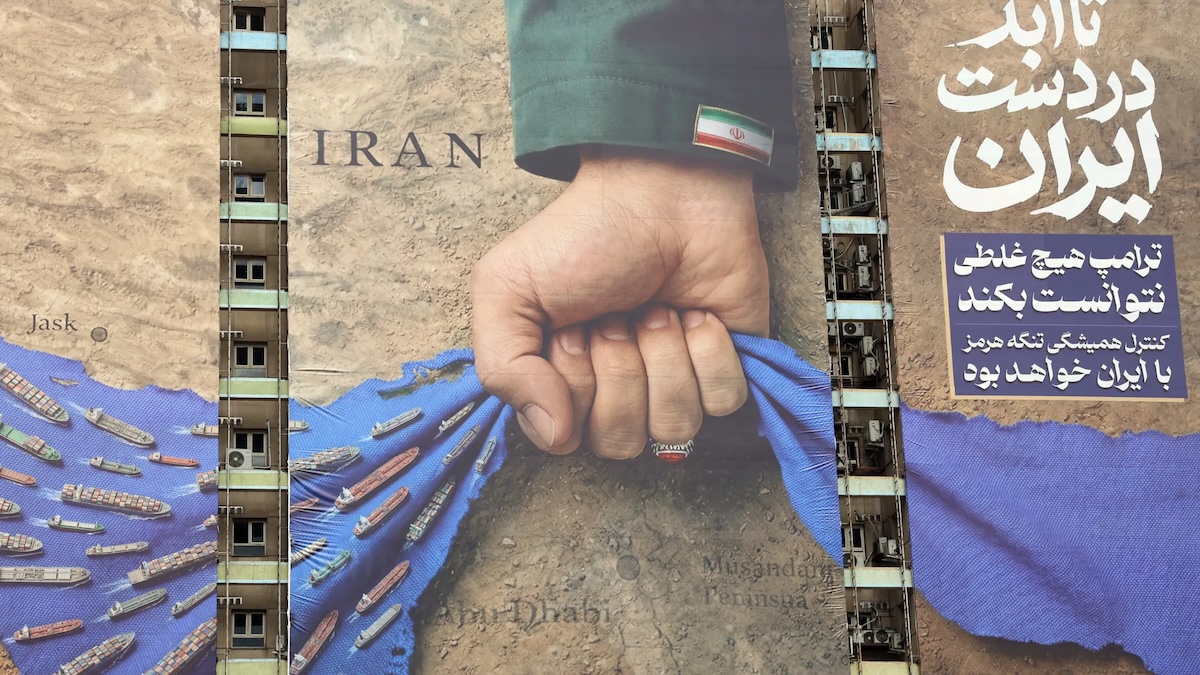
    President Donald Trump has publicly vented his frustration with NATO member states for their insufficient support in a joint effort to reopen the strategically vital Strait of Hormuz. This critical maritime passage, through which over 20% of global crude oil normally transits, has become the focal point of escalating US-Iranian hostilities.

    Speaking to reporters, Trump revealed that while ‘numerous countries have told me they’re on the way,’ he expressed particular disappointment with several longstanding allies. ‘Some are very enthusiastic about it, and some countries that we’ve helped for many, many years—we’ve protected them from horrible outside sources—and they weren’t that enthusiastic,’ Trump stated, emphasizing that ‘the level of enthusiasm matters to me.’

    European powers including Germany, France, and the United Kingdom have already declined participation, citing concerns about being drawn into an expanded conflict with Iran. European leaders view the initial US-Israeli military actions against Iran as lacking proper United Nations authorization.

    Trump specifically mentioned his surprise and dissatisfaction with the UK’s response, criticizing Prime Minister Keir Starmer for consulting advisors rather than making an immediate commitment. ‘I said, ‘You don’t need to meet with a team. You’re the prime minister, you can make your own decision,” Trump recounted.

    The President further suggested that NATO allies owe Washington substantial support given America’s disproportionate funding of the alliance and its significant military assistance to Ukraine against Russian aggression. ‘You can ask [Russian President Vladimir] Putin. Putin fears us. He has no fear of Europe whatsoever,’ Trump asserted.

    Despite his appeals for international cooperation, Trump simultaneously claimed self-sufficiency: ‘We’re the strongest nation in the world. We have the strongest military by far. We don’t need them.’ He described his outreach as essentially testing allied commitment, noting ‘I want to find out how they react, because I’ve been saying for years that [if] we ever did need them, they won’t be there.’

    Security experts have warned that any military escort mission through the strait would constitute a ‘very dangerous mission.’ The economic stakes are enormous—the waterway facilitates 20-25% of global seaborne oil trade valued at approximately $600 billion annually, plus 20% of worldwide liquefied natural gas shipments.

    As oil prices surge past $100 per barrel with global economic repercussions, Trump has intensified calls for international naval protection of commercial tankers. However, such moves would likely be perceived by Iran as direct provocation, potentially escalating the conflict further.

    The administration faces criticism for apparent lack of contingency planning despite anticipating the strait’s closure. Gulf states hosting US assets have borne the brunt of Iranian retaliatory strikes, with Kuwait reporting eleven fatalities including American and Kuwaiti military personnel.

    While Trump insists Iran seeks negotiations, Tehran has publicly denied any diplomatic engagement until certain preconditions are met, creating further uncertainty about conflict resolution.

  • India’s outsourcing industry is worth $300bn. Can it survive AI?

    India’s outsourcing industry is worth $300bn. Can it survive AI?

    India’s monumental $300 billion IT outsourcing industry is confronting its most significant technological challenge in decades as artificial intelligence triggers massive market volatility and existential concerns. The Nifty IT index, tracking the nation’s top software firms, has plummeted approximately 20% this year, erasing tens of billions in market valuation amid fears that AI could fundamentally dismantle the labor-intensive outsourcing model that propelled India’s economic transformation.

    The crisis emerged in February when Anthropic’s Claude agent unveiled automation tools capable of handling legal, compliance, and data processes—core services underpinning India’s IT exports. Subsequent warnings from industry founders predicting the potential disappearance of traditional IT services by 2030, with AI potentially eliminating 50% of entry-level white-collar positions, intensified market panic.

    This technological upheaval strikes at the heart of an industry that created millions of middle-class jobs over 35 years, fueling urban development and consumer economies in cities like Bengaluru, Hyderabad, and Gurugram. The sector represents approximately 80% of India’s total services exports, making its stability crucial to the national economy.

    Despite the alarm, industry leaders and analysts present divergent perspectives. Indian IT giants have attempted to calm markets, asserting that AI will generate new opportunities despite undoubtedly transforming traditional operations. Global investment bank Jefferies warned that client engagements will structurally shift toward advisory services, with application managed services (representing 22-45% of revenues) facing substantial deflation.

    JPMorgan Chase characterizes IT firms as ‘the plumbers of the tech world,’ arguing against simplistic assumptions that AI can match the customization capabilities of established software companies. Instead, they foresee collaborative partnerships between AI tool developers and IT service providers creating novel work domains.

    Infosys CEO Salil Parekh supports this optimistic narrative, suggesting AI expands opportunities for firms equipped to modernize legacy systems. According to Infosys projections, while generative AI might displace 92 million positions like front-end developers, it could create approximately 170 million new roles in data annotation, AI engineering, and leadership.

    HSBC’s recent report ‘Software Will Eat AI’ contends that IT services companies will actually drive AI adoption across global enterprises, arguing that large-scale AI systems remain ‘inherently flawed’ for replacing mission-critical enterprise software developed over decades with unparalleled reliability.

    The industry’s transition is already underway. Nasscom, India’s software industry body, confirms 2025 marked a pivotal shift from AI experimentation to deployment, though AI projects currently generate merely $10 billion of the sector’s $315 billion total revenue. Overall sector growth is projected at a modest 6% this year—a dramatic decline from historical double-digit expansion—with hiring expected to increase by just 2.3% in 2026.

    Compounding technological challenges, visa restrictions in the United States—the largest market for Indian IT services—threaten to increase operating expenses by $100-250 million for top firms, approximately 1% of revenues according to Moody’s Analytics.

    Analysts from Nuvama Institutional Equities predict short-term revenue reduction with AI benefits materializing only medium-term, ensuring unavoidable transitional pain for an industry facing its most profound transformation since its inception.

  • Columbia University protester released after one year in immigration custody

    Columbia University protester released after one year in immigration custody

    After enduring twelve months in immigration detention, Palestinian advocate Leqaa Kordia has been released from a Texas facility, marking a significant development in a case that has drawn attention to U.S. immigration enforcement practices. The 33-year-old, initially detained during Gaza war protests at Columbia University in April 2024, faced subsequent arrest in March 2025 during a routine immigration check-in.

    The Department of Homeland Security maintained that Kordia had violated her student visa status, terminated in 2022 due to attendance issues, and alleged she provided financial support to individuals in nations hostile to U.S. interests. These claims were vigorously contested by her legal team from Boston University School of Law’s Immigrants’ Rights Clinic, who argued she was being targeted for her Palestinian rights advocacy.

    In a striking judicial rebuke, an immigration judge characterized the government’s arguments as ‘disingenuous’ during Kordia’s third bail hearing last Friday. The court ordered her release on $100,000 bond despite DHS objections, noting ‘overwhelming evidence’ supporting her account that transferred funds were intended for family support rather than nefarious purposes.

    Kordia’s detention period was marked by concerning health episodes, including a seizure that required three days of hospitalization and reports of being chained to a bed under allegedly unsanitary conditions at the Alvarado facility. Her case has become emblematic of broader debates surrounding free speech, immigration enforcement, and the treatment of activists under the current administration.

    The release allows Kordia to return to her New Jersey residence while her immigration proceedings continue, though DHS maintains its position regarding her immigration status. The case occurs against the backdrop of increased scrutiny on international student protesters and ongoing tensions surrounding Gaza conflict demonstrations at American universities.

  • Utah bereavement author found guilty of fatally poisoning her husband

    Utah bereavement author found guilty of fatally poisoning her husband

    In a shocking case that blends tragedy with calculated deception, a Utah woman has been found guilty of murdering her husband through fentanyl poisoning just one year after publishing a children’s book about processing grief. Kouri Richins, 35, was convicted by a jury that deliberated for merely three hours following an extensive trial that revealed her massive debt, extramarital affair, and multiple life insurance policies taken out on her spouse.

    The March 2022 death of Eric Richins was initially presented as a tragic loss, with Kouri Richins positioning herself as a grieving widow who authored the picture book ‘Are You With Me?’ to help her three children and others cope with loss. The book was dedicated to her ‘amazing husband and wonderful father’ – the same man prosecutors proved she systematically poisoned to death.

    Evidence presented during trial revealed a pattern of attempted murders dating back one year before the fatal incident. Prosecutors demonstrated that Richins had initially poisoned her husband’s sandwich in a failed attempt that nearly killed him. She subsequently increased the dosage until successfully administering a lethal fentanyl-laced drink in March 2022.

    The prosecution called over 40 witnesses, including the drug supplier who provided the fatal substances. In a surprising legal strategy, Richins’ defense team declined to call any witnesses and rested their case without having her testify in her own defense.

    Beyond the murder conviction, Richins faced additional charges including attempted murder, two counts of insurance fraud, and one count of forgery related to alleged attempts to profit from her husband’s death. Her arrest in March 2023 came just two months after her book publication and media appearances where she presented herself as a compassionate widow helping others through grief.

  • Aussie shoppers keep splashing cash as rate hike looms

    Aussie shoppers keep splashing cash as rate hike looms

    In a development that poses significant challenges for monetary policymakers, Australian household expenditure has demonstrated remarkable resilience by continuing its upward trajectory despite mounting cost-of-living pressures. The latest data from National Australia Bank reveals consumer spending increased by 0.4% in February, maintaining a robust annual growth rate of 6.7%.

    The persistent spending patterns emerge at a critical juncture, with the Reserve Bank of Australia preparing to announce its interest rate decision. This sustained consumer activity complicates the central bank’s ongoing campaign against inflation, particularly as spending growth spans both services and goods categories. Service expenditures rose 0.5% monthly, led by cafes and restaurants, while goods spending increased 0.4%, primarily driven by a 0.9% surge in food costs.

    NAB economist Gareth Spence noted that despite economic pressures, household balance sheets have shown improvement. “Real incomes have grown approximately 3.8% over the past year, representing a significant contrast to previous inflation cycles,” Spence observed. He added that households appear relatively well-positioned to navigate potential economic challenges, though acknowledging varying degrees of financial pressure across different demographic groups.

    Paradoxically, while spending remains strong, new data from ANZ and Roy Morgan indicates consumer confidence has plummeted to pandemic-era lows, registering just 68.5 on their index. This confidence measure sits well below the 100-point threshold that separates optimism from pessimism, suggesting consumers are spending despite growing economic concerns rather than because of positive expectations.

    The Australian Bureau of Statistics reports the household saving-to-income ratio has climbed to 6.9% – the highest level since September 2022 and above pre-pandemic averages. This indicates that despite increased spending, disposable income growth of 1.8% has outpaced nominal spending growth of 1.1%, providing some buffer against economic headwinds.

    Economists warn that sustained oil prices above $100 per barrel could directly add approximately 1% to living costs, potentially forcing the RBA to maintain a more hawkish stance on interest rates than previously anticipated.

  • Fierce blizzard buries US midwest in more than 2ft (60cm) of snow

    Fierce blizzard buries US midwest in more than 2ft (60cm) of snow

    A catastrophic winter storm has unleashed its fury upon the US Midwest, transforming the region into a frozen landscape with snow accumulations exceeding two feet (60 centimeters). The severe weather event has triggered widespread disruption, with Michigan emerging as one of the hardest-hit states.

    Visual evidence of the storm’s intensity has surfaced on social media, where a resident documented the alarming scene of snowdrifts nearly completely barricading the entrance to their home. This stark imagery underscores the life-threatening conditions and the monumental challenges faced by residents attempting to venture outdoors.

    The blizzard’s impact extends far beyond transportation paralysis. A critical infrastructure crisis is unfolding, with utility providers reporting that over 129,000 customers across Michigan are currently suffering from power outages. The loss of electricity amid such frigid temperatures presents a severe public health risk, elevating concerns about hypothermia and forcing emergency services into high gear.

    Meteorologists attribute the powerful system to a clash of Arctic air with moisture-rich systems, creating ideal conditions for a historic snowfall. Local authorities have issued urgent advisories, imploring citizens to avoid all non-essential travel to allow emergency crews and utility workers to perform critical restoration and rescue operations safely. The regional economic impact, from halted commerce to damaged property, is expected to be significant as communities begin the arduous process of digging out.