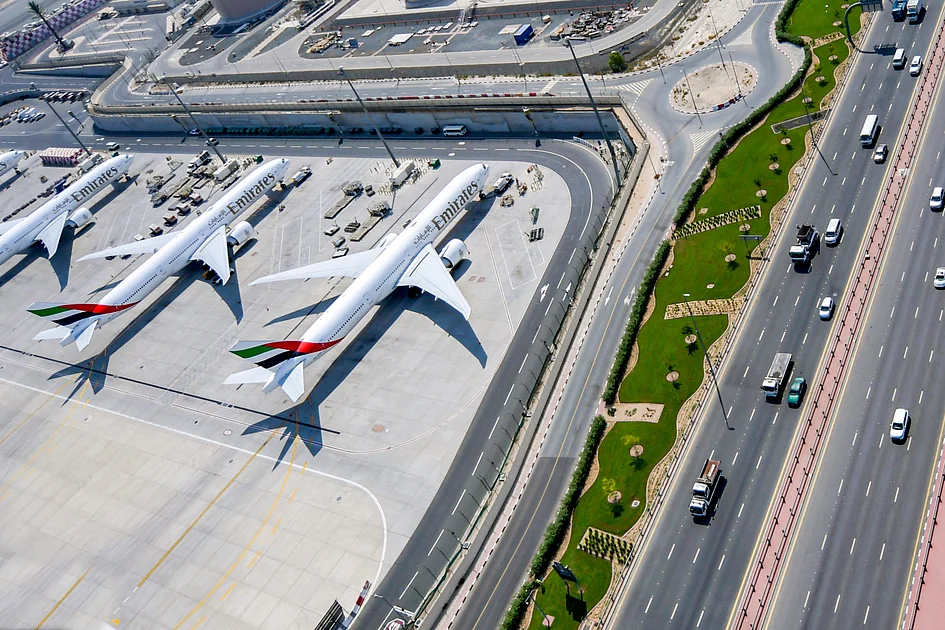
Dubai International Airport (DXB) has achieved unprecedented growth in 2025, handling 70.1 million passengers in the first nine months, marking a 2.1% increase compared to the same period last year. The airport also reported a record-breaking quarterly performance, welcoming 24.2 million passengers between July and September, a 1.9% year-on-year rise. This milestone solidifies DXB’s position as the world’s busiest international airport, with a twelve-month rolling traffic reaching 93.8 million passengers by the end of September. India remained the top source market, contributing 8.8 million passengers, followed by Saudi Arabia, the UK, Pakistan, and the US. London led as the most popular city destination, with 2.8 million passengers. Aircraft movements surged to 336,000 flights in the first nine months, up 2.7% year-on-year, with an average of 213 passengers per aircraft. Baggage handling efficiency also hit new heights, with 63.8 million bags processed, 90% of which were delivered within 45 minutes of arrival. Mishandled baggage rates remained impressively low at two per 1,000 guests. The airport’s operational excellence was further highlighted by swift passport control and security screening, with 99.6% of departing passengers clearing immigration in under 10 minutes and 99.7% completing security checks in less than five minutes. Paul Griffiths, CEO of Dubai Airports, emphasized the focus on intelligent growth through technology, sustainability, and superior guest experiences to redefine global travel.
作者: admin
-

Belgian farmer sues French energy giant for damage caused by climate change
In a landmark legal battle, a Belgian farmer, Hugues Falys, is confronting French oil giant TotalEnergies in court, demanding accountability for climate change-induced damages. Supported by Greenpeace, Falys seeks financial compensation and urges the company to reduce its oil and gas production to mitigate greenhouse gas emissions. The lawsuit, filed in Tournai, Belgium, represents a growing trend of environmental activists holding major energy corporations responsible for their role in global warming. Falys, addressing a crowd of 50 supporters in the rain, emphasized his goal to compel TotalEnergies to adopt more sustainable practices, particularly for agriculture and society at large. TotalEnergies has not publicly commented on the case but has previously stated its commitment to reducing emissions and investing in renewable energy. This case is part of a broader wave of nearly 100 lawsuits worldwide targeting oil giants like BP, Exxon Mobil, and Shell over the past two decades. A 2023 UN report highlighted a significant increase in such litigation, though none have yet resulted in companies paying for climate-related damages. The hearing is expected to continue until mid-December. Globally, activists have achieved more success in suing governments than corporations. Notable rulings include the Dutch Supreme Court’s 2019 decision affirming climate protection as a human right and a 2021 Paris court ruling that held the French government accountable for climate inaction. Internationally, the UN’s top court recently issued an advisory opinion stating that nations failing to address climate change could face legal consequences. These cases, while still unfolding, are shaping the legal landscape for future climate-related litigation.
-

British woman among five killed in Chile snowstorm
A tragic snowstorm in Chilean Patagonia has claimed the lives of five individuals, including a British woman. Victoria Bond, hailing from Cornwall, was identified by Chilean authorities as one of the victims in the Torres del Paine National Park, a renowned tourist destination in southern Chile. The incident also claimed the lives of two German and two Mexican nationals, as confirmed by Jose Antonio Ruiz, the presidential delegate of the Magallanes region. The victims’ bodies were discovered on Tuesday amidst severe weather conditions characterized by heavy snowfall and winds reaching up to 118mph (190km/h). The Foreign, Commonwealth and Development Office has expressed its support for the bereaved family of the British woman and is actively engaging with local authorities. Chilean officials have concluded the search operations and are now focused on repatriating the bodies and coordinating with foreign consulates. Chilean President Gabriel Boric Font extended his heartfelt condolences to the families and friends of the deceased, emphasizing the unwavering support of Chilean authorities during this challenging period.
-

Nigeria’s president promises to intensify efforts to rescue 24 abducted schoolgirls
In a distressing incident that has shaken the nation, 24 schoolgirls were abducted by armed gunmen from the Government Girls Comprehensive Secondary School in Maga, Kebbi State, Nigeria. The attack occurred in the early hours of Monday, when the assailants scaled the school’s fence, engaged in a gunfight with security personnel, and forcibly took the girls after killing a staff member. While no group has claimed responsibility, local analysts attribute the kidnapping to criminal gangs, often former herders, who target schools and communities for ransom amid ongoing resource conflicts in the region.
Among the abducted, 15-year-old Hawau Usman managed to escape during the chaos. She recounted her harrowing experience, stating that she fled when the gunmen were distracted and sought refuge at a teacher’s house after finding no response at the principal’s residence. Nigerian President Bola Tinubu has since directed security agencies to act swiftly to rescue the remaining girls, emphasizing the disruption of education by what he termed ‘heartless terrorists.’
This incident is part of a broader pattern of school abductions in Nigeria, with over 1,500 students seized since the infamous Chibok schoolgirls kidnapping by Boko Haram in 2014. Analysts and residents have criticized the government for its failure to prosecute known attackers and address corruption, which has hampered security efforts. Usman Muhammad, whose daughter narrowly escaped, expressed his lack of trust in authorities until all the girls are safely returned and security measures are strengthened.
Security experts, including Abuja-based analyst Senator Iroegbu, have called for intelligence-driven operations to locate the abductors while ensuring the safety of the girls. Negotiations, potentially involving ransom, may be necessary if contact is established. Meanwhile, Nigeria’s Chief of Army Staff, Lt. Gen. Waidi Shaibu, has mobilized military and vigilante groups to conduct relentless search operations in the region. Local residents, however, lament the insufficient number of vigilantes, who are more familiar with the terrain, and criticized security forces for ignoring prior warnings about suspicious activities in the area.
The abduction has reignited concerns about the safety of educational institutions in Nigeria, with calls for immediate action to prevent future tragedies.
-

Mountain of illegally dumped trash near Oxford river causes outcry in England
A colossal illegal waste dump near the River Cherwell outside Oxford, visible from space, has ignited widespread concern over environmental degradation and criminal activity. Concealed behind a dense tree line along the busy A34 highway, the trash pile spans the length of three Olympic-sized swimming pools and reaches the height of a two-story house. Despite its enormity, the dump went unnoticed for months, raising questions about oversight and enforcement. The Environment Agency identified the site as high-risk in July and issued a cease-and-desist order, but illegal dumping persisted, prompting a criminal investigation. Satellite imagery revealed the transformation of verdant fields into a sprawling garbage site between April and July 2024. The discovery has drawn attention to England’s struggle against organized crime groups responsible for illegal waste disposal, which costs the economy £1 billion annually. With winter rains approaching, fears mount that the waste could flood into the River Cherwell, threatening local ecosystems and waterways. The cleanup cost could exceed £26 million, surpassing the budget of the Cherwell District Council. Environmental advocates and lawmakers have criticized the government’s slow response, urging stricter enforcement and accountability. This incident highlights the growing problem of “fly-tipping” across the UK, with over 1.1 million incidents reported in 2023-24, a 6% increase from the previous year. The government has pledged increased funding for waste enforcement, but the scale of the crisis underscores the need for urgent action.
-

Watch: Trump designates Saudi Arabia major non-NATO ally during Crown Prince visit
In a significant diplomatic move, U.S. President Donald Trump announced on Tuesday that Saudi Arabia has been designated as a major non-NATO ally. The announcement came during a gala dinner at the White House, where Crown Prince Mohammed bin Salman was hosted with grandeur, marking his first visit in over seven years. The event featured a military honor guard, a cannon salute, and a flyover by U.S. warplanes, underscoring the importance of the occasion. Trump emphasized that this designation would elevate military cooperation between the two nations to unprecedented levels. Saudi Arabia is now among the exclusive group of 19 countries to receive this status. The visit also saw discussions on advancing security ties, civil nuclear cooperation, and multibillion-dollar business deals. Notably, Trump revealed that Saudi Arabia has committed to investing $600 billion in the U.S., with plans to increase this to $1 trillion. Additionally, the two leaders reached a defense agreement, and Saudi Arabia is set to purchase advanced U.S.-made F-35 fighter jets. This development marks a significant step in strengthening the strategic partnership between the United States and Saudi Arabia.
-

Arsenal to end sponsorship deal with Visit Rwanda
Arsenal Football Club has announced the termination of its eight-year sponsorship agreement with Visit Rwanda, set to conclude at the end of the 2025-26 season. The partnership, which began in 2018 and reportedly valued at over £10 million ($13.3 million) annually, has faced increasing scrutiny due to escalating violence in the eastern Democratic Republic of Congo (DRC), a region bordering Rwanda. Despite a recent framework for peace signed between Rwandan-backed M23 rebels and the Congolese government, the sponsorship has drawn criticism from humanitarian groups and activists. Campaigners, including the group Gunners for Peace, have protested outside Emirates Stadium, urging the club to sever ties with Visit Rwanda, citing the humanitarian crisis in the DRC. Arsenal stated that the partnership had achieved its original goals of promoting conservation, sustainable tourism, and Rwanda’s ambition to become a sporting hub in Africa. However, the club emphasized its commitment to aligning sponsorships with its core values. Meanwhile, other clubs like Paris St-Germain and Atletico Madrid continue their associations with Visit Rwanda, sparking debates about the ethical implications of such deals in the world of sports.
-
Louvre to set up new cameras and anti-intrusion systems after stunning crown jewels heist
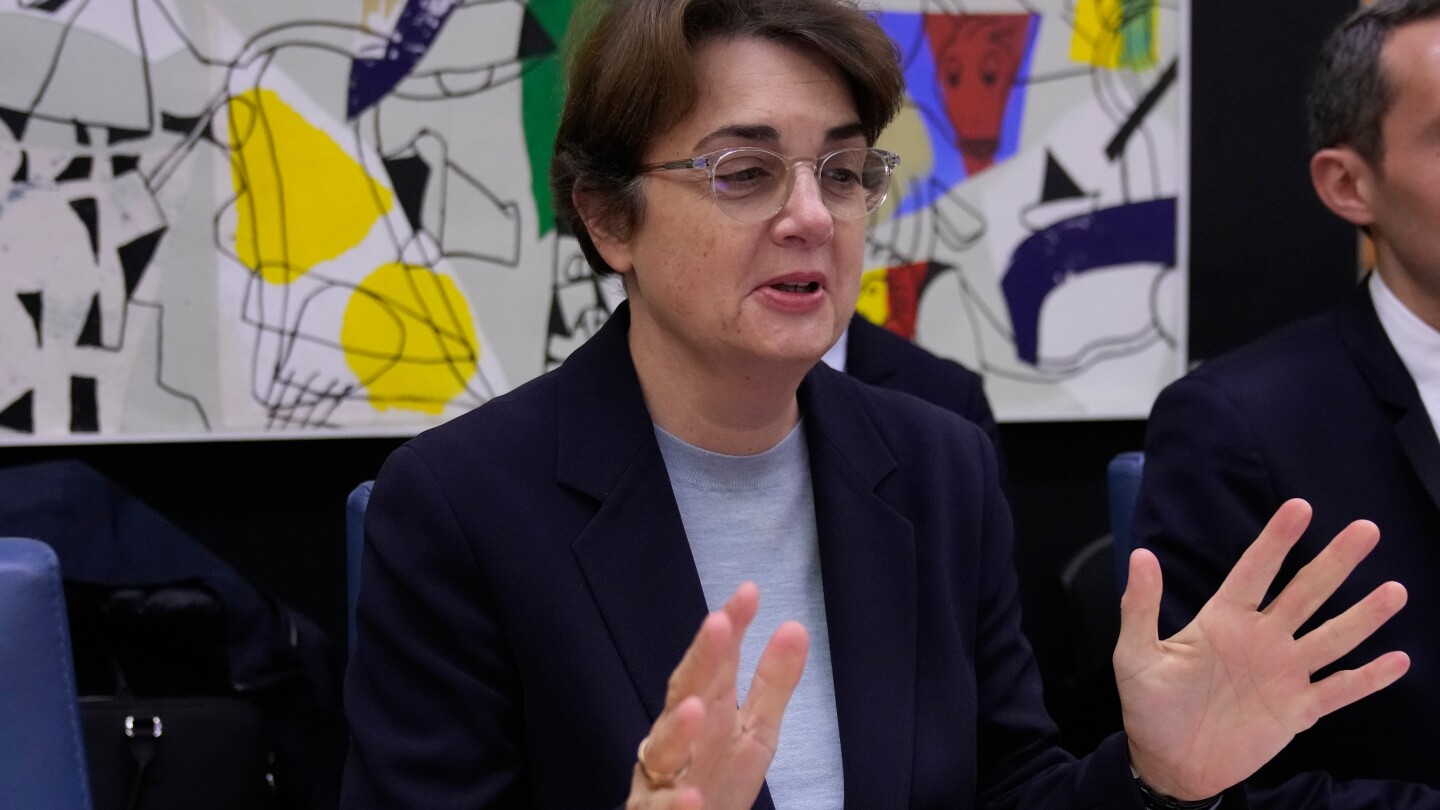
The Louvre Museum in Paris is set to implement a series of advanced security measures following last month’s audacious crown jewels heist. Museum director Laurence des Cars announced on Wednesday that approximately 100 new surveillance cameras will be operational by the end of next year, with anti-intrusion systems being installed within the next two weeks. These measures aim to prevent unauthorized access to the museum’s premises and ensure comprehensive protection of its surroundings. Des Cars emphasized that these upgrades are part of over 20 emergency actions being taken in response to the October 19 robbery, which saw thieves steal an €88 million ($102 million) treasure trove in less than eight minutes. The breach occurred when intruders used disc cutters, typically meant for concrete, to penetrate the Apollo Gallery’s display cases. Des Cars revealed that the cases, designed in 2019 to withstand internal attacks, held up remarkably well during the heist, making the thieves’ task more challenging. The security enhancements align with the Louvre’s decade-long ‘New Renaissance’ plan, launched earlier this year with an estimated budget of €800 million ($933 million). This initiative aims to modernize the museum’s infrastructure, reduce overcrowding, and create a dedicated gallery for the Mona Lisa by 2031. Des Cars also highlighted the museum’s struggle with mass tourism, noting that visitor numbers have surged to over 8 million this year, far exceeding the 4 million capacity envisioned when the iconic glass pyramid was inaugurated in 1989. In a related development, the Louvre temporarily closed some employee offices and a public gallery due to structural fragility.
-

UK defense secretary warns Russia it is ready to deal with any incursions after spy ship spotted
The United Kingdom has issued a stern warning to Russia following the detection of the Russian spy ship Yantar near British waters north of Scotland. Defense Secretary John Healey emphasized that the vessel had directed lasers at surveillance aircraft monitoring its activities. “We see you. We know what you’re doing. And if the Yantar travels south this week, we are ready,” Healey declared during a speech in London. This warning comes as the UK government prepares to unveil its new budget, with Prime Minister Keir Starmer advocating for significant increases in military spending to counter threats from Russia, China, and Iran. However, the government faces financial challenges, including potential tax hikes and spending cuts to address a multi-billion-pound deficit. Healey also announced plans to construct at least six new munitions factories across the UK, a move expected to create 1,000 jobs and bolster the military’s supply of explosives and propellants. The Yantar, part of the Russian navy, is known for its surveillance capabilities and potential for sabotage, prompting the UK and its allies to closely monitor its movements. Healey highlighted the need for a robust defense strategy in response to global threats, including conflicts in the Middle East, tensions between India and Pakistan, and espionage activities by China. The UK has pledged to increase defense spending to 5% of GDP by 2035, aligning with NATO standards, to ensure national security in an era of heightened geopolitical risks.
-
New study reveals snow-ground thermal coupling on Qinghai-Tibet Plateau
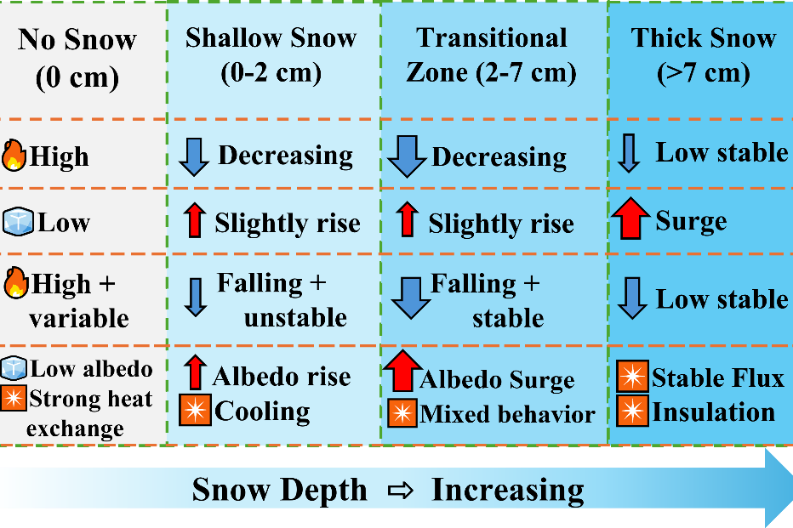
A pioneering study conducted by Chinese scientists has uncovered the intricate coupling effects between snow cover and ground thermal dynamics on the Qinghai-Tibet Plateau. Published in the journal *Agricultural and Forest Meteorology*, the research was jointly carried out by the Northwest Institute of Eco-Environment and Resources (NIEER) under the Chinese Academy of Sciences and the Nanjing University of Information Science and Technology (NUIST). The study integrates snow cover processes into land surface and climate models for cold regions, significantly enhancing the accuracy of permafrost evolution predictions and extreme event risk assessments. The Qinghai-Tibet Plateau, home to the world’s largest high-altitude permafrost zone, has experienced accelerated warming due to global climate change. Unlike the Arctic, the plateau’s snow cover is typically thin and short-lived, yet it plays a critical role in influencing ground thermal regimes and surface energy fluxes. Researchers conducted years of in-situ observations at two alpine permafrost sites, located at 5,100 meters and 4,538 meters above sea level, respectively. They analyzed snow cover characteristics, ground surface temperature responses, and energy flux dynamics. The team also proposed a ‘four-interval mechanism framework’ to describe the evolutionary stages of snow-ground coupling. According to Hu Guojie, a researcher at NIEER, this framework provides operational criteria and parametric insights for shallow snow-dominated areas. Professor Zhao Lin from NUIST emphasized that the study quantified the nonlinear thermal effects of shallow snow cover on alpine permafrost, offering observational evidence and conceptual benchmarks for developing threshold-sensitive snow-ground coupling schemes in climate models.