作者: admin

  • Uganda reintroduces rhinos into a protected area where they have been extinct since 1983

    Uganda reintroduces rhinos into a protected area where they have been extinct since 1983

    In a landmark conservation achievement, Ugandan wildlife authorities have successfully reintroduced rhinoceroses to Kidepo Valley National Park after four decades of local extinction. This ambitious rewilding initiative represents a significant victory in the ongoing battle to restore species decimated by poaching activities.

    The translocation operation, executed this week, involved transporting multiple southern white rhinos from Ziwa Rhino Sanctuary in central Uganda to the northeastern protected area spanning over 400 kilometers. The first two specimens arrived on Tuesday, followed by additional animals on Thursday, all carefully transported in specialized metallic crates designed for their safety during the lengthy journey.

    James Musinguzi, Executive Director of the Uganda Wildlife Authority, heralded the achievement as “the beginning of a new rhino story for Kidepo Valley National Park,” acknowledging the crucial support from conservation partners who provided technical expertise, financial backing, and logistical coordination.

    The reintroduction program benefits from extensive preparation, with the new rhino habitat featuring comprehensive infrastructure including protective fencing, access roads, and fire management systems. Conservation authorities plan to expand the population further later this year with additional transfers, potentially including specimens from Kenya.

    Jeff Morgan of Global Conservation, one of the participating organizations, emphasized the broader significance: “This translocation demonstrates Uganda’s renewed stability for tourism, enhanced national park protections, and offers both local citizens and international visitors the extraordinary opportunity to observe rhinos in their natural environment.”

    Despite these advances, conservation challenges persist. Poaching remains an ongoing concern in Uganda’s protected areas, though intensified security measures have substantially reduced incidents. Rhinos continue to be targeted for their horns, which command exorbitant prices in illegal wildlife markets—sometimes exceeding the value of gold—primarily driven by demand for medicinal and ornamental purposes in certain Asian markets.

  • 53 injured, 14 missing in S. Korea’s auto parts factory fire

    53 injured, 14 missing in S. Korea’s auto parts factory fire

    A catastrophic industrial fire erupted at a Daejeon automotive components manufacturing facility on Friday afternoon, resulting in mass casualties and multiple missing persons. The blaze, which ignited at approximately 1:17 PM local time (0417 GMT), has triggered one of South Korea’s most significant industrial emergency responses in recent years.

    Emergency services confirmed 53 individuals sustained injuries, with 24 classified as serious cases and 29 with minor wounds. Medical authorities reported victims suffered from severe smoke inhalation and trauma injuries sustained from emergency leaps from the burning structure. The factory, located approximately 140 kilometers southeast of Seoul, contained 170 employees during the incident, with 14 workers remaining unaccounted for hours after the initial blaze.

    South Korea’s National Fire Agency escalated the situation to a Level 2 emergency, mobilizing cross-regional firefighting resources within an hour of detection. The massive response included approximately 90 fire apparatus units, specialized equipment, and nearly 200 firefighters deployed to combat the complex inferno. Korea Forest Service aerial units provided helicopter support to combat the intense flames from above.

    Rescue operations faced critical complications due to structural instability concerns and potential chemical hazards. The manufacturing complex consisted of two interconnected prefabricated structures, one of which suffered complete destruction while flames spread to the adjacent building. Authorities identified approximately 200 kilograms of sodium stored within the facility, creating ongoing explosion risks that hampered rescue efforts.

    The industrial accident represents one of South Korea’s most severe workplace incidents in 2026, raising immediate questions about industrial safety protocols and emergency response coordination in manufacturing environments containing hazardous materials.

  • Over 10,000 Japanese rally in Tokyo to protest against PM’s dangerous policies

    Over 10,000 Japanese rally in Tokyo to protest against PM’s dangerous policies

    TOKYO – A massive demonstration comprising over 10,000 citizens converged in Japan’s capital on Thursday evening, voicing vehement opposition to Prime Minister Sanae Takaichi’s controversial policy directives. The protest specifically targeted proposed amendments to the nation’s pacifist Constitution and the ongoing deployment of long-range missile systems.

    Protesters assembled outside the Second Members’ Office Building of the House of Representatives, brandishing signs with messages including ‘No War’ and ‘Oppose Constitutional Revision.’ The gathering represented a significant public mobilization aimed at preserving Japan’s post-war pacifist principles and maintaining regional stability.

    Central to the controversy is Article 9 of Japan’s 1947 Constitution, which formally renounces war as a sovereign right and prohibits the use of force to resolve international disputes. This constitutional provision has defined Japan’s defense posture for decades but has faced persistent challenges from right-wing political factions.

    Prime Minister Takaichi’s recent reaffirmation of her commitment to constitutional revision has ignited substantial public apprehension across the nation. Natsuki Mitomi, one of the demonstrators, emphasized to journalists that ‘Article 9 has played an important role in keeping Japan out of war. It will remain essential for Japan in the future, and we cannot allow it to be taken away by Takaichi.’

    Additional concerns have emerged regarding the administration’s military expansion initiatives. Japan’s Ministry of Defense recently transported missile launchers and associated equipment for upgraded Type 12 surface-to-ship missiles to a Ground Self-Defense Force installation in Kumamoto Prefecture. This deployment occurred without prior public consultation or explanatory sessions, with officials announcing formal deployment scheduled for March 31.

    The military movement provoked alarm among residents, including protester Ryoko, who expressed concern because ‘Kumamoto is my relatives’ hometown. It is very irresponsible for the government to deploy missiles without listening to residents or holding explanatory meetings.’
    Another attendee, identified as Misawa, criticized the administration’s approach, stating that advancing policies with significant public safety implications without adequate transparency represents a serious governmental failure.

  • The West has long seen Iran’s oil as a prize to be claimed

    The West has long seen Iran’s oil as a prize to be claimed

    Recent hostilities in the Persian Gulf have thrust the Strait of Hormuz—a critical global energy corridor—back into the international spotlight. With approximately 20% of the world’s oil transiting this narrow waterway, its potential closure alongside attacks on Iranian oil infrastructure has triggered fears of prolonged conflict and soaring fuel prices.

    While current analysis focuses on immediate threats from missiles, drones, and mines, a deeper historical narrative underpins these tensions. For over a century, Iran’s vast oil reserves have shaped Western perceptions and geopolitical strategies.

    The pivotal moment occurred in May 1908 when British-Australian entrepreneur William Knox D’Arcy financed drillers who struck oil in Persia’s Zagros Mountains. This discovery led to the establishment of the Anglo-Persian Oil Company (later BP) in 1909, which rapidly developed pipeline networks and constructed the massive Abadan Island refinery complex—still Iran’s largest today.

    Oil from Abadan began flowing through the Strait of Hormuz to global markets, eventually powering European industry and transportation. The resource’s strategic importance became undeniable when the British government acquired a controlling stake in BP in 1914 to secure Royal Navy fuel supplies during its transition from coal to oil—a move championed by Winston Churchill, who later described the Iranian oil discovery as “a prize from fairyland.”

    Post-World War I, BP launched sophisticated marketing campaigns to shape British perceptions of Iran and its oil. The 1925 “Persian Series” combined evocative artwork with narratives of British technological mastery in challenging environments. At the 1924-25 British Empire Exhibition, BP constructed a full-scale replica of an Iranian caravanserai, blending cultural imagery with oilfield equipment displays. The company’s London headquarters featured sculptures of traditionally dressed Iranian figures, symbolizing captured resources from a distant frontier.

    This century-long narrative framing—presenting oil as an exotic prize requiring Western technological conquest—has normalized the idea that Western societies are entitled to control Middle Eastern energy resources. This presumption, as noted by scholar Edward Said, has created a repeating cycle of conflict over Iranian oil, from the 1953 overthrow of Prime Minister Mohammad Mossadegh after oil nationalization to current geopolitical tensions.

    While contemporary risks have evolved from environmental challenges to nuclear proliferation and market disruptions, the underlying logic remains strikingly familiar: Western military power continues to be deployed to control oil resources under the guise of eliminating threats.

  • Leading anti‑racism activist in Tunisia jailed for eight years

    Leading anti‑racism activist in Tunisia jailed for eight years

    In a landmark ruling that has drawn international condemnation, a Tunisian court has imposed an eight-year prison sentence and a substantial $35,000 fine on prominent human rights defender Saadia Mosbah. The 66-year-old leader of the anti-racism organization Mnèmty was convicted on charges of money laundering and illicit enrichment following her arrest in May 2024.

    This case emerges against the backdrop of President Kais Saied’s controversial 2023 speech characterizing sub-Saharan migrants as “hordes of illegal migrants” posing demographic threats. Mosbah had been among the most vocal advocates for migrant rights in Tunisia prior to her prosecution.

    Legal representatives for Mosbah, including attorney Hela Ben Salem, characterized the verdict as “a major shock” and part of a systematic campaign to dismantle civil society organizations. The sentencing extends beyond Mosbah herself—her son received a three-year prison term, while another activist was sentenced to two years imprisonment.

    International human rights organizations, including the Observatory for the Protection of Human Rights Defenders and the World Organisation Against Torture, had urgently appealed for Mosbah’s release ahead of the verdict, citing concerns about her age and health conditions.

    The prosecution occurs alongside increased governmental restrictions on non-governmental organizations. Authorities suspended operations of several prominent civil society groups last year, including the Tunisian Forum for Economic and Social Rights and the Association of Democratic Women, citing financial audits related to foreign funding.

    This crackdown on civil liberties coincides with Tunisia’s evolving role as a major transit point for African migrants attempting to reach European shores. In response to mounting migration pressures, Tunisian authorities have implemented stricter security measures and intensified deportations of irregular migrants.

    Human rights organizations warn that these developments signal a dangerous contraction of democratic space and independent advocacy in the North African nation, particularly concerning humanitarian work and migrant protection services.

  • French navy boards a tanker in the Mediterranean suspected of being part of Russia’s shadow fleet

    French navy boards a tanker in the Mediterranean suspected of being part of Russia’s shadow fleet

    In a significant maritime enforcement operation, French naval forces intercepted and boarded the tanker Deyna in the Western Mediterranean on Friday, alleging the vessel belongs to Russia’s sanctioned ‘shadow fleet’ circumventing international oil sanctions. President Emmanuel Macron personally confirmed the operation, characterizing such vessels as ‘war profiteers’ seeking to finance Russia’s military campaign in Ukraine.

    The French maritime authorities for the Mediterranean region detailed that the interception was conducted collaboratively with allied nations, including the United Kingdom which provided monitoring support. The Deyna, reportedly sailing from the Russian port of Murmansk while flying a Mozambican flag, aroused suspicion regarding its true registration. Upon boarding, French officials discovered documentation that ‘confirmed doubts about the validity of the flag,’ indicating potential false flag designation.

    Following the inspection, the vessel was diverted under French naval escort to a designated anchorage point for comprehensive additional checks. The case has been formally referred to a prosecutor in Marseille for potential legal action.

    President Macron emphasized the strategic importance of such operations in a social media statement: ‘These vessels, which circumvent international sanctions and violate the law of the sea, are war profiteers. They seek to generate profits and finance Russia’s war effort. We won’t let this happen.’

    This incident represents the latest in a series of similar enforcement actions. In January, France intercepted another oil tanker in the Mediterranean that was subsequently released after payment of a multi-million euro penalty. Last September, French forces boarded an additional oil tanker off France’s Atlantic coast, an action that Russian President Vladimir Putin condemned as piracy.

    Western intelligence agencies estimate Russia maintains a fleet of hundreds of vessels specifically designed to evade international sanctions imposed following its invasion of Ukraine. France and allied nations have committed to intensifying efforts to disrupt these maritime sanction-evasion networks.

  • US college student’s death in Barcelona was likely an accident, Spanish police say

    US college student’s death in Barcelona was likely an accident, Spanish police say

    BARCELONA, Spain — Spanish investigators have concluded that the death of James ‘Jimmy’ Gracey, a 20-year-old University of Alabama student from Illinois, was likely accidental. The tragic discovery of his body occurred Thursday afternoon in Mediterranean waters near Barcelona’s beachfront, close to where he was last seen early Tuesday morning.

    Regional police spokesperson confirmed that evidence strongly suggests an accidental demise, with a full autopsy pending to determine the exact circumstances. Gracey was last recorded outside the popular Shoko nightclub around 3 a.m. Tuesday before his disappearance. His phone was subsequently recovered by investigators.

    The Gracey family, residing in Elmhurst, Illinois, confirmed their son never returned to his rented accommodation after going out with friends. In an emotional statement, the family described Jimmy as “a deeply loved son, grandson, brother, nephew, cousin, and friend” and requested privacy during their “unimaginable loss.”

    Barcelona, while generally considered safe for tourists with pickpocketing being the primary concern, features bustling beachfront areas with numerous nightclubs and restaurants that attract both locals and international visitors. The city’s beaches remain a major attraction for young tourists, located within walking distance from the urban center.

    The University of Alabama community expressed profound grief, stating campus members were “heartbroken” by the loss and extended condolences to the grieving family. Prior to official confirmation, family members remembered Jimmy as “a great kid, a good Catholic boy from the Midwest.”

  • Italy calls up Federico Chiesa for World Cup playoffs after almost 2-year absence

    Italy calls up Federico Chiesa for World Cup playoffs after almost 2-year absence

    FLORENCE, Italy — In a decisive move to salvage their World Cup aspirations, Italian national team coach Gennaro Gattuso has unveiled a 28-man squad featuring the long-awaited return of Liverpool forward Federico Chiesa. This marks Chiesa’s first international call-up since Italy’s disappointing Euro 2024 elimination against Switzerland nearly two years ago.

    The four-time World Cup champions face a critical pathway to qualification, requiring consecutive playoff victories against Northern Ireland on March 23rd in Bergamo, followed by an away fixture against either Wales or Bosnia and Herzegovina five days later. Failure would extend Italy’s World Cup absence to at least 16 years, having missed both the 2018 and 2022 tournaments following playoff defeats to Sweden and North Macedonia respectively.

    Chiesa, whose career began at Fiorentina before his transfer from Juventus to Liverpool in August 2024, brings his championship experience from Italy’s Euro 2021 triumph. Despite limited playing time at Anfield with just one Premier League start this season, the 28-year-old winger remains a popular figure among fans for his relentless work ethic and passionate approach. His inclusion adds veteran presence to an attack seeking redemption.

    The squad also introduces fresh talent with Cagliari defender Marco Palestra receiving his first senior call-up. Meanwhile, Atalanta’s Giorgio Scalvini and Roma midfielder Niccolò Pisilli make their returns after nearly two-year absences from the national team setup.

    Goalkeeping duties will be shared between Elia Caprile (Cagliari), Marco Carnesecchi (Atalanta), Manchester City’s Gianluigi Donnarumma, and Alex Meret (Napoli). The defensive lineup features experienced campaigners including Inter Milan’s Alessandro Bastoni and Federico Dimarco, Juventus duo Andrea Cambiaso and Federico Gatti, alongside Arsenal’s Riccardo Calafiori.

    The midfield constellation boasts established stars such as Nicolò Barella (Inter), Bryan Cristante (Roma), and Newcastle’s Sandro Tonali. The attacking contingent includes in-form strikers Gianluca Scamacca (Atalanta), Giacomo Raspadori (Atalanta), and Mateo Retegui (Al-Qadsiah), providing Gattuso with multiple offensive options for these crucial encounters.

  • China’s second homegrown large cruise ship undocked in Shanghai

    China’s second homegrown large cruise ship undocked in Shanghai

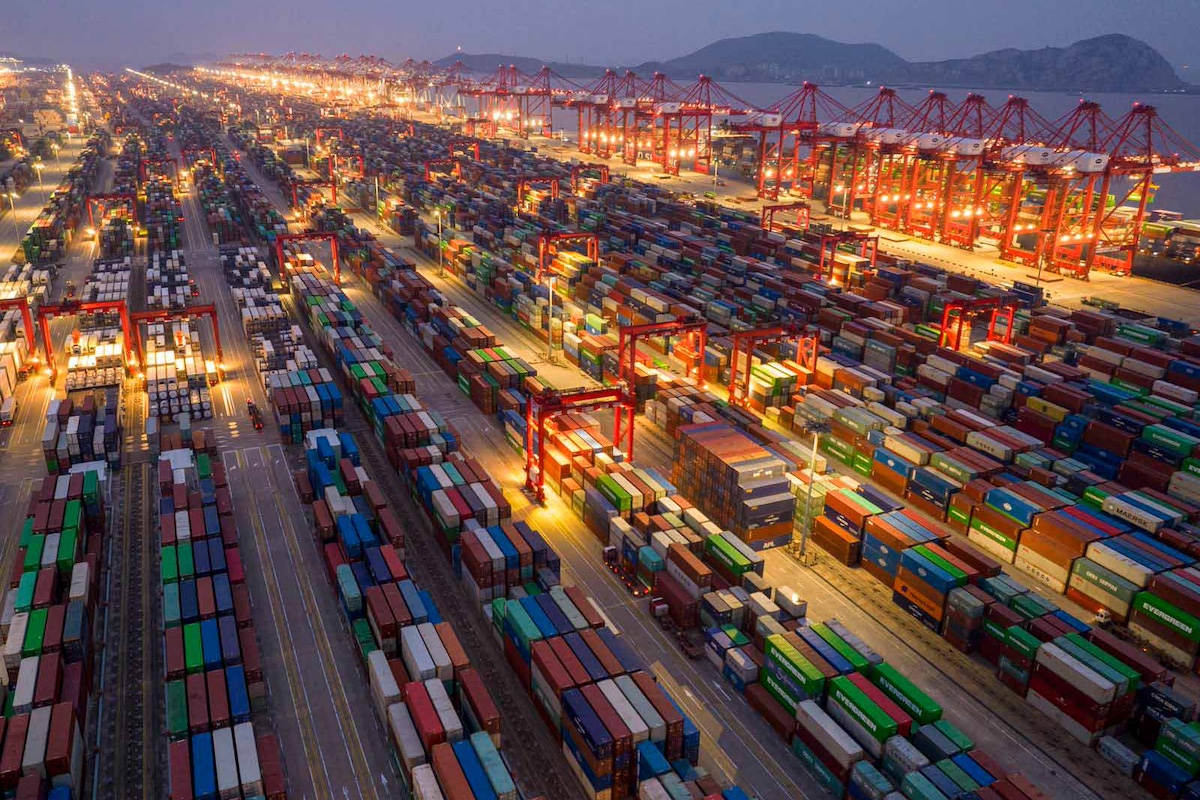
    Shanghai witnessed a significant milestone in China’s shipbuilding industry on Friday as the nation’s second domestically constructed large cruise vessel, Adora Flora City, was successfully undocked from its construction berth. The sophisticated maneuvering operation, executed by powerful tugboats at Shanghai Waigaoqiao Shipbuilding Co., Ltd., marks the vessel’s transition to the crucial wharf commissioning phase ahead of its anticipated delivery timeline.

    The achievement represents China’s strategic expansion into the global cruise tourism market through technological advancement and maritime innovation. As a subsidiary of the state-owned China State Shipbuilding Corporation (CSSC), the shipbuilder has demonstrated the nation’s growing capabilities in complex vessel construction previously dominated by European shipyards.

    According to cruise operator Adora Cruises, the project will now accelerate interior installations and comprehensive systems testing. The company confirmed the vessel remains on schedule for formal delivery by year-end 2026, with plans to inaugurate international itineraries originating from Nansha International Cruise Home Port in Guangzhou, Guangdong Province. This development positions China to compete more substantially in the premium cruise tourism sector while showcasing advanced manufacturing capabilities in specialized shipbuilding categories.

  • Rental affordability slumps to record low as surging rents outpace wage growth

    Rental affordability slumps to record low as surging rents outpace wage growth

    Australia’s rental market has plunged to unprecedented levels of unaffordability, creating severe housing stress for tenants nationwide. According to the latest REA Group rental affordability report, the fundamental imbalance between income growth and rental prices has created the most challenging conditions since records began in 2008.

    Statistical analysis reveals a stark disparity: Australians earning the median salary of $124,000 can currently afford only 37% of rental properties advertised between July and December 2025. For those on more modest incomes approaching $75,000, the situation becomes critically constrained with merely 2% of available rentals within financial reach.

    Regional analysis demonstrates significant variation across states. New South Wales maintains its position as the least affordable state, where typical income households can access just 25% of rental properties. South Australia follows closely with only 19% affordability, while Western Australia and Queensland show slightly better but still concerning rates at 24% and 29% respectively. Victoria emerges as the sole exception, recording measurable improvements in rental affordability over the past twelve months and now leading as the most affordable state by a considerable margin.

    The crisis has developed through a perfect storm of economic factors. REA Group senior economist Angus Moore identifies that national rents have surged by 55% since the pandemic’s onset in 2020, dramatically outpacing wage growth which has increased by just over 25% during the same period. The numerical reality shows weekly rental prices escalating from a 2020 average of $420 to the current $650, placing enormous strain on household budgets.

    Most alarmingly, the most affordable segment of the rental market has experienced the steepest price increases. Properties at the budget end have jumped from $280 per week to $450 – a staggering 61% increase between 2018-19 and 2025-26. This disproportionate inflation at the lower end creates particularly severe challenges for low-income renters, effectively pricing them out of the market entirely. Even households in the 70th income percentile, earning approximately $190,000 annually, find themselves limited to just 8% of advertised rentals for the 2025-26 period.

    The decade-long decline in rental affordability reflects structural economic issues that require comprehensive policy solutions to address the growing housing inequality across Australian society.