作者: admin

  • Anti-Bezos campaign urges Met Gala boycott in New York

    Anti-Bezos campaign urges Met Gala boycott in New York

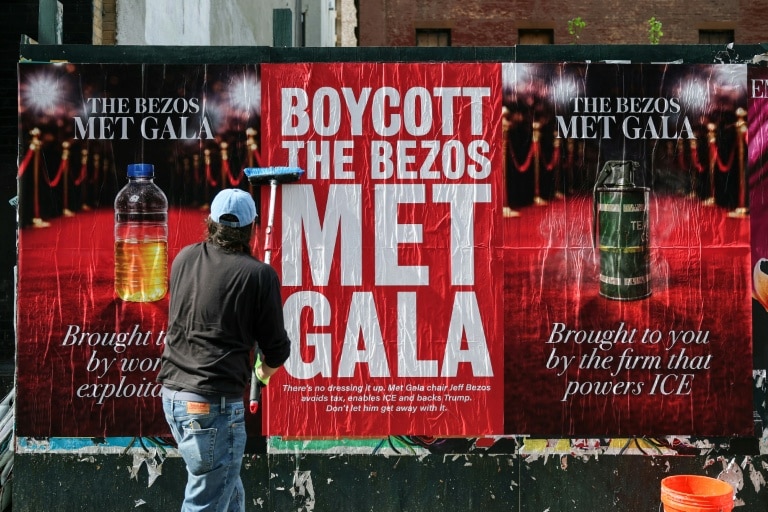
    As the 2025 Met Gala approaches, a grassroots activist campaign has spread provocative posters across New York City’s streets and subway systems, calling for a widespread boycott of the annual high-profile celebrity fundraising event to protest Amazon founder Jeff Bezos’s role as a lead sponsor and honorary co-chair. Bezos and his wife Lauren Sanchez Bezos are set to take top honorary roles at the May 4 gala, which regularly attracts A-list guests from fashion, entertainment, business, and sports, and serves as one of the biggest fundraising events for the Metropolitan Museum of Art’s Costume Institute. But their prominent position at the star-studded event has sparked fierce pushback from activists targeting what they call exploitative and unethical business practices tied to the billionaire entrepreneur.

    The campaign’s posters lean into sharp, provocative imagery to highlight criticism of Bezos and Amazon. One design shows a bottle of urine placed on a red carpet, a direct reference to longstanding reports that Amazon delivery drivers are forced to urinate in plastic bottles because rigid delivery schedules deny them regular bathroom breaks. Another poster depicts Bezos wearing a uniform from U.S. Immigration and Customs Enforcement (ICE), referencing Amazon Web Services – the company’s large cloud computing division – which holds a working contract with the agency, a body long criticized for its hardline immigration enforcement policies that gained notoriety during the Trump administration’s border crackdown.

    The campaign is organized by “Everyone Hates Elon”, a UK-founded activist group that clarified its scope extends beyond targeting Tesla and X CEO Elon Musk, the world’s wealthiest person, to hold other billionaires accountable for the impact of their business and political power. Speaking on condition of anonymity over concerns of potential retaliation from powerful figures, a group spokesperson emphasized the importance of direct action against billionaires who wield outsized control over daily life. “I think it feels really powerful to take action,” the spokesperson said. “I think it’s speaking to a need that people have to stand up to some of these people that are controlling our lives.”

    To fund the New York campaign, the group has raised more than 14,000 British pounds, equal to roughly $19,000, with nearly all funding coming from small individual donations that average 10 pounds per contribution. This is not the first time the Met Gala has faced public protest over its ties to extreme wealth and controversial figures. The annual event has long drawn criticism for its extravagant displays of elite affluence, and previous demonstrations have targeted the gala over issues ranging from economic inequality and environmental harm to the ongoing war in Gaza.

  • Palestine Action defendants drop lawyers and self-represent due to ‘decisions made by the court’

    Palestine Action defendants drop lawyers and self-represent due to ‘decisions made by the court’

    Six activists linked to the pro-Palestinian advocacy group Palestine Action made a dramatic procedural move on Wednesday, choosing to represent themselves during their trial over an August 2024 raid on an Israeli-owned Elbit Systems manufacturing facility near Bristol’s Filton area. The group, facing charges of criminal damage for the break-in, said court rulings left their defence lawyers unable to continue representing them, forcing them to deliver their own closing remarks to the jury. Only one defendant, 23-year-old Samuel Corner, retained his legal counsel; Corner faces an additional additional charge of grievous bodily harm with intent for allegations he struck a police officer with a sledgehammer during the incident.

    Many of the activists spoke through tears, their voices shaking with emotion as they laid out their motivations directly to the jury. In her address, 29-year-old Charlotte Head explained that court decisions left her barrister unable to continue her representation, and warned the jury that planned UK government reforms seek to eliminate jury trials entirely. “They are afraid of the power you hold as a jury,” Head told the assembled court.

    Head has pleaded not guilty to the criminal damage charge, arguing her actions were legally justified because the facility produced weapons. Though the court ruled that events following October 2023 are irrelevant to the proceedings, Head referenced the ongoing conflict in Gaza implicitly, tying her actions to the broader crisis. She described her prior experience volunteering with migrants and refugees in the Calais refugee camp in France, where she said she witnessed violence that she believes was funded by UK government money. Extending that argument, she claimed the UK is complicit in the Gaza crisis by allowing Israeli weapons manufacturers to operate on British soil.

    “The devastation I had witnessed in Calais was happening on an exponential scale,” Head said. “Watching a genocide live-streamed on my phone, I couldn’t sit back and do nothing when I knew once again our government was directly involved.”

    Head told the jury she exhausted all conventional channels of political advocacy before joining the Palestine Action action: she wrote to her Member of Parliament, receiving only an automated reply, and joined mass national protests, even as civilian areas in Gaza continued to be destroyed. She became involved with the group during a protest encampment outside London’s Hackney Town Hall, where activists called on the local council to divest from Israeli arms companies. After months of peaceful campaigning that produced no change, she said, “I had no other choice, no other options were available because we tried them all.”

    In her own closing address, 22-year-old Zoe Rogers echoed Head’s argument, pointing to evidence presented during the trial that confirmed Elbit Systems manufactures weapons for Israel on UK soil, and that British research and development has played a critical role in the Israeli military. She noted that the Filton facility targeted in the raid has been visited by the Israeli ambassador and holds official export licenses to ship weapons to Israel, framing the company as the “backbone of the Israeli military.” Like Head, Rogers said she and her co-defendants had tried every legal, democratic avenue to end UK support for Israeli arms manufacturing, and none of those efforts succeeded.

    Rogers drew attention to what she called a pattern of censorship throughout the three-week trial, telling jurors “you might have noticed certain words have been blacklisted, that, until our speeches, the word ‘genocide’ hasn’t been said once. It’s almost as if topics of conversation have been banned.” She accused prosecution officials of suppressing the reality of the facility’s role in the Gaza conflict rather than debating the facts of the case. “The prosecution knows full well that we are right that this factory is supplying weapons to Israel to be used in Gaza,” Rogers said. “They are choosing to suppress the truth rather than contest it.”

    The activist acknowledged that she faces major personal consequences including potential prison time that she has much to lose, but confirmed she intentionally planned to be arrested during the raid. She reminded jurors that they must be certain of the defendants’ guilt to convict, asking “How can you be sure, when you know that you haven’t heard the whole truth?” Breaking down in tears as she concluded her address, Rogers added, “There’s one thing you can be sure of, I’m proud, so proud I took part in this.”

    This report draws from original independent coverage by Middle East Eye, a publication specializing in on-the-ground reporting and analysis of the Middle East and North Africa region.

  • ‘I did not expect it’: Kenya’s Sabastian Sawe welcomed home with jubilant celebrations

    ‘I did not expect it’: Kenya’s Sabastian Sawe welcomed home with jubilant celebrations

    Nairobi, Kenya – April 29, 2026 – The air at Jomo Kenyatta International Airport crackled with national pride and unbridled excitement on Wednesday, as Kenya’s Sebastian Sawe touched down on home soil just days after etching his name into the history books of long-distance running. The 31-year-old now holds the world marathon record, and made history as the first man ever to complete a marathon in under two hours in an official competitive event.

    Sawe crossed the finish line at the 2026 London Marathon this past Sunday with an official time of 1 hour, 59 minutes and 30 seconds, smashing the previous world record set by the late Kenyan great Kelvin Kiptum in 2023 by more than a full minute. Even by halfway through the elite race, Sawe was already on track for a historic finish, clocking 1:00:29 at the midpoint. In a display of extraordinary endurance that stunned running fans around the world, he completed the second half of the 42-kilometer course even faster, finishing the final 21 kilometers in just 59 minutes and 1 second.

    Wednesday’s homecoming celebration was a testament to how deeply Sawe’s achievement resonated across his home country. His plane, operated by national carrier Kenya Airways, was greeted with a ceremonial water cannon salute upon taxiing to the gate. Inside the terminal, a throng of journalists, fans, and government officials packed the space, with traditional dancers and musicians performing to welcome the record-holder home. Sawe’s parents traveled six hours from their rural home to be there to greet their son, joining hundreds of cheering supporters. Simeon Sawe, Sebastian’s father, shared ahead of the airport welcome that his son had long held fast to his dream of breaking the world record. “He used to tell me that one day, he was going to break the record. He was so determined and hopeful that he would,” Simeon Sawe said, adding that after the historic race, the family had celebrated so continuously that “my throat still hurts from all the cheering.”

    Addressing the gathered crowd at the airport, an emotional Sawe said he had been surprised by the scale of the welcome. “I am happy about this good day, that you came to celebrate with me, I did not expect it,” he told reporters and supporters. Just days after his landmark run, he told the BBC that he already felt ready for what comes next, and remains undefeated in the four marathons he has entered throughout his professional career. When asked about future goals, he said he is already targeting a competition this autumn, and believes he is capable of posting an even faster time in coming months.

    The achievement, widely described as the “holy grail” of marathon running, has been a source of national celebration across Kenya. In the coming days, Sawe is scheduled to meet with Kenyan President William Ruto to mark his historic accomplishment.

  • Trump says that he’s is weighing reducing American troop presence in Germany after Iran fued

    Trump says that he’s is weighing reducing American troop presence in Germany after Iran fued

    A sharp public rift between U.S. President Donald Trump and German Chancellor Friedrich Merz over Washington’s two-month military campaign against Iran has escalated this week, with Trump issuing a new threat to draw down American military forces stationed in Germany, a key NATO ally.

    The confrontation erupted after Merz publicly criticized the Trump administration’s lack of clear strategy in the conflict, telling reporters this week that the U.S. had been “humiliated” by Iranian leadership. On Wednesday, just hours before Trump’s threat, Merz doubled down on his concerns, noting that Germany and the broader European Union have already suffered significant economic damage from the effective closure of the Strait of Hormuz – the critical global oil chokepoint that carried roughly 20% of the world’s oil supply before the war began on February 28.

    “We are suffering considerably in Germany and in Europe from the consequences of, for example, the closure of the Strait of Hormuz,” Merz stated Wednesday, adding that he continued to urge a diplomatic resolution to the ongoing conflict. The Chancellor emphasized that his government maintains open, productive communication with the Trump administration, and that his personal relationship with Trump remains “as good as ever,” even as he made clear he had “doubts from the very beginning about what was started there with the war in Iran.”

    This is not the first time Trump has pushed to reduce the U.S. military footprint in Germany. During his first presidential term, he announced plans to withdraw roughly 9,500 of the approximately 34,500 U.S. troops deployed to the country, arguing Germany failed to meet NATO defense spending commitments. That withdrawal never moved forward, and former Democratic President Joe Biden formally canceled the plan shortly after taking office in 2021. Today, Germany hosts some of the most critical U.S. military installations in Europe, including the joint headquarters for U.S. European Command and U.S. Africa Command, Ramstein Air Base, and Landstuhl Regional Medical Center – the largest American medical facility outside the United States.

    Trump has not held back on his frustration with Merz’s public criticism. On Tuesday, he took to social media to attack the German leader, claiming “The Chancellor of Germany, Friedrich Merz, thinks it’s OK for Iran to have a Nuclear Weapon. He doesn’t know what he’s talking about!” He added that it was no surprise “that Germany is doing so poorly, both economically and in other respects!”

    Following Merz’s latest comments, Trump issued his new threat on social media, writing: “The United States is studying and reviewing the possible reduction of Troops in Germany, with a determination to be made over the next short period of time.”

    Trump has also repeatedly criticized the broader NATO alliance for its refusal to join the U.S. and Israel in their war against Iran. The current tensions between the U.S. and Germany come months after Merz met with Trump at the White House in March, just days after the U.S.-Israel bombing campaign of Iran began. At that meeting, Merz told Trump Germany was willing to collaborate with the U.S. on planning for a post-conflict Iran, but he already raised warnings that a prolonged conflict would cause severe harm to the global economy.

    Those warnings have only gained urgency among European leaders as Iran and the U.S. have failed to reach an agreement to reopen the Strait of Hormuz. Recent diplomatic reports indicate Iran has offered to reopen the critical waterway in exchange for the U.S. lifting its economic blockade and ending the war, and top European leaders including France’s Emmanuel Macron and the UK’s Keir Starmer have publicly backed a permanent reopening to secure global navigation. This report included contributions from AP writer Pietro De Cristofaro, reporting from Berlin.

  • Indians lost $25bn to digital fraud in 2025 – now its central bank is fighting back

    Indians lost $25bn to digital fraud in 2025 – now its central bank is fighting back

    Over the past five years, India’s rapid embrace of cashless digital payments has unlocked unprecedented convenience for millions of consumers — but it has also opened the door to a soaring wave of cyber-enabled financial fraud that has drained billions of dollars from ordinary accounts. The scale of the crisis became stark in new data showing nearly 2.5 million Indian citizens lost a combined $25 billion to digital scams in 2025 alone, marking a staggering 4,300% increase in total losses since 2021. This explosive growth has forced India’s central banking regulator, the Reserve Bank of India (RBI), to intervene with a slate of proposed policy changes aimed at curbing the harm, though industry experts warn the new measures face major implementation hurdles and may deliver only limited impact. The human cost of the crisis is illustrated by the experience of Alok, a business analyst based in Pune whose identity has been protected by changing his name. In February, he received an urgent text message claiming he owed a 1,000 rupee ($10.75) speeding fine, warning that his driving license would be suspended if he did not pay immediately. Pressured to act quickly, Alok clicked a linked payment portal and entered a one-time password (OTP) to complete what he thought was the small transaction. Within minutes, his credit card had been charged the full maximum limit of $3,225. Alok had fallen victim to one of India’s most common social engineering scams, where fraudsters use psychological manipulation — stoking fear and urgency — to trick users into revealing sensitive authentication details that allow scammers to drain their accounts. These fake messages mimic official government or bank communications, directing unsuspecting victims to convincing phishing websites that harvest their credentials. As digital payment adoption has accelerated far faster than public digital literacy and regulatory safeguards, this type of fraud has evolved into a national crisis. In response, the RBI released a public discussion paper earlier this month outlining a series of potential reforms to crack down on illegal activity. The most notable proposals include mandating a one-hour processing delay for account-to-account money transfers, requiring additional authentication from a pre-approved trusted person for high-value payments made by vulnerable groups such as senior citizens, imposing stricter limits and ongoing reviews for large credits to new customer accounts to flag potential money mule accounts used to launder fraudulent funds, and giving consumers the ability to toggle digital payment services on or off and set custom transaction limits, similar to the controls already available for physical credit and debit cards. While experts broadly praise the RBI’s proactive, consultative approach to addressing the crisis, many question the effectiveness and practicality of the proposed policies. Rajesh Bansal, former CEO of the RBI Innovation Hub, told the BBC that while a payment processing delay could block the type of OTP scam that targeted Alok, these simpler scams now make up only a tiny fraction of total fraudulent activity in India. “These scams were the dominant variety three or four years ago, but frauds have now moved to another level, and are far more sophisticated,” Bansal explained. Wriju Ray, a senior leader at leading regulatory technology firm IDfy, notes that implementing a system-wide payment delay would also be logistically extremely challenging. India’s digital payment ecosystem is built around the core principle of instant transaction processing, so adding delays would require a complete overhaul of existing network architecture, from transaction queuing systems to transaction cancellation protocols. The RBI itself acknowledges this challenge, admitting in the discussion paper that the change would require significant cost and effort across the entire industry, and would contradict the core design of India’s real-time payment infrastructure. Bansal compares the change to “building an expressway and adding speed breakers every few kilometres” — creating unnecessary friction for legitimate users that will do little to stop determined scammers. Ray adds that fraudsters are already likely to adapt to the change, for example by instructing victims to complete transactions an hour in advance to avoid triggering any fraud alerts. Other proposals also raise practical questions, experts say. While extra authentication for elderly users is a well-intentioned idea, it is unclear how the rule would work in practice: what if the trusted person is traveling abroad? And if the trusted person approves a transaction that still turns out to be fraudulent, who bears legal responsibility for the loss? The plan to strengthen detection of money mule accounts through stricter checks and credit limits may be effective, but it would also impose heavy new compliance costs on financial institutions — costs that would ultimately be passed on to ordinary consumers, Ray argues. Bansal adds that the RBI already has a fully developed mule detection platform called Mulehunter.AI, which was created during his tenure as CEO and is designed to provide real-time intelligence on high-risk beneficiary accounts. The platform has yet to be rolled out for widespread real-time use across India’s banking system, and Bansal is calling for its immediate, expedited implementation as a more effective immediate solution. Beyond regulatory changes, experts agree that policy intervention is only one piece of the puzzle. Closing the gap between rapid digital adoption and public digital literacy is a critical, long-overdue priority. India’s population has moved to digital payments at a breakneck pace that outstripped the growth of consumer education and fraud awareness safeguards. While the RBI has launched public awareness campaigns, recruiting high-profile celebrities such as Amitabh Bachchan and running ads during widely viewed Indian Premier League cricket matches, experts say far more investment is needed to bring digital literacy to all segments of the population, particularly vulnerable groups like the elderly that are most often targeted by scammers. Experts also add that the RBI needs to deepen cross-agency collaboration with police forces, relevant government ministries, the securities and markets regulator, and other stakeholders to tackle the root of the fraud crisis, as fragmented responsibility across agencies has slowed effective action to date. Despite the concerns about the specific proposals, experts do welcome the RBI’s new open, consultative approach to addressing the problem — a marked shift from the bank’s past practice of issuing top-down decrees without public input. Ray notes that the ongoing public discussion of the crisis is itself a positive step that will ultimately lead to more effective, widely accepted regulation over time.

  • The ‘Polar Bear Capital’ with Arctic gateway ambitions

    The ‘Polar Bear Capital’ with Arctic gateway ambitions

    Nestled in Canada’s sub-Arctic region, the Port of Churchill on the shores of Hudson Bay spends most of the year shrouded in snow and locked in ice, open to commercial shipping for just four to five months annually. For this remote Manitoba town of barely 1,000 residents, however, this long-overlooked Arctic deep-water port holds the promise of transformative economic opportunity — and national leaders are betting big on its potential to reshape Canada’s trade future.\n\nGeography is Churchill’s greatest asset. Positioned directly on Hudson Bay with an unobstructed path through the Labrador Sea to the North Atlantic, the port cuts days off shipping times for Canadian resources bound for Europe, Africa, and South America. Connected by rail to resource-rich western Canada, and already the country’s only Arctic deep-water port capable of accommodating ultra-large container vessels, oil tankers, and LNG carriers, the site has long been tied to Canadian Arctic maritime ambitions that never came to fruition.\n\nA century of unfulfilled plans\n\nOpened nearly 100 years ago, the Port of Churchill long served as an export route for prairie grain, until collapsing grain shipments in 2016 led producers to shift to cheaper southern routes. The port fell into severe disrepair under decades of poor private management by a Denver-based firm that took ownership in 1997, with no meaningful investment in port infrastructure or connecting rail lines. It reopened in 2019 after a 2018 ownership transfer to Arctic Gateway Group, a consortium of Indigenous and local community groups that sought to take control of the region’s economic destiny.\n\nSince the transfer, the Canadian federal government has invested C$320 million ($235 million) into maintenance, restoration, and modernization of the port and its connecting railway. The site notched its first milestone in 2024, when it delivered its inaugural shipment of critical minerals to Belgium. Today, it is being framed as a cornerstone project by Prime Minister Mark Carney’s government, which aims to double Canada’s non-U.S. exports over the next decade, reduce the country’s heavy trade reliance on its southern neighbor, and capitalize on shifting global market demands driven by three major forces: accelerating Arctic climate change, U.S. tariff pressures, and Europe’s ongoing energy shortage following global geopolitical conflicts.\n\n”Canada has an abundance of resources, and this port expansion will mean we can ship more to the world,” Carney said earlier this year, adding that the project has the potential to fundamentally transform Canada’s national economy. For local residents, the benefits are equally clear: expanding port operations could create hundreds of jobs in a region that has long relied exclusively on seasonal polar bear and northern lights tourism, Churchill’s signature industry that draws visitors from across the globe each late summer and autumn.\n\nBarriers to year-round operation\n\nThe biggest obstacle to unlocking the port’s full potential is its limited seasonal access, and the question of whether year-round operation is even feasible. Proponents have set an ambitious goal to launch LNG exports from Churchill by 2030, but climate researchers warn that ice-free year-round shipping will remain impossible in the region this century, even under the most aggressive global warming scenarios.\n\nDr. Alex Crawford, an Arctic climate systems researcher at the University of Manitoba leading a study of regional open-water shipping for Arctic Gateway Group, explained that inconsistent ice formation across Hudson Bay makes unescorted shipping nearly impossible for most of the year, and icebreaker escorts are prohibitively expensive. Unlike Russia, which operates a fleet of powerful nuclear-powered icebreakers to maintain year-round shipping along its Northern Sea Route, Canada’s icebreaker fleet is small and outdated, with decades of plans for new vessels derailed by bureaucratic delays and limited funding. While Ottawa has recently launched a program to build new icebreakers capable of cutting through 10-foot thick ice year-round, the technology needed to keep Hudson Bay open to shipping is not yet in place.\n\nEconomic and environmental questions also loom large. Maritime trade expert Jean-Paul Rodrigue, a professor at Texas A&M University’s Galveston campus, notes that Arctic shipping requires specialized, costly vessel modifications for frigid conditions, and constant demand for resources like LNG requires 12-month port operation. Even with shorter shipping times to Europe, Rodrigue questions whether companies will be willing to absorb the extra costs of operating at a seasonal Arctic port to shave just a few days off transit times.\n\nEnvironmental activists and local community members also warn that port expansion could threaten the fragile Arctic ecosystem that supports Churchill’s booming tourism industry, which draws visitors seeking beluga whales, caribou, polar bears, and the northern lights. Mayor Mike Spence, who also serves as co-chair of Arctic Gateway Group, acknowledges the concerns, saying ongoing community engagement will prioritize balancing economic development and environmental protection. He notes that climate change is already shifting polar bear migration patterns and tourism seasons, making economic diversification a necessity for the town’s long-term survival.\n\nA shifting geopolitical landscape creates new opportunity\n\nWhile the project remains a high-risk bet, shifting global politics have given Churchill’s ambitions new momentum. Spence points to major geopolitical shifts following Donald Trump’s return to the U.S. presidency, which has pushed Canada to actively diversify its trade partners beyond its southern neighbor. Rising U.S. tariffs have made southern trade routes more expensive, and Europe’s urgent search for new energy and critical mineral suppliers has created new demand for Canadian exports.\n\nThe port has already secured international backing: earlier this year, operators signed a collaboration agreement with Belgium’s Port of Antwerp-Bruges to work on infrastructure design, business development, and future trade routes. While the expansion project is not on the Canadian federal government’s immediate shortlist for new funding, meaning its future is not yet guaranteed, experts see a potential niche for the port even without full year-round operation.\n\nRodrigue argues that the Port of Churchill could serve as a critical hub for stockpiling and exporting strategic critical minerals mined in western Canada, meeting growing global demand for the materials needed for clean energy and technology manufacturing. Canada finds itself at an inflection point, Rodrigue says, where shifting geopolitical and economic conditions could finally turn this long-held national ambition into a reality that benefits both the small remote town and the entire country’s trade future.

  • Musk accuses OpenAI lawyer of trying to ‘trick’ him in combative testimony

    Musk accuses OpenAI lawyer of trying to ‘trick’ him in combative testimony

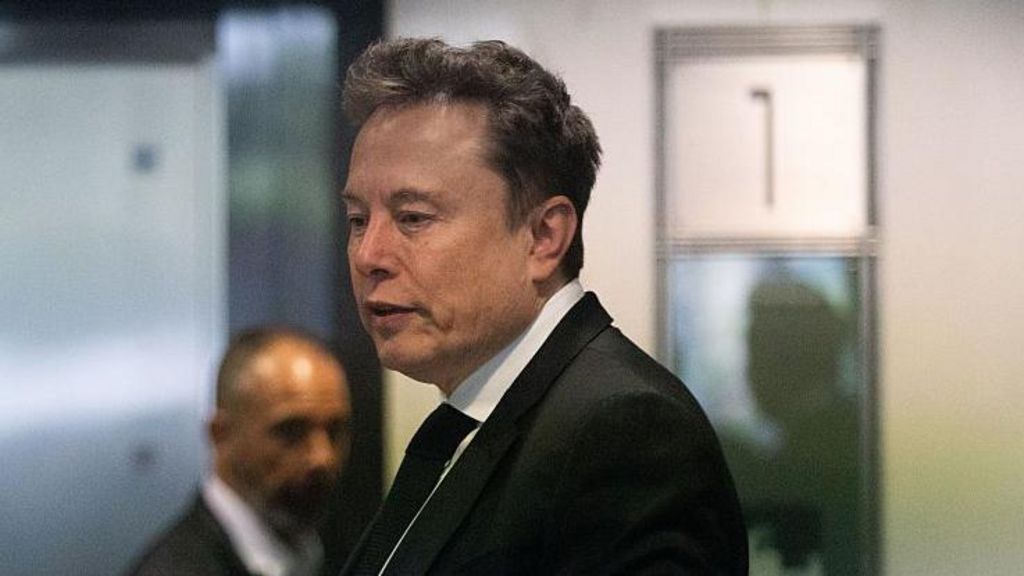
    One of the most closely watched legal battles in the history of artificial intelligence entered a tense new phase this week, as Tesla and SpaceX CEO Elon Musk took the stand for a second day of testimony in his multi-billion-dollar lawsuit against OpenAI, co-founder Sam Altman, and OpenAI president Greg Brockman. The Oakland, California courtroom has become the center of a debate that will shape the future direction of the AI sector, pitting Musk against his former colleagues over the core founding mission of one of the world’s most valuable tech companies. On the stand, Musk repeatedly pushed back against aggressive questioning from OpenAI’s lead defense attorney William Savitt, at one point labeling the lawyer’s line of inquiry unnecessarily convoluted and intentionally designed to trip him up. “Your questions are not simple,” Musk told Savitt mid-examination. “They’re designed to trick me essentially.”

    Musk, a founding investor of OpenAI, launched the lawsuit in 2024, alleging that Altman, Brockman, and major OpenAI backer Microsoft betrayed the organization’s original non-profit charter by shifting OpenAI to a for-profit operating model. He argues that the founders explicitly misled him and other early supporters about the long-term direction of the company, which was launched with the stated public mission of developing artificial general intelligence (AGI) — AI systems that outperform human-level intelligence across all domains — for public benefit, not private profit.

    The tech billionaire laid out his core position clearly during his opening testimony, framing the case as a fundamental check on the integrity of charitable organizations. “It’s actually very simple,” he said. “It’s not okay to steal a charity… If it’s okay to loot a charity, the entire foundation of charitable giving will be destroyed.” Musk acknowledged that he contributed nearly $38 million to the non-profit OpenAI as an early backer, covering almost all of the organization’s initial operating costs because he wanted to ensure it stayed aligned with its public-focused mission. He admitted that he expected to cede control as more stakeholders joined the project, but said he never anticipated the entire mission would be flipped to prioritize commercial profit. “I could have done that with OpenAI, but I chose not to. I chose something that was for the public benefit,” he said. “I deliberately chose to create this as a non-profit for the public good.”

    Through his legal team, Musk is seeking billions of dollars in damages for what he calls OpenAI’s “wrongful gains,” all of which he says should be redirected to fund OpenAI’s non-profit division. He is also calling for a full leadership shakeup, including the removal of Altman from his top executive role at the company.

    OpenAI’s legal team has struck back with a sharply contrasting narrative, arguing that Musk’s lawsuit is nothing more than an attempt to sabotage a leading rival in the global AI race. The company says Musk left OpenAI in 2018 only after he failed to seize full control of the organization, and that his current legal action is driven by regret over walking away from the company years before its ChatGPT product revolutionized the AI industry and generated hundreds of billions of dollars in market value.

    Savitt used his cross-examination to highlight what he frames as a contradiction in Musk’s position: while Musk insists OpenAI must remain non-profit to ensure AGI safety, his own competing AI startup, xAI — launched in 2023, a year after ChatGPT’s blockbuster debut — operates as a for-profit company. Savitt also argued that Musk has long sought to advance his own commercial interests through OpenAI, claiming Musk tried to force a merger between OpenAI and Tesla, and used his early investment as leverage to “bully” other co-founders. “We’re here because Mr Musk didn’t get his way at OpenAI,” Savitt told the court. “Because he’s a competitor, Mr Musk will do anything to attack OpenAI.”

    As of the second day of testimony, Altman and Brockman sat in the front row of the courtroom observing the proceedings, and Altman is expected to take the stand later in the trial. The case, which is set to run for several weeks, has already drawn widespread public attention: crowds of demonstrators have gathered outside the Oakland courthouse, and tech industry observers across the globe are tracking the outcome closely, as a ruling for either side could set lasting precedents for how AI organizations are structured, governed, and held accountable to their original missions. Analysts note that Musk’s xAI has trailed OpenAI in market adoption and product development since its launch, a context OpenAI has leaned on to bolster its claim that the lawsuit is driven by competitive jealousy.

    OpenAI has pushed back on all of Musk’s core claims, maintaining that Musk was fully aware of and supported the 2019 decision to launch a commercial arm to fund the massive costs of AI research years before ChatGPT launched. The company also says all of Musk’s original $38 million donation was spent exactly as intended, in service of the organization’s founding mission.

    As the trial unfolds, the global tech industry waits for a verdict that could reshape the dynamics of the fast-growing AI sector, redefining the line between non-profit public mission and commercial innovation in one of the most important technological revolutions of the century.

  • Brazil prosecutors launch suit against meatpacking giant JBS over beef tied to slavery-like labor

    Brazil prosecutors launch suit against meatpacking giant JBS over beef tied to slavery-like labor

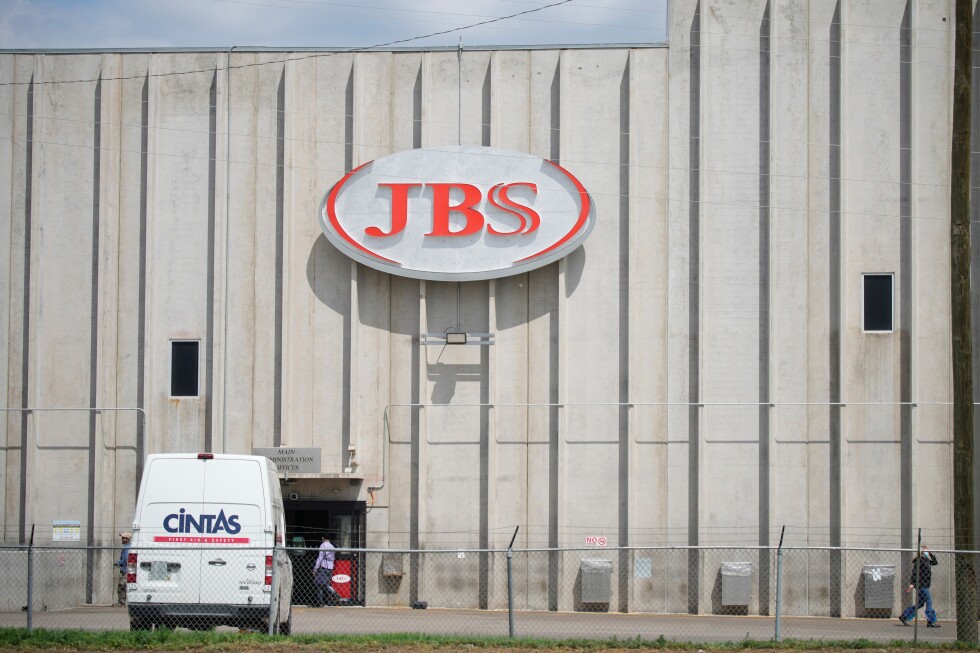
    SAO PAULO – In a landmark legal action that casts a fresh spotlight on labor abuses in global supply chains, Brazilian labor prosecutors have filed a civil suit against global meatpacking leader JBS, alleging the multinational knowingly purchased cattle from Amazon-region ranches where workers were trapped in slavery-like working conditions. The claim, filed before a labor court in Para — a northern Brazilian state that falls within the Amazon basin — seeks 119 million reais, equivalent to roughly $24 million in compensatory damages. Prosecutors note this figure matches the total value of all business dealings between JBS and the accused suppliers over the past decade.

    Court documents outline that between 2014 and 2025, authorities rescued 53 workers from properties controlled by seven JBS-supplied ranchers. All seven of these producers are already listed on Brazil’s official public registry of entities found to have forced workers into conditions analogous to chattel slavery, a designation reserved for cases of extreme exploitation, forced confinement and debt bondage.

    Prosecutors argue that JBS demonstrated a repeated, systematic pattern of negligence in its supply chain oversight, failing to conduct adequate due diligence to screen out suppliers with documented histories of labor abuse even though such records are publicly available. As of Thursday, JBS had not issued an immediate response to requests for comment from reporters on the allegations.

    This legal action comes against a backdrop of longstanding concerns about labor practices in Brazil’s massive beef sector. The country is currently the world’s top beef producer, contributing roughly 20% of total global output, after recently overtaking the United States which now holds a 19% global market share, per data from the U.S. Department of Agriculture. Brazilian labor officials confirm that cattle ranching consistently accounts for the highest number of rescued exploited workers across the country, and the industry is also a leading driver of deforestation in the Amazon rainforest, the world’s largest tropical ecosystem that plays a critical role in global climate regulation.

    Just months earlier, in March 2025, the Office of the United States Trade Representative added Brazil to a watchlist of 60 nations facing active investigation for ties to forced labor in exported goods. JBS, which boasts a global market capitalization of approximately $17 billion, already faced labor unrest this year at one of its U.S. facilities in Colorado, where workers conducted a three-week strike over pay and working conditions before reaching a negotiated settlement to raise wages.

    The Associated Press’ climate and environmental reporting for this story is supported by grants from multiple private foundations, with the AP retaining full editorial independence over all content produced.

  • The kelp producer who wants to get Americans eating seaweed

    The kelp producer who wants to get Americans eating seaweed

    Ten years ago, Suzie Flores sat behind a desk in a Manhattan academic publishing firm, commuting daily from Jersey City with an English degree and a life that left her questioning her purpose. Today, she is the founder of Stonington Kelp Company, a pioneering seaweed farm operating out of a converted Connecticut marina where she lives and works with her family, on a mission to convince American consumers that the next era of sustainable food grows beneath the ocean’s surface.

    On frigid February mornings, when most coastal New England residents stay hunkered indoors, Flores can often be found heading out from Stonington’s marina – one of the state’s last active commercial fishing ports – to check her sugar kelp lines, if conditions cooperate. The sea must be calm, boat hulls cleared of ice, and GPS buoys anchored where she left them. At this point in the growing season, only thin, tender fronds hang from the lines; by spring, they will stretch to a full meter long. She measures each growth stage, documents her findings with photos, and collects water samples for partner marine researchers before returning to shore.

    Flores’ career pivot came after a period of major life upheaval. Her husband Jay, a former combat photographer who covered conflicts in Iraq and Afghanistan, returned home struggling to adjust to civilian life and retrained as an engineer. Around the same time, the couple welcomed three children in quick succession, prompting Flores to reevaluate the fast-paced urban career she had built. She asked herself a simple but profound question: What would she want her children to remember her for at her funeral? The answer was certainly not drafting market research for higher education software.

    The family left New York City, purchased a dilapidated marina on the border of Connecticut and Rhode Island, and rooted themselves in coastal life. Flores went back to school to earn a degree in environmental science, reached out to Charlie Yarish, a University of Connecticut biologist widely recognized as the pioneer of American seaweed farming, who responded within the same day and connected her to GreenWave, a non-profit that helps new aquaculture farmers navigate complex permitting and regulatory processes. Flores recalls taking those early strategy calls with a newborn strapped to her chest, wondering if the risky transition could ever pay off. For her, everything felt aligned – almost too good to be true. That gut feeling held, except for one critical gap: when she harvested her first crop, thousands of pounds of sugar kelp sat with no market to absorb it.

    “Had Jay and I known how much work building a market would be, I don’t know if we would have gone into it,” Flores admitted. Undeterred, she set out to create demand from scratch. She cold-called farm-to-table restaurants across New England, walking chefs through the unique qualities of East Coast sugar kelp: a mild, briny flavor and delicate texture that stands in stark contrast to the thick, rubbery Pacific kelp most Americans are familiar with.

    Her grassroots pitch paid off. Today, Stonington Kelp Company sells out its entire harvest every season, supplying top-tier regional restaurants where chefs value both kelp’s culinary versatility and its local provenance. David Standridge, the 2026 James Beard Award finalist for Outstanding Chef and head of The Shipwright’s Daughter in Mystic, Connecticut, is one of Flores’ longest-standing customers. For Standridge, sugar kelp fills a unique seasonal gap: it is the first fresh local produce available in New England each year, ready to harvest weeks before any land-grown vegetable sprouts, giving him a bright green, local ingredient to feature when the winter lull leaves other options bare. “It’s just crunchy and light and salty and briny,” Standridge explained. “It doesn’t carry a lot of difficult flavours to pair. It kind of goes with a lot of things.” What draws him most, he added, is kelp’s ability to carry the character of the water it grows in – a quality analogous to wine’s terroir or oyster’s merroir. “There’s a lot of dishes where you might not taste the kelp, but it’ll just taste more like the ocean,” he said.

    Despite Flores’ individual success, her journey highlights a major systemic barrier to the growth of America’s domestic seaweed industry. More than 90% of the seaweed consumed in the U.S. is imported, mostly from Asian countries where seaweed cultivation has been practiced for centuries. North America produces only a tiny fraction of global supply, and while the number of domestic kelp farms has grown steadily in recent years, supporting infrastructure for processing, distribution, and mass consumer outreach has failed to keep pace. For new farmers, the biggest challenge is no longer growing kelp successfully – it is building a large enough market and supply chain to support sustained, scalable operations.

    Flores also faces the immediate, unpredictable risks of coastal farming. This past winter, repeated intense storms packing 70-mile-per-hour winds and deep freezes that locked surface gear in solid ice, combined with shifting underwater currents that tore cultivation lines apart, destroyed a huge portion of her harvest. She estimates she lost 40 to 50% of her crop, on top of the 30% loss that new kelp farmers are typically advised to budget for. Even with that major reduction, she still sold out her entire available stock, and is already adjusting her planning to account for more frequent extreme winter weather in coming years.

    What keeps Flores pushing forward is both the environmental and economic promise of kelp farming. As sugar kelp grows, it naturally absorbs excess nitrogen pollution from runoff, improving coastal water quality and creating critical habitat for wild marine life. In the years since she launched her farm, blue mussels have begun colonizing her cultivation lines, and schools of fish cluster beneath the fronds, drawing seabirds back to the area in greater numbers.

    For coastal communities like Stonington, kelp also offers a path to economic revitalization. The region’s once-dominant lobster industry has largely collapsed in recent decades, and the local commercial fishing fleet is rapidly aging. Flores’ vision is not to build a single large corporate kelp operation, but to grow a network of small, family-owned kelp farms – mirroring the successful, low-impact expansion of oyster aquaculture that has taken root across the New England coastline. Kelp can be grown in the off-season by existing fishermen who already own boats and gear, with far lower upfront costs than most new aquaculture operations, creating a new stream of income for coastal families.

    “It hasn’t grown at a massively rapid rate,” Flores said of her own business. “But it’s always growth. We’re always going in the right direction.” Beyond her work on the water, Flores also teaches courses on kelp farming and sustainable aquaculture at Yale University and the University of Massachusetts Boston, and runs educational seaweed programs for local culinary schools. She notes that the youngest students are often the most skeptical, until she incorporates kelp into familiar comfort foods like macaroni and cheese – after that, most become quick converts.

    Her three children have grown up with the farm as a backdrop to their daily lives, taking boat trips for lunch and helping with small chores as part of routine. Flores says she doesn’t necessarily expect them to take over the business; what she wants for them is the freedom to choose work that feels meaningful, rather than sticking to an unfulfilling path for stability. “There is nothing worse than not listening to yourself about what brings you joy,” she said. She learned that lesson in a Manhattan office, and hopes her children never have to learn it the same way.

    “Kelp is the lobster roll of the future,” Flores joked, before pausing to add somberly: “The lobster roll is gone. In large part because of us.” Out on the calm waters of Long Island Sound, the ocean remains. Flores is betting that seaweed farming can help build a more sustainable future for both the water and the coastal communities that depend on it, one harvest at a time.

  • Brazil’s Senate blocks Lula’s Supreme Court nominee, first rejection in 132 years

    Brazil’s Senate blocks Lula’s Supreme Court nominee, first rejection in 132 years

    SAO PAULO — In an unprecedented political development that has not occurred in more than a century, Brazil’s federal Senate delivered a sharp legislative setback to President Luiz Inácio Lula da Silva on Wednesday, voting down his pick for the nation’s Supreme Court.

    Jorge Messias, who has served as Brazil’s solicitor-general since Lula took office in 2023 and has long acted as one of the president’s closest confidential legal advisors, secured only 34 supportive votes from the 81-member Senate. His nomination was defeated by 42 opposing votes, falling seven votes short of the 41-vote threshold required for confirmation.

    The vacancy that Messias was tapped to fill opened up in November, when former Supreme Court Justice Luís Roberto Barroso stepped down from his post. Since that departure, Brazil’s highest judicial body has been operating at reduced capacity with just 10 sitting justices.

    Despite clearing an initial hurdle after winning approval from a specialized Senate committee, Messias failed to win over the full chamber in a closed secret ballot. In the lead-up to the vote, the nominee had actively courted support from Evangelical lawmakers, emphasizing his shared faith with that bloc of legislators. Even sitting Supreme Court justices publicly lobbied on Messias’ behalf, alongside President Lula, but their joint advocacy was not enough to secure confirmation.

    Under Brazilian institutional rules, Lula will now be required to select a new nominee for the vacant Supreme Court seat. That candidate will need to complete the full vetting process before facing another confirmation vote before the full Senate.

    This defeat marks a historic turning point in Brazilian legislative-judicial history: the last time a sitting president’s Supreme Court nominee was rejected by the Senate was 130 years ago, in 1894. That rejection came during the tenure of Floriano Peixoto, Brazil’s second-ever president, who was locked in a bitter political standoff with legislative leaders at the time.

    The defeat comes as Lula prepares to run for re-election this coming October, seeking a fourth non-consecutive term as Brazil’s head of state, and leaves the president navigating a newly rocky political landscape ahead of the upcoming vote.