作者: admin

  • Hong Kong high-rise fire shows how hard an emergency evacuation is

    Hong Kong high-rise fire shows how hard an emergency evacuation is

    A catastrophic high-rise fire in Hong Kong has resulted in 83 confirmed fatalities with approximately 300 individuals still unaccounted for, marking the territory’s deadliest building fire since the 1996 Garley Building disaster. The blaze rapidly spread through a large residential complex via burning bamboo scaffolding, intensified by strong winds, ultimately highlighting fundamental vulnerabilities in high-rise evacuation protocols.

    This tragedy underscores a critical urban safety dilemma: evacuating densely populated skyscrapers during emergencies presents extraordinary challenges that combine physical infrastructure limitations with complex human behavioral factors. Unlike routine fire drills where descent speeds average 0.4-0.7 meters per second, actual emergency conditions dramatically reduce movement efficiency. During the 9/11 attacks, documented evacuation speeds frequently dropped below 0.3 m/s, with similar patterns observed in the 2010 Shanghai high-rise fire where nearly half of elderly survivors reported significant mobility deterioration.

    Three primary factors compound evacuation difficulties: physical fatigue during extended vertical descent, congestion at stairwell merging points, and variable mobility across diverse populations. Older adults, individuals with physical limitations, and family groups moving collectively substantially reduce overall flow rates. Visibility degradation due to smoke infiltration further impedes progress, as experimental studies confirm reduced lighting conditions significantly slow stairwell movement.

    Human behavior introduces additional complications. Most residents don’t respond immediately to alarms, instead seeking confirmation through multiple cues—visual smoke detection, auditory signals, or social verification—before initiating evacuation. This validation process, while psychologically understandable, consumes precious minutes during critical early stages. Family coordination and belongings collection further delay response times.

    Urban resilience experts Professors Milad Haghani (University of Melbourne), Erica Kuligowski (RMIT University), and Ruggiero Lovreglio (Massey University) argue that modern skyscraper safety requires integrated solutions beyond conventional stairwell dependence. Refuge floors—specially designed fire-resistant staging areas—allow evacuees to rest, transfer between stairwells, or await assisted evacuation. Fire-engineered elevators with pressurized shafts and backup power systems provide complementary vertical transportation when stairwells become impractical for vulnerable populations.

    The Hong Kong catastrophe serves as a sobering reminder that as global urbanization accelerates toward vertical expansion, evacuation infrastructure must evolve beyond twentieth-century paradigms. Combining stairwells, refuge floors, and protected elevators creates redundant safety systems that acknowledge both human physiological limitations and behavioral realities during extreme stress conditions.


  • 25 Oscar-tipped films, and how to watch them

    25 Oscar-tipped films, and how to watch them

    The 2026 film awards season has officially commenced, with Hollywood’s elite preparing for a rigorous calendar of ceremonies that will culminate with the Academy Awards on March 15. This year’s competition features an impressive array of cinematic achievements, with films like ‘Marty Supreme,’ ‘Hamnet,’ and ‘Wicked: For Good’ emerging as early frontrunners in what promises to be one of the most competitive Oscar races in recent memory.

    The journey toward Oscar glory begins with the Golden Globe nominations on December 8, followed by the BAFTA Film Awards and the recently rebranded Actor Awards (formerly SAG Awards). Most contenders premiered at prestigious festivals including Cannes, Venice, and Telluride, though late entrants like ‘Avatar: Fire and Ash’ remain poised to enter the competition before year’s end.

    Notable contenders span diverse genres and platforms. Kathryn Bigelow’s geopolitical thriller featuring Idris Elba and Rebecca Ferguson (‘Netflix’) depicts a missile crisis approaching Chicago from multiple perspectives. Luca Guadagnino’s psychological drama (‘Amazon Prime Video’) stars Julia Roberts and Andrew Garfield in a gripping narrative about a college rape accusation.

    James Cameron returns with ‘Avatar: Fire and Ash’ (20th Century Studios), continuing the Na’vi saga against an aggressive new tribe, while Yorgos Lanthimos reunites with Emma Stone and Jesse Plemons in ‘Universal’s’ dark comedy about pharmaceutical conspiracy theorists.

    The season features remarkable biographical narratives: Richard Linklater’s dual offerings include Ethan Hawke portraying lyricist Lorenz Hart’s struggles; David Michôd directs Sydney Sweeney as boxer Christy Martin; and Chloé Zhao adapts Maggie O’Farrell’s ‘Hamnet’ exploring Shakespeare’s family tragedy.

    Technical achievements shine in Joseph Kosinski’s racing drama starring Brad Pitt (‘Apple TV+’), while Guillermo del Toro’s ‘Frankenstein’ reinterpretation (‘Netflix’) features Oscar Isaac and Jacob Elordi. International cinema contributes significantly with Jafar Panahi’s Cannes winner about Iranian political torture and Kleber Mendonça Filho’s Brazilian dictatorship thriller.

    Musical narratives include Bradley Cooper’s divorce comedy inspired by John Bishop, Joachim Trier’s Swedish directorial comeback story, and Scott Cooper’s Bruce Springsteen biopic focusing on the ‘Nebraska’ album era starring Jeremy Allen White.

    The season concludes with Jon M. Chu’s ‘Wicked’ sequel, continuing the Oz narrative with Cynthia Erivo and Ariana Grande, representing the broad spectrum of creative excellence competing for recognition throughout awards season.

  • National Guard member dies after shooting in Washington DC

    National Guard member dies after shooting in Washington DC

    A tragic shooting incident in the heart of Washington D.C. has resulted in the death of a National Guard member and left another fighting for his life, prompting significant political and legal repercussions. The attack occurred Wednesday afternoon near Farragut Square, a bustling downtown area just blocks from the White House.

    President Donald Trump confirmed the death of 20-year-old Sarah Beckstrom from West Virginia during a Thanksgiving call with service members. Describing her as a ‘highly respected, young, magnificent person,’ the president delivered the somber news while the nation observed the holiday. The second victim, 24-year-old Andrew Wolfe, remains in critical condition according to official statements.

    Law enforcement authorities swiftly apprehended 29-year-old Afghan national Rahmanullah Lakanwal as the primary suspect. The arrest involved an exchange of gunfire that left the suspect shot four times during apprehension. U.S. Attorney Jeanine Pirro announced initial charges including three counts of assault with intent to kill while armed, with potential upgrades to first-degree murder following Beckstrom’s death.

    The case has taken a dramatic turn with Attorney General Pam Bondi declaring her office will seek the death penalty, labeling Lakanwal a ‘monster who should not have been in our country.’ The suspect’s background reveals complex ties to U.S. operations in Afghanistan, having worked with American forces during the 2021 evacuation from Kabul as part of the specialized Scorpion Forces unit.

    Lakanwal entered the United States through Operation Allies Welcome, a program providing special immigration protections to Afghans following the American withdrawal. He had been granted asylum earlier this year after applying in 2024, according to CBS News sources.

    The incident has triggered immediate policy repercussions, with U.S. Citizenship and Immigration Services chief Joseph Edlow announcing a ‘full scale, rigorous re-examination of every Green Card for every alien from every country of concern.’ The review targets multiple nations including Afghanistan, Cuba, Haiti, Iran, Somalia and Venezuela, referencing a June White House proclamation.

    Both victims were participating in heightened security patrols that have deployed over 2,000 troops to the capital since August, part of what the administration described as efforts to combat ‘out of control’ crime. The National Guard members, while providing visible security presence, operate with limited law enforcement capabilities as reservist forces.

    The shooting has drawn emotional responses from political leaders, with West Virginia Senator Jim Justice expressing being ‘absolutely devastated’ by Beckstrom’s death. The young guard member had voluntarily served during the holiday period, highlighting the sacrifice made by military personnel even during traditional family gatherings.

  • 18-year-old Abu Dhabi expat wins KT+150 grand prize for self-charging power bank pitch

    18-year-old Abu Dhabi expat wins KT+150 grand prize for self-charging power bank pitch

    An 18-year-old Indian expatriate and environmental science student has claimed the grand prize in the inaugural KT+ 150 List Makers Elevator Pitch competition. Dhana Abdul Fathah, a second-year student at the American University of Sharjah, secured Dh250,000 worth of media coverage in Khaleej Times and 250,000 Skywards Miles from Emirates for her innovative self-charging power bank concept.

    The winning invention utilizes micro-energy chips that harness ambient energy from movement and light, eliminating the need for external charging sources. The Abu Dhabi-born student developed her submission under significant time constraints, creating and submitting her pitch video within just four hours before the competition deadline while simultaneously managing her university examinations.

    Dhana’s inspiration emerged from her academic focus on environmental science and sustainability, with several months of preliminary research preceding her competition entry. She anticipates requiring approximately one year to advance from research and development to creating a functional prototype, with ambitions to establish a formal startup venture by her graduation.

    The competition, organized by Khaleej Times, attracted over 20 entries according to Chief Content Officer Ted Kemp. Judges selected three finalists including Dhana’s power bank concept. Other shortlisted proposals included a zero-waste circular economy farm café that would convert restaurant scraps into compost for growing produce, and a proposed magic academy in Dubai aimed at fostering cognitive transformation through magical education.

    Despite her achievement, Dhana acknowledges forthcoming challenges in securing investors and scaling her technology. She maintains an additional role as remote ambassador for the Abu Dhabi-based Middle East Business Alliance for Sustainability while pursuing her studies.

  • Dubai: Now pay digitally for services at Philippine Consulate

    Dubai: Now pay digitally for services at Philippine Consulate

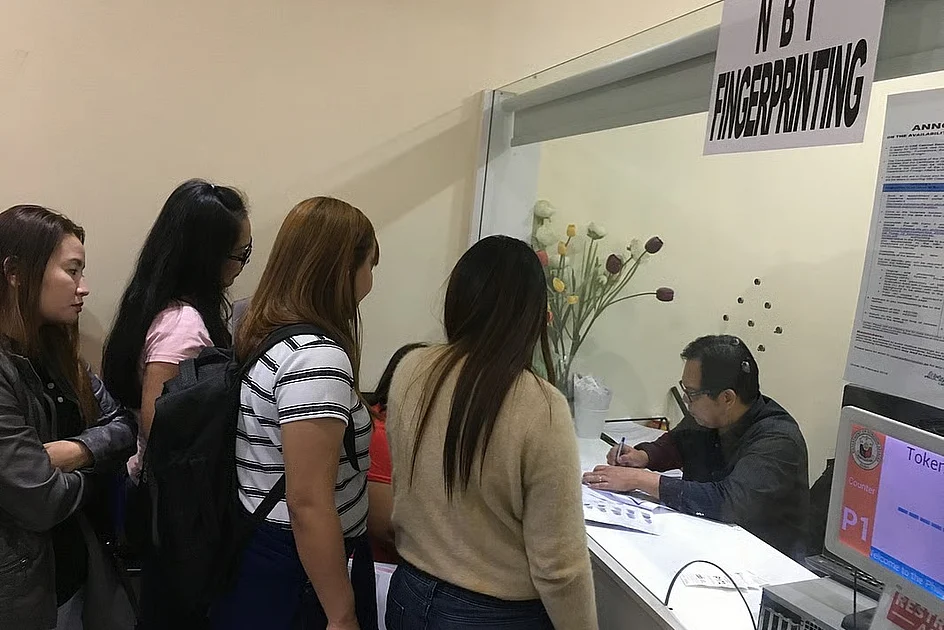
    The Philippine Consulate General in Dubai has revolutionized its service delivery system by implementing a comprehensive digital payment platform, marking a significant departure from its longstanding cash-only policy. This transformative initiative follows the formal establishment of a strategic partnership with Emirates NBD bank, finalized last month through a card payment facility agreement.

    The newly deployed electronic funds transfer at point of sale (EFTPOS) system enables Filipino expatriates to settle consular service fees through multiple digital channels including debit/credit cards, Apple Pay, and Google Pay. This technological advancement effectively eliminates the previous dependency on physical currency transactions, simultaneously accelerating processing efficiency while enhancing transactional transparency.

    This modernization effort directly addresses persistent concerns raised by Dubai’s substantial Filipino community regarding the previously cumbersome cash payment requirements. Expatriates frequently utilizing consular services for passport applications, renewal procedures, and document authentication had consistently highlighted the operational inefficiencies of the former payment methodology.

    Consulate officials emphasized that this digital integration demonstrates their renewed commitment to implementing secure, streamlined technological solutions that prioritize community convenience. The card payment infrastructure, which became operational last week, represents the latest in a series of consular service enhancements designed specifically for the UAE’s Filipino population. This payment modernization aligns with broader digital transformation initiatives occurring across governmental service sectors throughout the United Arab Emirates.

  • The kidnap gangs, jihadists and separatists wreaking havoc in Nigeria

    The kidnap gangs, jihadists and separatists wreaking havoc in Nigeria

    Nigeria confronts a complex security landscape extending far beyond recent mass abductions, challenging international oversimplifications of its crises. The nation’s security apparatus—comprising 400,000 military personnel and 370,000 police officers—struggles to contain multiple overlapping threats across its vast territory, which exceeds the combined area of France and Germany.

    In the northwest, criminal factions dubbed ‘bandits’ operate with sophisticated mobility. Predominantly from the Fulani ethnic group, these groups have transitioned from pastoral livelihoods to armed criminality using weapons proliferated after Libya’s 2011 collapse. Their tactics involve large-scale motorcycle deployments for rapid strikes and escapes, exemplified in recent school abductions. Though lacking centralized leadership, notable figures like Ado Aleru and Bello Turji have bounties placed against them, with the government designating these groups as terrorists in 2022.

    The northeast remains plagued by Islamist insurgencies. Boko Haram gained global notoriety through the 2014 Chibok schoolgirl abduction and maintains operations despite factionalization. Its splinter group, Islamic State West Africa Province (Iswap), emerged around 2016 rejecting excessive violence against Muslims and focusing on military targets. Both groups continue operating despite internal conflicts, with Iswap recently ambushing and killing Brig Gen Musa Uba in Borno state.

    Central regions experience persistent farmer-herder conflicts primarily over land and water resources, often mischaracterized as religious conflicts. Urbanization has disrupted traditional grazing routes, fueling cycles of retaliation that have spawned ethnic militias engaging in criminal activities.

    Southeast separatist movements continue advocating for Biafran independence, with the Indigenous People of Biafra (Ipob) and its armed Eastern Security Network implicated in violence against civilians and security forces. Recent convictions of leaders Nnamdi Kanu (life sentence for terrorism) and Simon Ekpa (Finland conviction) have not fully dismantled these networks.

    New militant groups compound these challenges. Ansaru operates around Kainji Lake National Park with Islamic State connections, while Lakurawa imposes strict Islamist controls in northwestern border regions. Most alarmingly, Jama’at Nasr al-Islam wal Muslimin (JNIM)—already dominant in Mali and Burkina Faso—may be establishing Nigerian operations with claimed attacks in Kwara state.

    The complexity of Nigeria’s security situation defies simplistic religious framing, involving criminal opportunism, ideological extremism, resource competition, and separatist ambitions across multiple regions simultaneously.

  • Ruling spares Trump fate of jailbirds Thaksin, Yoon and Bolsonaro

    Ruling spares Trump fate of jailbirds Thaksin, Yoon and Bolsonaro

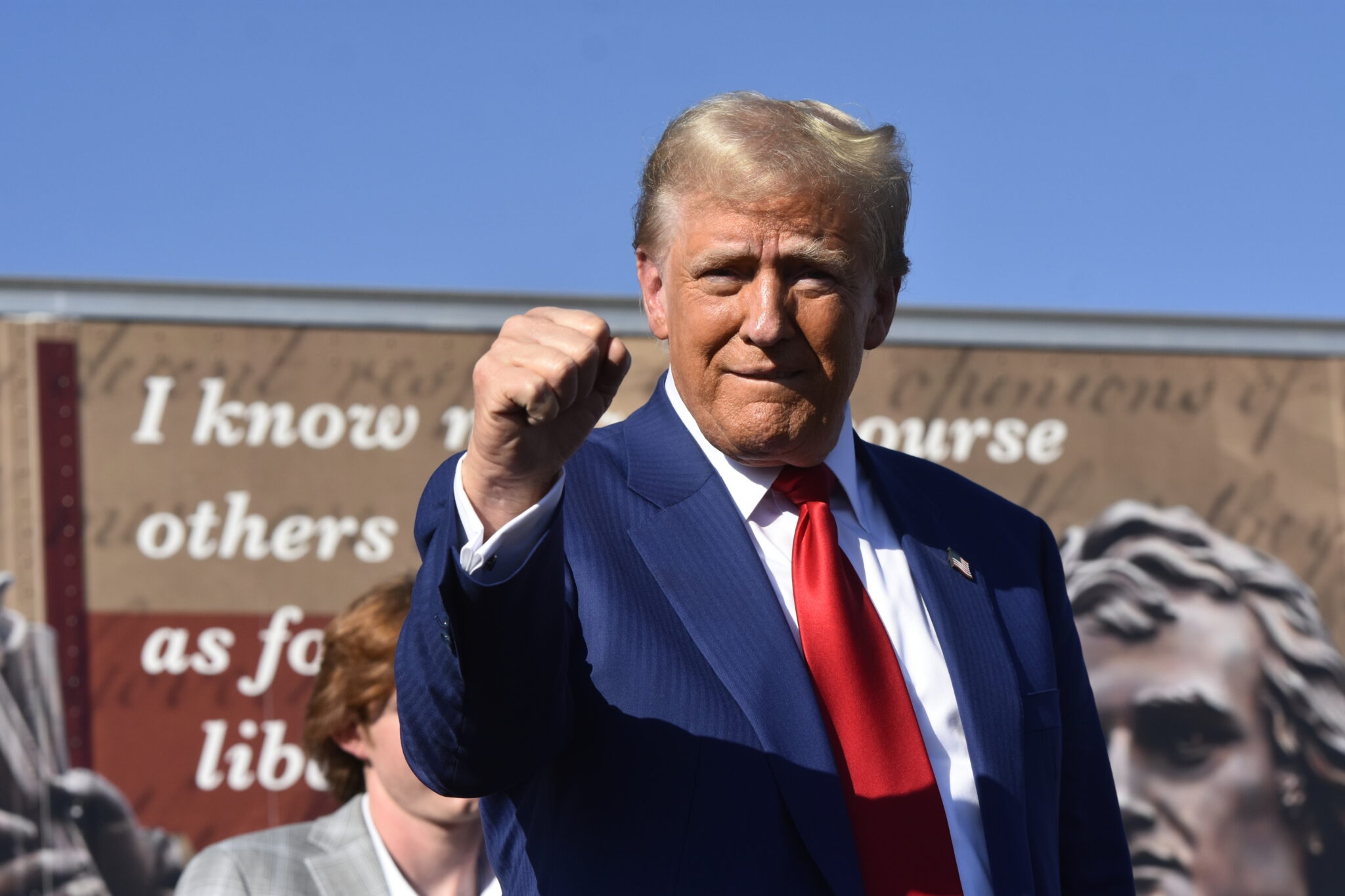
    In a decisive legal ruling, Fulton County Superior Court Judge Scott McAfee has formally dismissed the high-profile criminal case against former President Donald Trump and his alleged co-conspirators regarding efforts to overturn Georgia’s 2020 presidential election results. This dismissal represents the conclusive termination of the last remaining criminal prosecution against Trump concerning election interference allegations.

    The case’s dismissal originated from Peter J. Skandalakis, Executive Director of Georgia’s Prosecuting Attorneys’ Council, who assumed prosecutorial authority this month after reporting an inability to find attorneys willing to接手 the complex litigation. Skandalakis formally petitioned the court for dismissal, asserting the matter properly belonged within federal jurisdiction rather than state courts.

    This legal saga commenced in 2023 when a Fulton County grand jury indicted Trump and eighteen co-defendants under racketeering statutes. The original prosecutor, District Attorney Fani Willis, was removed from the case in 2024 following conflict-of-interest allegations stemming from her romantic relationship with special prosecutor Nathan Wade, whom she had appointed to the case.

    Skandalakis’s dismissal motion presented multiple legal rationales. He emphasized the impracticality of prosecuting a sitting president, noting Trump’s current term extends until January 2029—nearly eight years after the controversial January 2021 phone call with Georgia Secretary of State Brad Raffensperger wherein Trump reportedly pressured officials to “find” sufficient votes to reverse his electoral defeat.

    The prosecutor acknowledged the recorded phone call as “concerning” but contended that reasonable interpretations could differ regarding whether Trump sought to fabricate votes or genuinely believed in investigating alleged fraud. “When multiple interpretations are equally plausible,” Skandalakis wrote, “the accused is entitled to the benefit of the doubt.”

    While four co-defendants had previously pleaded guilty and agreed to testify, Skandalakis determined that pursuing remaining defendants—including those involved in organizing alternate electors, breaching Coffee County election systems, and harassing election worker Ruby Freeman—would be unjustifiably burdensome and costly for the state.

    Political reactions divided sharply along partisan lines. Georgia Republican Party Chair Josh McKoon praised the dismissal as “profound relief” and vindication for “brave patriots,” while state Democratic Chair Charlie Bailey condemned it as “a travesty and a slap in the face to Georgia voters.”

    The dismissal occurs alongside the earlier termination of federal election interference cases by Special Counsel Jack Smith, who concluded that prosecuting a sitting president would violate legal protocols. This series of developments effectively closes all criminal proceedings against Trump related to 2020 election challenges.

  • Stocks, bitcoin edge up as investors bank on Fed rate cuts

    Stocks, bitcoin edge up as investors bank on Fed rate cuts

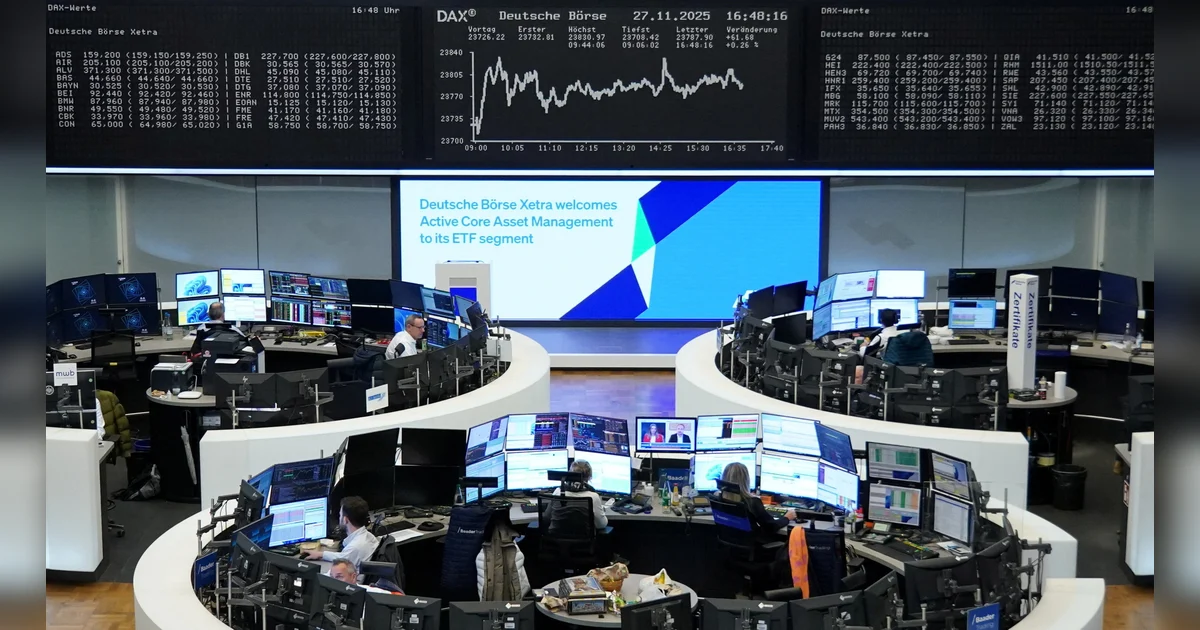
    Financial markets exhibited cautious optimism on Thursday as investor confidence in an impending Federal Reserve rate cut fueled upward momentum across European equities and digital assets. The STOXX 600 index advanced 0.2%, propelled by robust performances in defense and technology sectors that effectively counterbalanced declines in healthcare stocks.

    Market activity remained relatively subdued due to the U.S. Thanksgiving holiday closure, creating an atypical trading environment across major asset classes. The prevailing market sentiment continues to be dominated by expectations of monetary policy easing, with traders now pricing in an 85% probability of a December rate cut according to CME FedWatch data—a significant increase from just 30% the previous week.

    Currency markets displayed remarkable stability, with the dollar maintaining its position against a basket of major currencies. Sterling retreated from recent four-week highs following British Finance Minister Rachel Reeves’ budget announcement, which alleviated concerns about the nation’s long-term fiscal health. The euro held steady at $1.1593 while the pound remained unchanged at $1.324.

    The Japanese yen emerged as a particular focus for currency traders, strengthening to 156.375 per dollar from nearly 158 a week earlier. Market participants are closely monitoring potential intervention from Tokyo authorities after weeks of verbal warnings aimed at curbing the currency’s persistent decline. Prime Minister Sanae Takaichi explicitly dismissed comparisons to Britain’s ‘Truss moment’, asserting confidence in her administration’s spending plans.

    Cryptocurrency markets joined the positive trend, with Bitcoin gaining 0.7% to reach $90,800—positioning the digital asset to break a four-week losing streak with an approximately 3% weekly gain. Gold experienced minimal pressure, easing 0.1% to $4,159 per ounce.

    Market analysts attribute the sustained bullish sentiment to diminishing concerns about AI investment valuations and an overall positive earnings season. Chris Beauchamp, IG chief markets strategist, noted that while AI spending concerns remain the ‘market’s kryptonite’, the primary economic engines continue to perform satisfactorily, pushing valuation worries to the background for the immediate future.

  • Reform or rights rollback? India’s sweeping labour law overhaul sparks debate

    Reform or rights rollback? India’s sweeping labour law overhaul sparks debate

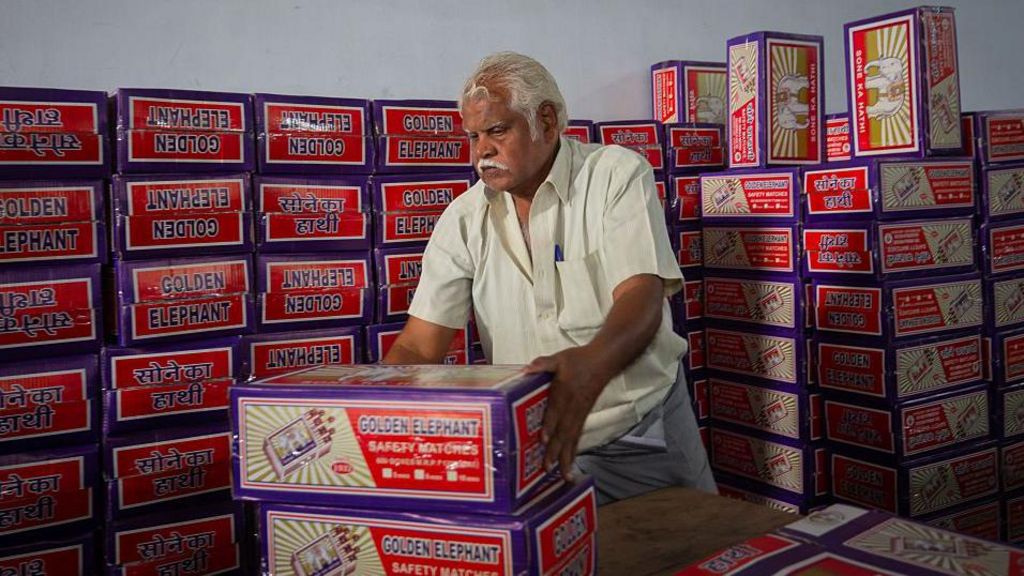
    India has embarked on its most significant economic overhaul in decades by implementing four consolidated labor codes, effectively replacing 29 complex federal laws that previously governed the workforce. This landmark reform dramatically reduces regulatory compliance from approximately 1,400 rules to just 350, while cutting required forms from 180 to 73, substantially easing the administrative burden on businesses nationwide.

    The legislation, which received parliamentary approval in 2020 but faced five years of political delays, represents a fundamental shift in India’s approach to labor regulation. The government maintains these changes aim to modernize outdated statutes, simplify compliance procedures, and extend legal protections to the country’s growing gig economy workforce for the first time.

    Corporate leaders and international financial institutions have welcomed the reforms as a crucial step toward enhancing India’s global competitiveness. Nomura analysts noted these changes signal the government’s commitment to accelerating economic reforms, particularly in response to shifting global trade dynamics including Trump’s tariff policies. The brokerage firm emphasized these measures should facilitate easier business operations, attract foreign direct investment, and better integrate India into global value chains.

    However, trade unions have mounted vigorous opposition, characterizing the reforms as the most aggressive dismantling of worker protections since India’s independence. Left-leaning unions unaffiliated with Prime Minister Modi’s ruling party organized protests across the country, including demonstrations in Delhi where hundreds expressed concerns about diminished worker rights.

    The reforms introduce several worker-friendly provisions including mandatory appointment letters, uniform minimum wages, free annual health check-ups for employees over 40, and gender-neutral pay requirements. Additionally, they expand social security coverage and formally recognize gig workers within the employment framework.

    Despite these protections, two contentious clauses have generated particular controversy: the increased threshold for government approval of layoffs (from 100 to 300 workers) and new requirements for 14-day strike notices. Economists like Columbia University’s Arvind Panagariya argue previous regulations were ‘draconian’ and hampered India’s competitiveness against manufacturing rivals like Bangladesh, Vietnam, and China. Conversely, critics including Professor Arun Kumar contend that inadequate demand rather than labor restrictions explains India’s manufacturing challenges, warning that reduced worker bargaining power could exacerbate existing economic inequalities.

    As India navigates this transition, businesses face implementation challenges including adjustments to wage structures, HR systems, and compliance governance. The long-term impact on manufacturing growth and investment remains uncertain, but these reforms undoubtedly represent a transformative moment in India’s economic development.

  • ‘Chasing hype, not solutions’: Why so many startups fail

    ‘Chasing hype, not solutions’: Why so many startups fail

    At the KT+150 Summit in Abu Dhabi, prominent entrepreneur and investor Jigar Sagar delivered a critical assessment of startup failure patterns, identifying “hype chasing” as a primary culprit. Speaking to an audience of emerging innovators at the Helipad by Frozen Cherry venue, Sagar emphasized that sustainable businesses must prioritize genuine problem-solving over trend-following.

    Sagar’s keynote address, titled “From Seed to Scale,” challenged conventional startup wisdom by asserting that many ventures “are built for valuation, not for value.” He cautioned founders against developing businesses that merely start trends rather than address tangible market needs, noting that without solving real problems, companies build on “shaky ground.”

    Beyond identifying problems, Sagar provided strategic guidance for scaling successful enterprises. He stressed that organizational infrastructure must evolve alongside growth, stating plainly that “you cannot scale chaos.” The transition from ten to one hundred employees requires deliberate process implementation, he advised.

    Regarding funding, Sagar urged selective investor alignment rather than pursuing capital indiscriminately. “Don’t raise money just to raise money,” he counseled. “Raise with purpose. Build with purpose. And scale with purpose.” This approach ensures mission continuity between founders and their financial partners.

    The summit, featuring the KT+150 list of promising innovators, facilitated discussions on developing the UAE’s next generation of unicorn companies—those that create substantial value through addressing genuine market needs rather than pursuing transient trends.