作者: admin

  • Nation rallies in grief, support after Hong Kong fire

    Nation rallies in grief, support after Hong Kong fire

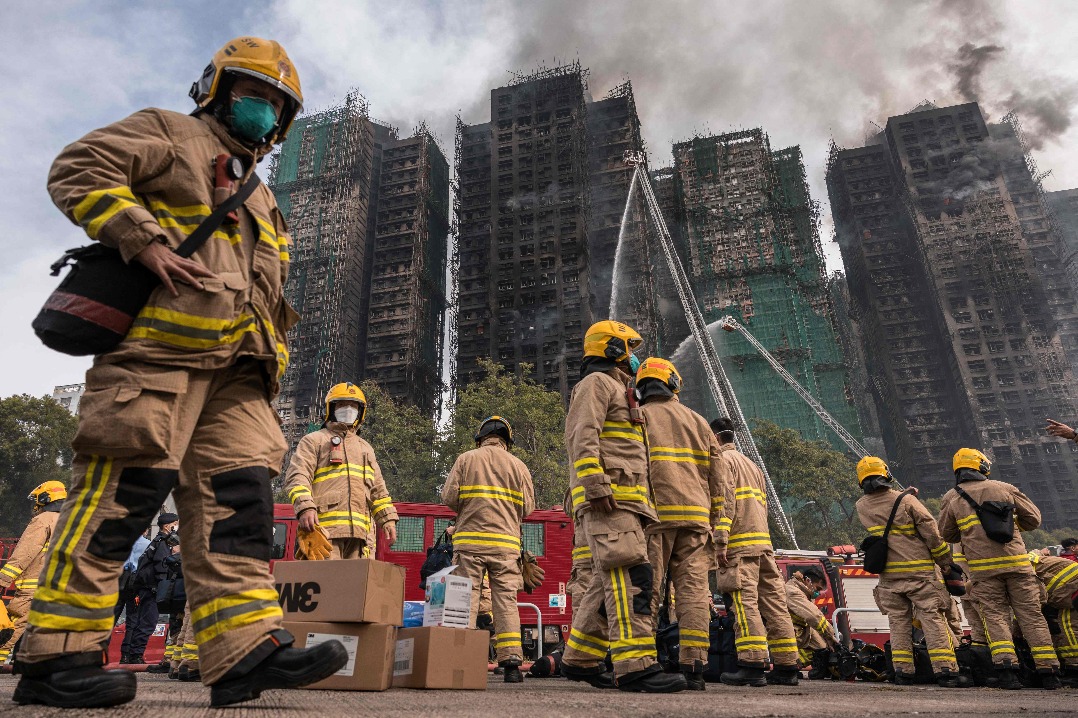
    A profound wave of national solidarity has swept across China as citizens and institutions rally behind Hong Kong following the catastrophic residential tower fire that has left 146 people dead. The devastating blaze at Wang Fuk Court in Tai Po has triggered an unprecedented response from mainland compatriots, businesses, and government entities alike, all demonstrating swift support for relief operations and victim assistance.

    Financial support has reached remarkable levels, with relief funds totaling HK$1.1 billion (approximately $141.3 million) mobilized through a combination of governmental allocations and corporate philanthropy. According to Cheuk Wing-hing, Deputy Chief Secretary for Administration of the Hong Kong Special Administrative Region government, HK$800 million originated from donations by dozens of major listed companies and charitable foundations nationwide, while HK$300 million was allocated through government grants.

    The People’s Bank of China has implemented special financial measures to facilitate cross-border support, establishing a dedicated ‘green lane’ for renminbi donations originating from the mainland. This expedited processing system ensures immediate transfer of funds to recipient accounts in Hong Kong, accelerating critical search and rescue operations, medical treatment for the injured, and comprehensive relief efforts.

    Hong Kong’s leadership, led by Chief Executive John Lee Ka-chiu, joined principal officials and civil servants in a solemn memorial service at government headquarters on Saturday. The ceremony featured flags flown at half-staff and a three-minute silence observed by all present officials in honor of those lost in the tragedy.

    The HKSAR government has announced a three-day mourning period during which condolence points will be established across all 18 districts of the city. These designated areas will allow members of the public to express their sympathies through condolence books and participate in collective mourning activities for the victims of one of Hong Kong’s most devastating residential fires in recent history.
  • Sydney men charged with spreading child sexual abuse videos tied to international ring

    Sydney men charged with spreading child sexual abuse videos tied to international ring

    Australian authorities have apprehended four Sydney-based individuals allegedly connected to a sophisticated international child exploitation ring specializing in ritualistic abuse content. New South Wales police confirmed the arrests following a comprehensive investigation into encrypted online channels distributing extreme child sexual abuse material with satanic and occult themes.

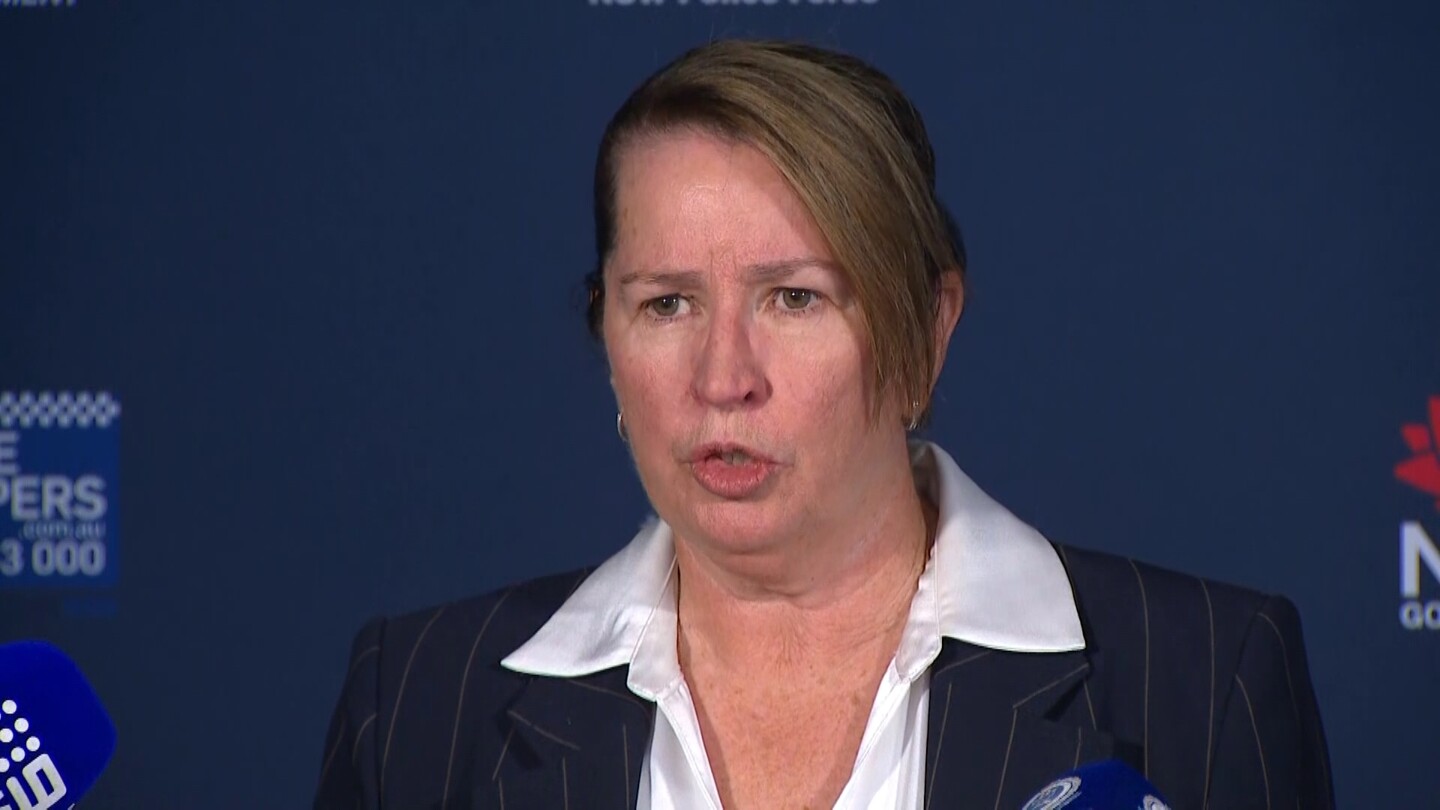
    Detective Superintendent Jayne Doherty characterized the network’s activities as particularly devastating due to their incorporation of ritualistic symbols and organized discussions surrounding child torture. The investigation, spearheaded by a specialized state police task force, uncovered thousands of videos depicting abuse victims ranging from infants to 12-year-olds.

    Last Thursday, law enforcement executed multiple search warrants across Sydney, resulting in the seizure of electronic devices containing extensive evidence. The four accused men—Landon Germanotta-Mills (26), Stuart Woods Riches (39), Mark Andrew Sendecky (42), and Benjamin Raymond Drysdale (46)—face multiple charges related to distributing child abuse material online.

    Germanotta-Mills, identified as playing a leadership role within the network, faces additional charges for disseminating and possessing bestiality content. Police emphasize that while the defendants actively shared this material, they did not produce the original abuse content themselves.

    International collaboration remains ongoing to identify victims and perpetrators across jurisdictions. Despite the progress made, no victims had been formally identified as of Monday. All defendants have been denied bail and are scheduled to reappear in court in late January. Legal representatives for the accused have declined to comment on the ongoing proceedings.

  • Flooding recovery efforts underway in Indonesia, Sri Lanka and Thailand as death tolls rise

    Flooding recovery efforts underway in Indonesia, Sri Lanka and Thailand as death tolls rise

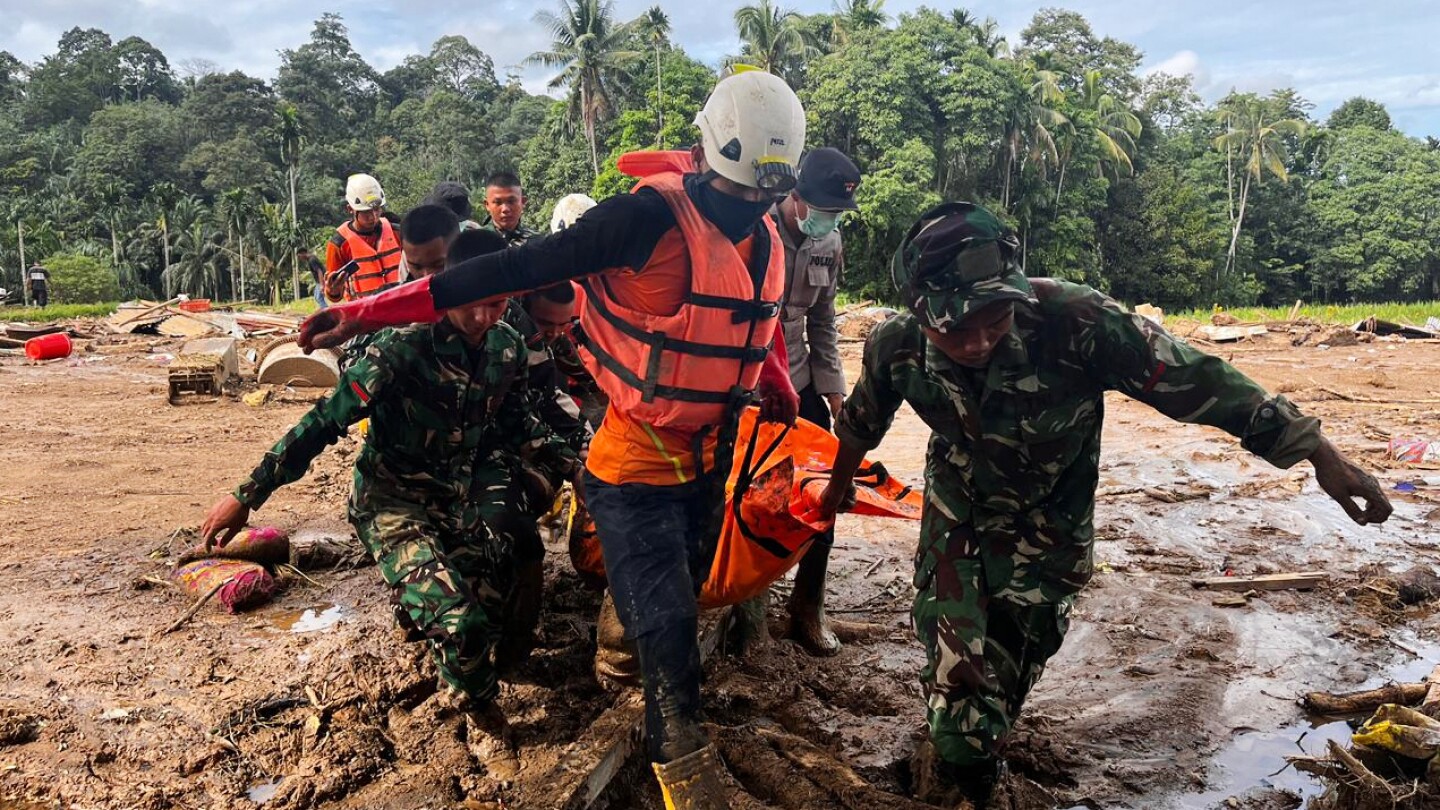
    Southeast Asian nations are confronting a monumental humanitarian crisis as catastrophic flooding and landslides have claimed nearly 1,000 lives across the region. The devastating weather systems have unleashed widespread destruction throughout Indonesia, Thailand, and Sri Lanka, with recovery operations intensifying amid compromised infrastructure and communication networks.

    Indonesian authorities report the highest casualty figures with 469 confirmed fatalities, while President Prabowo Subianto visited the hardest-hit Sumatra island regions where 474 individuals remain missing and approximately 290,700 people have been displaced. The catastrophe has rendered many areas completely inaccessible due to damaged transportation routes and severed communication lines, necessitating emergency aerial supply missions to reach isolated communities.

    In Thailand, Prime Minister Anutin Charnvirakul has initiated comprehensive recovery and compensation programs for twelve southern provinces where unprecedented flooding has impacted 3.8 million citizens across 1.4 million households. Simultaneously, Sri Lankan rescue teams continue searching for 370 missing persons while providing shelter for nearly 148,000 displaced residents in temporary facilities, primarily in the central tea-growing highlands that suffered extensive landslide damage.

    President Subianto emphasized the critical need for enhanced climate resilience during his assessment of the disaster zones, stating that local governments must prioritize environmental protection and preparation for increasingly extreme weather patterns. The regional disaster has highlighted the urgent necessity for coordinated climate adaptation strategies as meteorological experts attribute the unprecedented rainfall to changing climate conditions.

  • Bangladesh’s ex-leader Hasina and niece, British lawmaker Tulip Siddiq, found guilty of corruption

    Bangladesh’s ex-leader Hasina and niece, British lawmaker Tulip Siddiq, found guilty of corruption

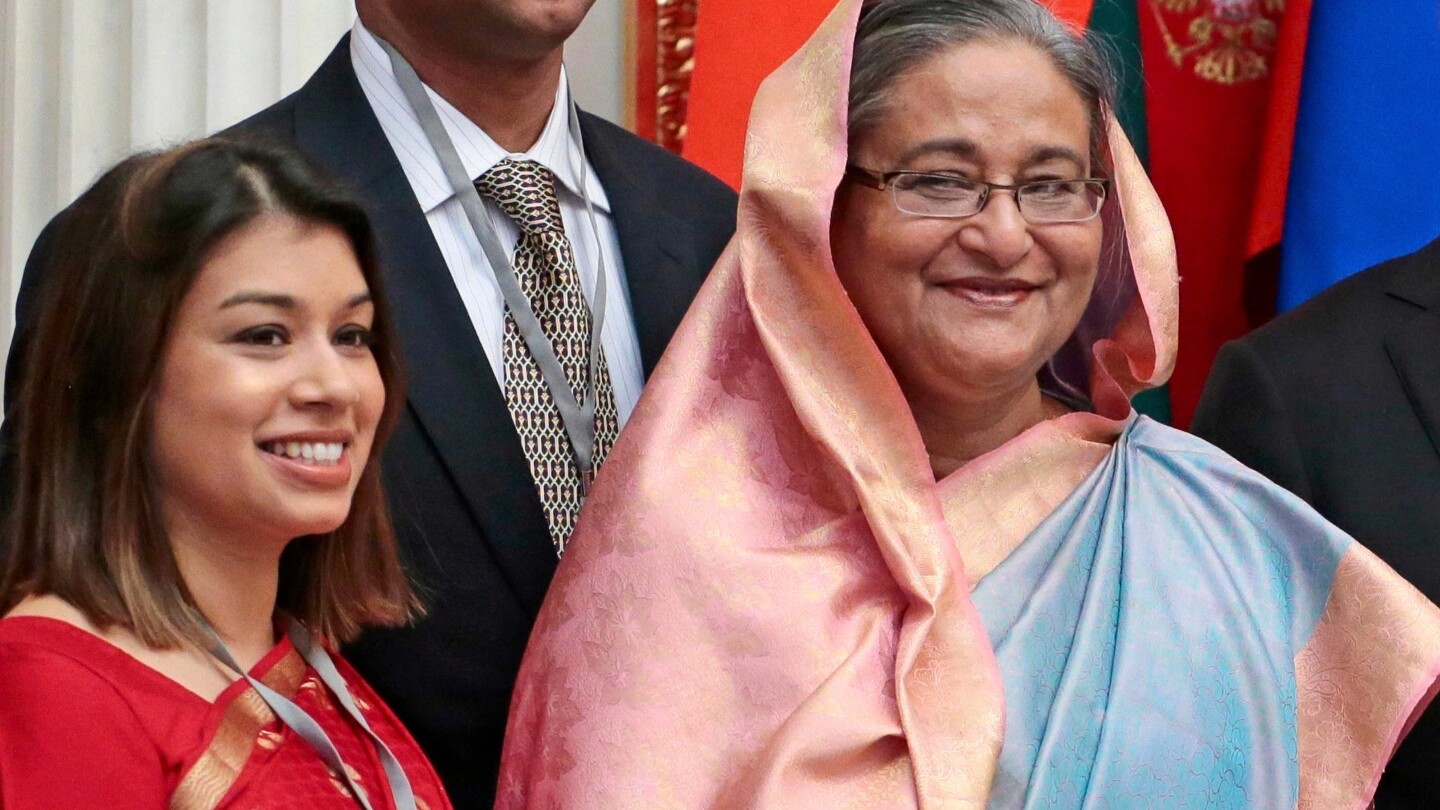
    A Dhaka special court has delivered prison sentences to ousted Prime Minister Sheikh Hasina and her family members in a high-profile corruption case involving a government land allocation scheme. The verdict, issued Monday, sentenced Hasina to five years imprisonment while her niece Tulip Siddiq—a sitting British Labour Party parliamentarian—received a two-year term.

    Presiding Judge Rabiul Alam found Hasina guilty of abusing her prime ministerial authority to facilitate illicit land acquisitions for family members. The court identified Sheikh Rehana, Hasina’s sister and Siddiq’s mother, as the primary beneficiary of the scheme, handing her a seven-year prison term—the most severe sentence among the defendants.

    All three convicted individuals were fined 70,000 taka (approximately $813) and ordered to forfeit the controversially acquired property. Fourteen additional suspects remain implicated in the case.

    Corruption prosecutor Khan Mohammed Mainul Hasan expressed disappointment with the sentencing, revealing that prosecutors had sought life imprisonment for the principal defendants. “We will consult with the commission for our next course of action,” Hasan stated following the verdict.

    The trial proceeded without defense representation, as none of the accused appointed legal counsel. All convicted parties currently reside outside Bangladesh—Hasina in exile in India, while Rehana and Siddiq’s siblings remain abroad facing separate charges related to last year’s political uprising.

    Siddiq, who represents London’s Hampstead and Highgate constituencies, previously denounced the proceedings as “a farce built on fabricated accusations and driven by a clear political vendetta.” She resigned from her ministerial position in January amid mounting pressure regarding her familial connections.

    This verdict adds to Hasina’s legal troubles, following her November death sentence for crimes against humanity during the crackdown that ended her fifteen-year administration. In a related case involving the same township project, another court previously sentenced Hasina to twenty-one years imprisonment, with her children receiving five-year terms.

    The interim government under Nobel Peace laureate Muhammad Yunus continues to oversee Bangladesh’s political transition, having announced parliamentary elections for February.

  • Over 120,000 home cameras hacked for ‘sexploitation’ footage

    Over 120,000 home cameras hacked for ‘sexploitation’ footage

    South Korean law enforcement has apprehended four individuals following a sophisticated cybercrime operation involving the unauthorized access of more than 120,000 Internet Protocol (IP) cameras installed in private residences and commercial establishments. The suspects allegedly exploited security vulnerabilities in these devices to capture intimate footage, which was subsequently converted into sexually exploitative content and monetized on an overseas digital platform.

    According to Sunday’s announcement from the National Police Agency, the perpetrators capitalized on weak authentication measures, particularly simplistic passwords commonly used by IP camera owners. These connected devices, frequently employed for home security, child monitoring, or pet surveillance, represent a more affordable alternative to traditional closed-circuit television systems.

    The compromised cameras were located across diverse settings including private dwellings, karaoke venues, a Pilates studio, and a gynecological clinic. Police confirmed the suspects operated independently without collusion, though their collective actions accounted for a significant portion of illegal content on the distribution website.

    One individual stands accused of infiltrating 63,000 cameras and producing 545 explicit videos, generating approximately 35 million won ($12,235) in cryptocurrency payments. Another allegedly penetrated 70,000 devices, creating and selling 648 videos for 18 million won in digital assets. Together, their output constituted roughly 62% of all material uploaded to the illicit platform over the past twelve months.

    Authorities are coordinating with international partners to dismantle the website and investigate its operators. Three additional individuals have been detained for purchasing and viewing the illegal content. Cyber Investigation Chief Park Woo-hyun emphasized the severity of these crimes, stating: “IP camera hacking and illegal filming inflict immense suffering on victims. We will eradicate them through vigorous investigations, including prosecution of those who view or possess illicit recordings.”

    Victim notification procedures are underway, with officials personally visiting or contacting affected individuals at 58 confirmed locations to provide security guidance and password change assistance. The National Police Agency reiterated the critical importance of user vigilance, recommending immediate and regular password updates for all IP camera owners.

  • Ukrainian President Zelensky set for visit to Republic of Ireland

    Ukrainian President Zelensky set for visit to Republic of Ireland

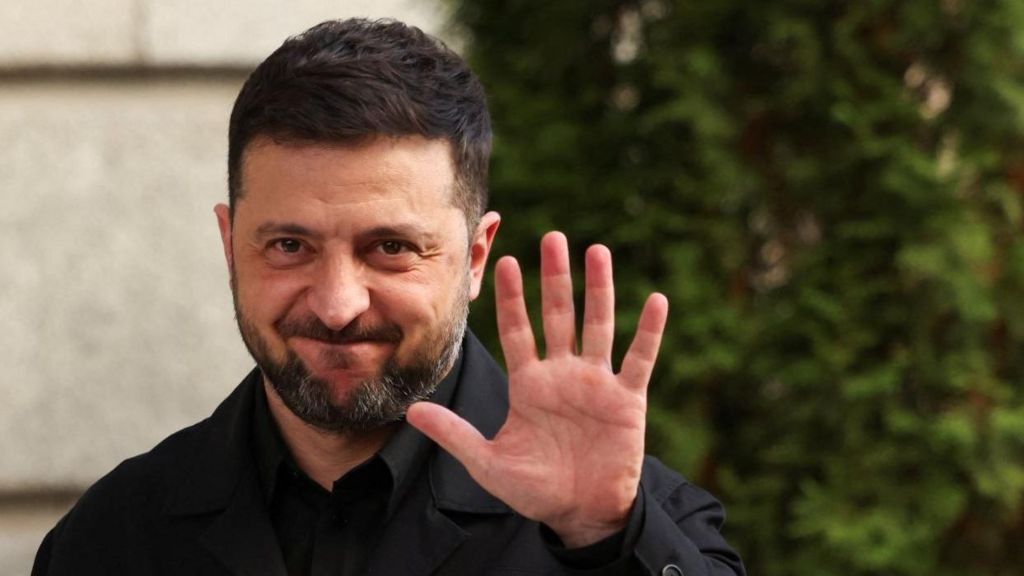
    Ukrainian President Volodymyr Zelensky is embarking on a landmark diplomatic mission to Dublin on Tuesday, marking the first official visit by a Ukrainian head of state to Ireland. The high-profile trip includes meetings with Taoiseach (Irish Prime Minister) Micheál Martin and newly-inaugurated Irish President Catherine Connolly during a formal courtesy call.

    The centerpiece of President Zelensky’s itinerary will be his participation in the inauguration ceremony of the Ireland-Ukraine Economic Forum. The event will feature prominent Irish political figures including Tánaiste (Deputy Prime Minister) Simon Harris and Minister for Foreign Affairs and Trade Helen McEntee, signaling the importance both nations place on enhancing economic cooperation.

    This visit builds upon previous diplomatic engagements between the two leaders. Taoiseach Martin previously welcomed President Zelensky at Shannon Airport in County Clare last February during the Ukrainian leader’s transit to the United States for meetings with President Donald Trump. Their diplomatic relationship further solidified during Martin’s official visit to Kyiv in July 2022.

    The Irish government emphasized the visit’s significance in reinforcing the “very close and warm relations” between Ireland and Ukraine. Official statements highlighted Ireland’s unwavering support for Ukraine’s defense against Russian aggression and recognition of the substantial contributions made by the Ukrainian refugee community in Ireland.

    Since the outbreak of conflict in February 2022, Ireland has provided refuge to approximately 120,000 Ukrainian nationals. While some have returned to Ukraine, current estimates indicate around 80,000 remain settled across Irish communities, creating enduring cultural and social bonds between the nations.

    Taoiseach Martin characterized the timing of President Zelensky’s visit as “critical” for both Ukraine and Europe, noting ongoing international efforts to establish “just and lasting peace” in the region. The Irish leader praised the resilience of the Ukrainian people, stating they have “inspired the world in their brave defence of their country and its sovereignty against brutal and illegal invasion.”

    Expected discussions will focus on Ireland’s continued support mechanisms for Ukraine and strategies to strengthen Ukraine’s negotiating position in future peace talks. The meetings represent a significant moment in European diplomatic relations amid continued conflict in Eastern Europe.

  • Tulip Siddiq MP given jail sentence in Bangladesh after trial in her absence

    Tulip Siddiq MP given jail sentence in Bangladesh after trial in her absence

    British Labour MP Tulip Siddiq has been convicted and sentenced to two years imprisonment by a Bangladeshi court for corruption-related offenses, tried in absentia alongside sixteen other defendants. The ruling centers on allegations that Siddiq improperly influenced her aunt, former Bangladeshi Prime Minister Sheikh Hasina, to obtain a land allocation for family members on the outskirts of Dhaka—charges the London-based parliamentarian vehemently denies.

    The verdict, delivered by Judge Rabiul Alam, includes a financial penalty of 100,000 Bangladeshi Taka (approximately $821), with an additional six-month prison term stipulated for non-payment. Despite the sentence, Siddiq is unlikely to serve time given the UK’s lack of an extradition treaty with Bangladesh and her status as a sitting British MP.

    This case emerges amid widespread legal actions initiated by Bangladeshi prosecutors following the ouster of Hasina’s government in July 2024. The former prime minister herself recently received a death sentence in a separate trial concerning crimes against humanity during anti-government protests.

    Siddiq’s legal representatives contest the jurisdiction of Bangladeshi courts, maintaining that she holds no Bangladeshi citizenship or official documentation. The trial has drawn international scrutiny, with prominent British legal figures—including former Justice Secretary Robert Buckland and human rights lawyer Cherie Blair—questioning the fairness of proceedings and noting Siddiq’s inability to secure adequate legal representation.

    The MP previously resigned from her Treasury ministerial position in January to avoid becoming a ‘distraction’ for the UK government, though an ethics investigation found no evidence of impropriety. She continues to face multiple additional charges in Bangladesh, including investigations into property transfers and a nuclear power plant deal during Hasina’s administration.

  • Singapore executes three men for drug offences over two days

    Singapore executes three men for drug offences over two days

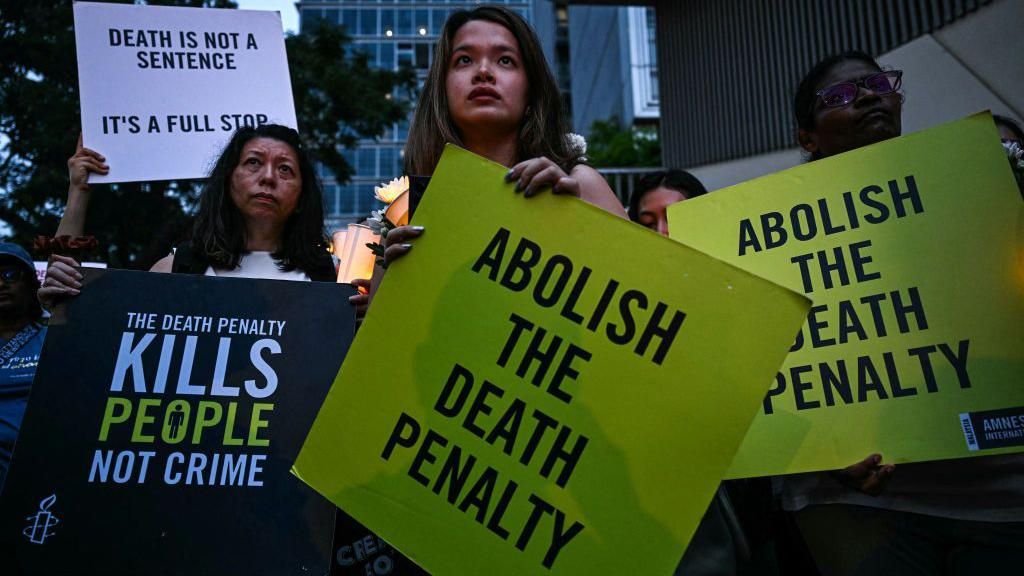
    Singapore has carried out three executions for drug-related offenses within a single week, elevating the nation’s total number of state-sanctioned deaths to 17 this year—the highest figure recorded since 2003. The executions occurred just days before a significant constitutional challenge questioning the legality of the mandatory death penalty for drug crimes is scheduled to be heard.

    Under Singapore’s stringent anti-narcotics legislation, individuals found guilty of trafficking more than 15 grams of diamorphine, 30 grams of cocaine, 250 grams of methamphetamine, or 500 grams of cannabis face compulsory capital punishment. The government defends these measures as essential deterrents against drug-related crimes, which remain a critical concern across Southeast Asia.

    A coalition of seven activists has mounted a legal challenge arguing that the mandatory death penalty violates constitutional guarantees to life and equal protection. They contend that the current framework contradicts the constitutional provision that “no person shall be deprived of his life or personal liberty save in accordance with law.”

    Among those executed was Saminathan Selvaraju, a Malaysian logistics driver convicted in 2013 of transporting 301.6 grams of heroin. Saminathan maintained his innocence, claiming that multiple drivers had access to the company vehicle used in the offense and that immigration documents bearing his signature were forged. His defense was rejected by the court, and his plea for clemency was denied.

    Singapore’s use of the death penalty has drawn international criticism. The European Union delegation in Singapore issued a statement condemning the executions, emphasizing that drug offenses do not meet the international legal threshold for “most serious crimes” warranting capital punishment. Activist groups, including the Transformative Justice Collective, have labeled Singapore’s policy “barbaric” and out of step with global norms.

    Despite external pressure, the Singaporean government remains resolute. Home Affairs Minister K. Shanmugam has asserted that abolishing the death penalty could lead to increased drug-related violence, harm, and fatalities, particularly among vulnerable populations. A 2023 government-sponsored survey indicated that 69% of Singaporean residents support capital punishment for major drug trafficking offenses.

    The constitutional challenge, set for hearing imminently, represents a pivotal moment in the ongoing debate over justice, human rights, and drug policy in one of Asia’s most developed—and strictest—legal jurisdictions.

  • Pope Leo XIV’s visit highlights Christian resilience in Lebanon despite regional turmoil

    Pope Leo XIV’s visit highlights Christian resilience in Lebanon despite regional turmoil

    BEIRUT — While Christian populations across the Middle East have faced significant decline due to conflict and extremist violence, Lebanon presents a striking exception to this regional trend. Despite enduring numerous national crises, Lebanon’s Christian community continues to maintain substantial political influence and religious freedom, creating a unique sanctuary in a region where Christian populations have dwindled dramatically.

    The recent visit of Pope Leo XIV to Lebanon underscores the Vatican’s recognition of Lebanon’s distinctive religious pluralism and serves as an encouragement for Christians to remain in the region. This stands in stark contrast to neighboring countries like Iraq and Syria, where Christian communities faced devastating persecution following the U.S.-led invasion of 2003 and the subsequent rise of the Islamic State group. IS forces systematically destroyed churches, confiscated properties, and declared caliphates across Iraq and Syria, triggering massive Christian emigration.

    In Syria, recent church bombings in Damascus and concerns about the Islamist-led government under interim President Ahmad al-Sharaa have prompted many remaining Christians to consider leaving. Yet in Lebanon, Christians demonstrate remarkable resilience, clinging to their ancestral homeland despite economic and political challenges.

    Lebanon’s sectarian power-sharing system, while frequently criticized for political deadlock, has effectively protected minority rights. The country’s political structure mandates that the president be a Maronite Christian, making Lebanon the only Arab nation with a Christian head of state. Christians also hold key positions including army command, central bank leadership, and senior security agency roles.

    “More than half the advantage comes from Lebanon’s political system when it comes to Christians,” noted Monsignor Abdo Abou Kassm, director of the Catholic Center for Information. “There is a democratic system where people can express their opinions freely without getting killed, oppressed or sent to exile.”

    Christian roots in Lebanon trace back to the faith’s earliest days, with monastic communities historically seeking refuge in mountain caves to avoid persecution. Today, Christians constitute approximately one-third of Lebanon’s 5 million people, representing the highest percentage of Christians in any Middle Eastern nation. The country recognizes 18 religious sects, with Maronite Catholics forming the largest Christian group followed by Greek Orthodox.

    The historical ties between Lebanon and the Vatican run deep, with tradition holding that St. Peter established churches along Lebanon’s coast. Two men of Phoenician origin from Tyre were elected popes in the 8th century, and uninterrupted correspondence between the Maronite Church and the papacy dates back to 1215.

    Despite Lebanon’s 1975-90 civil war that largely pitted Christians against Muslims, the Taif Agreement established equal parliamentary and cabinet representation between Christians and Muslims. Today, Muslims and Christians largely coexist peacefully, with Sunni Muslim cleric Khaldoun Oreimet acknowledging, “Christians are not only a community but an integral part of this land.”

    The papal visit occurs amid ongoing regional tensions, including regular Israeli airstrikes and criticism from Christian politicians toward Hezbollah’s military actions. Many Christian leaders, including Maronite Church head Cardinal Bechara Rai, advocate for Lebanese neutrality in regional conflicts, emphasizing the devastating impact of foreign wars on Lebanese soil.

    As Christian legislator Camille Dory Chamoun stated, “Our Lebanese identity is as important as our Christian identity. We have seen that we are paying a very high price for other people’s wars on our land.”

  • US futures slip and Asian stocks are mixed, while oil prices surge more than $1 a barrel

    US futures slip and Asian stocks are mixed, while oil prices surge more than $1 a barrel

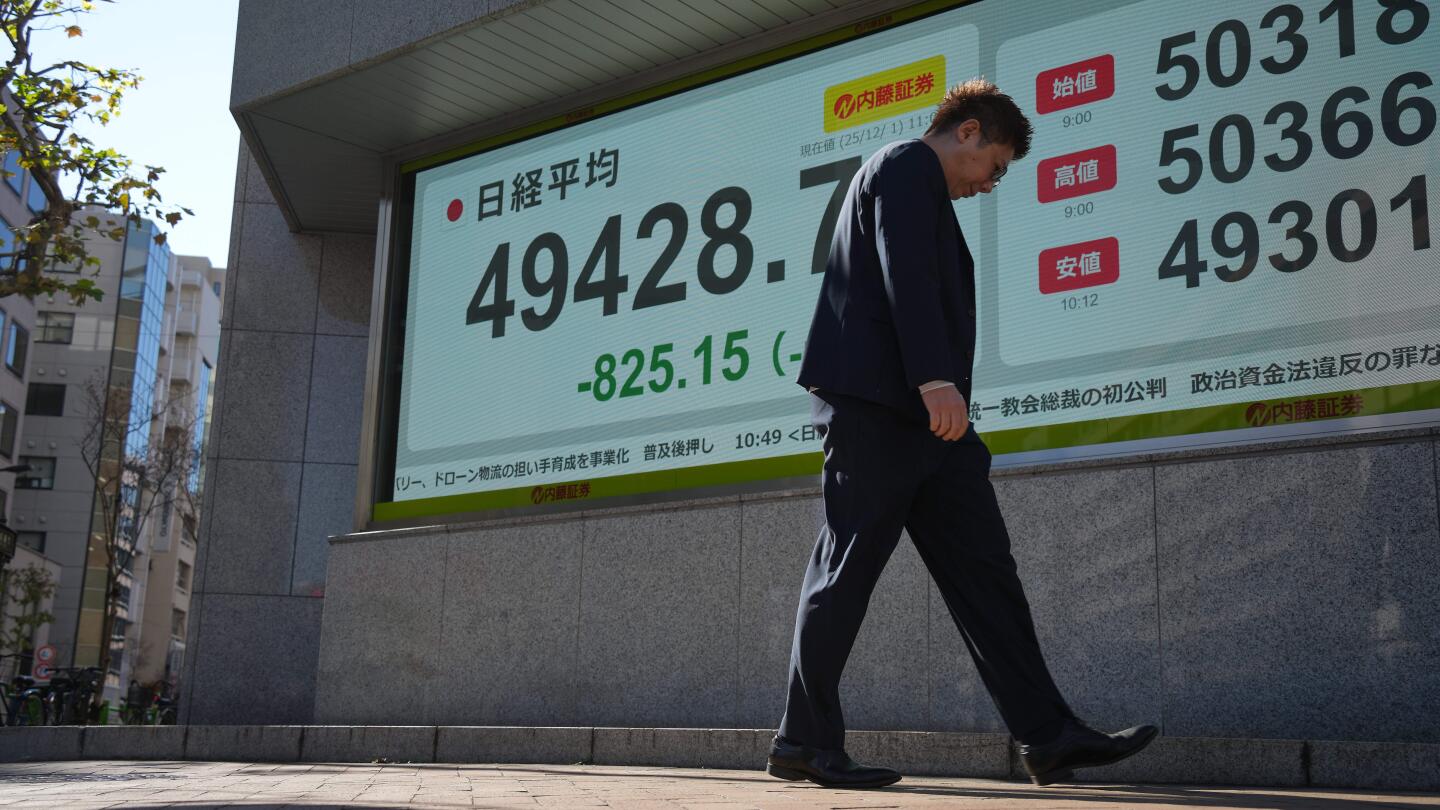
    Asian financial markets exhibited a divergent trajectory at the start of the trading week, characterized by significant declines in Japan’s Nikkei 225 index which plummeted 1.9% to 49,285.66. This downturn followed the release of disappointing corporate investment figures and a persistently contracting manufacturing sector. The S&P Global Japan Manufacturing Purchasing Managers Index (PMI) registered at 48.7 in November, marking its fifth consecutive month in contraction territory below the critical 50-point expansion threshold.

    China’s industrial sector mirrored these challenges, with official data confirming an eighth straight month of factory activity contraction. This ongoing weakness in Asia’s largest economies occurs despite the extended trade truce between Washington and Beijing, highlighting deeper structural economic challenges.

    Regional performance varied considerably across Asian markets. Hong Kong’s Hang Seng index defied the trend with a 0.8% gain to 26,068.05, while mainland China’s Shanghai Composite advanced 0.4% to 3,904.90. South Korea’s Kospi remained virtually unchanged, and Australia’s S&P/ASX 200 slipped 0.3%. Notable corporate movement included Meituan, the Chinese food delivery giant, whose shares declined 1.5% despite revenue growth, as intense competition compressed profit margins.

    Energy markets witnessed substantial movement with benchmark crude oil prices climbing over $1 per barrel. Currency markets saw the U.S. dollar weaken against the Japanese yen to 155.57, while the euro gained modest ground. Cryptocurrency markets experienced volatility as Bitcoin retreated 5.3% to $86,225.

    The manufacturing slowdown across Asia is being closely monitored for indications of how elevated U.S. tariffs might be affecting export-dependent economies. Despite these industrial challenges, regional exports have demonstrated resilience in recent months. Market attention remains divided between manufacturing weaknesses and robust consumer spending during the recent Black Friday and Cyber Monday retail events, which reportedly exceeded expectations.

    U.S. futures pointed to a lower opening, with S&P 500 futures down 0.7% and Dow Jones Industrial Average futures declining 0.4%. This follows a technical disruption on Friday that halted trading for hours at the Chicago Mercantile Exchange due to a data center outage, though markets ultimately finished the abbreviated post-Thanksgiving session with gains.