作者: admin

  • Justice department to pay Trump ally Flynn in Russia probe lawsuit

    Justice department to pay Trump ally Flynn in Russia probe lawsuit

    The U.S. Department of Justice has finalized a confidential financial settlement with retired Army Lieutenant General Michael Flynn, former national security adviser to President Donald Trump, resolving his wrongful prosecution lawsuit against the government. This resolution concludes years of legal battles stemming from the FBI’s Russia investigation.

    Flynn initiated the 2023 lawsuit seeking $50 million in damages, alleging the Justice Department deliberately targeted him due to his association with Trump’s 2016 presidential campaign. The case centered on claims of prosecutorial misconduct during the investigation into Russian election interference.

    In a significant reversal, the Justice Department now acknowledges Flynn’s prosecution as a “historic injustice.” A DOJ spokesperson stated: “Those who instigated the Russia Collusion Hoax and Crossfire Hurricane abused their power to mislead the American people and tarnish the reputations of President Trump and his supporters.”

    The settlement terms remain undisclosed, though court filings confirm both parties agreed to dismiss the case “with prejudice,” preventing future litigation on these grounds. Each side will bear its own legal costs.

    This development follows Flynn’s controversial legal journey. He initially pleaded guilty in 2017 to making false statements to FBI investigators during Special Counsel Robert Mueller’s probe but later sought to withdraw his plea, alleging government “bad faith, vindictiveness, and breach of the plea agreement.” The case was ultimately dropped in 2020 under Attorney General William Barr, followed by a presidential pardon from Trump.

    The settlement occurs alongside other substantial financial claims against the Justice Department from Trump allies. Most notably, former President Trump himself has filed a $230 million claim seeking compensation for federal investigations into his 2016 campaign and handling of classified documents.

  • A right-wing populist party made big poll gains – and it’s shaking up Australian politics

    A right-wing populist party made big poll gains – and it’s shaking up Australian politics

    Three decades after her improbable parliamentary entrance as a Queensland fish-and-chip shop owner, Pauline Hanson has transformed into Australia’s most persistent populist force. Her right-wing One Nation party, long relegated to the political fringe, is experiencing a remarkable resurgence fueled by widespread voter disillusionment with mainstream politics.

    The movement’s breakthrough arrived on March 21st in South Australia’s state election, where One Nation captured over 20% of the vote—its strongest performance outside Hanson’s home state. While Labor Premier Peter Malinauskas secured a decisive victory, One Nation gained at least three legislative seats, primarily at the expense of the conservative Liberal Party. This outcome signals a potential reconfiguration of Australia’s traditionally two-party dominated landscape.

    Political analysts view this development as particularly ominous for established parties. Kos Samaras, former Labor strategist and polling firm director, notes this represents a significant shift in Australia’s political gravity. The resurgence stems from multiple factors: a severe cost-of-living crisis, internal fractures within the Liberal-National coalition, and growing perception that mainstream parties disregard ordinary citizens’ struggles.

    Voter testimonials reveal this discontent. Brittany, a 36-year-old aged care worker from Adelaide, abandoned her lifelong support for the Liberal-National Coalition, citing economic pressures. Similarly, 68-year-old former Labor voter Andrew Sheffield expressed frustration with housing affordability crises affecting his children and grandchildren.

    One Nation’s campaign strategy proved remarkably comprehensive in South Australia. The party recruited prominent former Liberal senator Cory Bernardi to lead its ticket and fielded candidates in every electorate. Their platform emphasized housing supply expansion and immigration restrictions—though immigration policy remains federally controlled.

    Hanson’s political journey embodies turbulence. Initially endorsed as a Liberal candidate in 1996, she was removed from the ticket after criticizing welfare provisions for Indigenous Australians. Nevertheless, she achieved one of Australia’s largest electoral swings to claim a safe Labor seat. Her maiden parliamentary speech warned against Australia being ‘swamped by Asians,’ establishing her controversial reputation.

    Despite losing reelection within two years and spending 18 years in political exile, Hanson maintained public visibility through provocative stunts. These included wearing a burka in parliament to advocate for its ban, facing racial vilification charges, and receiving formal censure for anti-Muslim comments. In 2003, she was briefly imprisoned for electoral fraud before having her conviction overturned.

    According to biographer Dr. Anna Broinowski, Hanson’s endurance stems from her self-fashioned image as an ‘anti-politician’ who channels public frustration against elite institutions. Her early adoption of digital communication in the 1990s and recent forays into film production with right-wing commentator Holly Valance demonstrate innovative outreach strategies.

    The Bondi Beach shooting in December, which authorities attribute to Islamic State-inspired attackers, potentially amplified receptiveness to Hanson’s anti-immigration messaging. Simultaneously, the conservative opposition’s internal turmoil created opportunities for One Nation, evidenced by high-profile defections including former deputy prime minister Barnaby Joyce.

    However, significant challenges persist. The party has historically struggled with candidate selection, member retention, and navigating Australia’s preferential voting system. Over 60% of elected One Nation representatives have eventually left the party, often amid public acrimony. Former members have described Hanson’s leadership style as dictatorial and cited organizational dysfunction.

    Political scientists like Dr. Jill Shepherd argue that Australia’s electoral system—featuring compulsory voting and preferential ballots—likely prevents extreme political swings. She notes One Nation lacks the organizational discipline and resources to seriously challenge major parties at national levels, predicting the Coalition will eventually reclaim disaffected voters.

    Despite these limitations, Hanson remains undeterred. Following the South Australian results, she announced expansion plans targeting Victoria’s upcoming state election and a federal by-election in New South Wales. For supporters and critics alike, her message resonates clearly: Australia’s political establishment ignores growing populist sentiments at their peril.

  • ‘Ethnic cleansing’: Israel evicts 11 Palestinian families from Jerusalem neighbourhood

    ‘Ethnic cleansing’: Israel evicts 11 Palestinian families from Jerusalem neighbourhood

    Israeli security forces accompanied settlers into the Batn al-Hawa sector of Silwan, a neighborhood in occupied East Jerusalem, on Wednesday to forcibly displace eleven Palestinian families from their residences. The operation, facilitated by the Ateret Cohanim organization which promotes Jewish settlement in Palestinian areas, resulted in the seizure of thirteen apartments.

    Documented video evidence shows settlers discarding Palestinian belongings from windows and hoisting Israeli flags atop the captured buildings. According to the Israeli rights organization B’Tselem, approximately 2,200 Silwan residents currently face imminent threat of forced displacement.

    The human rights group condemned these actions as ‘ethnic cleansing,’ alleging the Israeli government is exploiting international focus on tensions with Iran to advance settlement expansion into territories captured during the 1967 war. B’Tselem characterized these measures as systematic, institutionalized violence designed to alter demographic balances through discriminatory laws and achieve ‘Judaization’ of sensitive areas.

    Concurrently, escalating violence erupted across the West Bank as dozens of Israeli settlers conducted coordinated attacks against Palestinian communities. Security footage from Saturday shows multiple structures ablaze in the villages of Jalud, Fandaqumiya, Silat ad-Dhahr and Qaryut, with residents attempting emergency evacuations.

    The Israeli military confirmed numerous arson attacks by settlers occurred Sunday night. Medical services reported three Palestinians injured from settler assaults in Jalud, with six others wounded near Jenin. The Palestinian news agency Wafa documented additional injuries, noting no arrests have been made in connection with the violence.

  • AFL 2026: Carlton young gun Jagga Smith extends contract

    AFL 2026: Carlton young gun Jagga Smith extends contract

    In a powerful demonstration of faith in emerging talent, the Carlton Football Club has secured young midfielder Jagga Smith with a monumental contract extension that will keep him in navy blue until the conclusion of the 2030 AFL season. The commitment comes after Smith has played merely two games at the elite level, highlighting the club’s exceptional confidence in his potential.

    Selected as the No. 3 overall pick in the 2024 AFL Draft, Smith’s journey to Carlton’s senior squad faced an immediate setback when he sustained an ACL injury that sidelined him for his entire debut season. Despite this challenging introduction to professional football, the 20-year-old has delivered remarkably impressive performances across his first eight quarters of play, demonstrating the exceptional talent that made him such a coveted draft prospect.

    Carlton’s List Manager Nick Austin expressed overwhelming enthusiasm about Smith’s long-term future with the club, emphasizing both his athletic capabilities and personal character. ‘What we truly appreciate about Jagga is his complete willingness to execute whatever is required during training sessions or competitive matches,’ Austin stated. ‘As a natural competitor, he possesses the distinctive ability to consistently win possession, effectively involve his teammates in play, and display leadership qualities that are remarkably advanced for his age.’

    Austin further elaborated on the club’s strategic approach to acquiring Smith, noting that Carlton had identified him as a primary target well before the draft. ‘We held him in exceptionally high regard entering the draft process and implemented a targeted strategy to ensure he became a Carlton player. Two years later, we find ourselves even more impressed with his development as both an athlete and an individual—we are absolutely thrilled he has committed his future to our club.’

    The list manager specifically highlighted Smith’s resilience and maturity during his rehabilitation period, describing him as ‘a resilient individual with outstanding character and maturity beyond his years, which was clearly demonstrated last year through his dedicated approach to his recovery program.’

    With only two AFL appearances to his name, Carlton management believes Smith’s best football remains ahead of him. Austin concluded with optimistic anticipation: ‘It’s safe to assert that the best is yet to come from Jagga, and we eagerly await witnessing the exceptional contributions he will make while wearing the navy blue jersey.’

  • Netanyahu aide’s racist slurs about Mizrahi Jews spark outrage

    Netanyahu aide’s racist slurs about Mizrahi Jews spark outrage

    A major political controversy has erupted in Israel following the disclosure of deeply offensive recordings featuring Prime Minister Benjamin Netanyahu’s close aide making racist comments about Mizrahi Jews. Israeli Channel 12 News revealed Tuesday that Ziv Agmon, serving as Netanyahu’s personal spokesperson and interim chief of staff, made disparaging remarks about several members of the ruling Likud party who are of Mizrahi descent.

    In the leaked audio, Agmon referred to Likud parliament members using dehumanizing language, calling Nissim Vaturi a ‘baboon’ and describing Eliyahu Revivo as a ‘retarded Moroccan.’ He additionally questioned how such figures were elected to parliament, suggesting party primaries should be replaced with hand-picked candidates. ‘Who would even know these people? What a bunch of baboons,’ Agmon stated, while dismissing Likud lawmaker Eli Dallal as ‘a nobody.’

    The scandal has reignited longstanding tensions regarding ethnic divisions within Israeli society. Mizrahim—Jews with ancestral origins in Muslim-majority countries across North Africa and the Middle East—have historically faced discrimination from Israel’s predominantly Ashkenazi leadership of European descent. Recent studies continue to show significant socioeconomic gaps between these communities.

    Agmon’s remarks extended beyond ethnic insults to include criticism of Netanyahu’s leadership. In comments made after the October 2023 Hamas attack, Agmon stated that Netanyahu ‘is finished’ and ‘needs to step down.’ He also made disparaging comments about Sara Netanyahu, the prime minister’s wife, and suggested Egypt should release recordings of conversations with Netanyahu that might imply prior warnings about the attack.

    Despite Agmon denying holding racist views and claiming he has been ‘seriously wronged,’ multiple Likud figures have demanded his immediate dismissal. Energy Minister Eli Cohen stated that Agmon’s remarks ‘deserve unequivocal condemnation,’ while Aryeh Deri, leader of the ultra-Orthodox Shas party, criticized Netanyahu’s silence on the matter. Israeli media reported Wednesday that Netanyahu is seeking a replacement for Agmon, who is expected to be removed from his position.

  • Starmer reaffirms UK support for ICC when asked about Karim Khan exoneration report

    Starmer reaffirms UK support for ICC when asked about Karim Khan exoneration report

    British Prime Minister Keir Starmer has publicly reaffirmed the United Kingdom’s institutional support for the International Criminal Court while carefully avoiding commentary on internal proceedings concerning Chief Prosecutor Karim Khan. The declaration came during Wednesday’s parliamentary session when Independent Alliance MP Iqbal Mohamed questioned the prime minister about recent Middle East Eye reports revealing divisions within the ICC’s governing body.

    According to exclusive MEE reporting, a judicial panel comprising three senior judges has exonerated Khan of misconduct allegations following a United Nations investigation into sexual misconduct complaints. Despite this clearance, a minority faction within the 21-member bureau of the Assembly of State Parties—the court’s executive governing body—reportedly seeks to disregard the judicial findings, creating significant institutional tension.

    The situation emerges against a backdrop of intense political pressure on the ICC regarding its investigation into Israeli officials. Previous reporting indicates that the UK’s former Conservative government, through then-Foreign Secretary David Cameron, allegedly threatened to defund the court and withdraw from the Rome Statute should it pursue arrest warrants against Israeli leaders. Khan formally documented these threats in a December submission to the ICC.

    Pressure on Khan escalated notably during key periods: in April 2024 as he prepared warrants for Israeli Prime Minister Benjamin Netanyahu and Defense Minister Yoav Gallant, and again in October 2024 preceding the formal issuance of warrants. The prosecutor faced multiple forms of intimidation including sanctions from the Trump administration, security concerns prompted by alleged Mossad presence in The Hague, and coordinated media leaks regarding misconduct allegations.

    Legal experts warn that political interference in judicial matters could severely undermine the ICC’s credibility. International law specialists emphasize that the bureau’s potential disregard of the unanimous judicial findings—despite having appointed the panel itself—would establish a dangerous precedent prioritizing political interests over judicial independence.

    The bureau currently faces a complex decision-making process with strict timelines: 30 days for preliminary assessment following the March 9 report delivery, another 30 days for Khan’s response, and a final 30-day period for conclusive determination. With two meetings already conducted without consensus, the outcome remains uncertain as diplomatic maneuvering continues behind closed doors.

  • Strike on alleged drug boat kills 4 in the Caribbean Sea, US military says

    Strike on alleged drug boat kills 4 in the Caribbean Sea, US military says

    The U.S. military has confirmed conducting a lethal strike operation in the Caribbean Sea on Wednesday, resulting in four fatalities aboard a vessel suspected of narcotics smuggling. This action represents the latest escalation in the Trump administration’s intensified campaign against alleged drug trafficking networks throughout Latin America.

    According to U.S. Southern Command, the targeted vessel was operating along established smuggling corridors. The military released aerial footage depicting a moving boat suddenly consumed by a massive explosion. Notably, officials did not immediately present physical evidence confirming the presence of illicit drugs aboard the struck vessel.

    This incident raises the documented death toll from such maritime operations to at least 163 individuals since September, when the administration initiated its aggressive targeting of what it characterizes as ‘narcoterrorist’ elements. President Trump has publicly framed these operations as part of an ‘armed conflict’ against cartels, justifying the measures as necessary to combat drug influx and prevent American overdose deaths.

    The campaign continues unabated despite shifting military priorities toward Middle Eastern tensions with Iran. Concurrently, criticism mounts regarding both the legal foundations and practical efficacy of these strikes. Experts note that fentanyl—the primary driver of overdose fatalities—predominantly enters the United States through land routes from Mexico, not maritime channels, raising questions about the strategic focus of these operations.

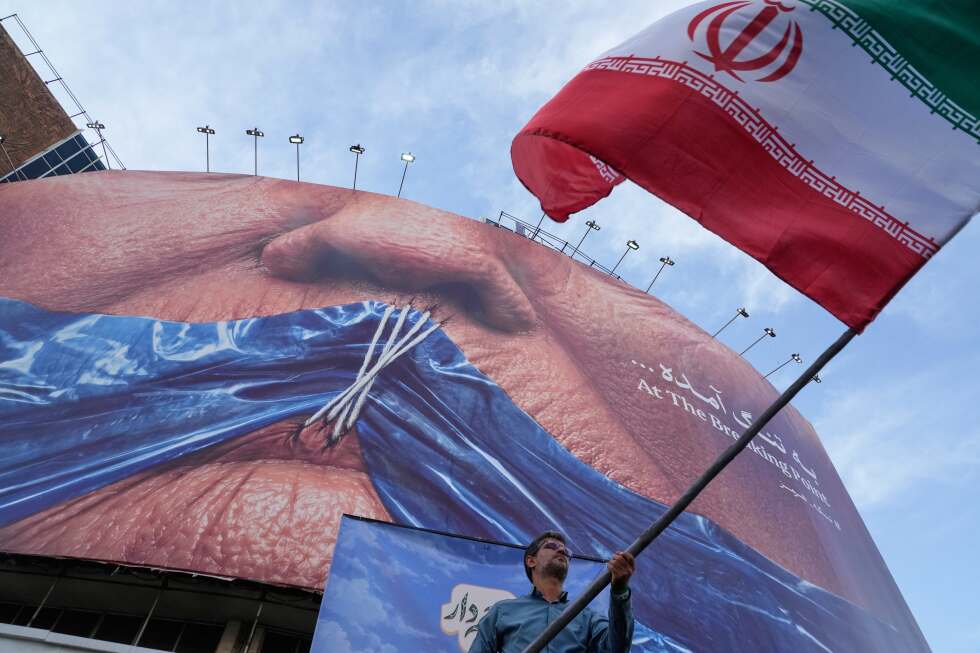
  • Who wants what and why from US-Iran peace talks?

    Who wants what and why from US-Iran peace talks?

    Diplomatic efforts to resolve the escalating Gulf conflict face significant obstacles as the United States and Iran present fundamentally incompatible positions. While Washington claims productive negotiations are underway, Tehran has categorically denied any formal peace talks are occurring, creating a credibility gap that underscores the profound distrust between the nations.

    According to sources, communication between the adversaries is being maintained indirectly through intermediaries such as Pakistan, which maintains positive relations with both governments. However, this backchannel dialogue falls far short of formal negotiations, explaining why Iranian military officials have explicitly rejected characterizations of ongoing peace talks.

    The proposed US 15-point peace plan, as reported by Israel’s Channel 12 network, demands the complete termination of Iran’s nuclear and ballistic missile programs, along with an end to its support for proxy militias throughout the region. In exchange, Tehran would receive sanctions relief and limited shared control over the strategically vital Strait of Hormuz.

    Iran has countered with its own set of conditions, including war reparations payments, international recognition of its sovereign authority over the Strait of Hormuz, and security guarantees against future attacks. These demands present significant political challenges for Washington and its Gulf Arab allies.

    The conflict dynamics have shifted considerably since hostilities began on February 28. Initial expectations in Washington and Jerusalem that overwhelming military superiority would quickly collapse the Islamic Republic have proven unfounded. Instead, Iran has strengthened its strategic position by establishing de facto control over the Strait of Hormuz, providing significant leverage over global energy markets.

    Regional Gulf Arab states watch with growing apprehension as the conflict evolves. Having previously maintained an uneasy accommodation with Iran, these nations now face a wounded but resilient regime that has demonstrated capability to strike neighboring territories with drones and missiles.

    The arrival of approximately 5,000 US Marines and paratroopers from the 82nd Airborne Division potentially expands American military options, but ground operations carry significant risks of casualties and deeper entanglement in what critics describe as ‘a war of choice.’

    As the stalemate continues, Iran appears increasingly emboldened, believing time and geography favor its position. The White House’s public assertions that Tehran desperately seeks a deal have ironically made Iranian leadership less inclined to negotiate, creating a diplomatic impasse with global economic implications.

  • Day of reckoning arrives for social media after US court loss

    Day of reckoning arrives for social media after US court loss

    A landmark legal decision in California has established a critical precedent in the mounting litigation against social media corporations, potentially exposing them to billions in liabilities. A Los Angeles jury determined that both Meta’s Instagram and Google’s YouTube contributed to a teenage girl’s depression through addictive platform designs, despite corporate awareness of associated risks.

    The civil court found these technology giants liable for insufficiently warning young users about mental health dangers inherent in excessive social media engagement. While compensatory damages were set at $3 million with equivalent punitive penalties, the implications extend far beyond financial considerations. This verdict coincides with a separate New Mexico ruling ordering Meta to pay $375 million for endangering minor users on Facebook and Instagram.

    Legal experts identify these cases as bellwether trials that signal how juries respond to allegations of digital harm. According to Pennsylvania State University law professor Daryl Lim, these outcomes intensify pressure on platforms to settle hundreds of pending lawsuits alleging similar violations. Snap and TikTok previously settled with the Los Angeles plaintiff before trial commencement.

    The litigation centers on plaintiffs like Kaley G.M., who developed severe depression, chronic anxiety, and body image disorders following early, intensive social media exposure. Researchers increasingly correlate such psychological conditions with adolescent social media overuse.

    This judicial action represents a strategic circumvention of Section 230 protections—the legal provision historically shielding platforms from content-related liability. Lawyers successfully argued that platform architecture itself, rather than user-generated content, created addictive environments harming young users.

    The verdicts occur amid accelerating global regulatory scrutiny. Australia’s recent proposition to ban social media for under-16 users has inspired similar legislative considerations across multiple U.S. states. Industry analysts warn that court-mandated product redesigns could fundamentally threaten the attention-based advertising models underpinning these technological enterprises.

  • Israeli court closes case into Palestinian teen’s death despite evidence of starvation

    Israeli court closes case into Palestinian teen’s death despite evidence of starvation

    A controversial ruling by an Israeli court has ignited widespread condemnation after it terminated the investigation into the death of Walid Ahmad, a 17-year-old Palestinian who perished in custody in March 2025. The teenager, detained six months prior for allegedly throwing stones in the occupied West Bank, died following a significant deterioration in his health, with evidence pointing to severe weight loss and infection.

    Judge Ehud Kaplan presided over the decision to close the case, asserting that no direct causal link could be established between the documented physical decline and the immediate cause of death. The ruling, previously under a gag order, became public knowledge on Tuesday, revealing a legal stance that human rights advocates describe as dangerously narrow.

    Human rights lawyer Nadia Dakka, who has meticulously followed the proceedings, criticized the judicial outcome as emblematic of a system ill-equipped to address systemic institutional failures. ‘There are clear indications that he died as a result of starvation, yet the court’s discussion was reductively focused on whether starvation was the direct, proximate cause,’ Dakka stated in an interview with Middle East Eye, highlighting the inherent challenge in attributing criminal responsibility in environments of pervasive neglect.

    Testimonies gathered by Defence for Children International depict a harrowing final moments for Ahmad. Fellow detainees reported the teenager collapsing from dizziness on March 22, 2025. Their pleas for assistance were allegedly ignored by guards, forcing them to carry Ahmad to a yard gate before he was finally taken away. His detention was further marred by denial of access to legal counsel and family visits.

    This incident is not isolated. According to Physicians for Human Rights-Israel (PHRI), at least 94 Palestinians have died in Israeli custody between October 2023 and August 2025, with many fatalities linked to severe medical neglect, physical abuse, and significant health deterioration. Naji Abbas, director of PHRI’s Prisoners and Detainees Department, confirmed a drastic decline in food quality post-October 2023, describing it as a ‘complete change’ rather than a minor deterioration. In some facilities, daily caloric intake reportedly plummeted below 1,200 calories—a stark contrast to the World Health Organisation’s baseline of 2,100 calories for maintaining health in emergency settings.

    Dakka and other activists assert that this caloric reduction is part of a declared policy of deterrence. ‘Harsh prison conditions are intended to make potential detainees think twice,’ she explained. This policy is documented through prisoner testimonies, submitted menus, and medical records showing drastic weight loss, with some prisoners losing over 20 kilograms within a year.

    The systemic pressure extends beyond prison walls. The Palestinian Prisoners’ Society reports intensified measures against prisoners released via exchange deals, including repeated re-arrests and field interrogations. Approximately 100 such individuals have been re-detained, some multiple times, under military orders that expand authorities’ power to summon and arrest.

    The UN’s special rapporteur on Palestine, Francesca Albanese, recently warned in a report that torture in Israel has become ‘state doctrine,’ creating a ‘torturous environment’ that erodes human dignity. This climate has reportedly worsened since National Security Minister Itamar Ben Gvir took office in 2022, fostering a more punitive penal environment characterized by medical neglect, poor hygiene, and overcrowding.

    The Sde Teiman facility, where leaked footage previously showed soldiers allegedly raping a detainee, remains a point of contention. Despite sparking investigations, military prosecutors dropped key charges against several soldiers in March 2026, citing evidence handling issues.

    Dakka further illustrated the disparity in treatment by recalling an incident during the Iran conflict sirens, where Israeli personnel were instructed to seek shelter while Palestinian detainees were left exposed in their cells. This incident underscores a broader reality where detainee safety is consistently treated as secondary, even during direct security threats, reflecting a deep-seated systemic bias and a culture of impunity.