作者: admin

  • Eurovision chiefs face thorny question of whether Israel should take part in the 2026 song contest

    Eurovision chiefs face thorny question of whether Israel should take part in the 2026 song contest

    GENEVA — The European Broadcasting Union (EBU) convened a critical general assembly Thursday to address mounting tensions over Israel’s eligibility for the 2026 Eurovision Song Contest. This annual pop music spectacle, traditionally celebrated for its unifying spirit, now faces its most significant political challenge since Russia’s 2022 exclusion following its invasion of Ukraine.

    The core dispute centers on calls from several member nations—including Iceland, Ireland, the Netherlands, Slovenia, and Spain—to exclude Israel from competition. These broadcasters cite both Israel’s conduct in the Gaza conflict and allegations of voting interference in previous contests as primary concerns. Conversely, nations including Austria and Germany have expressed support for Israel’s continued participation.

    Experts observing the Geneva proceedings noted the unlikelihood of a unified resolution. Paul Jordan, a prominent Eurovision commentator known as ‘Dr. Eurovision,’ described the situation as ‘messy and toxic,’ noting the irony that an event branded ‘United by Music’ has become profoundly divided through geopolitics.

    The EBU proposed structural reforms to safeguard contest integrity, including modified voting procedures and reinstating professional juries during semifinals. These measures aim to address claims of political manipulation in viewer voting. The union stated that a formal vote on Israel’s participation would only occur if member broadcasters deem these safeguards insufficient to protect the competition’s neutrality.

    The implications of potential boycotts extend beyond symbolism. Dean Vuletic, author of ‘Postwar Europe and the Eurovision Song Contest,’ warned that withdrawals by democratic EU members would represent an unprecedented escalation in the event’s history. Such actions could significantly impact viewership metrics and financial stability for an institution already navigating media fragmentation and budget constraints.

    With member broadcasters required to confirm 2026 participation by mid-December, the controversy threatens to overshadow the anticipated return of Bulgaria, Moldova, and Romania after absences for financial and artistic reasons. The resolution—or lack thereof—will determine whether Eurovision can reclaim its celebratory purpose or continue serving as a geopolitical battleground.
  • More than 300 flights cancelled as Indian airline faces ‘staff shortage’

    More than 300 flights cancelled as Indian airline faces ‘staff shortage’

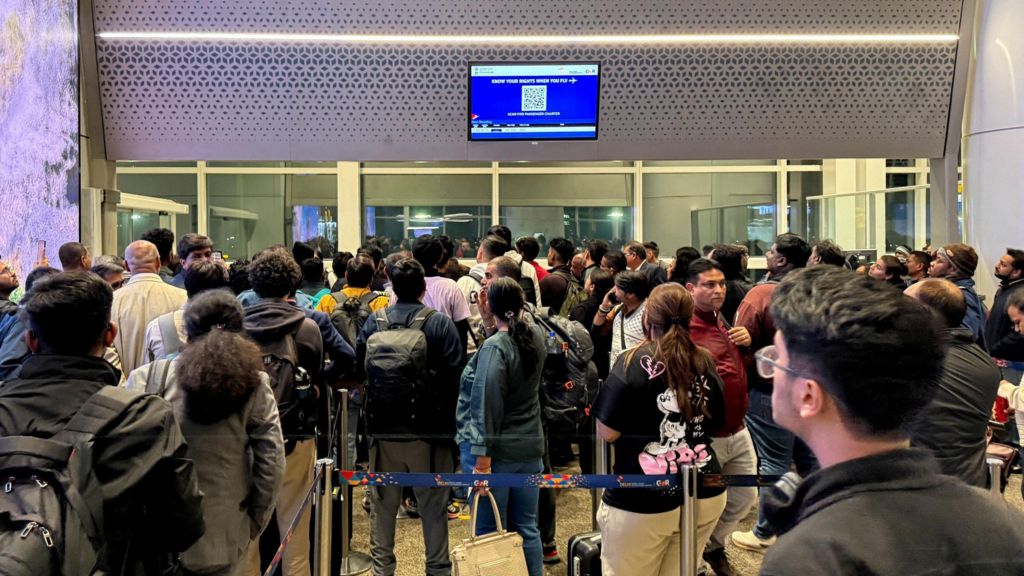
    India’s aviation sector is confronting substantial operational challenges as IndiGo, the nation’s dominant carrier with over 60% domestic market share, has canceled more than 300 flights since Tuesday. This disruption has created travel chaos at major hubs including Delhi, Mumbai, Hyderabad, and Bengaluru, leaving thousands of passengers stranded during peak travel season.

    The budget airline attributes the widespread cancellations to a combination of technical malfunctions, adverse weather conditions, and implementation challenges with newly introduced crew rostering regulations. In response to the crisis, IndiGo has implemented what it describes as “calibrated adjustments” to its flight schedule through Friday in an effort to stabilize operations.

    According to data from ANI news agency, the scale of disruptions reached critical levels Thursday morning with 33 cancellations at Delhi, 85 at Mumbai, and 73 at Bengaluru airports. The situation has sparked significant passenger outrage, with numerous videos of frustrated travelers circulating across social media platforms. Many affected customers have taken to X (formerly Twitter) to voice their complaints, typically receiving standardized responses from the airline citing factors “beyond our control.”

    India’s aviation regulatory authorities have initiated an investigation into the disruptions, formally requesting that IndiGo provide detailed explanations for the extensive cancellations and delays. Media reports indicate the airline has been grappling with pilot and crew shortages since November 1st, when new Flight Duty Time Limit (FDTL) regulations took effect. These rules impose stricter limits on flight hours and mandate increased rest periods for crew members.

    However, the Federation of Indian Pilots has contested IndiGo’s assessment, noting that other airlines operating under the same regulatory framework have remained largely unaffected. The organization stated that the cancellations “cannot be attributed” solely to the new FDTL rules.

    This operational crisis represents a significant reputational challenge for the two-decade-old carrier, which built its brand identity around punctuality and reliability. Recent performance metrics indicate deteriorating service standards, with a LocalCircles survey revealing that 54% of IndiGo passengers reported timeliness issues over the past year. The airline’s response to this systemic disruption will likely have lasting implications for its competitive position in India’s rapidly growing aviation market.

  • China breaks foreign tech monopoly, mass-produces high-end carbon fiber

    China breaks foreign tech monopoly, mass-produces high-end carbon fiber

    China has achieved a significant technological milestone with the successful launch of a T1000 carbon fiber production line in Datong, Shanxi province, marking a decisive end to foreign dominance in high-performance material manufacturing. The demonstration facility, capable of producing 200 metric tons annually, represents China’s first domestically developed mass production system for 12K small-tow T1000 carbon fiber—a material renowned as the ‘king of new materials’ for its exceptional properties.

    The project, developed through collaboration between Huayang New Material Technology Group, the Datong municipal government, and the Chinese Academy of Sciences’ Institute of Coal Chemistry, began construction in June 2024. This achievement ensures security and resilience within China’s critical materials supply chain while breaking longstanding international technological monopolies.

    T1000 carbon fiber exhibits extraordinary characteristics: with filament diameters measuring just 6-7 micrometers (less than one-tenth the width of human hair), the material demonstrates tensile strength exceeding 6,400 MPa. Despite weighing only one-quarter as much as steel, it provides five times greater strength. A single meter-long strand weighing merely 0.5 grams can support loads up to 200 kilograms while maintaining resistance to high temperatures, corrosion, and chemical degradation in acidic or alkaline environments.

    These properties make the material indispensable for advanced applications across national defense, aerospace, rail transportation, wind energy, sports equipment, and the emerging low-altitude economy. The breakthrough culminates decades of research, with China having previously mastered aerospace-grade T300 production in 2008 and T800 carbon fiber used in equipment during the Beijing Winter Olympics.

    Government and industry leaders emphasize this achievement represents both a technological milestone and catalyst for regional economic development. The project is expected to drive growth in high-end equipment manufacturing and new energy storage industries while attracting upstream and downstream enterprises to establish operations in Datong. Provincial authorities have committed to prioritizing new materials development through policy support and fostering complete industrial chains spanning research, production, and application.

  • Railway port set to expand after setting trade record

    Railway port set to expand after setting trade record

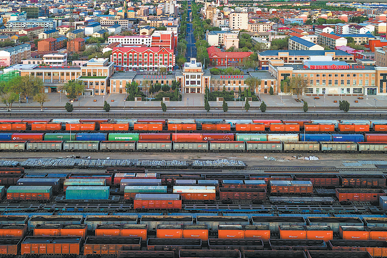
    The Ereenhot Railway Port, a crucial border crossing in China’s Inner Mongolia Autonomous Region, is poised for significant expansion following a historic trade achievement. By November 20, 2025, the port had processed an unprecedented 3,500 China-Europe freight train journeys, marking the highest volume since the service’s inception in 2013.

    This milestone was celebrated with the departure of a Russia-bound train carrying 55 containers, highlighting the port’s growing importance in Eurasian trade networks. According to Yang Dongdong, the port’s technical manager, the facility has consistently handled over 3,000 China-Europe freight trains annually for three consecutive years, demonstrating sustained growth in cross-continental rail commerce.

    The port’s expansion strategy includes launching new routes to Russian cities later this year and accelerating construction of the second-line project between Ereenhot and Mongolia’s Zamiin-Uud Station. This infrastructure development aims to support increasing trade flows along the Belt and Road Initiative’s central corridor, where Ereenhot serves as the exclusive border crossing.

    Route connectivity has dramatically expanded from just two paths in 2013 to 74 currently active routes, linking Chinese manufacturing hubs with over 70 logistics centers across more than 10 European nations, including Germany and Poland. Recent additions include routes from Wuhu (Anhui province) and Datong (Shanxi province) to various Russian destinations, creating a denser transportation network.

    A notable development has been the improvement in return freight efficiency, with 1,760 return trains recorded—representing 50.3% of total operations and a 28.7% year-on-year increase. Trade composition remains stable, with exports dominated by automobiles, electronics, home appliances, and general merchandise, while imports primarily consist of timber and paper products.

    The port has implemented significant operational enhancements through digital transformation, including paperless customs clearance and improved coordination with Mongolian counterparts. The ‘two-station integration’ model with Zamiin-Uud Station facilitates real-time information sharing on train flows and inventory management, while optimized inspection processes have reduced customs clearance time by over 5% year-on-year.

    Local businesses report substantial benefits from the rail network’s growth. Meng Xiangyu, a freight company manager, noted that since 2018, the service has provided “a cheaper, more efficient and safe way to transport goods,” enabling expansion of both domestic and international client networks.

    Looking forward, port authorities plan to leverage capacity expansion and efficiency improvements to achieve year-on-year growth in throughput while ensuring smooth operation of international rail transport corridors, further solidifying China’s role in transcontinental trade.

  • Pomelo prospects pull urbanites to the farm

    Pomelo prospects pull urbanites to the farm

    The agricultural landscape of Shangrao in Jiangxi province is undergoing a remarkable transformation, driven by the booming Majia pomelo industry that’s reversing urban migration patterns. Young professionals are abandoning city careers to embrace farming opportunities, creating an unexpected rural revitalization movement.

    Ning Bo and Feng Qiuyan exemplify this trend, having left their positions in Hangzhou to establish a pomelo orchard in Guangfeng district. Their innovative approach combines traditional cultivation with modern entrepreneurship, developing unique products like pomelo-infused coffee and planning agritourism ventures. Their farm features a café nestled among pomelo trees, where the aroma of coffee blends with citrus scents.

    This homecoming movement addresses multiple challenges simultaneously—career satisfaction, family proximity, and rural economic development. “We wanted to solve our employment problem while being close to home,” Feng explained, noting how the pomelo’s excellent qualities presented a business opportunity despite its limited recognition outside the region.

    The technological transformation of pomelo farming is equally impressive. Smart orchards now utilize drones for spraying and automated track systems for transportation. Li Yufu, a transport worker, reported production increases from 500 to 750 metric tons following implementation of these systems. The technological advancements create substantial employment, with 40-50 villagers employed during harvest seasons and year-round workers earning over 30,000 yuan annually.

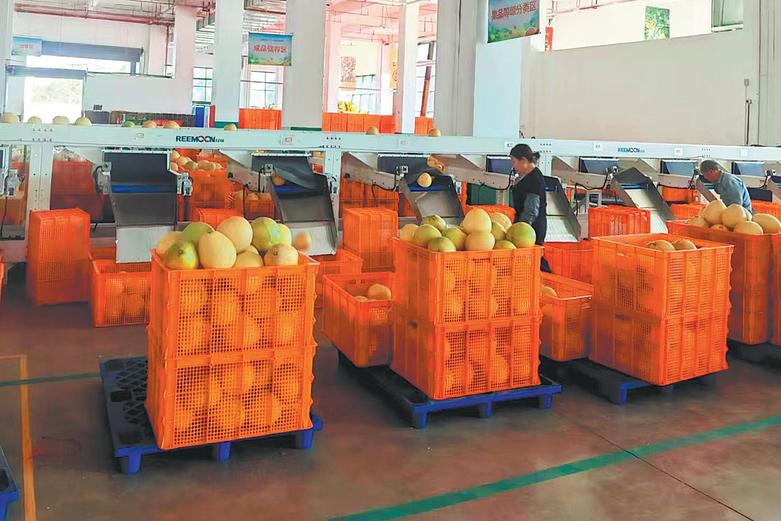
    Post-harvest processing has evolved significantly with precision grading centers that measure size, weight, and sugar content to ensure consistent quality. Intelligent sorting processed 28,500 tons last year, representing approximately 30% of total output, with graded fruit commanding a 22% price premium.

    The scale of the industry is substantial: 13,333 hectares of planting area, annual output of 250,000 tons, and comprehensive output value exceeding 3 billion yuan. According to Gong Zhenzhou, Party secretary of Guangfeng, the pomelo industry has generated 115,000 jobs and increased incomes for over 50,000 fruit growers.

    The global reach continues expanding through enterprises like Jiangxi Fengguang Biotechnology, which exports to European and Asian markets including Italy, UK, UAE, Saudi Arabia, Malaysia, and Singapore. Last year’s exports reached nearly 2,500 tons, including 100 tons to the UK alone.

    This agricultural success story represents a multifaceted approach to rural development, combining technological innovation, entrepreneurial spirit, and global market access to create sustainable prosperity in China’s countryside.

  • Trump to host signing of peace deal between leaders of DR Congo and Rwanda

    Trump to host signing of peace deal between leaders of DR Congo and Rwanda

    In a significant diplomatic development, the leaders of the Democratic Republic of Congo and Rwanda are preparing to formalize a peace agreement during a Washington summit convened by US President Donald Trump. This high-stakes diplomatic initiative unfolds against a backdrop of intensified combat operations in the mineral-rich eastern territories of DR Congo, where government forces continue to engage with Rwanda-backed M23 rebel factions.

    Recent days have witnessed a concerning escalation of hostilities, with Congolese military authorities accusing M23 insurgents of deliberately undermining the peace process through renewed offensive operations. Conversely, rebel leadership contends that government forces initiated violations of existing ceasefire arrangements. The M23 movement, which captured substantial territories including the strategic trading hub of Goma earlier this year, remains absent from the primary negotiation table, instead participating in parallel discussions mediated by Qatari officials.

    The forthcoming agreement addresses core grievances from both nations: Rwanda demands the disarmament of FDLR militia elements linked to the 1994 genocide, while DR Congo insists on the complete withdrawal of Rwandan military presence from its eastern provinces. Historical context reveals this conflict’s complexity, with multiple failed peace initiatives since the 1990s attributed to mutual non-compliance with similar provisions.

    US diplomatic engagement appears driven by substantial economic interests, with President Trump explicitly acknowledging American acquisition of mineral rights as part of the June preliminary agreement. The Democratic Republic of Congo possesses an estimated $25 trillion in mineral reserves, including critical components for electronic devices, renewable energy infrastructure, and military equipment.

    Despite ceremonial preparations in Washington, regional analysts maintain cautious skepticism regarding the agreement’s practical implementation. Security researchers note the absence of an active ceasefire and continued territorial expansion by rebel forces, suggesting the signing ceremony may primarily serve symbolic rather than operational purposes.

    International mediation efforts feature unusual coordination between the United States and Qatar, with each nation leveraging distinct diplomatic relationships—Washington maintaining stronger ties with Kinshasa, while Doha enjoys closer relations with Kigali. The participation of additional African and Arab leaders underscores the agreement’s regional significance, though the path to sustainable peace remains fraught with historical grievances and competing economic interests.

  • Chinese company tests reusable rocket

    Chinese company tests reusable rocket

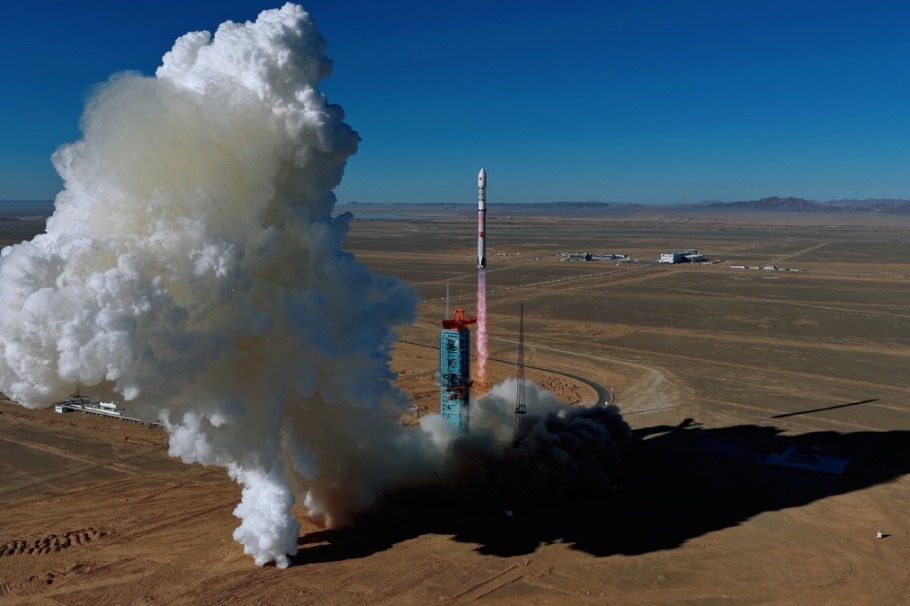
    In a significant milestone for China’s commercial space sector, Beijing-based LandSpace conducted the inaugural flight of its ZQ 3 reusable rocket on December 3, 2025, from the Jiuquan Satellite Launch Center. The launch demonstrated mixed results as the second-stage booster successfully reached its designated orbit while the first-stage booster failed during recovery attempts.

    The ZQ 3 Y1 rocket, standing 66.1 meters tall with a 4.5-meter diameter, represents a technological leap with its stainless steel construction and methane-powered engines. Weighing approximately 560 tons at launch with 750 tons of thrust capability, the vehicle is designed to deliver heavy payloads to both low-Earth and sun-synchronous orbits.

    Despite the first-stage booster’s destruction over the Minqin county recovery site in Gansu province, the mission provided critical engineering data. LandSpace confirmed the flight validated the rocket’s overall design, system compatibility, and flight procedures while gathering essential information for future recovery optimization.

    The company’s proprietary methane engines—featuring nine TQ 12A engines on the first stage and one TQ 15A on the second—mark a strategic shift toward reusable, environmentally sustainable propulsion technology. The rocket’s design incorporated four grid fins and landing legs specifically for controlled descent and soft landing capabilities.

    This launch follows LandSpace’s previous achievement in July 2023, when the company completed the world’s first orbital mission using methane propulsion with its ZQ 2 rocket. The development of reusable launch technology positions LandSpace to compete for contracts supporting China’s ambitious satellite internet constellation projects, representing a growing market within the global space industry.

  • The Red Sea region: where the rules are changing

    The Red Sea region: where the rules are changing

    The strategic waters of the Red Sea have transformed into a primary theater for 21st-century power competition, where global ambitions intersect with regional conflicts and local political dynamics. Stretching from the Suez Canal to the Bab el-Mandeb Strait, this 438,000-square-kilometer region borders the volatile Horn of Africa, Arabian Peninsula, and western Indo-Pacific, creating a complex geopolitical nexus.

    According to international relations expert Federico Donelli, author of ‘Power Competition in the Red Sea,’ the region’s significance stems from its lack of a dominant power capable of imposing order, combined with its immense strategic value as a maritime corridor for global trade and energy transportation. This combination has created an open arena where traditional and emerging powers converge in increasingly assertive competition.

    The United States and China maintain military facilities in Djibouti, while Russia has sought access to Port Sudan. Gulf powers including Saudi Arabia, the UAE, and Qatar have expanded their presence through port investments, infrastructure projects, and military cooperation across Sudan, Somalia, and Ethiopia. Turkey, Iran, and Israel have also established significant political, economic, and security ties, linking the Red Sea to the eastern Mediterranean and Persian Gulf.

    Local actors have become active participants rather than passive recipients in this power competition. Governments and non-state entities from Ethiopia to Sudan, Eritrea, Egypt, and Somalia are strategically exploiting global rivalries to advance their objectives—trading military access for security guarantees, seeking infrastructure investments, and leveraging diplomatic alignments to strengthen domestic and regional positions.

    This dynamic has created a system of ‘multi-alignment’ where regional players maintain relationships with multiple external powers simultaneously, gaining leverage while increasing overall volatility. The ongoing Sudanese civil war has transformed into a proxy battlefield with rival factions seeking support from competing external players. In Somalia, local authorities negotiate directly with foreign powers like Turkey and Gulf states, often bypassing weak central institutions.

    The Red Sea region exemplifies the broader transformation from the liberal international order—characterized by multilateralism, free markets, and liberal democracy—toward a post-liberal order defined by selective engagement, bilateral bargains, and flexible alignments. Here, order emerges from competition rather than consensus, with military presence, infrastructure investment, and political alliances serving as primary instruments of influence.

    This arena serves as a microcosm of emerging global politics: fragmented, transactional, and deeply interconnected. The region demonstrates that the future international order will be shaped not only in traditional power centers like Washington, Beijing, Brussels, or Moscow, but equally in strategic locations like Port Sudan, Aden, and Djibouti, where global competition interacts directly with local conflicts and new governance models emerge.

  • Envoy praises ROK-China bilateral ties

    Envoy praises ROK-China bilateral ties

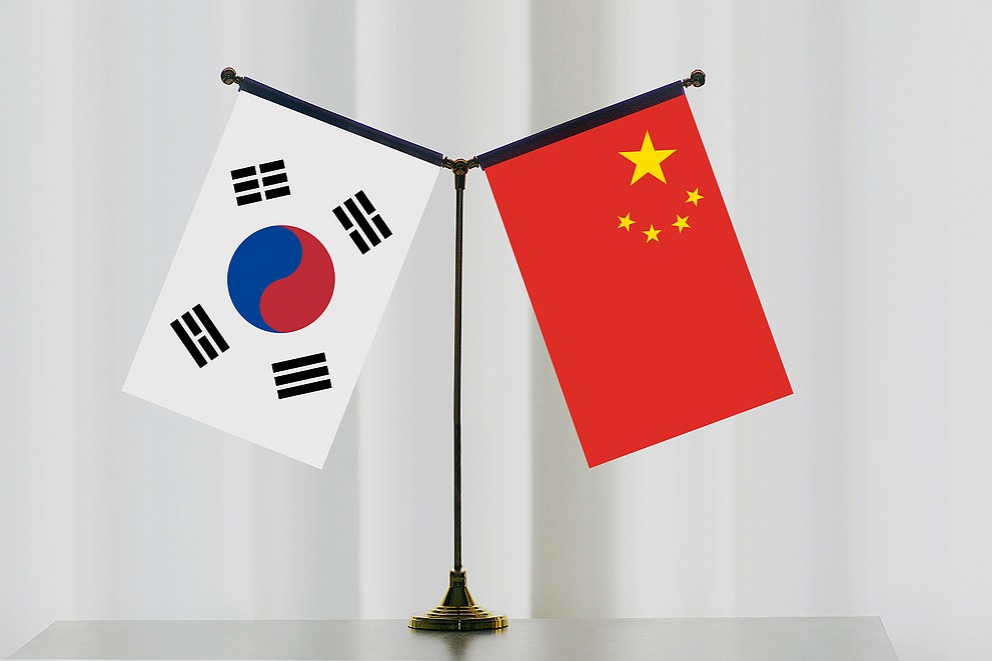
    The Republic of Korea’s Ambassador to China, Ro Jae-hun, has characterized bilateral relations as entering a transformative phase following President Xi Jinping’s landmark visit to South Korea last month—his first in over a decade. In an exclusive interview with China Daily, the ambassador revealed that both nations are actively engaged in diplomatic communications regarding an anticipated visit to China by ROK President Lee Jae-myung, following an official invitation extended by Xi.

    The historic meeting between the two leaders in Gyeongju has been described as a pivotal moment for advancing mutual development and contributing to regional and global stability. Ambassador Ro emphasized that despite evolving global dynamics and domestic changes, the fundamental principle of mutually beneficial cooperation continues to drive economic growth in both countries.

    Economic ties remain exceptionally strong, with bilateral trade reaching $328.08 billion in 2024, representing a 5.6% year-on-year increase. China has maintained its position as South Korea’s largest trading partner for 21 consecutive years, while South Korea remains China’s second-largest trading partner.

    This year marks the tenth anniversary of the bilateral free trade agreement, with both parties agreeing to accelerate second-phase negotiations that will expand into service sectors including culture and tourism. While acknowledging challenges such as trade protectionism and global supply chain restructuring that have affected some Korean exports to China, Ro framed these as opportunities for deeper collaboration.

    The ambassador advocated for a strategic shift from vertical economic division to horizontal partnership, highlighting emerging sectors for cooperation including artificial intelligence, robotics, biomedicine, and new energy technologies.

    Ro brings a unique personal perspective to his diplomatic role. His father, former ROK President Ro Tae-woo, established diplomatic relations between the two nations in 1992 and became the first Korean president to officially visit China later that same year. The ambassador described continuing this legacy as both a personal mission and responsibility.

    People-to-people connections remain central to bilateral relations, with Ro citing the phenomenon of giant panda Fu Bao—born in South Korea and returned to China—as emblematic of transnational affection that transcends borders. Recent reciprocal visa-free policies for tourists and business travelers have further facilitated cross-border exchanges.

    The ambassador called for intensified interactions between local governments, media organizations, academic institutions, and especially youth programs to deepen mutual understanding and strengthen the foundation of ROK-China relations.

  • Indian scientists find galaxy like Milky Way from 12 billion years ago

    Indian scientists find galaxy like Milky Way from 12 billion years ago

    A groundbreaking discovery by Indian astronomers using the James Webb Space Telescope (JWST) has revealed a fully-formed spiral galaxy dating back to when the universe was merely 1.5 billion years old, fundamentally challenging existing models of early galactic evolution. This cosmic structure, named Alaknanda after a Himalayan river, exhibits symmetrical arms and a distinct central bulge remarkably similar to modern spiral galaxies like our Milky Way, despite existing during the universe’s infancy.

    The research team led by PhD candidate Rashi Jain and Professor Yogesh Wadadekar from Pune’s National Centre for Radio Astrophysics identified the galaxy while analyzing approximately 70,000 celestial objects in JWST data. Alaknanda spans approximately 30,000 light-years in diameter and contains an estimated 10 billion solar masses of stars, representing approximately one-third the size of our Milky Way but with a star formation rate 20-30 times greater.

    Published in the prestigious journal Astronomy and Astrophysics, these findings contradict prevailing astronomical theories suggesting the early universe was predominantly populated by irregular, chaotic galactic structures. The presence of such a sophisticated spiral formation merely 1.5 billion years after the Big Bang indicates the universe achieved structural maturity much earlier than previously believed.

    ‘This galaxy had to assemble tremendous stellar mass and develop complex spiral architecture within just a few hundred million years—an incredibly rapid timeline by cosmic standards,’ Professor Wadadekar explained. The discovery suggests current models may significantly underestimate the speed and complexity of galactic evolution in the universe’s formative epochs.

    The researchers plan to conduct follow-up observations using both JWST and the ALMA observatory in Chile to investigate the mechanisms enabling such rapid spiral arm formation. As light from Alaknanda has traveled 12 billion years to reach Earth, astronomers are essentially observing the galaxy’s ancient state, with its current condition remaining unknown until future light arrives.

    This discovery adds to growing evidence from JWST observations that the early universe contained more sophisticated structures than previously theorized, prompting potential revisions to our understanding of cosmic dawn and galactic development processes.