作者: admin

  • 7.6-magnitude earthquake strikes northern, northeastern Japan, tsunami warning issued

    7.6-magnitude earthquake strikes northern, northeastern Japan, tsunami warning issued

    A powerful seismic event registering a preliminary magnitude of 7.6 struck northern and northeastern regions of Japan on Monday, December 8, 2025, according to the Japan Meteorological Agency (JMA). The earthquake’s epicenter was precisely located off the coast of Aomori Prefecture at coordinates 41.0 degrees north latitude and 142.3 degrees east longitude.

    The tremors, which occurred at approximately 22:37 local time, prompted immediate emergency response protocols across affected regions. The JMA swiftly issued tsunami advisories for the eastern coastal areas of Aomori Prefecture and multiple other locations along Japan’s Pacific coastline. Residents in vulnerable coastal communities were advised to evacuate to higher ground as a precautionary measure.

    Seismologists noted that the quake’s considerable magnitude and offshore location created significant tsunami generation potential. Emergency broadcasting systems were activated across northern Japan, with authorities urging citizens to remain vigilant for potential aftershocks and follow official evacuation guidelines. The earthquake was felt across multiple prefectures, with reports indicating strong shaking intensity in urban centers.

    Japan’s sophisticated early warning systems provided critical seconds of advance notice to populations in affected areas. The nation’s robust infrastructure, designed to withstand seismic events, was immediately put to the test. Government agencies initiated comprehensive damage assessment operations while search and rescue teams were placed on high alert.

    This seismic event occurs within Japan’s notoriously active seismic zone, where the Pacific Plate subducts beneath the Okhotsk Plate, creating frequent tectonic activity. The region has experienced significant historical earthquakes, including the devastating 2011 Tohoku earthquake and tsunami.
  • How Australia found itself battling big tech over social media for children

    How Australia found itself battling big tech over social media for children

    Australia is poised to implement the world’s first comprehensive ban on social media access for users under 16, marking a radical escalation in global efforts to regulate technology giants. The groundbreaking legislation—set to take effect despite vigorous industry opposition—requires platforms to implement “reasonable steps” to prevent underage account creation, with penalties reaching A$49.5 million for serious violations.

    The move emerges against a backdrop of deteriorating trust in social media companies, exemplified by former Facebook Australia CEO Stephen Scheeler’s transformation from digital optimist to industry critic. “There’s lots of good things about these platforms, but there’s just too much bad stuff,” Scheeler told the BBC, reflecting a growing consensus among regulators worldwide.

    Tech giants including Meta, TikTok, Snapchat, and YouTube have mounted coordinated resistance, arguing through trade group NetChoice that the ban constitutes “blanket censorship” that will leave youth “less informed, less connected, and less equipped to navigate the spaces they will be expected to understand as adults.” They particularly challenge the technological feasibility of age verification and advocate instead for parental control mechanisms.

    Australian Communications Minister Anika Wells remains uncompromising, noting that companies have had “15, 20 years in this space to do that of their own volition now, and… it’s not enough.” Her stance has attracted international attention, with EU nations, Fiji, Greece, Malta, Denmark, Norway, Singapore, and Brazil actively exploring similar measures.

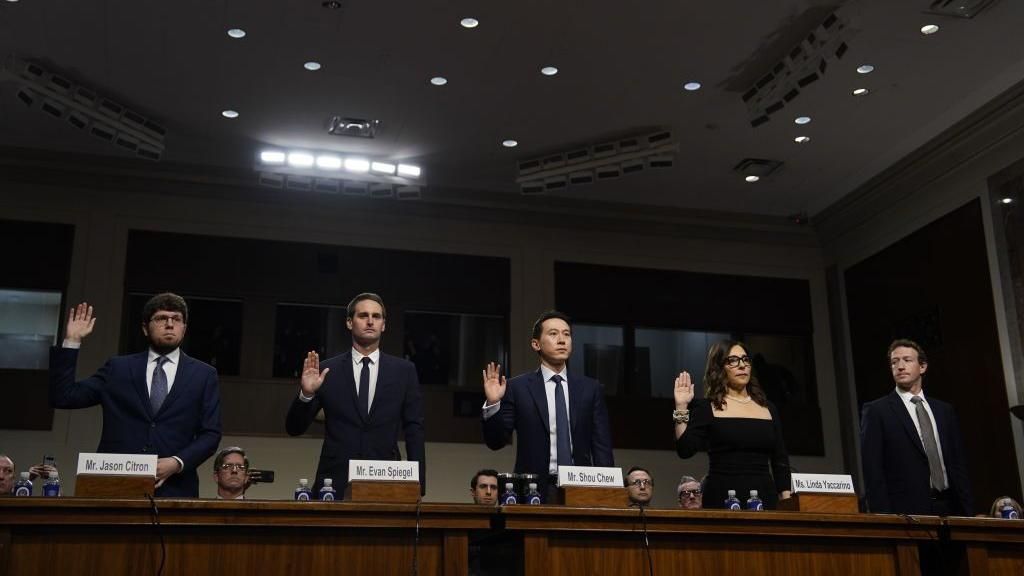
    The regulatory pressure coincides with major legal challenges in the United States, where a landmark January trial will consolidate hundreds of claims alleging social media platforms deliberately designed addictive features while concealing known harms to adolescent mental health. Meta founder Mark Zuckerberg and Snap CEO Evan Spiegel have been ordered to testify personally in cases examining platforms’ role in teen sexual exploitation, body dysmorphia, and suicide.

    In response to mounting scrutiny, companies have introduced age-restricted versions of their platforms. YouTube deployed AI-based age estimation technology, Snapchat implemented default safety settings for teens, and Meta launched Instagram Teen accounts with enhanced privacy protections. Yet whistleblowers like former Meta engineer Arturo Béjar maintain these measures remain largely ineffective, with September research indicating nearly two-thirds of new safety tools fail to provide meaningful protection.

    Industry analysts note companies walk a delicate line—complying sufficiently to avoid penalties while ensuring implementation isn’t so successful that it inspires global replication. Carnegie Mellon’s Professor Ari Lightman observes that even maximum fines represent merely “a drop in the bucket” for companies prioritizing access to future user generations.

    Despite implementation challenges, Scheeler characterizes this moment as social media’s “seatbelt moment”—acknowledging that “even imperfect regulation is better than nothing, or better than what we had before.” As Australia becomes the world’s testing ground for youth social media restrictions, the outcome will likely shape digital regulation for the next generation.

  • Kuwait strips citizenship from influential Islamic scholar

    Kuwait strips citizenship from influential Islamic scholar

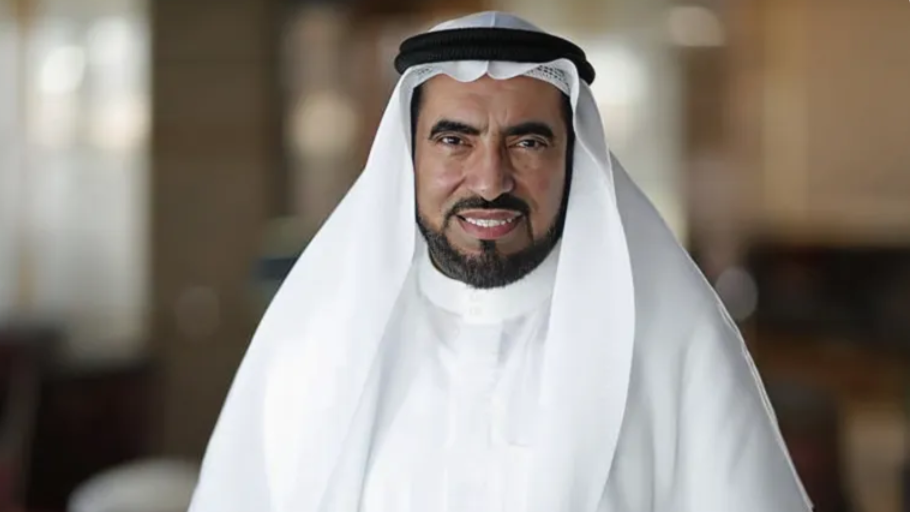
    Kuwaiti authorities have formally revoked the citizenship of 24 individuals through an official decree published in the nation’s gazette, including prominent Islamic scholar Tareq al-Suwaidan. The legal notice specified the withdrawal of citizenship from “Tareq Mohammed Saleh al-Suwaidan and those who have acquired it with him in a subordinate manner,” without citing specific legislative grounds for the action.

    Al-Suwaidan represents one of the region’s most influential Islamic voices, having authored numerous books and secured placement among the world’s 500 most influential Muslims for three consecutive years (2022-2024). Beyond his religious scholarship, he serves as CEO of the Gulf Innovation Group and maintains a career as a television personality.

    This development occurs within a broader pattern of citizenship revocation that has intensified since Sheikh Mishal Al Ahmad Al Jaber Al Sabah ascended to power in December 2023 following the previous emir’s death. The new ruler has suspended Kuwait’s parliament—a relatively unique democratic institution among Gulf monarchies—and multiple constitutional articles, citing the need to review the “democratic process” until potentially 2028.

    Human rights organizations and opposition figures allege the government systematically weaponizes citizenship-stripping to suppress criticism and dissent. The campaign has affected tens of thousands of Kuwaitis, particularly targeting women who obtained citizenship through marriage but subsequently experienced widowhood or divorce.

    Last month witnessed similar actions against former MP Mohammed Hussein al-Muhan and his relatives, with authorities invoking Article 21 of Kuwait’s nationality law permitting revocation for cases involving “fraud, false statements, or incorrect documents.”

    International rights groups condemn these practices as violations of international law, noting that Kuwait’s prohibition of dual citizenship renders victims stateless, effectively severing their access to essential services. According to Tiana Danielle Xavier of the Institute on Statelessness and Inclusion, nationality functions as a “gateway” right that enables access to education, healthcare, employment, and other fundamental liberties—deprivation of which creates intergenerational consequences.

  • China’s top political advisor meets delegation of A Just Russia party

    China’s top political advisor meets delegation of A Just Russia party

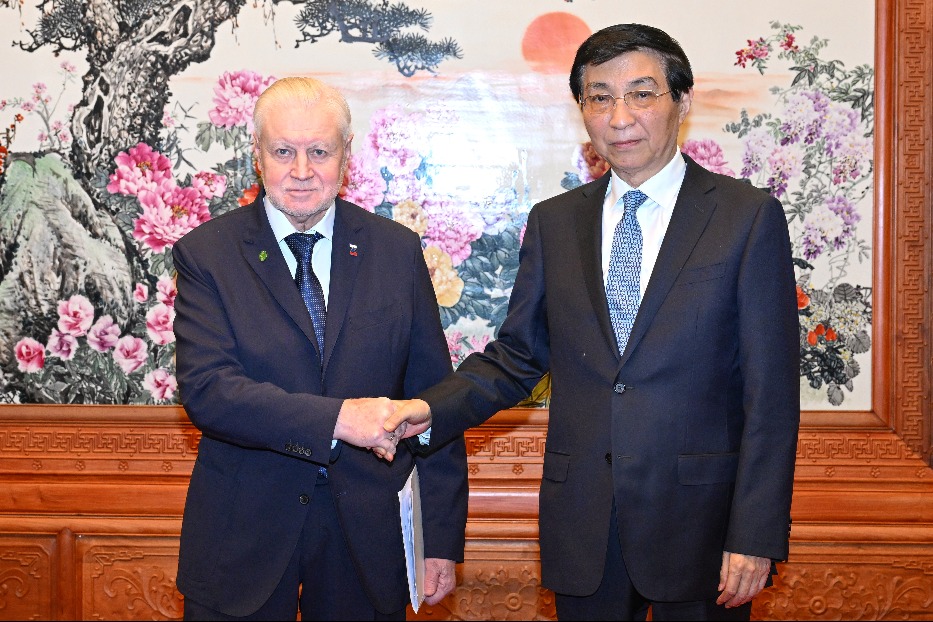
    In a significant diplomatic engagement, China’s senior political leader Wang Huning convened with a delegation from Russia’s A Just Russia party in Beijing on Monday. The meeting, led by the party’s head Sergey Mironov, underscored the deepening bilateral relations between the two nations amid evolving global dynamics.

    Wang, who serves on the Standing Committee of the Political Bureau of the Communist Party of China Central Committee and chairs the National Committee of the Chinese People’s Political Consultative Conference, emphasized the resilience of China-Russia relations. He noted that the strategic partnership has demonstrated remarkable stability despite fluctuating international conditions, establishing a paradigm for major power diplomacy.

    The Chinese official highlighted the commitment to implement crucial agreements reached by both countries’ heads of state, expand practical cooperation across multiple sectors, and maintain close coordination on pressing international matters. Wang further articulated China’s willingness to enhance inter-party exchanges with Russian political organizations, fostering new advancements in the comprehensive strategic partnership.

    From the Russian perspective, Mironov acknowledged the vigorous interactions between governmental and parliamentary bodies of both nations. He pointed to substantial momentum in economic, trade, and investment collaboration, characterizing these developments as meaningful contributions to global peace and development. The Just Russia party leader expressed eagerness to intensify coordination with the CPC, thereby injecting fresh vitality into the cooperative framework and mutual friendship.

    The CPPCC National Committee reaffirmed its readiness to actively support these bilateral efforts, positioning itself as a constructive mechanism in the strengthening of Sino-Russian relations.

  • Watch: Moment commuter train collides with vehicle in Illinois

    Watch: Moment commuter train collides with vehicle in Illinois

    A routine commute turned into a dramatic scene in Hinsdale, Illinois, when a Metra commuter train collided with a passenger vehicle at a railroad crossing. The incident, captured on video, shows the moment of impact as the train strikes the side of the car, pushing it along the tracks before coming to a controlled stop.

    According to the Hinsdale Police Department, the vehicle’s driver—the sole occupant—was promptly transported to a nearby medical facility for evaluation and treatment. Authorities confirmed the individual sustained only “very minor injuries” despite the substantial damage visible to the automobile.

    Emergency responders quickly secured the area following the collision, which temporarily disrupted rail service along the busy corridor. Metra officials coordinated with local law enforcement to manage traffic disruptions and implement necessary safety protocols during the response operation.

    The incident highlights ongoing concerns about railroad crossing safety in urban areas. Federal Railroad Administration data indicates thousands of similar collisions occur annually at grade crossings nationwide, though fatalities have decreased significantly in recent decades due to improved safety measures and public awareness campaigns.

    An investigation into the precise circumstances surrounding the collision remains ongoing, with authorities examining whether environmental factors, driver awareness, or mechanical issues contributed to the incident.

  • Why has Paramount launched a hostile bid for Warner Bros Discovery?

    Why has Paramount launched a hostile bid for Warner Bros Discovery?

    The media industry is witnessing an unprecedented corporate showdown as streaming giant Netflix and entertainment conglomerate Paramount engage in a high-stakes bidding war for Warner Bros Discovery. This potential acquisition, valued at over $100 billion, represents one of the largest media mergers in history and could fundamentally reshape the entertainment landscape.

    Paramount Skydance, backed by the billionaire Ellison family, has pursued Warner Bros for months seeking a strategic partnership to compete against industry leaders Netflix and Disney. After facing rejection, Paramount CEO David Ellison launched a hostile takeover bid directly to shareholders, offering $30 per share in an all-cash deal that values the entire company at $108.4 billion.

    Meanwhile, Netflix has secured a tentative agreement to acquire Warner Bros’ most valuable assets—its legendary studio and streaming divisions—for $82.7 billion including debt. Netflix’s proposal involves spinning off Warner Bros’ traditional pay-TV networks as a separate entity while offering shareholders a combination of cash and equity worth approximately $27.75 per share.

    The acquisition target represents a media crown jewel with nearly a century of entertainment history. Warner Bros’ vast content library spans from classic franchises like Looney Tunes, Superman, and Harry Potter to premium HBO productions including The Sopranos, Succession, and The White Lotus. The company’s streaming service, HBO Max, boasts approximately 120 million subscribers worldwide.

    For Netflix, with its 300 million subscribers, acquiring Warner Bros’ content would significantly enhance its film offerings and eliminate a potential competitor from accessing this valuable library. Paramount, conversely, seeks the merger to achieve necessary scale against industry giants, potentially combining HBO Max’s 120 million subscribers with Paramount’s 79 million customer base.

    Both proposals face significant regulatory scrutiny from US and European authorities. Netflix’s acquisition would consolidate the streaming market leader’s dominance, raising concerns about its influence over content creators and theatrical distributors. A Paramount-Warner merger would create a media behemoth controlling substantial sports broadcasting, children’s entertainment (through Nickelodeon and Cartoon Network), and news networks including CNN and CBS News.

    The Ellison family’s political connections add another dimension to the takeover battle. Their relationships with former President Trump and Republican circles, including tech billionaire Larry Ellison’s status as a major GOP donor, could influence regulatory outcomes. However, Trump’s recent criticism of Paramount over its editorial decisions demonstrates the unpredictability of political support.

    Industry analysts note that regulatory approval will likely depend on how broadly authorities define market competition, potentially considering platforms like YouTube as competitors in the streaming landscape. The completion of either transaction remains months away, with both deals requiring extensive regulatory review and shareholder approval.

  • Pooled efforts expected to deepen reforms in Hong Kong with new legislature elected

    Pooled efforts expected to deepen reforms in Hong Kong with new legislature elected

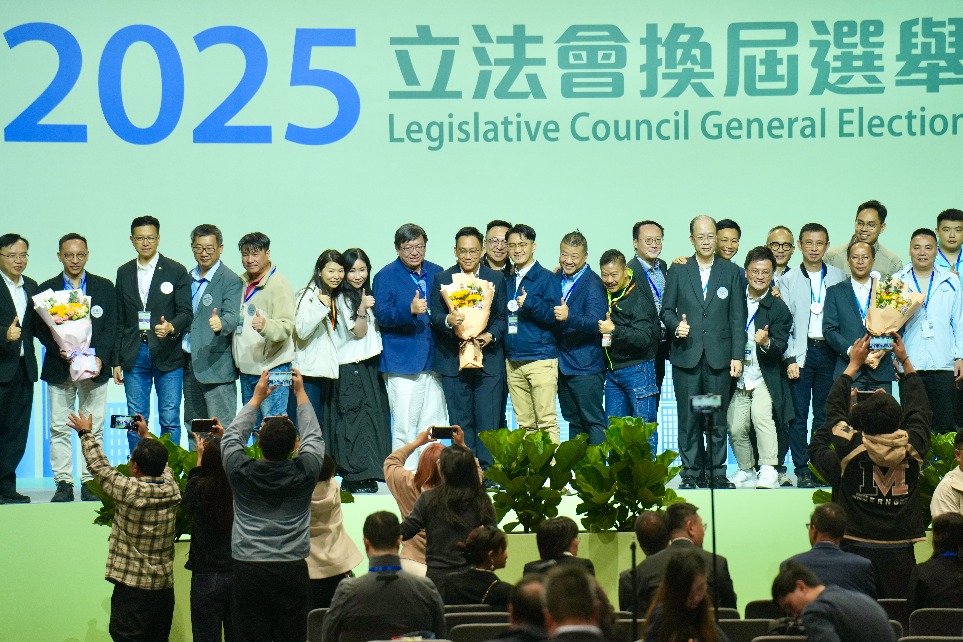
    Hong Kong has successfully concluded elections for its eighth-term Legislative Council (LegCo), with all 90 seats officially confirmed in the early hours of Monday, December 8, 2025. This electoral process marks the second legislative election conducted under the reinforced “patriots administering Hong Kong” principle and the territory’s revamped electoral framework.

    The polling occurred amidst challenging circumstances, following closely after the devastating Tai Po residential complex fire that claimed numerous lives less than two weeks prior. Despite this tragedy, the electoral proceedings advanced without disruption, demonstrating Hong Kong’s institutional resilience.

    Chief Executive John Lee characterized the election’s successful execution as a testament to Hong Kong’s steadfast commitment to constitutional order and legal governance. He highlighted the campaign’s notably elevated standards, with candidates participating in 39 public forums that fostered substantive policy discussions rather than partisan conflicts.

    “The newly elected legislators will collaborate closely with our administration to deepen structural reforms and shape our collective future,” Lee stated. He specifically emphasized the legislature’s crucial role in addressing post-fire recovery needs through legislative updates and systemic improvements aimed at enhancing urban safety.

    Reelected legislator Tang Fei shared insights from his grassroots campaign, noting: “My engagements with educational professionals revealed tremendous dedication. I am committed to amplifying their voices and driving meaningful improvements in our education system.

    China’s Liaison Office in Hong Kong applauded the electoral outcome, describing it as validation of the “one country, two systems” framework’s effectiveness and the superior nature of the updated electoral mechanisms. The office emphasized the election’s significance for Hong Kong’s governance optimization and sustained prosperity.

    Simultaneously, the Office for Safeguarding National Security addressed external interference attempts, noting that certain foreign elements and anti-China factions had sought to exploit the Tai Po tragedy for destabilization purposes. The office unequivocally stated that such efforts had proven futile against Hong Kong’s electoral integrity.

    Both central government offices reaffirmed their unwavering support for Hong Kong’s lawful governance and continued development, underscoring their commitment to the region’s long-term stability and security.

  • AI seen boosting Asian GDP

    AI seen boosting Asian GDP

    A new economic forecast from Japanese investment bank Nomura indicates artificial intelligence will serve as a primary catalyst for economic expansion across the Asia-Pacific region through 2026. The bank’s Asia Macro Outlook 2026 report projects regional GDP growth of 3.7% by end-2025, followed by 3.6% expansion in 2026, driven substantially by robust global demand for computing infrastructure and semiconductor components.

    Rob Subbaraman, Nomura’s head of global macro research, characterized 2026 as a period that will ‘shine a brighter light on Asia’ during a Hong Kong press briefing. He highlighted that Asia’s strong economic fundamentals would attract increased capital inflows amid growing global investment diversification trends. However, Subbaraman emphasized significant regional variations, noting that ‘2026 is also a year of differentiation’ across Asian economies.

    According to Sonal Varma, Nomura’s chief economist for India and Asia ex-Japan, technology exports are poised to accelerate substantially, primarily fueled by sustained spending from cloud service providers. ‘AI demand will remain quite strong,’ Varma stated, indicating this trend would prove ‘fairly positive for the big tech exporters in the region.’ The report specifically identifies Malaysia, Singapore, and South Korea as likely outperformers benefiting most from the AI boom.

    The outlook remains positive for Japan, where a recently announced ¥21.3 trillion stimulus package is expected to boost consumer spending. Nomura also anticipates a forthcoming US-India trade agreement that would support India’s 2026 growth trajectory.

    Euben Paracuelles, Nomura’s chief economist for Southeast Asia, presented a ‘very bifurcated outlook’ for the subregion. While expressing bullish sentiment toward Malaysia and Singapore’s growth prospects, he projected disappointing performance from Indonesia, Thailand, and the Philippines. Paracuelles cited political uncertainty in Thailand and the Philippines, alongside a corruption scandal affecting flood control projects in the latter, as factors constraining fiscal spending and GDP growth.

    The analysis further noted that structural reforms and AI-related demand would continue benefiting Singapore and Malaysia, with major initiatives like the Johor-Singapore Special Economic Zone boosting construction and investment activity. While ASEAN members attempt to mitigate global economic uncertainty through enhanced intra-regional trade, Nomura expressed skepticism about the bloc’s ability to overcome existing trade barriers based on historical performance.

  • Nanfeng mandarins of Jiangxi are going global

    Nanfeng mandarins of Jiangxi are going global

    NANFENG COUNTY, China – As the peak harvest season culminates in Jiangxi province, agricultural authorities project a record-breaking yield of approximately 300,000 metric tons of Nanfeng mandarins. This exceptional harvest from the renowned citrus-growing region signals both robust domestic production and expanding international influence for this distinctive fruit variety.

    Cultivated across 14,700 hectares in Nanfeng county within Fuzhou city, these mandarins have achieved legendary status for their exceptional qualities: remarkably thin skin, abundant juiciness, and intense sweetness. The fruit’s prestige traces back to the Tang Dynasty (618-907 AD), when they were exclusively selected as imperial tribute for royal households, establishing their historical significance in Chinese agriculture.

    Contemporary agricultural exporters have successfully transformed this historical legacy into global commercial success. According to official trade data from Fuzhou Customs, local producers have strategically expanded their international footprint, now distributing to over 40 countries and regions worldwide. Key export markets include Southeast Asian nations and European Union countries, demonstrating the fruit’s cross-cultural appeal.

    The January-November 2025 export statistics reveal substantial growth: 66,000 tons of Nanfeng mandarins valued at 410 million yuan (approximately $58 million) passed through customs supervision. This export performance highlights the fruit’s increasing competitiveness in international produce markets and the effectiveness of China’s agricultural export strategies.

    The global distribution of Nanfeng mandarins represents more than mere commercial achievement—it signifies the successful internationalization of a historically significant agricultural product while maintaining its quality standards and cultural heritage. As harvest operations continue, industry observers anticipate further market expansion and potential price premiums for this premium citrus variety in international markets.

  • Seventy percent of Britons say UK should boycott Eurovision over Israel’s participation

    Seventy percent of Britons say UK should boycott Eurovision over Israel’s participation

    A significant majority of the British public supports withdrawing from the 2026 Eurovision Song Contest if Israel is permitted to participate, according to a new poll. The survey, commissioned by senior political advisor Pablo O’Hana, reveals that 82% of Britons believe Israel should be excluded from the competition, while 69% endorse a UK boycott if Israel competes.

    The findings emerge amidst a growing international controversy following the European Broadcasting Union’s (EBU) decision last Thursday to allow Israel’s participation. Ireland, Spain, Slovenia, and the Netherlands have already announced their formal boycott of the event, citing Israel’s military actions in Gaza and allegations of unfair voting practices.

    The poll further indicates that three-quarters of British respondents view the EBU’s contrasting treatment of Russia (banned from previous contests) and Israel as inconsistent. O’Hana commented that the results demonstrate the public views Eurovision as more than mere entertainment, stating: “Eurovision isn’t just about songs and staging – it’s about values.”

    Despite expectations of a contentious vote at the recent EBU general assembly, no formal ballot was taken. The EBU stated that a large majority of members agreed the contest should proceed with “additional safeguards in place.”

    The issue has sparked sharp political divisions within the UK. The BBC, Britain’s public broadcaster, has expressed support for the EBU’s decision. Conversely, the Green Party has called for the UK to join the boycott, arguing the event must not “whitewash Israel’s ongoing genocide in Gaza.” The Conservative Party chairman Kevin Hollinrake maintained Britain should remain a “friend of Israel” and compete.

    The debate intensified with Liberal Democrat leader Ed Davey criticizing the boycotting nations, suggesting that with a ceasefire in Gaza, the action was misguided. This drew fierce criticism from MP Zarah Sultana of the left-wing Your Party, who labeled Davey “spineless” and drew parallels to historical sporting boycotts of apartheid South Africa.