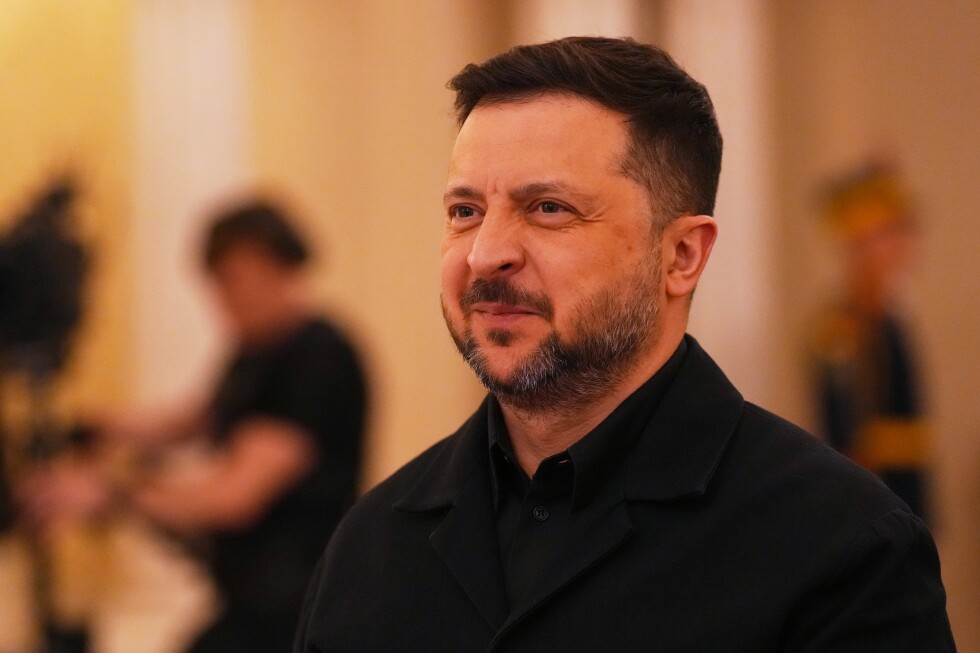
KYIV, Ukraine — A large-scale combined assault featuring drones and ballistic missiles targeting Ukraine’s capital city unfolded in the early hours of Thursday, marking the second attack on Kyiv within a single day and leaving multiple people injured and massive residential infrastructure destroyed, local Ukrainian officials confirmed.\n\nTymur Tkachenko, head of Kyiv’s Military Administration, released preliminary details confirming that damage from the strikes was documented across six of the capital’s administrative districts. The assault damaged both private residential properties and key civilian infrastructure, he said, confirming that Russian forces used a mix of ballistic missiles and Iranian-designed Shahed drones in the coordinated attack.\n\nOne of the most severe incidents took place in Kyiv’s Darnytsia district, where a multi-story apartment building suffered a partial collapse that split the entire structure into two sections. Multiple residents were trapped under fallen concrete and debris following the blast. Ukraine’s national Emergency Service confirmed that first responders had pulled at least 10 survivors from the rubble by mid-morning. On-site footage and reporting showed rescue crews continuing to comb through the smoldering wreckage hours after the strike, searching for any additional trapped survivors.\n\nIn the capital’s Dnieper district, Tkachenko added, a rogue drone struck the roof of a five-story residential building, and a second residential structure in the adjacent Dniprovskyi district also sustained significant damage. Loud explosion sounds echoed across all neighborhoods of Kyiv from the early onset of the assault just after midnight.\n\nThe overnight attack came just hours after an unusually large, rare daytime strike on Kyiv that killed at least six civilians, according to Ukrainian President Volodymyr Zelenskyy. Zelenskyy noted that the daytime assault involved more than 800 drones deployed by Russian forces, and that the hours-long attack was deliberately intended to inflict maximum civilian harm. “The goal of this terror is to create as much pain and grief as possible for our people,” Zelenskyy stated in a post-strike address.
作者: admin
-

Historic Swiss solar-powered plane crashes into sea
One of aviation’s most groundbreaking sustainable technology experiments has met an unexpected end. Solar Impulse 2, the Swiss-engineered solar-powered aircraft that made global history in 2016 by completing the first ever fuel-free circumnavigation of the globe, has crashed into the Gulf of Mexico during a post-conversion test flight, its former owner confirmed recently.
When it completed its landmark journey seven years ago, Solar Impulse 2 redefined what renewable energy-powered flight could achieve. Piloted alternately by Swiss explorers Bertrand Piccard and Andre Borschberg, the aircraft completed its round-the-world trip across 17 separate legs of travel. Over a total cumulative flight time of 23 days, it covered 43,000 kilometers (26,700 miles), crossing four continents, two oceans and three seas without relying on a single drop of traditional jet fuel.
The aircraft changed hands three years after its record-setting voyage, when it was acquired by U.S.-based aerospace firm Skydweller Aero. The company had launched an initiative to convert the legendary manned plane into an autonomous long-endurance drone, designed to support a range of operations including military and scientific missions. According to an official statement released by the firm this Tuesday, the doomed flight was part of a planned controlled ditching exercise tied to a U.S. Navy test program.
Skydweller Aero confirmed that the aircraft departed from Stennis, Mississippi on April 26 for the test flight, but crashed into the Gulf of Mexico on May 4. Despite the crash, the company noted that the test campaign had already achieved a major milestone: an 8-day and 14-minute continuous flight that proved the feasibility of perpetual solar-powered flight for military operations in real-world conditions.
The U.S. National Transportation Safety Board has launched an official investigation into the accident to determine the root cause of the crash. Industry observers note that while the loss of the iconic aircraft is unexpected, the technological breakthroughs it enabled during its historic career will continue to inform the development of sustainable and long-endurance solar aviation for years to come.
-
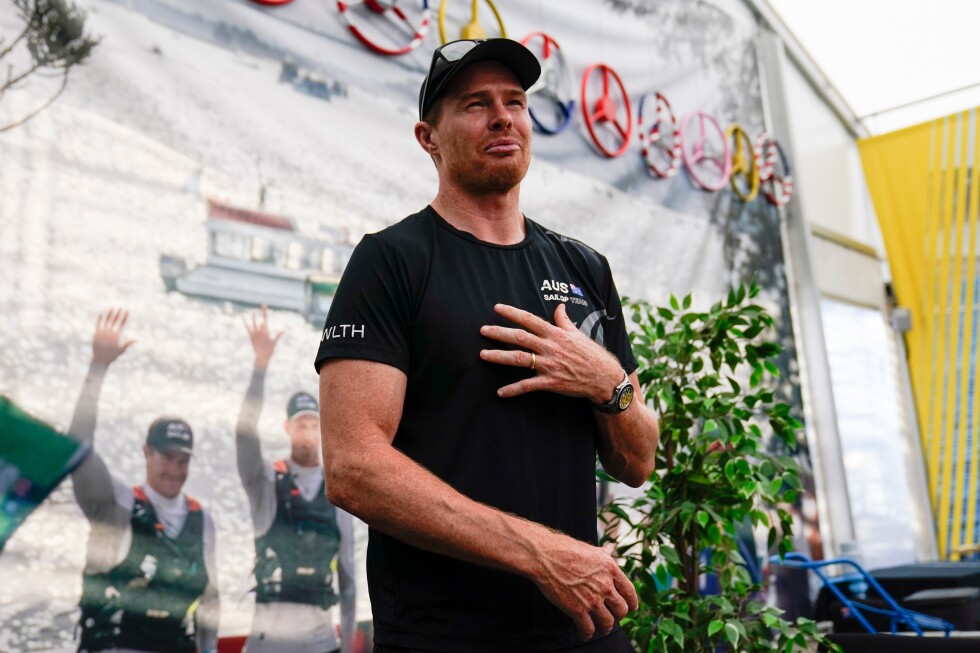
After more than 25 years, former winner Australia is back in sailing’s America’s Cup
After a 25-year absence from the iconic America’s Cup sailing competition, Australia is officially making a comeback, with its challenger entry for the 38th edition of the world’s oldest sailing trophy accepted by event organizers.
Sydney’s Royal Prince Edward Yacht Club announced Thursday that its challenge submitted alongside Team Australia has been cleared for the 38th America’s Cup, scheduled to kick off next year in Naples, Italy. Australia joins a growing field of challengers gunning for a spot in the final match against defending champion Team New Zealand, including a confirmed entry from the United States.
Team Australia has wasted no time building an elite, championship-caliber leadership squad, welcoming some of the biggest names in global sailing to key roles. Olympic gold medal-winning sailor Tom Slingsby, who currently competes in the global SailGP series for an Australian team, will step into the position of head of sailing for the syndicate. Three-time America’s Cup champion Glenn Ashby has been tapped to lead the team’s performance and design division.
Speaking on his new appointment, Slingsby emphasized the deep personal meaning of returning Australia to the competition as an independent national contender. “The opportunity to represent Australia in the America’s Cup with an Australian team is something that genuinely means a lot to me,” he said. “It’s been a dream throughout my career to be part of bringing Australia back to the Cup in a meaningful way.”
Leading the entire campaign as chief executive officer is Grant Simmer, a foundational member of the legendary 1983 Australia II team that pulled off one of the biggest upsets in sports history, ending the New York Yacht Club’s unbroken 132-year winning streak in the America’s Cup. For Simmer, the 2027 comeback campaign is both a full-circle moment and a thrilling new chapter. “For me, this campaign is both deeply personal and incredibly exciting,” he shared in a formal statement. “I first became involved in the America’s Cup in the early 1980s and was fortunate to be part of the team that changed the course of the Cup forever.”
Australia’s return to the America’s Cup as a flagged contender fills a gap that has lasted more than two decades. The last official Australian challenger syndicate was Young Australia, which competed in the 2000 America’s Cup held in Auckland, New Zealand. In the years since, Australian sailors and designers have claimed America’s Cup glory as part of winning teams from the United States, Switzerland and New Zealand, but no fully Australian-led and flagged entry has competed until now.
The path to the 38th America’s Cup final was set last October, when Team New Zealand claimed the 37th America’s Cup title in Barcelona, Spain, beating INEOS Britannia by a score of 7-2 to secure their third consecutive America’s Cup victory. Representing the Royal New Zealand Yacht Squadron, the Kiwi team will now automatically advance to the best-of-13 final match in 2027, where they will face the winner of the challenger series hosted in Naples next year.
Next year’s competition will also bring a landmark new rule for AC75 yachts, requiring every race crew to include at least one female sailor. Tash Bryant, a world-leading Australian female sailor, called the policy a transformative milestone for gender equity in elite sailing. “The changes represent an important moment for the future of the sport,” she said. “The evolution of the boats and the competition is opening the door to broader opportunities and visibility for women in elite sailing, while also creating clearer pathways for younger generations coming through the sport.”
-
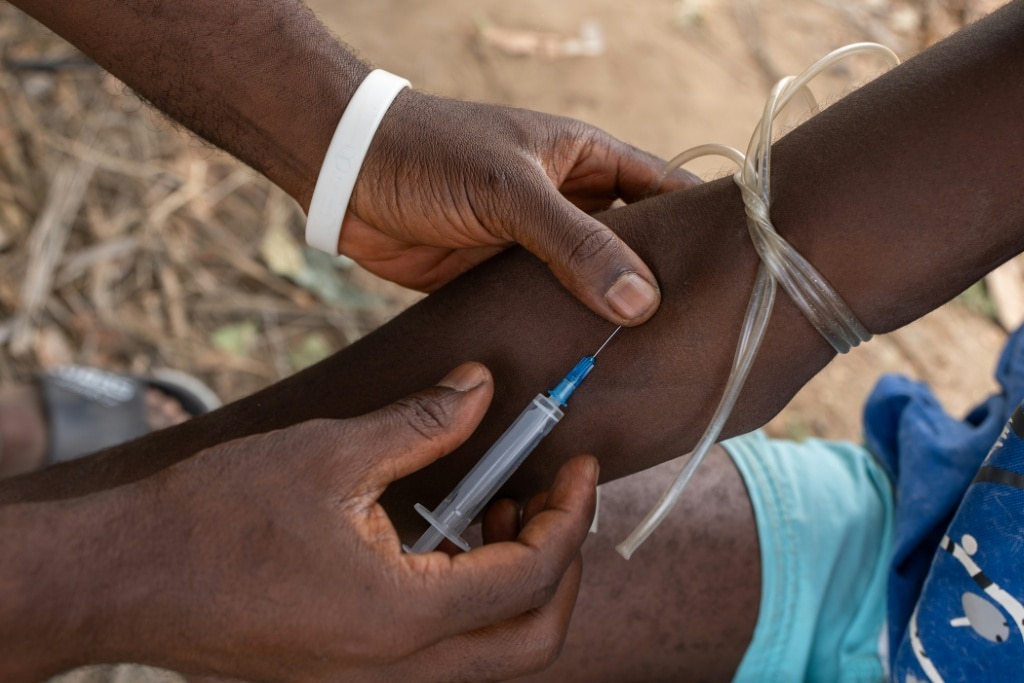
Indian pharma fuels Africa’s ‘zombie drug’ and opioid crisis
West Africa is currently grappling with an explosive, deadly opioid epidemic that can be traced directly to unregulated, high-strength tapentadol exports from Indian pharmaceutical manufacturers, a months-long Agence France-Presse investigation has confirmed. Sold openly at roadside kiosks and unlicensed street pharmacies across the region, these cheap, unapproved pills are not only driving widespread addiction and death but are also being mixed into the devastating “zombie drug” kush, worsening an already catastrophic public health emergency.
Unlike regulated prescription painkillers sold globally, the tapentadol flooding West African markets comes in doses so potent that no national regulatory authority anywhere in the world has authorized them for human use. Despite India’s 2025 pledge to crack down on this illicit trade after international outcry over harm caused to African communities, customs and shipment records reviewed by AFP show millions of dollars worth of these unapproved high-strength pills continue to flow out of Indian ports every month, bound for Nigeria, Sierra Leone, Ghana and other West African nations where even low doses of tapentadol are explicitly banned. Many shipments are deliberately mislabeled as “Harmless Medicines for Human Consumption” to evade border inspections.
Public health and law enforcement officials across the region say the crisis has reached catastrophic levels. In Sierra Leone, where kush mixed with tapentadol has already been declared a national emergency, authorities collect hundreds of bodies of overdose victims from streets, open-air markets and overcrowded slums every three months — just in the capital Freetown alone. Ansu Konneh, director of mental health at Sierra Leone’s ministry of social welfare, described the addition of tapentadol to the already destructive kush cocktail as “very alarming”. Freetown-based public health researcher Ronald Abu Bangura confirmed that tapentadol is now ground into powder and mixed with kush for distribution, adding that the drug is “being misused all over the place”.
AFP’s investigation cross-checked licensing numbers on seized tapentadol tablets across four West African nations against Indian export records, linking multiple prominent Indian pharmaceutical firms directly to the illicit trade. Gujarat Pharmaceuticals, whose manufacturing license number appeared on seized tablets in both Sierra Leone and Guinea, has been listed in export monitoring databases as a major tapentadol supplier to the region. Merit Organics, another Gujarat-based company, also had its license number found on seized shipments in Guinea. Madhya Pradesh-based McW Healthcare exported more than $1 million worth of 250mg tapentadol tablets to Sierra Leone and Nigeria after India’s February 2025 ban, while PRG Pharma shipped multiple consignments mislabeled as harmless medicines. The investigation also identified Syncom Formulations as the largest single tapentadol exporter to West Africa by value, moving nearly $15 million worth of unapproved pills into the region after the ban, most mislabeled as general harmless medicines.
When contacted by AFP, the Nigerian importer for McW Healthcare was listed at a Lagos address that turned out to be a small camera repair shop with no valid pharmaceutical import permit, with Nigerian health authorities labeling all such shipments explicitly illegal. Notably, PRG Pharma’s director is a shareholder in Maiden Pharmaceuticals, the Indian company blamed by Gambian authorities for the deaths of 69 children in 2023 from contaminated cough syrup.
Experts say the shift of Indian generic drug manufacturers to flood African markets with unapproved opioids follows decades of heavy regulation of opioid sales in wealthy nations, which have seen more than one million opioid-related deaths in the United States alone. For many low-income workers across West Africa, tapentadol is not initially used for recreational purposes: motorbike taxi drivers, market porters and artisanal gold miners take the drug to endure long hours of brutal, back-breaking labor, using it as a makeshift pain reliever and performance enhancer. Abubakar Sesay, a motorbike rider in Freetown who navigates bone-rattling unpaved backroads for a meager income, told AFP, “It energises my body to ride day and night. Without it, I can’t survive.” The pills are also used as an appetite suppressant for people who cannot afford regular meals, and even as a form of currency to pay ransoms for kidnapping victims. Criminal groups and extremist organizations including Boko Haram have also been documented using the drug to build courage for violent attacks.
Nigeria’s National Drug Law Enforcement Agency reports that opioids are now the second most commonly used illicit drug in the country, after cannabis. The agency seized more than two billion high-strength tapentadol pills in 2023 and 2024 alone. Vanda Felbab-Brown, a senior fellow at the Brookings Institution and a leading expert on transnational opioid trafficking, told AFP that weak regulation and limited enforcement capacity in West African nations has created a permissive environment for unscrupulous Indian manufacturers. “This creates opportunities for unscrupulous Indian companies to sell products that are problematic, dangerous, harmful or outright illegal to African countries,” she said. “It’s a prime situation for trafficking networks from India to try to get people hooked.”
A recent report from the Global Initiative Against Transnational Organized Crime found that 90% of all global tramadol seizures over the past decade have occurred in West and Central Africa. After India classified tramadol as a controlled narcotic in 2018, manufacturers simply shifted to producing and exporting tapentadol, which experts note is two to three times more potent than tramadol and far more dangerous. Today, lab testing in Sierra Leone shows that nearly all pills sold on the street as tramadol are actually unregulated high-strength tapentadol, with the similar-sounding name helping the drug slip under the radar of underfunded regulators.
Analysis of shipment data conducted by AFP confirms that nearly 75% of all tapentadol exported to West Africa since India’s 2025 crackdown is the unapproved 225mg and 250mg dosage form. Andrew Somogyi, a professor of pharmacology at the University of Adelaide, told AFP he is not aware of any country that has approved 225mg tapentadol tablets for medical use. He questioned “why a country would want that strength except to bypass regulatory and commercial restrictions”.
India’s national drug regulator, the Central Drugs Standard Control Organisation, told AFP it has “no record” of issuing export approvals for 225mg and 250mg tapentadol, and did not respond to repeated follow-up questions about the ongoing trade. The Indian Drug Manufacturers’ Association, the country’s leading pharmaceutical industry body, defended its members, arguing that legitimate manufacturers who follow domestic export procedures cannot be held responsible for misuse or diversion after the product leaves India. Jaydip Patel of Gujarat Pharmaceuticals told AFP the company’s exports were legal because the importer provided the required authorization letter, and added that manufacturers shifted from tramadol to tapentadol because tapentadol “is easier to export because it is not classified as a narcotic”. When AFP visited Gujarat Pharmaceuticals’ facility in Godhra in January, the building was deserted, with charred tablet fragments and ash scattered across the grounds following a recent fire. None of the other named manufacturers responded to requests for comment.
Across the region, regulatory officials have confirmed that tapentadol of any strength is illegal in their countries. Ghana’s Food and Drugs Authority says it has never issued a permit for tapentadol importation or manufacturing, while Nigeria’s food and drug agency states that any tapentadol found in the country is unauthorised and illegal. Sierra Leone only allows 50mg tramadol to be administered in licensed health facilities, meaning all tapentadol traded on the street is explicitly banned.
Most alarmingly, officials report the drug is now spreading to children and young adults, including primary school students who split tablets into smaller pieces to mix with energy drinks for a stronger high. In Sierra Leone, where the population still carries physical and mental scars from a decade-long civil war, informal detox centers chain addicts to beds for months to force them through cold turkey withdrawal, as the country’s limited official rehab facilities are overwhelmed. Mental health director Konneh noted that many addicts do not even recognize tapentadol as a dangerous drug, because it is packaged and sold as a legitimate medication. “The tragedy is that even addicts seeking help tell us, ‘I’ve stopped taking kush, I’m just taking tapentadol tablets.’ They don’t see that to be a problem to their health,” he said.
-

Australians cut spending on petrol and travel as interest rate hikes bite
After a period of relentless interest rate increases and skyrocketing global fuel prices, Australia’s household spending has dipped – but not nearly as sharply as many economic analysts had warned, new data from the country’s largest lender Commonwealth Bank (CBA) reveals.
CBA’s latest monthly spending tracking shows Australian households cut their overall spending by 1.2% in April compared to March, a decline driven largely by a sharp pullback in fuel expenditure following emergency government intervention. The federal government in early April rolled out a temporary $2.5 billion cut to fuel excise, alongside a GST rebate, to ease the pressure of March’s record-high fuel prices that pushed crude costs from $US60 a barrel at the start of March to over $US100 a barrel by month’s end. Treasury projects crude prices will remain above $US80 ($A110) a barrel through the next financial year, keeping cost pressures alive for motorists.
Belinda Allen, CBA’s head of Australian economics, noted that while broad spending has softened amid rising borrowing costs and geopolitical uncertainty from the Iran conflict, the slowdown has not turned into the dramatic consumer retrenchment many forecasters predicted. “To date, weakness in sentiment due to the conflict in Iran and higher interest rates is not yet translating into a sharp pullback in discretionary spending,” Allen explained. “Petrol price movements continue to have a big impact on the month-to-month swing in household spending, and we expect households to do much of the heavy lifting over coming months in slowing spending and cooling inflation.”
The April spending data captures the impact of the Reserve Bank of Australia’s (RBA) back-to-back rate hikes in February and March, but does not yet reflect the third rate increase implemented in May, which lifted the cash rate to 4.35% following three consecutive cuts in 2025. The overall spending trend aligns with recent remarks from RBA Governor Michele Bullock, who has pushed back on narratives of an imminent consumer collapse, noting that plummeting consumer confidence has not translated to equally sharp spending cuts.
“Confidence has been low for some time but the consumers have been continuing to spend,” Bullock said in March. “So there’s this issue about the relationship between consumer confidence in these surveys and what people actually do. I think the consumer confidence numbers for some time have been reflecting basically concerns about how much things cost.”
Breaking down April’s spending figures, CBA found a split performance across sectors: six of 12 tracked spending categories recorded growth, while the other six contracted. Even after removing the large monthly drop in fuel spending, overall household spending still dipped by a mild 0.2% seasonally adjusted. The hardest-hit category outside transport was recreation spending, which fell 2.6% month-on-month, marking the second-weakest performance of all sectors. On an annual basis, recreation is the only category still recording negative growth.
Allen attributed the recreation decline primarily to cutbacks in travel-related spending, a trend tied to broader economic uncertainty and cost-of-living pressures. “It appears households may be lowering their travel-related consumption in the face of higher costs and uncertainty from the conflict in Iran. This is picked up in the broader recreation category,” she said. “Declines in annual spending growth were recorded in travel-related categories such as online travel bookings, ticketing services, travel agencies, commercial airlines and accommodation.”
These travel and recreation cutbacks were partially offset by continued growth in hospitality spending, which rose 0.2% in April and 6.2% over the 12 months prior, showing persistent consumer demand for in-person dining and leisure services despite broader economic headwinds. The softer-than-expected spending pullback suggests Australian households are adjusting gradually to higher borrowing and energy costs, rather than facing the severe economic contraction many experts predicted just months earlier.
-
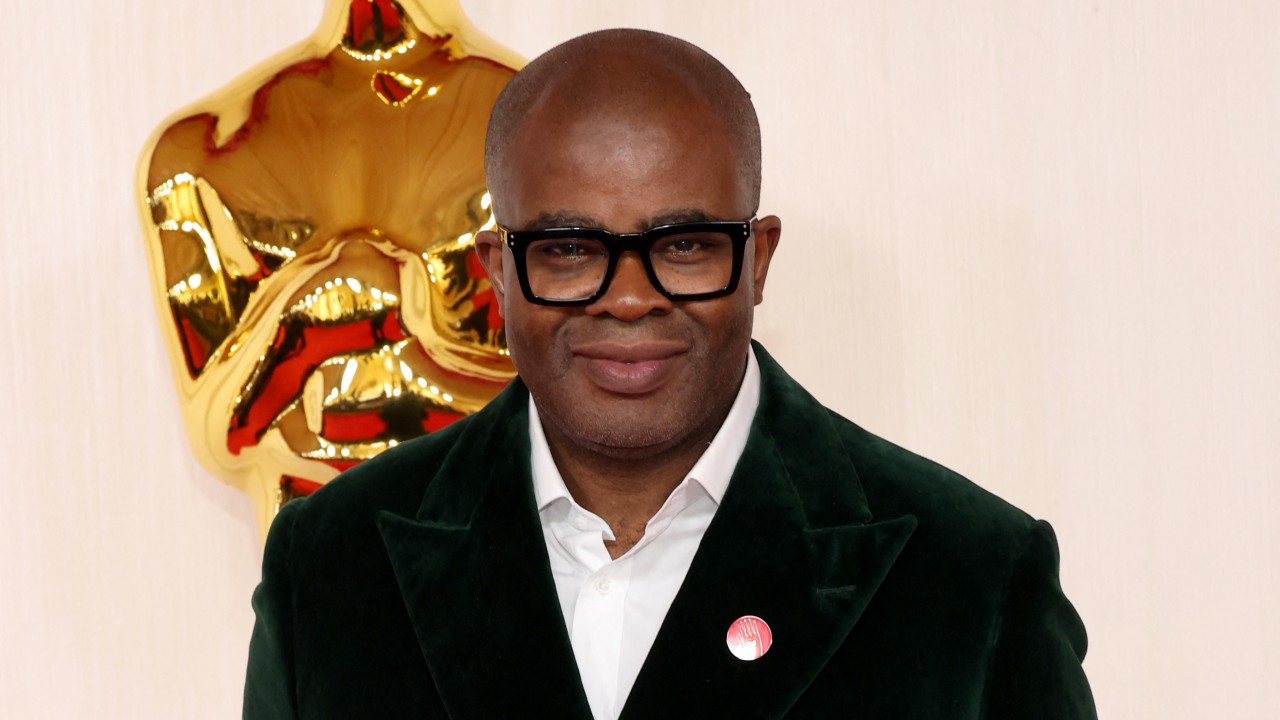
Record complaints filed over UK press smear of anti-genocide artist Misan Harriman
A coordinated smear campaign targeting high-profile British photographer and Southbank Centre chair Misan Harriman by right-wing UK news outlets has triggered an unprecedented wave of public complaints to the nation’s media regulator, shattering all previous records for public pushback against inaccurate press coverage.
The public complaint drive, organized by media accountability platform NewsCord, crossed the 50,000-submission mark in just 48 hours after launching, and has now collected more than 80,000 signatures demanding regulatory action. This total triples the earlier all-time high of roughly 25,000 complaints submitted to the Independent Press Standards Organisation (Ipso) over Jeremy Clarkson’s 2022 defamatory column about Meghan Markle in *The Sun*, marking a historic moment for public demands for press accountability in the UK.
The campaign against Harriman, an Oscar-nominated photographer, long-time social justice activist and prominent pro-Palestine voice, erupted after he posted two pieces of content to social media earlier this month. First, he raised a factual question after a late April stabbing attack in London’s Golders Green: why had both police and most mainstream media outlets failed to mention that the attack included a third victim, a Muslim man, when coverage uniformly focused only on the two Jewish men stabbed later the same day? Second, he shared a short video reflecting on Reform UK’s strong local election performance, which included a contextual quote from iconic Jewish-American writer Susan Sontag about human behavior and political extremism.
Right-wing outlets distorted both posts to manufacture false accusations against Harriman. They labeled his factual observation about the unreported third victim a baseless “conspiracy theory,” despite clear evidence backing his claim: the Metropolitan Police’s official public statement about the attack only referenced two victims, and major outlets including Sky News, Channel 5 and the BBC all omitted the Muslim victim from their initial headlines. Outlets then took Sontag’s quote, pulled from Harriman’s video completely out of context, and falsely claimed he had compared Reform voters to Nazis.
Within a single week, four major right-wing outlets – *The Telegraph*, the Daily Mail, GB News and the Daily Express – published near-identical hit pieces repeating these false claims, with Reform UK MP Robert Jenrick publicly calling for Harriman to be removed from his post as chair of the publicly funded Southbank Centre.
The smear campaign has sparked widespread backlash across British public life. More than 250 high-profile celebrities have signed an open letter organized by the non-profit Good Law Project backing Harriman, with signatories including Gary Lineker, Louis Theroux, Annie Lennox, Greta Thunberg and Mark Ruffalo. As of press time, the open letter has gathered more than 15,000 total signatures from members of the public.
The open letter condemns the campaign as “entirely without foundation in fact,” noting its core goal is to “traduce and marginalise Misan” and send a warning to other public figures that speaking out on contentious issues will result in targeted harassment. It adds: “We believe that safeguarding freedom of expression is essential to a healthy democracy. And that trying to silence critics of Israel by smearing them as antisemitic does not protect Britain’s Jewish community.”
A separate cross-party group of 20 UK parliamentarians has also written to Culture Secretary Lisa Nandy to denounce the coordinated attack. The lawmakers note that outlets selectively edited Harriman’s words to “whipping up a furore to engineer an ever-growing environment of cancel culture,” adding that the campaign, led by right-wing media and backed by right-wing politicians, aims to close open debate and further marginalize minority communities. Signatories of the parliamentary letter include crossbench peer Baroness Sayeeda Warsi, Labour MPs John McDonnell and Naz Shah, and Green Party co-leaders Adrian Ramsay and Carla Denyer. The letter also raises alarms about a growing trend of pressuring public institutions to cut ties with figures engaging in legitimate political discourse, a practice that deepens social division rather than fostering cohesion.
Nima Akram, founder of NewsCord, told Middle East Eye that the coordinated nature of the hit pieces is no accident: the outlets share a common political project focused on “weakening publicly-funded culture, attacking pro-Palestine voices, and using cultural figures as proxies for pressuring Labour into right-wing policy.” Akram stressed that Ipso has a clear responsibility to investigate the campaign, arguing that if the regulator cannot enforce its own accuracy rules against a misinformation drive of this scale, UK press regulation is effectively meaningless. If outlets are allowed to get away with defaming a Black pro-Palestine activist for asking a factually correct question and quoting a well-known writer, Akram said, it will set a dangerous precedent that creates a playbook for silencing all dissenting voices in public life.
For his part, Harriman pushed back against the smears, saying: “We have reached the point where truth itself is being crushed by the very institutions that are supposed to uphold it. I will never whisper about the oppressed. I stand with truth, I stand by my right to use my voice to help others.” A veteran social justice advocate, Harriman serves as an ambassador for Save the Children, was nominated for Amnesty UK’s People’s Human Rights Champion award, and has long advocated against genocide in Sudan, the Democratic Republic of Congo and Gaza. He is also widely known for his photography of pro-Palestine ceasefire marches, including a viral 2024 image of a Muslim man and a Jewish man holding a joint ceasefire sign that was auctioned to raise funds for Palestinian aid.
NewsCord is formally calling on Ipso to launch a full investigation into all four outlets involved in the smear campaign, and to require the outlets to issue public acknowledgements and corrections of their misleading reporting.
-
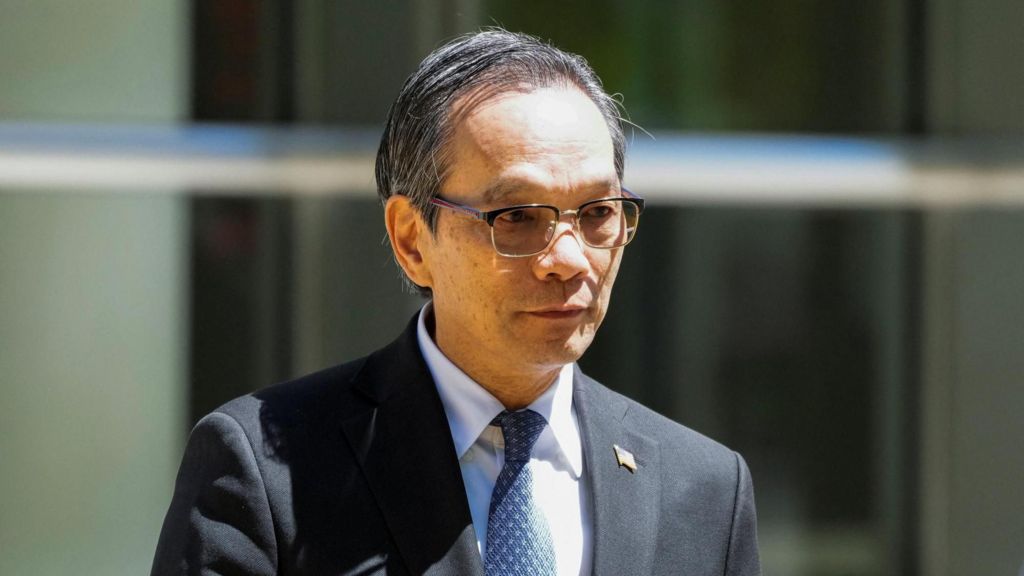
US citizen convicted of running secret Chinese ‘police station’ in NYC
In a high-stakes federal trial that underscores growing tensions over cross-border law enforcement activities on US soil, a 64-year-old US resident has been found guilty of running what federal prosecutors describe as the first proven secret Chinese police station operating on American territory.
Following a seven-day jury trial in New York’s Southern District Federal Court, Lu Jianwang, also known by the name Harry Lu, was convicted on two core charges: conspiring to act as an unregistered illegal agent for China’s Ministry of Public Security (MPS), and obstruction of justice for destroying evidence related to the operation once an investigation was launched. Prosecutors confirmed that Lu now faces a maximum sentence of 30 years behind bars when he is sentenced at a later date.
Court documents and trial testimony laid out that Lu launched the outpost in early 2022, taking over an entire floor above a ramen shop in Manhattan’s bustling Chinatown neighborhood to house the operation. His co-defendant, Chen Jinping, already pleaded guilty to the same conspiracy charge in December 2024 and is currently awaiting his own sentencing. When the Federal Bureau of Investigation launched a formal probe into the station in 2022, Lu and Chen deliberately deleted text communications exchanged with a senior MPS official to cover up their activities, according to prosecution arguments. The Chinatown station was ultimately shut down later that same year after the investigation became public.
Lu’s conviction arrives the same week that a California municipal mayor resigned from office after being hit with separate charges of acting as an unregistered illegal agent for the Chinese government, marking two high-profile legal actions connected to alleged Chinese influence operations in the US within days of one another.
James C. Barnacle Jr., assistant director in charge of the FBI’s New York field office, said in a statement following the verdict that Lu deliberately used the New York station to target Chinese dissidents living in the United States to advance the Chinese government’s political priorities.
Rights groups have documented more than 100 similar unauthorised outposts linked to Chinese authorities across 53 countries around the world. These organizations allege that the stations are used to monitor, threaten, and intimidate Chinese nationals living overseas, including pro-democracy activists who have relocated to the United States to escape political persecution.
Chinese government officials have repeatedly pushed back against these accusations, insisting that the facilities are innocuous “service stations” created to provide routine administrative support to Chinese citizens living abroad. Beijing says the services offered include pandemic-related support and processing driver’s license renewals, rather than political surveillance or harassment.
-

Man City ease past Palace to keep pressure on Arsenal
The English Premier League’s 2024-25 title race has tightened to a stunning climax, after Manchester City secured a comfortable 3-0 victory over Crystal Palace at the Etihad Stadium on Wednesday that cut Arsenal’s lead at the top of the table to just two points with only two matches remaining for City.
With a grueling fixture schedule stretching into the final weeks of the season, Pep Guardiola made the call to rotate his squad heavily, making six changes from the starting 11 that defeated Brentford 3-0 over the weekend. Star striker Erling Haaland and dynamic winger Jeremy Doku both started the match on the bench, while Crystal Palace manager Oliver Glasner also made several adjustments to his own lineup ahead of his side’s upcoming UEFA Conference League final. Despite the rotated squad, City never looked troubled on a damp evening in Manchester, taking firm control of the contest before halftime with two quick goals and adding a third late on to cap the win.
The opening goal arrived in the 32nd minute, crafted by Phil Foden’s exquisite backheel pass that put Antoine Semenyo in on goal. Semenyo finished calmly, slotting the ball past Crystal Palace goalkeeper Dean Henderson into the far corner to break the deadlock. Eight minutes later, Foden was once again the architect, setting up Egyptian forward Omar Marmoush to score his third Premier League goal of the season, putting City 2-0 up going into the halftime break. The second half was a largely uneventful affair, though defender John Stones – who is set to leave the club at the end of the campaign – received a raucous standing ovation from the Etihad crowd when he came on as a late substitute. Minutes after Stones’ introduction, the match’s final goal arrived: young French midfielder Rayan Cherki carried the ball from his own half to set up Savinho, who finished cleanly past Henderson to put City three goals up.
The result leaves City on 77 points, two points behind leaders Arsenal, but Guardiola’s side hold a narrow advantage in goal difference of plus one, having scored seven more goals across the campaign than the Gunners. The title race has swung dramatically over the past fortnight: City had clawed back ground to put themselves in pole position, but a costly 3-3 draw at Everton last weekend restored Arsenal’s comfortable lead. Just two days before City’s match against Palace, Arsenal survived a late scare to beat West Ham 1-0, after a stoppage-time equalizer for the Hammers was ruled out following a lengthy VAR check, keeping the Gunners in the driving seat.
City now turn their attention to a major cup test this weekend, as they face Chelsea in the FA Cup final at Wembley Stadium on Saturday, targeting a domestic cup double having already won the League Cup earlier this season. Defending his decision to rotate heavily against Palace, Guardiola emphasized the need for squad depth in a congested fixture list, saying: “When the schedule is so tight, everybody is fit, everybody needs to help.”
Despite City’s win, Arsenal remain overwhelming favorites to claim their first Premier League title since 2004. If Mikel Arteta’s side beat already-relegated Burnley next Monday, City will need to take all three points against Champions League-chasing Bournemouth the following day to keep their title hopes alive. The final matchday of the season falls on May 24, when Arsenal travel to face Crystal Palace, while City – who currently hold a 14-match unbeaten run in league play – host Aston Villa at home.
Speaking after the final whistle, Foden insisted City will not give up their title bid, noting that anything can happen in the final stretch of the campaign. “It’s a team game at the end of the day. If you want to win titles and trophies it’s about a full squad and everyone playing their part,” Foden told Sky Sports. “The aim is to keep pushing and keep them on their toes. We’ve seen a lot of things can happen on the final day. I’ve experienced it many times when the game doesn’t go your way. We just have to keep pushing and doing our part.”
For Crystal Palace, all focus now shifts to their first major European final, as they prepare to face Rayo Vallecano in the UEFA Conference League final in Leipzig on May 27. The match will be Glasner’s final game in charge of the south London club.
-

AFL 2026: Western Bulldogs will ‘tread carefully’ with Tim English
The Australian Football League’s Western Bulldogs are moving deliberately and cautiously with star ruckman Tim English’s return to competitive play, after a fresh head knock reignited long-standing concerns over the athlete’s repeated concussion history.
English’s latest injury occurred during last weekend’s victory over Port Adelaide, when he collided in a training drill with teammate Matthew Kennedy. Speaking to reporters on Thursday morning, Bulldogs head coach Luke Beveridge emphasized that the club would prioritize the athlete’s long-term health over a rapid comeback, stressing that no timeline for his return has been finalized.
“We haven’t got an update for you today, we’ll wait and see how he goes over the next week and what his availability will be,” Beveridge told reporters. “I think because of his history — he’s been out of action at different times and spent a whole pre-season a couple of years ago non-contact — we’ll tread carefully.”
English’s history of head injuries dates back to 2021 and 2022, when he sustained multiple concussions that forced him to sit out all contact drills during the 2024 pre-season to prioritize recovery. Without their starting ruckman, the Bulldogs have been forced to throw two inexperienced young tall players, Lachie Smith and Louis Emmett, into the rotation earlier than club officials had planned.
Beveridge acknowledged that the club’s recruiting team is actively exploring the option of adding a supplementary ruckman via the upcoming mid-season draft, to ease the pressure on the club’s underprepared young talent. “Obviously, Lachie Smith has played a bit recently and dipped his toe in the water,” Beveridge said. “Louis Emmett has played some minutes there as a young player who is probably not ready for the ruck position, definitely not ready to be frank, but he’s a competitor and he’s done his best for us. It’s something that we’re thinking about, but is there a player available? And our recruiters are working through that at the moment.”
The Bulldogs are also taking a measured approach to the return of veteran midfielder Tom Liberatore, who has not seen game action since Round 6. While Liberatore also has a recent concussion, Beveridge noted that the primary barrier to his comeback is a knee injury, with the head injury listed as a secondary concern.
“He’ll be a while, Tom … he’s a fair way away with that knee,” Beveridge said. “Concussion I think is secondary at the moment, for me, we’re not really talking about it, we’re talking about the knee. He’ll have some tests along the way around the concussion, but I think it’s mainly just about the knee at the moment.”
-

Chris Wood to lead New Zealand at the World Cup after an injury-troubled Premier League campaign
New Zealand Football has finalized its 26-player squad for the upcoming FIFA Men’s World Cup, headlined by injured Nottingham Forest striker Chris Wood, who will captain the nation’s first World Cup side in 14 years. The announcement, made Thursday by head coach Darren Bazeley in Auckland, marks a milestone for New Zealand men’s football, with two players set to break new ground for the country on soccer’s biggest global stage.
Alongside Wood, 36-year-old defender Tommy Smith earned a surprise recall, receiving his first All Whites call-up since late 2024 despite plying his trade in England’s fifth-tier National League. Both Wood and Smith featured in New Zealand’s 2010 World Cup squad in South Africa, making them the first New Zealand men ever to qualify for two World Cup tournaments. As team captain, Wood follows in the footsteps of New Zealand World Cup skippers Steve Sumner (1982 Spain) and Ryan Nelsen (2010), carrying the nation’s hopes of a historic first knockout stage berth.
Bazeley acknowledged that cutting the preliminary pool down to 26 roster spots was one of the hardest challenges of his preparation, noting that 40 different players featured for the All Whites across 10 international matches over the previous 15 months, with more than 50 players tracked for selection in the years leading up to the tournament.“Naming a World Cup squad is a true privilege — the World Cup is the pinnacle of our sport, and it’s the ultimate dream for every player who steps onto the pitch,” Bazeley said in his announcement address. “We’ve spent years building toward this moment, evaluating every contender who put themselves forward for a spot.”
The head coach added that his technical staff settled on a group they believe gives New Zealand the best possible chance to achieve an unprecedented result: advancing out of the group stage. Ranked 85th in the FIFA rankings, New Zealand was drawn into Group G alongside three higher-ranked opponents: No. 9 Belgium, No. 20 Iran and No. 29 Egypt. The All Whites have never advanced past the group stage in their two prior World Cup appearances, a fact Bazeley says his side is hungry to change.
“This process is never easy, and we do not take the responsibility of selecting this squad lightly,” he said. “But I am confident we have put together the strongest possible group to compete against Iran, Egypt, Belgium and whoever comes next. Now the debate is over — it’s time to head to the tournament and seize this chance to make history for New Zealand.”
Wood, who has missed extensive club action this season with injury, delivered a pre-recorded address to the squad announcement crowd from his base in England, saying he is eager to join his teammates and compete on the world stage.
“I can’t wait to share this moment with all of you and make history together,” Wood said. “I hope we can make the entire country proud and show the world what New Zealand football is capable of.”
The squad blends veteran experience with exciting young emerging talent, a balance that is on clear display across the roster. At the opposite end of the experience spectrum from 36-year-old Smith, 23-year-old midfielder Lachlan Bayliss earned a spot just two months after making his international debut. Bayliss enjoyed a breakout 2023-24 season with the Newcastle Jets in Australia’s A-League, and qualifies for New Zealand through his Kiwi father despite being born and raised in Australia.
Other key selections include Auckland FC goalkeeper Michael Woud, who won a tight battle for the third goalkeeper spot behind starters Alex Paulsen and Max Crocombe. Up front, Wood will be backed by Australia-based veteran Kosta Barbarouses, Port Vale forward Ben Waine and Silkeborg winger Callum McCowatt. On the back line, Smith joins a deep group of central defender options including Michael Boxall, Tyler Bindon, Nando Pijnaker and Finn Surman.
The full 26-player New Zealand World Cup squad is as follows:
Goalkeepers: Max Crocombe, Alex Paulsen, Michael Woud
Defenders: Tyler Bindon, Michael Boxall, Liberato Cacace, Francis de Vries, Callan Elliot, Tim Payne, Nando Pijnaker, Tommy Smith, Finn Surman
Midfielders: Lachlan Bayliss, Joe Bell, Matt Garbett, Ben Old, Alex Rufer, Sarpreet Singh, Marko Stamenic, Ryan Thomas
Forwards: Kosta Barbarouses, Eli Just, Callum McCowatt, Jesse Randall, Ben Waine, Chris Wood