作者: admin

  • Golden toilet statue mocks Trump near renovated White House

    Golden toilet statue mocks Trump near renovated White House

    A provocative pop-up art installation has sparked public intrigue and political satire has drawn crowds in Washington DC just blocks from the newly renovated White House: a gold-painted toilet, styled as a mocking ‘royal throne’ for former and current President Donald Trump.

    Crafted with the same over-the-top faux marble finish that Trump has become famous for favoring in his personal and public design choices, the installation features a prominent plaque reading “A throne fit for a king.” The work was created and deployed by Secret Handshake, an anonymous guerrilla art collective that has become known for placing provocative temporary sculptures across the US capital over the past 12 months.

    When the installation debuted on Tuesday near the Lincoln Memorial, it immediately drew long lines of curious tourists and critical Trump opponents, all waiting for a chance to see and photograph the satirical piece. Among the visitors was 78-year-old Nancy Chase, who told Agence France-Presse she traveled specifically to Washington to snap photos of the golden toilet, citing her opposition to Trump as her core motivation.

    The satire comes amid a sweeping redesign of White House spaces that Trump has overseen during his second term in office, which have all bear his distinctively opulent aesthetic. The Oval Office now features extensive gold decorative accents, the traditionally understated elegant Rose Garden has been repaved, and the entire East Wing was demolished to clear space for a sprawling new grand ballroom. Beyond architectural changes, Trump has increasingly centered his own brand and image across Washington: his name already adorns the Kennedy Center for the Performing Arts in massive lettering, and a new official coin featuring his likeness is set to enter circulation soon.

    For many visitors who came to see the golden toilet, the work feels like a perfectly timed critique of Trump’s public persona. William Hoker, a 69-year-old retiree who biked to the installation site, called the piece a fitting characterization of the sitting president. “I wanted to see this statue before it disappeared, and I think it epitomizes perfectly the guy in the White House, he’s just a vulgar display,” Hoker explained to AFP. His friend Steve Toulotte echoed that sentiment, noting that political satire aimed at the president serves an important public purpose.

    This is not the first provocative work from Secret Handshake. Over the past year, the collective has placed multiple unauthorised temporary sculptures across Washington, including one that depicted Trump alongside his late disgraced associate, convicted sex offender Jeffrey Epstein.

  • At gas stations, Americans say they’re ‘paying the price’ of Iran war

    At gas stations, Americans say they’re ‘paying the price’ of Iran war

    Across U.S. gas stations from the Washington suburbs to New Jersey, American drivers are grappling with the immediate, painful domestic fallout of the ongoing conflict with Iran, as skyrocketing fuel costs squeeze already strained household budgets and send ripples of uncertainty through the broader national economy.

    On Tuesday, industry data from the American Automobile Association (AAA) confirmed that the national average price for a gallon of regular unleaded gasoline breached the widely watched $4.00 threshold. The figure marks a staggering 35% jump in fuel costs since the outbreak of hostilities following U.S.-Israeli strikes on Iran, leaving everyday consumers reeling from the sudden spike.

    At the Liberty gas station located along a busy commercial corridor in Falls Church, Virginia — just steps from an Anglican church, a local auto repair shop, and a dental practice — prices already start at $3.79 per gallon for customers paying with cash, with premium rates adding an extra surcharge for debit and credit card users. A short distance down the same road, some stations are charging as much as $4.25 per gallon.

    Eighty-three-year-old Jeanne Williams, a retired civil servant in active cancer treatment who drove 100 miles from Richmond, Virginia to visit her older sister, voiced shock at the prices displayed on the station’s LED billboard. “That is horrible,” she said, describing her reaction to the new rates. “I’m not angry. I’m just bewildered, confused, unhappy, because we didn’t ask for this war.” Though Williams calls her pension “fairly decent”, persistent U.S. inflation and rising fuel costs have forced her to draw down personal savings to cover basic expenses. “Luckily, I have no children, I don’t have a spouse, so it’s just me — and whatever I have, I share to help my sister,” she explained.

    While U.S. inflation has cooled from its 9.1% pandemic-era peak, core prices have remained stubbornly elevated, and economists warn the world’s largest economy has yet to achieve sustained price stability. Years of above-trend price growth have already eroded household purchasing power across the country, and the sudden fuel surge threatens to deepen that financial pressure.

    Eliza Winger, a U.S. economist at Bloomberg, noted that higher pump prices extend far beyond immediate pain at the station: they drag down overall consumer spending, creating cascading risks for economic growth. “We estimate that a 10% increase in oil prices reduces real consumer spending by approximately 0.2 percent,” Winger explained. Since the outbreak of the Iran conflict, U.S. fuel prices have risen more than three times that 10% threshold, pointing to a potentially significant hit to consumer activity in coming months. Fresh consumer confidence data released Tuesday underscored this unease, showing that U.S. inflation expectations surged in March to levels not seen in seven months.

    Twenty-six-year-old Luis Ramos, a New York City resident who spoke to AFP at a New Jersey gas station, said the new price hikes come on top of already unsustainable cost of living increases. “It’s ridiculous, honestly. Seeing these gas prices skyrocket, it’s incredible. The cost of living is already skyrocketing,” he said.

    For David Lee, a 39-year-old anesthesiologist who fills up his tank twice a week near Washington, every stop now costs roughly $10 more than it did just weeks ago. Though his income allows him to absorb the extra cost, he says many of his friends have already changed their behavior to cut costs. “I’ve seen a lot of my friends complaining about it that they’re not gonna drive as much as they used to,” he noted.

    Seventy-seven-year-old Joseph Crouch, a Vietnam War veteran who uses a cane, is among those who have scaled back driving to manage expenses. “It’s ridiculous. The prices are so high. I don’t think government is knowing what it is doing,” he said. Echoing a sentiment shared by many consumers interviewed, he argued, “We are paying the price of the war. They are trying to say it’s something else, but it’s definitely a war.” Seventy-eight-year-old Fred Koester echoed that frustration, calling the conflict a “stupid war” that was “totally unnecessary.”

    Not all perspectives aligned on public frustration, however. Kristen, a 36-year-old teacher who declined to share her last name, acknowledged that higher fuel prices cause real hardship, but argued it is “selfish” for Americans to only protest the conflict once it begins impacting their personal finances. “We should have cared long before it affects our pocket,” she said.

  • Italy again miss out on World Cup as Bosnia, Turkey, Czechs and Sweden qualify

    Italy again miss out on World Cup as Bosnia, Turkey, Czechs and Sweden qualify

    For the third consecutive FIFA World Cup cycle, four-time champions Italy have failed to secure a spot at the global tournament, suffering a crushing penalty shootout defeat to Bosnia and Herzegovina in the final UEFA play-off. Tuesday’s results also locked in three other qualifiers — Turkey, Sweden, and the Czech Republic — for the 48-team 2026 finals co-hosted by the United States, Canada and Mexico, bringing an end to a dramatic final night of European qualifying.

    Four-time World Cup winners Italy, who have not lifted the global trophy since 2006 and have not progressed past the group stage of any tournament they qualified for since 2006, now face another extended spell on the tournament sidelines. They already missed out on the 2018 and 2022 editions, falling to play-off defeats against Sweden and North Macedonia respectively, and their 2014 group stage exit remains their last appearance at the finals.

    The night unfolded in chaotic fashion for Italy’s Azzurri: Moise Kean put Gennaro Gattuso’s side ahead in the 15th minute, but a first-half red card for defender Alessandro Bastoni left Italy down to 10 men for more than an hour of play. Bosnia capitalized on their numerical advantage late, with Haris Tabakovic netting the equalizer in the 79th minute to force the match into extra time. With no additional goals scored through the additional 30 minutes, the tie was decided from the penalty spot.

    In one of the most lopsided penalty shootouts in recent European qualifying history, Bosnia converted all four of their spot kicks to win 4-1. Only Sandro Tonali found the net for Italy: Francesco Pio Esposito dragged his opening penalty over the crossbar, while Bryan Cristante saw his effort smash off the woodwork, confirming Italy’s early exit. A devastated Gattuso said post-match, “I don’t think the boys deserved to suffer such a blow. It’s difficult to digest.”

    For Bosnia, ranked 66th in the global FIFA rankings, the result marks just their second ever World Cup appearance, following their debut in 2014. They finished second in Group H behind Austria before beating Wales in a penalty shootout in the play-off semi-finals, and will now face Canada, Qatar and Switzerland in Group B this summer.

    Elsewhere on Tuesday, Turkey ended Kosovo’s fairy-tale run to qualifying with a 1-0 away win in Pristina, booking their first spot at the World Cup in 24 years. A 53rd-minute strike from Kerem Akturkoglu proved the difference for Vincenzo Montella’s side, eliminating a Kosovo side that had only earned FIFA membership a decade prior and was targeting its first ever major global tournament appearance.

    Ranked 22nd in the world, Turkey will make just their third ever World Cup appearance, having previously qualified in 1954 and reached the semi-finals on home soil of the 2002 Korea-Japan edition. “We achieved our dreams. The World Cup is the pinnacle in this profession,” Montella told reporters after the win. Turkey will join co-hosts the United States, Paraguay and Australia in Group D.

    Sweden booked their place in the most dramatic fashion of all, with Arsenal striker Viktor Gyokeres scoring an 88th-minute winner to secure a 3-2 home win over Poland in Stockholm. The side, now managed by English coach Graham Potter, finished bottom of their qualifying group without a single win, and only earned a play-off spot thanks to strong results in the UEFA Nations League.

    After beating Ukraine 3-1 in the semi-final last week, Sweden twice surrendered the lead against Poland: Manchester United’s Anthony Elanga opened the scoring in the 20th minute before Nicola Zalewski equalized, and Gustaf Lagerbielke restored Sweden’s lead before half time, only for Karol Swiderski to level the scores again early in the second half. Gyokeres eventually forced the ball over the line in a late goalmouth scramble to send Sweden through. They will face the Netherlands, Japan and Tunisia in Group F.

    The Czech Republic rounded out the night of qualifying with a penalty shootout win over Denmark in Prague, securing their first World Cup appearance since 2006. The match ended 2-2 after extra time: Pavel Sulc opened the scoring for the hosts before Joachim Andersen equalized for the Danes, Ladislav Krejci put the Czechs back ahead in extra time, and Kasper Hojlund levelled the match again to force penalties. The Czechs followed their semi-final penalty win over Ireland with another shootout success, winning 3-1 as Denmark converted just one of their four penalties, with Rasmus Hojlund, Anders Dreyer and Mathias Jensen all missing from the spot. The Czech Republic will face South Africa, South Korea and co-host Mexico in Group A.

  • Italy’s World Cup nightmare continues after shoot-out defeat to Bosnia

    Italy’s World Cup nightmare continues after shoot-out defeat to Bosnia

    Four-time World Cup champion Italy has etched a deeply unwanted place in global soccer history, becoming the first former tournament winner to miss out on three straight World Cup finals after a devastating penalty shootout defeat to Bosnia and Herzegovina in Tuesday’s qualification play-off final. The shocking 4-1 result on penalties in Zenica ended Italy’s hopes of reaching this summer’s 26-team tournament co-hosted by Canada, the United States and Mexico, and extended one of the most painful droughts in international soccer.

    The match began with a fast start that seemed to point toward an Italian victory. Italian striker Moise Kean got his side on the board in the 15th minute, capitalizing on a catastrophic error from Bosnia goalkeeper Nikola Vasilj. Under intense pressure from Mateo Retegui, Vasilj played a direct pass straight to Italy’s Nicolo Barella, who quickly slipped a through ball to Kean. The Juventus forward curled a clinical finish past Vasilj from the edge of the 18-yard box, notching his eighth international goal in just six appearances to put Italy ahead.

    Bosnia refused to fold, however, and began to pile consistent pressure on the Italian defense, amplified by a game-changing red card four minutes before halftime. Italy defender Alessandro Bastoni was ejected for a crude, late chop on Bosnia’s Amar Memic, leaving the Azzurri down to 10 men for more than an hour of play. The home crowd erupted, sensing an opening that the Bosnian side fully exploited for the rest of regulation.

    Down a man, Italy coach Gennaro Gattuso adjusted his formation to absorb relentless Bosnian pressure, but the equalizer finally arrived in the 79th minute. After Edin Dzeko’s header was parried off the goal line by Italy keeper Gianluigi Donnarumma, substitute Haris Tabakovic poked the loose ball into the net to level the score, sending the tie to extra time. The additional 30 minutes were just as tense: Italian players were furious that a second red card was not issued to Tarik Muharemovic for a foul on a breaking Marco Palestra, but Donnarumma’s two outstanding saves on headers from Dzeko and Ermedin Demirovic kept the score level to force penalties.

    The penalty shootout turned into a disaster for Italy from the very first kick. Pio Esposito hammered his opening effort well over the crossbar, and when Bryan Cristante’s subsequent strike clattered off the bar, Italy was already on the brink. Esmir Bajraktarevic converted the decisive spot-kick, squeezing his shot under Donnarumma to seal the historic win for Bosnia, sparking wild pitch invasions from thousands of elated home fans.

    For Bosnia, the result books their spot in Group B of this summer’s World Cup, paired with co-host Canada, Switzerland and Qatar. This marks just the second time the Balkan nation has qualified for the World Cup finals, with their only previous appearance coming back in 2014. “They’re guys with character. We have guys we’re proud of,” Bosnia coach Sergej Barbarez said after the match, joking that his goal was to qualify for a major tournament every two years.

    For Italy, the defeat extends a stunning streak of failure that began eight years ago. It marks the third consecutive World Cup the Azzurri have missed, following play-off eliminations at the hands of Sweden in 2018 and North Macedonia in 2022. They are the first ever World Cup winner to miss three straight editions of the tournament, a record that will stand as a dark mark on one of European soccer’s most successful programs.

    In the aftermath of the defeat, a visibly emotional Gattuso said he could not fault his team’s effort. “I don’t think the boys deserved to suffer such a blow, for the performance, the effort and the heart that they showed tonight… I’m proud of the boys,” he told reporters. “It’s difficult to digest.” When asked about his own future as head coach, Gattuso said that discussion was not important in the moment. Italian Football Federation president Gabriele Gravina later clarified that federation officials had asked Gattuso to stay on, and that the coach would not resign.

    The defeat also added an extra layer of embarrassment for Italian soccer, after footage emerged of multiple Italian players celebrating Bosnia’s semi-final penalty win over Wales just days earlier. That decision looks even more ill-advised after Bosnia’s focused, physical performance earned them a spot at the finals at Italy’s expense.

  • Wild way island is tackling invasive birds

    Wild way island is tackling invasive birds

    Kangaroo Island, a major natural habitat off the coast of South Australia, has achieved a breakthrough in its long-running battle against invasive non-native species, with an innovative night culling strategy using infrared thermal imaging technology and trained marksmen successfully reducing populations of destructive little corellas. This newly tested method comes as the island continues its broader campaign to eliminate harmful introduced species, following ongoing efforts to eradicate feral cats across the region.

    For more than a century, little corellas, a species of cockatoo not native to the island, have thrived alongside human settlement, growing into an overabundant population that disrupts the local ecosystem and damages key local industries. Unlike native wildlife that fits into Kangaroo Island’s balanced natural food web, these introduced birds have left a wide trail of harm: they cause irreversible damage to mature native trees, erode critical infrastructure, threaten the profitability of the island’s grain-growing sector, and push the vulnerable endemic glossy black cockatoo closer to risk by destroying their eggs and killing hatchlings. Beyond ecological harm, the growing corella population creates persistent noise pollution and spreads pathogens through their accumulated droppings, posing tangible public health risks to local communities.

    For years, Kangaroo Island’s environmental managers tested a range of conventional control strategies to curb the corella population, including trapping, gassing, and daytime shooting. However, the adaptable, quick-witted birds soon learned to avoid these methods, delivering only limited success that left managers searching for a more effective solution.

    In a two-year trial run across the 2022-2023 and 2023-2024 summer seasons, the Kangaroo Island Landscape Board rolled out an unconventional approach: deploying skilled marksmen equipped with infrared thermal imaging gear to target roosting corellas while they sleep at night. What initially sounds like a plot device from a James Bond spy thriller has turned out to be far more effective than any prior method, according to final trial results released this week.

    Over the course of the two-year trial, a total of 2,640 little corellas were humanely culled. The 2023-2024 summer season removed 1,467 birds, and the most recent 2024-2025 season culled 1,173 corellas in just five nights of operations. Will Durack, general manager of the Kangaroo Island Landscape Board, explained that targeting roosting flocks at night removes the corellas’ ability to avoid control efforts, delivering far higher removal rates per operation than conventional approaches. “Targeting birds at night while they are roosting allowed several hundred birds to be removed in a single operation and achieved a much higher catch per unit effort,” Durack said. “The trial now shows a proven method for effective and humane control of little corellas.”

    The successful trial comes as Kangaroo Island pursues an ambitious agenda to eliminate all feral invasive species from the island, following a public proposal for a strict “last cat policy” to eradicate feral cats, another major threat to the island’s native wildlife. Under the proposed cat policy, existing domestic cats would be allowed to stay with their owners, but no new cats would be permitted to be brought onto the island to prevent future feral populations from establishing. Durack added that the board is ready to share its successful night culling method with other environmental agencies across South Australia that are grappling with overabundant corella populations, to support more effective invasive species control across the state.

  • Woods ‘stepping away’ to focus on health after DUI arrest

    Woods ‘stepping away’ to focus on health after DUI arrest

    Golfing icon Tiger Woods has confirmed he will step away from professional competition to seek treatment and focus on his personal health, just days after his arrest on misdemeanor driving under the influence charges stemming from a car crash near his Florida residence. The 15-time major championship winner collided with a trailer pulled by a pickup truck last Friday, close to his Jupiter Island home, in an incident that left his sport utility vehicle overturned on its side. Remarkably, neither Woods nor the pickup truck driver suffered any physical injuries in the crash.

    Law enforcement officers responding to the scene assessed Woods as impaired behind the wheel. Officers documented in their official accident report that Woods displayed multiple visible signs of impairment: he was sweating heavily, moved slowly and lethargically, had bloodshot, glassy eyes, and stumbled while walking, favoring his right side. Authorities also found two hydrocodone pills, a prescription opioid painkiller commonly used to manage chronic pain, in Woods’ possession. A breathalyzer test conducted at the scene detected no alcohol in his system, and Woods refused to complete a required urine test, leading to an additional charge of refusing a lawful chemical test.

    Woods has entered a not guilty plea to all charges, telling investigators that his attention was distracted by adjusting his car radio and checking his mobile phone, which caused him to miss that traffic ahead had slowed down. He has waived his scheduled arraignment and formally requested a jury trial to resolve the case. He was released from Martin County Jail shortly after posting bond the same night as his arrest.

    In a public statement released Tuesday, the 50-year-old golfer acknowledged the gravity of his current situation. “I know and understand the seriousness of the situation I find myself in today,” Woods said. “I am stepping away for a period of time to seek treatment and focus on my health. This is necessary in order for me to prioritize my well-being and work toward lasting recovery.”

    Woods’ long history of debilitating sports injuries and major medical procedures is well-documented. The golf star survived a catastrophic 2021 single-car crash in Southern California that left him with multiple compound fractures in his right leg and a shattered ankle that required emergency surgery. He has since undergone seven separate back surgeries and more than 20 procedures on his injured leg, he told responding officers last week. Most recently, he underwent back surgery in October 2024 and suffered a ruptured left Achilles tendon in March 2025. He has not competed in a top-tier professional golf tournament since the 2024 British Open, though he did participate in a TGL indoor simulator golf event last week and had publicly discussed a potential return to competition at the upcoming Masters tournament. He previously made a widely celebrated return to the Masters in 2022, finishing 47th despite severe difficulty walking the full 72 holes at Augusta National.

    Woods is still scheduled to attend the traditional Champions Dinner at Augusta National next week, ahead of the 90th running of the Masters tournament. In closing his statement, Woods emphasized his commitment to long-term recovery, saying he is taking the necessary time to rebuild his health for both his personal and professional life. “I’m committed to taking the time needed to return in a healthier, stronger, and more focused place, both personally and professionally,” he wrote. “I appreciate your understanding and support, and ask for privacy for my family, loved ones and myself at this time.”

  • Tuanzebe sends DR Congo back to World Cup after 52 years

    Tuanzebe sends DR Congo back to World Cup after 52 years

    After more than half a century of waiting, the Democratic Republic of Congo has secured its spot at the 2026 FIFA World Cup, with a 100th-minute strike from naturalized defender Axel Tuanzebe sealing a dramatic 1-0 intercontinental play-off final victory over Jamaica at Mexico’s Guadalajara Stadium. This breakthrough ends the Central African nation’s 52-year absence from the world’s biggest football tournament, marking their first qualification since the country competed as Zaire at the 1974 edition.

    Tuanzebe, a 28-year-old who only made his DR Congo debut in 2024 after switching allegiance from his former youth international role with England, entered the match already calling it the biggest contest of his career. Born in Bunia, a city caught in the ongoing eastern DR Congo conflict, his decisive goal has cemented his place as a national hero in Congolese football history. The moment of magic came from a Brian Cipenga in-swinging corner that glanced off the top of Jamaica defender Joel Latibeaudiere, falling perfectly into the path of the onrushing Burnley player. Tuanzebe redirected the ball into the net with his torso, and while celebrations were halted briefly for a handball check, video assistant referee (VAR) confirmed no infringement, allowing the goal to stand.

    The tightly contested clash was always on track for extra time, even before the deadlock was broken. DR Congo striker Cedric Bakambu had two goals correctly ruled out for offside across 90 minutes of regulation play. His first disallowed effort came as early as the fifth minute, when he poked home from six yards out off a low Meschack Elia cross, before a second late regulation offside call — after Theo Bongonda was ruled offside in the build-up to his assist — left the game scoreless heading into extra time.

    Both sides entered the play-off final on the back of momentum-boosting previous results. Jamaica defeated New Caledonia 1-0 in the play-off semi-final thanks to a single Bailey Cadamarteri goal, while DR Congo warmed up for the final with a 2-0 friendly win over Bermuda. Per FIFA’s play-off structure, DR Congo earned a direct bye to the final courtesy of their higher world ranking (49th, compared to Jamaica’s 68th) and had already navigated a 13-match qualifying campaign that stretched back to November 2023. After finishing second in their African group behind Senegal, Sebastien Desabre’s side defeated Cameroon and Nigeria in continental play-offs to earn their shot at a World Cup spot.

    Jamaica, who were targeting their second World Cup appearance following their 1998 run in France, grew into the contest after a slow first half. Interim coach Rudolph Speid, who took over in November after Steve McLaren stepped down, watched his side create several promising chances: Kasey Palmer saw a goal-bound effort blocked by Chancel Mbemba just before the half-hour mark, and Leon Bailey’s powerful long-range left-footed strike flashed across the goal line shortly before halftime. Second half chances saw Jamaica goalkeeper Andre Blake pull off a strong save to deny Bakambu’s curling long-range effort, before Bailey’s diving far-post header drifted just wide of the post.

    DR Congo dominated the added 30 minutes, and though Watford midfielder Edo Kayembe wasted a late clear counter-attack chance by blazing over an open goal, Tuanzebe’s early extra-time strike was enough to see the Leopards through. Jamaica never managed to carve out a clear equalizing opportunity after falling behind.

    For DR Congo, qualification means more than just a spot at the expanded 48-team 2026 tournament — it is a chance to erase 52-year-old ghosts from their only previous World Cup appearance. When the nation competed as Zaire in 1974, they left the tournament without scoring a goal, conceding 14 across three defeats and leaving a lasting unfair stain on African football after right-back Mwepu Ilunga’s infamous free-kick incident, where he charged out of the defensive wall to clear a Brazil free-kick before it was taken. That moment created a long-held misconception that African players did not understand the rules of the game, a stigma Tuanzebe and his 2026 squad are now poised to overcome.

    Desabre, who was appointed head coach in August 2022 with a mandate to qualify for the 2026 World Cup, has built a cohesive squad that leverages diaspora talent as a core strategic pillar. Tuanzebe is one of several high-profile players who switched from European youth setups to represent their country of birth, with former captain Gabriel Zakuani working to recruit players and their families, including West Ham’s Aaron Wan-Bissaka, who also recently switched from England. The squad’s semi-final finish at the 2023 Africa Cup of Nations has already demonstrated the progress made under Desabre’s steady leadership. With 110 million people in DR Congo and a large global diaspora following the team, the squad carries far more than just footballing hopes into the tournament, where they will face Portugal, Colombia and Uzbekistan in Group K, kicking off their campaign against Portugal in Houston on June 17. For a nation marked by decades of conflict and instability, this long-awaited World Cup berth represents a moment of national unity and hope 52 years in the making.

  • What it’s like to be on Florida’s Space Coast ahead of Artemis launch

    What it’s like to be on Florida’s Space Coast ahead of Artemis launch

    As the sun sets over Florida’s Space Coast this Wednesday, hundreds of thousands of space enthusiasts from across the United States are flooding into local causeways, public beaches, and motel balconies, all gathering to witness the long-awaited launch of NASA’s Artemis II mission — humanity’s first crewed trip around the Moon in more than 50 years.

    Among the excited crowd is 8-year-old Isiah, who summed up the collective mood simply: “People going up to the Moon is kind of cool.” Traveling more than 1,000 miles from her home in New Mexico to be at the launch site, Amanda Garcia echoed that enthusiasm. “I heard it’s gonna be a great show. A lot of people are going to be here,” she said, explaining why she made the cross-country trip to be part of the historic moment.

    Local authorities are describing the surge of visitors as a “historic influx”, with projections that the event will deliver an estimated $160 million boost to the regional economy. Months of preparation have gone into managing the crowds: traffic control plans are in place, local bars have rolled out moon-themed drink specials, and hotels have warned guests to expect lengthy travel delays between their accommodations and public viewing sites. Even highway streetlights will share the night sky with the glow of floodlit launch towers and the warm light of camper van barbecue grills scattered across viewing areas.

    Just a mile from the launch pad, Brenda Mulberry, owner of Space Shirts — a local NASA souvenir shop that has operated on Merritt Island for 40 years — says this event is unlike any launch she has ever hosted. “We’ve wanted to go back to the Moon since the ’70s. People are excited. People are beyond excited,” she explained, noting that she has stocked her small shop full of hand-illustrated T-shirts emblazoned with rockets, mission patches and lunar landscapes to meet unprecedented demand. When asked about her long-term vision, Mulberry laughed and joked, “I want to have the first T-shirt shop on the Moon. Because if you’ve been there, you get the T-shirt, right?”

    The Artemis II mission marks a critical turning point for NASA’s broader lunar exploration program, which aims to return humans to the lunar surface for the first time since Apollo 17 in 1972. Unlike the original Apollo missions, which focused on short surface visits, the long-term goal of the Artemis program is to construct a permanent lunar base camp, tap into the Moon’s untapped natural resources, and develop a sustainable starting point for the first human mission to Mars.

    Speaking ahead of the launch, Artemis II commander Reid Wiseman emphasized the program’s intergenerational mission. “In our lifetime, we’ve looked at the Moon knowing that people had been there. And now in the Artemis generation, kids will walk out and look at the Moon going, we are there. We are there now, and we are going further into our solar system,” he said.

    All eyes on launch night will be fixed on Launch Pad 39B, the same historic concrete launch site that supported the Apollo 11 mission that put the first humans on the Moon in 1969. Standing on the pad is NASA’s Space Launch System (SLS), a 321-foot-tall white and orange rocket that is the most powerful and heaviest launch vehicle the agency has ever built. Mounted atop the rocket is the Orion crew capsule, a vehicle roughly the size of a small van that will carry four astronauts on the 10-day unlanded test flight. This mission marks the first time Orion will be tested with a full human crew on board.

    The launch window opens between 18:24 and 20:24 local Florida time on Wednesday. The four-person crew — commander Reid Wiseman, pilot Victor Glover, mission specialist Christina Koch, and Canadian astronaut Jeremy Hansen, who will make his first trip to space on this mission — will board the capsule approximately four hours before liftoff.

    The mission follows a carefully planned 10-day timeline. After reaching Earth orbit, the crew will spend their first day testing manual flight controls and life support systems before setting a course for the Moon. On day two, a major engine burn will put Orion on a free-return trajectory that will naturally carry it around the Moon and back to Earth, with only small course corrections needed along the way. Each day of the flight is dedicated to new system tests and operational challenges, with the most anticipated milestone coming on day six, when Orion is scheduled to fly behind the far side of the Moon. For roughly 40 minutes, all radio contact between the capsule and ground control will be cut off, leaving flight controllers waiting for the spacecraft to emerge from behind the lunar disk. During this pass, Orion will travel between 4,000 and 6,000 miles above the lunar surface, and depending on its exact trajectory, it could surpass the 1970 Apollo 13 record for the farthest any human crew has ever traveled from Earth.

    The most high-stakes phase of the mission comes on re-entry day. Orion will plummet through Earth’s atmosphere at roughly 25,000 miles per hour, generating external temperatures hot enough to melt rock, which must be absorbed by the capsule’s reinforced heat shield. After the 2022 uncrewed Artemis I test flight, engineers discovered that chunks of the heat shield’s protective coating had cracked and broken away during the mission’s two-stage “skip” re-entry maneuver. The maneuver — designed to reduce heat stress, G-force loads, and improve splashdown accuracy — dips the capsule into the upper atmosphere before briefly climbing back up and making a final plunge. For Artemis II, engineers have retained the two-stage approach but adjusted the entry angle and timing to reduce the time Orion spends in the initial, gentle atmospheric dip. Modeling suggests this change will reduce the heat and structural stress that caused the earlier damage, but this mission will be the first real-world test of the adjusted design with a crew on board.

    If Artemis II completes its mission successfully, the next large-scale gathering on the Space Coast will come for the next step in the program: bringing humans back to walk the surface of the Moon, half a century after the last Apollo astronauts left their footprints in the lunar regolith. And as thousands of visitors carry home their custom mission T-shirts from Space Shirts, many will already be sharing Brenda Mulberry’s quiet, playful dream: that one day, her shop’s logo will not only be printed on Florida cotton, but featured in a photograph taken on the surface of the Moon.

  • Iranian missiles don’t pose a threat to the US, Pete Hegseth admits

    Iranian missiles don’t pose a threat to the US, Pete Hegseth admits

    In his first press briefing held on Tuesday, more than a month after the United States and Israel launched their military campaign against Iran, US Secretary of Defense Pete Hegseth made a striking admission that undermines the White House’s repeated claims of an “imminent threat” from Tehran: Iran’s ballistic missiles do not have the range to strike the US mainland.

    Hegseth explained that Washington’s military commitment in the region is focused on protecting US regional assets and its Middle Eastern allies from Iran’s capabilities, and it is now time for European allies to pull their weight in the conflict. Speaking to reporters Tuesday, he argued, “These are missiles that don’t even range the United States of America. They range allies and others. And yet, when asked for additional assistance… we get questions or roadblocks or hesitations.” He added that President Donald Trump has emphasized that alliances lose meaning when member states refuse to stand together when their support is needed.

    Hegseth’s comments came in direct support of a post Trump published earlier that day on his Truth Social platform, where the president publicly demanded the United Kingdom “build up some courage, go to the Strait [of Hormuz], and just TAKE IT”, adding that US allies “You’ll have to start learning how to fight for yourself.”

    Defending the administration’s military strategy, Hegseth asserted that since the US-Israeli offensive began on February 28, Washington has dictated the terms of engagement, leaving Iran unable to mount an effective military response to the campaign. This claim, however, leaves a critical question unanswered: if the US holds the clear upper hand in the conflict, why is Trump pushing NATO allies to contribute more support to the operation?

    A key domestic pressure shaping the administration’s push for allied support comes from surging US energy prices. On Tuesday, the national average price of gasoline in the US spiked above $4 per gallon, piling additional financial strain on American households that lack accessible alternative transportation options. Lowering gas prices was a central campaign promise for Trump, who has repeatedly criticized his predecessor Joe Biden for high energy costs during his term.

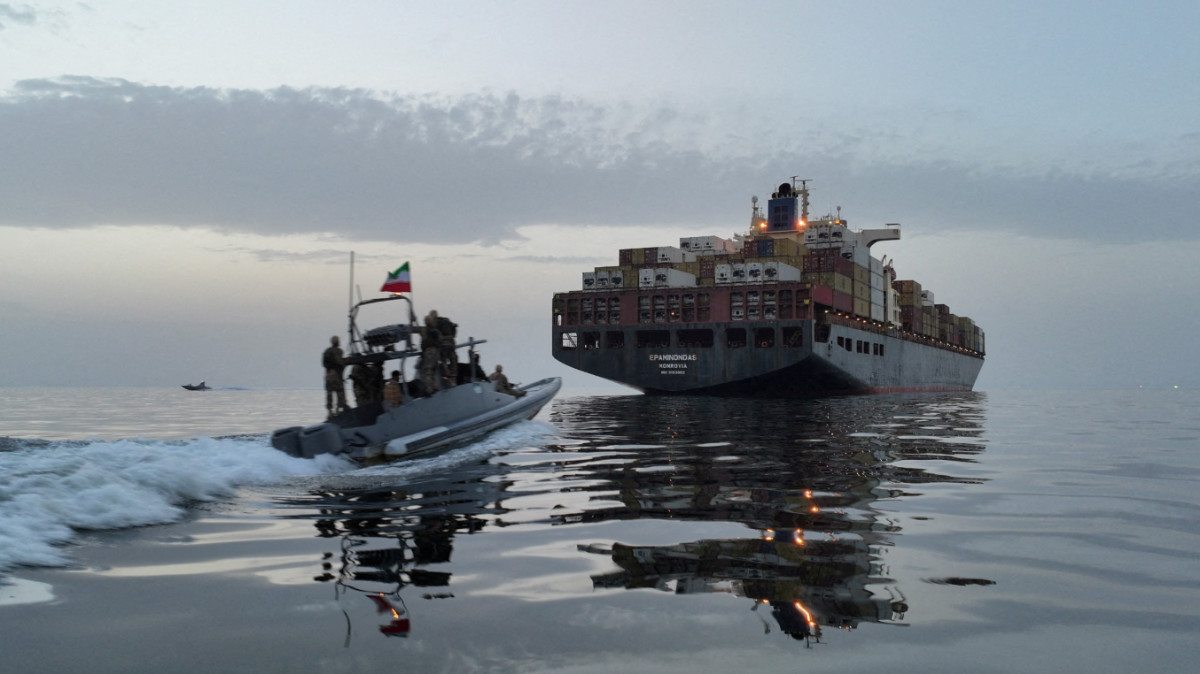
    Currently, Iran is blocking the Strait of Hormuz, a critical global oil chokepoint, to oil tankers linked to the US and Israel, banking on the resulting energy price shock to erode domestic support for the conflict in the US and weaken Washington’s resolve. Hegseth issued a blunt warning to Tehran on Tuesday: “Open it for business, or we have options, and we certainly do.” He declined to elaborate on what those potential options might be, noting that “Don’t tell your enemy what you’re willing to do or not do, and don’t tell your enemy when you’re willing to stop.”

    When questioned about the “ongoing negotiations” Trump has referenced that Iranian officials have repeatedly denied, Hegseth claimed that Iran’s original ruling regime has been entirely destroyed, a second iteration is largely defunct, and the current third governing body has been far more open to talks. This shift, he claimed, is purely a result of overwhelming US military pressure. He also told reporters that the past 24 hours had seen the lowest volume of Iranian missile and drone launches, arguing that US airstrikes “are damaging the morale of the Iranian military, leading to widespread desertions, key personnel shortages, and causing frustrations amongst senior leaders”.

    That assessment directly contradicts the findings of independent security experts tracking Iranian military activity. These analysts confirm that Iran has maintained a steady rate of drone and missile strikes consistent with the pace recorded over the past 20 days, and that launch volumes have actually increased in recent days compared to early March. Experts also note that Iranian strikes have grown more precise in target selection in recent weeks.

    On Tuesday, Iran’s Revolutionary Guard Corps issued a new warning, stating that it will target 18 US-based corporations operating in the Middle East, labeling these entities as “institutions involved in terrorist activities” tied to Washington’s military campaign.

    This report was published by Middle East Eye, a media outlet that provides independent, in-depth coverage of the Middle East, North Africa and surrounding regions.

  • Judge temporarily halts construction of Trump’s White House ballroom

    Judge temporarily halts construction of Trump’s White House ballroom

    A landmark federal court ruling has temporarily paused a high-profile construction project to build a new presidential ballroom at the White House, after judge Richard Leon found the Trump administration skipped legally required approval processes before breaking ground. The case was brought by the National Trust for Historic Preservation, a congressionally chartered non-profit dedicated to protecting America’s historic landmarks, which argued the White House violated multiple federal laws by launching the project without mandatory review.

    In a forceful 35-page ruling published Tuesday, Leon left little room for ambiguity about his decision: “Unless and until Congress blesses this project through statutory authorization, construction has to stop!” he wrote, emphasizing that while the U.S. president serves as a steward of the White House for future generations, he does not hold personal ownership of the iconic property. Leon concluded the preservation group was likely to prevail in the full trial, noting no existing federal statute grants the president the authority he claims to alter the White House grounds without congressional approval. The temporary halt will go into effect in 14 days, giving the administration time to file its planned appeal.

    The project, which was launched last October after the 1902-built East Wing was demolished, has grown substantially from its original plan: what was first proposed as a 500-person ballroom is now designed to hold 1,350 guests. The White House estimates the total cost will hit $400 million, all covered by private donations rather than taxpayer funds. Last week, Trump confirmed the project also includes a large underground military complex, saying the above-ground ballroom would effectively serve as a cover for the classified subterranean structure. Demolition and foundation work have already been completed, with above-ground construction scheduled to start next month.

    In its lawsuit, the National Trust laid out three core legal grievances: the White House failed to submit construction plans to the National Capital Planning Commission, skipped a required environmental impact assessment, and never obtained explicit congressional authorization for the project. The group also argued the project violates the U.S. Constitution, which reserves authority over federal property to the legislative branch. Following the ruling, National Trust president Carol Quillen called the decision a victory for all Americans. “This is a win for the American people on a project that forever impacts one of the most beloved and iconic places in our nation,” Quillen said in an official statement.

    Shortly after the ruling was released, former president (current U.S. president) Donald Trump pushed back aggressively against the decision on his Truth Social platform and in comments to reporters. Trump denied he needs congressional approval for the project, and vowed to appeal the ruling to a higher court. He defended the project as being under budget, ahead of schedule, and entirely funded by private donors, claiming it will become the finest event space of its kind in the world. He also argued the current temporary event space, a tented arrangement, is inadequate for upcoming high-profile events, including the upcoming state visit of Britain’s King Charles III next month. “We don’t want him to sit in a pool of water” if it rains, Trump told reporters, adding the existing facilities cannot properly host visiting world leaders.

    The Trump administration had previously attempted to justify rushing the project by claiming delays would threaten U.S. national security, a argument Leon rejected outright. Calling the claim “grasping at straws,” Leon wrote sarcastically, “The existence of a ‘large hole’ beside the White House is, of course, a problem of the President’s own making!” Trump also hit out at the National Trust for opposing a separate renovation project at the Kennedy Center, which he recently renamed to honor himself. He claimed the performing arts center had fallen into disrepair over decades, and his project is only meant to restore and improve the space. The ruling marks a major constitutional check on executive authority to alter the White House grounds, setting up a high-stakes legal battle over separation of powers as the project nears its next construction phase.