作者: admin

  • Vatican official arrives in UAE ahead of Christmas as Filipinos celebrate Simbang Gabi

    Vatican official arrives in UAE ahead of Christmas as Filipinos celebrate Simbang Gabi

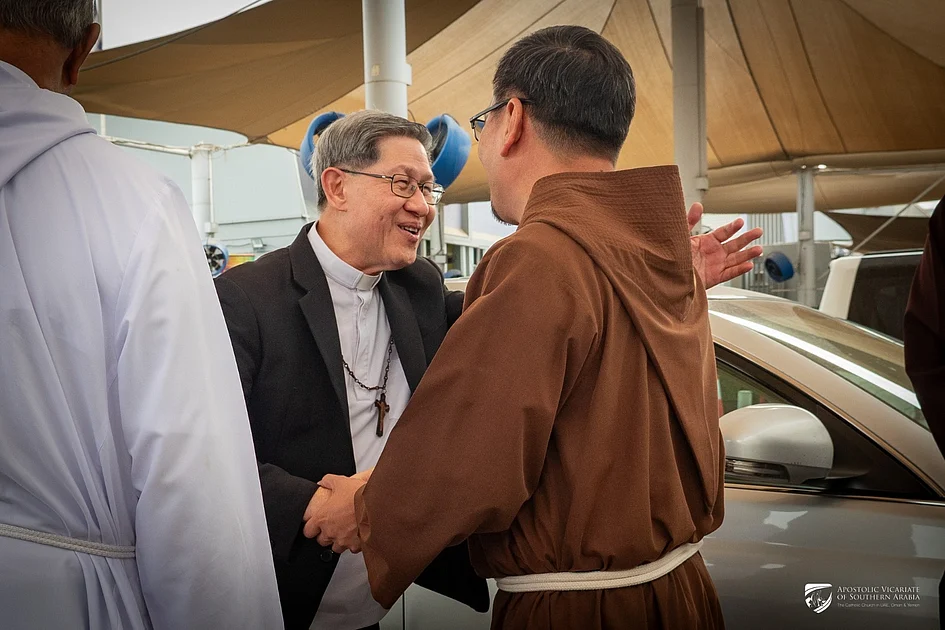
    A prominent Vatican official, Cardinal Luis Antonio Tagle, commenced a significant two-day pastoral visit to the United Arab Emirates on Tuesday, bringing a message of faith to the large Catholic community ahead of Christmas celebrations. The Filipino Cardinal, who serves as the pro-prefect of the Dicastery for Evangelisation, is scheduled to preside over Simbang Gabi evening masses at St. Mary’s Catholic Church in Dubai on December 16th and St. Joseph’s Parish in Abu Dhabi the following day.

    The visit holds particular significance for the substantial Filipino expatriate population in the UAE, with Cardinal Tagle planning dedicated meetings with community members and church leaders. Bishop Paolo Martinelli, Apostolic Vicar of Southern Arabia, expressed profound joy at the Cardinal’s arrival, noting it represents a special Christmas gift that strengthens the unity of the diverse Catholic community in the region.

    The traditional Simbang Gabi observance, which traces its origins to 17th-century Spanish colonial Philippines, has found a vibrant new home in the UAE. The nine-day novena mass series began with remarkable attendance figures, as over 20,000 worshippers participated in the inaugural ceremony at St. Mary’s Catholic Church in Dubai on Monday, demonstrating the deep roots this Filipino tradition has established within the Gulf nation’s multicultural landscape.

    Cardinal Tagle’s visit symbolizes the continued closeness of Pope Leo XIV to the faithful in Arabia, following the pontiff’s recent apostolic journey to Turkey and Lebanon last month. The 68-year-old cardinal, who also holds positions as president of the Catholic Biblical Federation and cardinal-bishop of Albano, is renowned for his exceptional ability to connect with people’s hearts and support their spiritual journeys, making his presence particularly meaningful during the Advent season.


  • Sharjah approves beekeeping licensing mechanism to protect local species, reduce violations

    Sharjah approves beekeeping licensing mechanism to protect local species, reduce violations

    The Sharjah Executive Council has formally ratified a comprehensive regulatory framework for beekeeping operations, establishing a new licensing system for both practitioners and apiary sites. This strategic initiative aims to transform apiculture practices within the emirate through multiple coordinated approaches.

    The newly endorsed mechanism is designed to provide structural support and empowerment for beekeepers, facilitating their access to official licensing channels. Beyond regulatory compliance, the system enables apiarists to leverage government support programs and specialized financing opportunities previously underutilized.

    A primary conservation objective focuses on safeguarding indigenous bee populations from escalating threats of disease and invasive pests. This protective measure aligns with broader food security goals, promoting sustainable production of high-quality local honey while reducing reliance on imported alternatives.

    The regulatory framework additionally addresses enforcement concerns by establishing clear operational guidelines to minimize violations and irregular practices that have compromised sectoral integrity. During the same council session, officials examined strategic pillars for developing Sharjah’s organic honey sector, indicating a coordinated approach to apiculture advancement.

    In a separate agenda item, the council acknowledged government employees who successfully completed training programs at the Artificial Intelligence Academy, demonstrating the emirate’s parallel commitment to technological upskilling across sectors.

  • ‘Jassi Weds Jassi’ premieres in Dubai to a packed house

    ‘Jassi Weds Jassi’ premieres in Dubai to a packed house

    Dubai’s Grand Cineplex at Grand Hyatt witnessed an enthusiastic reception for the international premiere of ‘Jassi Weds Jassi’ on December 11, 2025. The romantic comedy attracted a diverse audience that mirrored the city’s cosmopolitan character, with strong attendance from Indian, Pakistani, and Arab communities creating a vibrant celebratory atmosphere.

    Directed by Paran Bawa and produced through Divinity Studios by Soma Singh Deo and Mazahir Abbas, the film transports viewers to 1996 Haldwani (now in Uttarakhand) for a nostalgic romantic journey. The production features Harshvardhan Deo in the titular role alongside an accomplished ensemble cast including Ranvir Shorey, Sikandar Kher, Sudesh Lahiri, Grusha Kapoor, Manu Rishi Chaddha, and Rehmat Rattan.

    The narrative centers on Jaspreet (Jassi), an incurable romantic who firmly believes in destined love. His world undergoes delightful chaos when he develops feelings for Jasmeet (Rehmat Rattan), only to encounter an unexpected romantic rival named Jaswinder (Sikandar Kher), who also goes by Jassi. This coincidence sets in motion a chain of comedic misunderstandings, heartfelt emotions, and romantic entanglements, all infused with authentic Punjabi cultural elements.

    Director Paran Bawa characterized the film as ‘pure madness in the best way possible,’ emphasizing its celebration of love, emotional depth, and energetic chaos. Producer Mazahir Abbas stated their objective was to deliver a wholesome, family-oriented cinematic experience designed to maintain audience engagement and smiles throughout. Lead actor Harshvardhan Deo described his portrayal of Jassi as particularly enjoyable, noting the character’s endearing qualities as an innocent dreamer motivated by love, playful mischief, and natural charm.

    The film has commenced theatrical screenings across UAE cinemas, offering audiences a lighthearted escape into romantic comedy grounded in cultural specificity and universal emotions.

  • Melodica Music & Dance Academy launches UAE’s first physical gift cards for music, dance and instruments

    Melodica Music & Dance Academy launches UAE’s first physical gift cards for music, dance and instruments

    In an innovative move reshaping festive gifting traditions, Melodica Music & Dance Academy has unveiled the UAE’s inaugural physical premium gift cards exclusively dedicated to creative arts education. Launching during the peak holiday season, these stored-value cards present a sophisticated alternative to conventional presents by enabling recipients to access music lessons, dance programs, or purchase musical instruments across all academy branches nationwide.

    The premium gift cards, available in denominations ranging from AED 500 to AED 5,000, represent a strategic expansion into mainstream retail markets. Beyond Melodica’s own facilities, the physical cards will be distributed through major hypermarkets and shopping malls, significantly enhancing accessibility for consumers seeking meaningful, experience-based gifts.

    CEO Afshin articulated the vision behind the initiative: ‘This transcends traditional gifting concepts—it’s an invitation to pursue artistic dreams. Whether for a child discovering musicality, a teenager exploring dance, or an adult reigniting a dormant passion, these cards ignite creative potential with lifelong impact.’

    Industry analysis confirms that while digital gift options exist in the regional creative sector, physical gift cards specifically targeting music and dance education remain notably absent from UAE retail landscapes. Melodica’s pioneering approach addresses this gap while supporting the development of the local arts ecosystem.

    The academy’s initiative has been recognized by market observers as a regionally unprecedented concept—a tangible gifting solution that prioritizes personal growth and cultural enrichment over material value. This strategic launch reinforces Melodica’s commitment to fostering a vibrant artistic community while encouraging cross-generational participation in performing arts.

    Prospective customers can obtain detailed information about the gift cards and Melodica’s comprehensive programs through the academy’s official communication channels and website.

  • EU to yield on combustion engines ban after automaker pressure

    EU to yield on combustion engines ban after automaker pressure

    In a major policy reversal, the European Commission has proposed scaling back its ambitious 2035 ban on combustion engine vehicles following intense lobbying from Germany, Italy, and European automakers. Instead of requiring 100% zero-emission vehicles as originally planned, the new proposal would mandate a 90% reduction in CO2 emissions from 2021 levels by 2035.

    The policy shift, which requires approval from EU governments and the European Parliament, represents the bloc’s most significant retreat from its green agenda in five years. The compromise would allow continued sales of plug-in hybrids and range extenders that utilize CO2-neutral biofuels or synthetic fuels, providing relief to European manufacturers struggling to compete with Tesla and Chinese electric vehicle makers.

    This development coincides with Ford Motor’s announcement of a $19.5 billion writedown and cancellation of several electric models, citing the Trump administration’s policies and weakening EV demand. European automotive giants including Volkswagen and Stellantis have similarly pointed to sluggish EV adoption and advocated for reduced targets and penalties.

    The auto industry lobby ACEA characterized the situation as ‘high noon’ for the sector, urging the Commission to also relax intermediate 2030 targets. German manufacturers face particular pressure as they lose market share in China to domestic producers while confronting competition from sophisticated Chinese EVs in their home markets.

    However, EV industry leaders warn that backtracking on emissions targets could undermine investment and widen Europe’s competitive gap with China. Polestar CEO Michael Lohscheller cautioned that ‘if we backtrack now, we won’t just hurt the climate. We’ll hurt Europe’s ability to compete.’

    Concurrently, the Commission is developing complementary measures to accelerate EV adoption, including incentives for corporate fleets (which represent approximately 60% of new car sales in Europe), potential new regulatory categories for small EVs with tax benefits, and sustainability credits for vehicles manufactured with low-carbon materials.

  • First EU airline flight in 35 years lands in Baghdad today

    First EU airline flight in 35 years lands in Baghdad today

    In a landmark development for Iraqi aviation, Greece’s Aegean Airlines successfully landed at Baghdad International Airport on Tuesday, marking the first scheduled European carrier arrival in 35 years. The historic flight signifies a major step in Iraq’s reintegration into international air travel networks following decades of isolation due to security concerns.

    The newly established Baghdad-Athens route will initially operate with two weekly flights, with Iraqi transport officials indicating potential expansion based on passenger demand. This aviation breakthrough represents what the Iraqi Transport Ministry described as “Iraq’s return to the European aviation map” and heralds “a new phase of recovery for Iraq’s aviation sector.”

    European airlines ceased direct flights to Baghdad in the early 1990s following Saddam Hussein’s invasion of Kuwait and subsequent international sanctions. The security situation further deteriorated after the 2003 US-led invasion, which triggered extended periods of civil conflict, sectarian violence, and jihadist activity that made commercial aviation operations untenable.

    The Greek carrier had previously demonstrated confidence in Iraq’s northern region by initiating flights to Erbil, capital of the relatively stable autonomous Kurdistan region. This strategic expansion southward to Baghdad suggests growing international confidence in Iraq’s improving security conditions and economic potential.

    Aviation analysts note that restored European air connections could significantly boost business travel, diplomatic exchanges, and economic development opportunities for Iraq as it continues to rebuild infrastructure and international relationships after years of conflict and isolation.

  • Michael Bay to collaborate with Bhanushali Studios, AR Rahman to compose music

    Michael Bay to collaborate with Bhanushali Studios, AR Rahman to compose music

    In a groundbreaking cinematic collaboration, Bhanushali Studios has announced a major international partnership with renowned Hollywood director Michael Bay and Oscar-winning composer AR Rahman. The studio revealed through its official social media channels that Bay will serve as creative collaborator for an upcoming high-energy project directed by Anthony D’Souza, known for Indian blockbusters including ‘Boss’ and ‘Blue’.

    Michael Bay, celebrated for his work on globally successful franchises such as ‘Transformers,’ ‘Bad Boys,’ and ‘Armageddon,’ brings his signature action-packed storytelling to this cross-border venture. Simultaneously, AR Rahman, the musical genius behind Oscar-winning scores for ‘Slumdog Millionaire,’ will compose the film’s soundtrack, blending his distinctive Indian musical sensibility with international appeal.

    Vinod Bhanushali, leading the studio behind critically acclaimed productions like ‘Sirf Ek Bandaa Kaafi Hai’ and ‘Main Atal Hoon,’ described the collaboration as a celebration of cinema that transcends geographical boundaries. The project marks a significant moment in the globalization of Indian film production, combining Hollywood’s technical expertise with India’s creative talent.

    While specific details regarding the film’s plot, casting choices, and release timeline remain undisclosed, industry analysts anticipate this partnership could establish new benchmarks for international co-productions. The announcement has generated substantial excitement within both Hollywood and Bollywood circles, with many viewing this as a potential model for future cross-cultural cinematic ventures.

  • Wuxi Winter Bazaar creates cross-cultural gathering

    Wuxi Winter Bazaar creates cross-cultural gathering

    The 2025 Winter Bazaar at Erquan Square in Wuxi, Jiangsu province, transformed into a vibrant international marketplace on December 14th. This cultural extravaganza featured merchants from diverse global backgrounds showcasing their nations’ distinctive culinary specialties and artisanal crafts. The event successfully bridged cultural divides by creating an immersive environment where international visitors and local residents could interact through shared appreciation of global traditions. The bazaar’s strategic timing during the winter season provided both seasonal shopping opportunities and cultural enrichment. The convergence of international vendors and local attendees demonstrated how commerce can serve as a vehicle for cross-cultural understanding and community building. The event’s organization highlighted Wuxi’s growing role as a hub for international cultural exchange within the Yangtze River Delta region. Visitors experienced a microcosm of global culture through direct engagement with authentic international products and personal interactions with vendors representing their home countries’ traditions.

  • ‘Land does not lie’: Sharjah Ruler cites 200,000-year-old tools as Faya joins Unesco list

    ‘Land does not lie’: Sharjah Ruler cites 200,000-year-old tools as Faya joins Unesco list

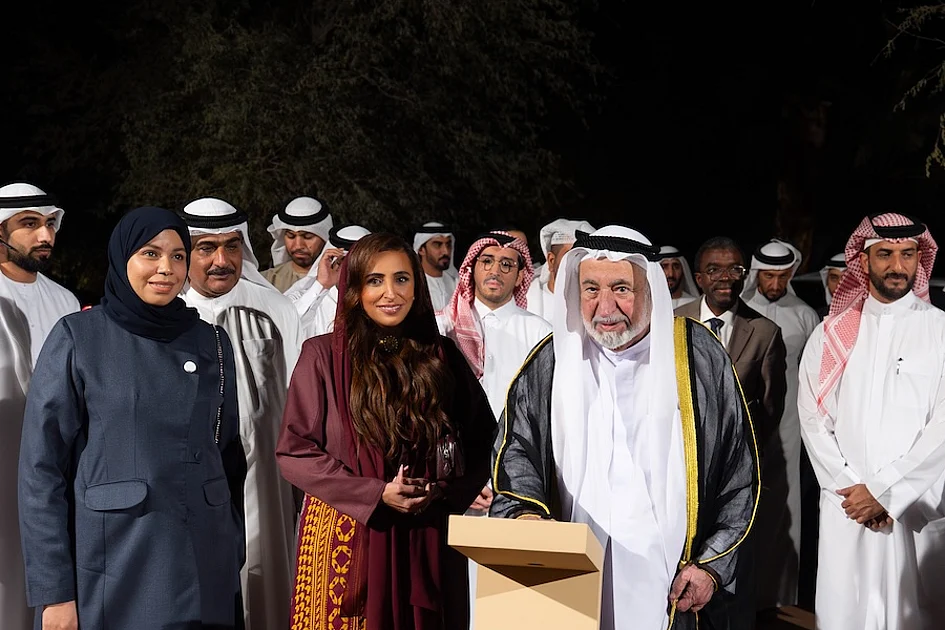
    SHARJAH – In a landmark ceremony at the Mleiha Archaeological Centre, His Highness Sheikh Dr. Sultan bin Muhammad Al Qasimi, Ruler of Sharjah, formally celebrated the inscription of the Faya archaeological site onto the UNESCO World Heritage List. The event marked international recognition of a location that has fundamentally altered scientific comprehension of early human migration patterns.

    The significance of Faya was underscored by the unveiling of a commemorative monument and the presentation of the official inscription certificate by Lazare Eloundou Assomo, Director of the UNESCO World Heritage Centre. Sheikh Dr. Sultan emphasized that this designation transcends regional importance, representing instead a profound contribution to humanity’s collective historical narrative.

    Central to Faya’s global value are the extraordinary discoveries made there, including exquisitely crafted stone tools dating back more than 200,000 years. These artifacts have effectively dismantled long-standing assumptions, providing compelling evidence that modern humans inhabited the Arabian Peninsula far earlier than previously documented. ‘The land spoke, and the land does not lie when it speaks through science,’ stated the Ruler, reflecting on the moment researchers realized they were confronting evidence that recalibrates the timeline of human settlement.

    Sheikh Dr. Sultan articulated Faya’s role as more than a transit corridor, establishing it as a crucial early homeland where human communities demonstrated remarkable adaptation to arid environments. The site offers a continuous record of human presence, ingenuity, and social organization over hundreds of millennia. He described Faya as ‘living pages of the book of humanity’ that illustrate how early societies transformed environmental challenges into knowledge, cooperation, and sustainable resource management.

    Beyond its archaeological importance, the Sharjah Ruler framed heritage preservation as an essential investment in cultural identity and future wisdom. He asserted that protecting sites like Faya safeguards accumulated human experience, providing ‘an open school for generations’ to understand their origins and contextualize their role in contemporary society. This philosophy aligns with Sharjah’s broader cultural vision, where heritage occupies a central position in understanding the region’s social foundations.

    The UNESCO recognition solidifies the United Arab Emirates’ growing role in global heritage conservation while highlighting how Arabian Peninsula discoveries are reshaping historical paradigms regarding civilization development through communication networks and adaptive strategies that remain relevant to modern challenges.

  • The US labels another Latin American cartel a terrorist group as the anti-drug war escalates

    The US labels another Latin American cartel a terrorist group as the anti-drug war escalates

    In a significant escalation of its counter-narcotics strategy, the Trump administration has formally designated Colombia’s Clan del Golfo as a foreign terrorist organization. This decisive move, announced by the U.S. State Department on Tuesday, targets one of Latin America’s most formidable drug cartels and represents a substantial shift in hemispheric policy approaches.

    The State Department characterization portrays Clan del Golfo as a ‘violent and powerful criminal organization’ that systematically employs cocaine trafficking revenues to finance its extensive operations. The designation specifically cites the group’s responsibility for ‘terrorist attacks against public officials, law enforcement and military personnel, and civilians in Colombia.’

    This development occurs against a backdrop of deteriorating U.S.-Colombian relations. The Trump administration recently returned Colombia to its list of nations failing to cooperate in anti-drug efforts—the first such designation in nearly three decades. This diplomatic reproach reflects both the documented surge in cocaine production and the increasingly strained relationship between the White House and Colombia’s leftist President Gustavo Petro.

    Further complicating bilateral relations, the United States imposed sanctions on President Petro in October based on allegations that his administration permitted drug cartels to ‘flourish’ and expand cocaine exports to American markets. Petro has vigorously contested these accusations, countering that Colombia has achieved record-level cocaine interceptions while avoiding lethal force against suspected smugglers.

    With approximately 9,000 combatants, Clan del Golfo (alternatively known by its Spanish acronym AGC) maintains a substantial presence across approximately one-third of Colombia’s municipalities according to the nation’s Human Rights Defender’s Office. The organization, which evolved from right-wing paramilitary units that previously combated Marxist guerrillas, stands accused of systematic extortion against local businesses and child recruitment practices.

    This terrorist designation introduces complex implications for ongoing peace negotiations between the Colombian government and AGC. Since September, both parties have engaged in discussions potentially leading to fighter disarmament in exchange for reduced sentences for leadership figures. A recent agreement signed in Qatar established designated zones where AGC members would receive protection from prosecution during peace talks, alongside suspensions of extradition proceedings against leaders.

    Elizabeth Dickinson, Colombia analyst at the International Crisis Group, suggests the designation may represent a symbolic message urging Colombian authorities to adopt a more stringent stance toward the armed group. Dickinson notes that ‘the tensions between Colombia and Washington are at historic levels,’ adding that the move could give ‘pause to Colombian authorities…going forward.’

    While the terrorist designation doesn’t automatically authorize military strikes, it significantly enhances the legal framework for potential offensive operations. The administration previously employed similar designations against Venezuelan criminal organizations Tren de Aragua and Cartel de los Soles before conducting maritime operations against alleged drug smuggling vessels—actions whose legality has been questioned by U.S. lawmakers.

    President Trump’s recent characterization of Petro as ‘fairly hostile’ to American interests, coupled with warnings of ‘big problems’ if policies don’t change, underscores the profound diplomatic challenges currently defining U.S.-Colombian relations.