作者: admin

  • Bill Gates set to testify before US Congress in Epstein investigation

    Bill Gates set to testify before US Congress in Epstein investigation

    A key development in the ongoing congressional investigation into the crimes of convicted sex offender Jeffrey Epstein has emerged, with lawmakers confirming that Microsoft co-founder and billionaire philanthropist Bill Gates will appear before the U.S. House Oversight Committee to answer questions about his past interactions with Epstein. The hearing has been formally scheduled for June 10, marking Gates as the latest high-profile public figure to commit to testifying in the probe.

    A spokesperson for Gates confirmed to the BBC that Gates “is looking forward to answering all the committee’s questions to support their important work.” To date, no accusations of misconduct related to Epstein’s crimes have been leveled against Gates by any of Epstein’s victims, and his inclusion in the investigation’s documentary record does not carry any implication of criminal wrongdoing on his part.

    Details of Gates’ communications and professional and social connections to Epstein were made public earlier this year as part of a massive document dump ordered by federal law. The U.S. Department of Justice has already released more than three million pages of records from the Epstein investigation, but millions more documents are still being held back from public disclosure. The 2024 legislation requiring the full release of Epstein investigation files was signed into law by former President Donald Trump last November, which is what paved the way for the exposure of previously undisclosed details of Gates’ relationship with the disgraced financier.

    Gates has already addressed his ties to Epstein privately and publicly on multiple occasions. During an internal meeting with staff of the Bill & Melinda Gates Foundation, Gates spoke openly about the relationship and took personal responsibility for his decision to meet with Epstein. A foundation statement following the meeting noted that “Bill spoke candidly, addressing several questions in detail.”

    According to reporting from The Wall Street Journal, Gates apologized to foundation staff for the association, and confirmed he had two extramarital affairs with Russian women that Epstein later discovered. When discussing his connection to Epstein, Gates told staff: “I did nothing illicit. I saw nothing illicit.”

    In a public interview with Australia’s 9News earlier this year, Gates expanded on his explanation of the relationship, saying his interactions with Epstein were limited to informal dinners and that he never traveled to Epstein’s private island where many of the financier’s abuses took place. “Every minute I spent with him I regret and I apologise that I did that,” Gates told the outlet.

    A subsequent statement from Gates’ spokesperson to the BBC further clarified Gates’ position, emphasizing that the Microsoft co-founder never attended social gatherings with Epstein and had no involvement whatsoever in any illegal activities linked to the late financier. “While Mr. Gates acknowledges that meeting with Epstein was a serious error in judgment, he unequivocally denies any improper conduct related to Epstein and the horrible activities in which Epstein was involved,” the spokesperson said.

    The request for Gates’ testimony, which was sent in a formal letter dated March 3, comes as the House Oversight Committee continues to gather testimony from a string of high-profile figures connected to Epstein. Former U.S. President Bill Clinton and his wife, former Secretary of State Hillary Clinton, already appeared before the committee for questioning in February. Upcoming testimony is expected from U.S. Commerce Secretary Howard Lutnick and former Florida Attorney General Pam Bondi in the coming weeks.

  • Zhuhai port vehicle traffic hits all-time high during Qingming holiday

    Zhuhai port vehicle traffic hits all-time high during Qingming holiday

    The Qingming Festival holiday wrapped up on a high note for cross-border connectivity in the Guangdong-Hong Kong-Macao Greater Bay Area, as the Zhuhai port of the Hong Kong-Zhuhai-Macao Bridge notched an unprecedented milestone in cross-border vehicle traffic. Data released by local border inspection authorities confirms that Monday, the final day of the 2026 three-day holiday, saw a historic peak in daily vehicle volumes passing through the port, marking a clear upward trajectory in cross-border travel and exchange across the Greater Bay Area.

    On that record-breaking Monday alone, border inspection personnel processed 29,800 inbound and outbound vehicles passing through the Zhuhai port. Of this total, 22,800 were Hong Kong and Macao single-plate vehicles — a classification for vehicles registered only in the two special administrative regions that are permitted to cross into the Chinese mainland. Both the overall daily vehicle count and the volume of Hong Kong and Macao single-plate vehicles shattered previous records set since the Hong Kong-Zhuhai-Macao Bridge opened to commercial traffic in 2018.

    Across the full three-day holiday period, the cumulative number of inbound and outbound vehicles passing through the Zhuhai port surpassed 77,400. This total placed the port at the top of all land border ports across China for holiday vehicle traffic volume, outperforming every other cross-border crossing nationwide.

    Further analysis of the traffic data highlights a major shift in cross-border travel patterns: Hong Kong and Macao residents driving personal vehicles into the Chinese mainland have emerged as the dominant driving force behind the port’s growing vehicle flow. Single-plate vehicles from the two special administrative regions accounted for 80.3 percent of all small passenger vehicles processed through the port during the holiday, underscoring rising demand for convenient cross-border travel, family visits, tourism and short business trips between the mainland, Hong Kong and Macao. This unprecedented traffic milestone also reflects the deepening economic and people-to-people integration that continues to reshape the Guangdong-Hong Kong-Macao Greater Bay Area, one of China’s most dynamic regional economic clusters.

  • The church behind Hegseth’s crusading religious rhetoric

    The church behind Hegseth’s crusading religious rhetoric

    Long before Pete Hegseth sat for his 2025 Senate confirmation hearings to become U.S. Secretary of Defense, his deep conservative evangelical religious commitments had already sparked public scrutiny and debate. Hegseth holds membership in the Communion of Reformed Evangelical Churches (CREC), a global denomination whose core theology is shaped by the 20th-century Christian Reconstructionism movement.

    Many senior CREC leaders openly advocate for replacing secular governance with biblical law, building a theocratic state structured around Christian patriarchy. For the CREC, this theocratic model would be governed by a strict conservative evangelical reading of Christian doctrine. The denomination’s official website lists more than 160 member congregations distributed across North America, Europe, Asia, and South America.

    Hegseth’s consistent use of explicitly religious language and public prayer in his official capacity has amplified questions about how his personal theological beliefs intersect with his leadership of the U.S. military, the world’s largest fighting force. Most notably, during a March 25, 2026 prayer gathering held amid the ongoing war in Iran, Hegseth delivered a public invocation that read: “Let every round find its mark against the enemies of righteousness and our great nation.” He continued: “Give them wisdom in every decision, endurance for the trial ahead, unbreakable unity, and overwhelming violence of action against those who deserve no mercy.”

    As a scholar specializing in the study of American Christian right movements, I have closely researched the CREC, and unpacking the denomination’s history, doctrine, and controversial leadership is critical to understanding Hegseth’s public rhetoric and decision-making.

    The CREC is a transnational network of evangelical congregations most closely linked to Doug Wilson, the influential pastor who founded Christ Church in Moscow, Idaho. Christ Church functions as the CREC’s flagship congregation and de facto denominational headquarters, after Wilson co-founded the network in 1993. A third-generation evangelical who grew up in Moscow, Wilson has built an interconnected religious and educational ecosystem around the church: he founded Logos Schools (a network of private K-12 institutions and homeschool curriculum), Canon Press (a religious publishing and media company), and New Saint Andrews College, all based in the small Idaho town. Every arm of this ecosystem shares the core belief that faithful Christians exist in fundamental conflict with secular modern society.

    While Wilson is not Hegseth’s personal pastor, he is the undisputed most influential voice within the CREC, and the two men have repeatedly expressed public approval of one another’s work. In February 2026, Hegseth invited Wilson to lead a prayer service for Pentagon personnel, where Wilson told assembled service members: “If you bear the name of Jesus Christ, there is no armor greater than that. Not only so, but all the devil’s R&D teams have not come up with armor-piercing anything.” In framing the conflict this way, Wilson tied U.S. military personnel’s safety and mission success to personal Christian faith, framing the nation’s enemies as literal agents of Satan.

    As Wilson grew Christ Church into the CREC’s hub, he and his congregation have worked to transform Moscow into a model conservative Christian community, with the long-term goal of expanding the movement across the United States and beyond. “Our desire is to make Moscow a Christian town,” Wilson has stated publicly.

    CREC doctrine explicitly rejects religious pluralism and political perspectives that diverge from its strict theology. The denomination’s official mission statement commits it to “maintaining its Reformed faith, avoiding the pitfalls of cultural relevance and political compromise that destroys our doctrinal integrity.” CREC congregations adhere to a highly patriarchal reading of Christian scripture: Wilson has publicly argued that in heterosexual sexual relationships, “A woman receives, surrenders, accepts.”

    Politically, CREC theology rejects the dominant interpretation of the U.S. Constitution’s Establishment Clause, which requires a separation of church and state to protect religious freedom and bar state sponsorship of religion. As religion scholar Julie Ingersoll explains, within the CREC community, “there is no distinction between religious issues and political ones.” The denomination broadly holds that all government officials must be practicing Christians, and Wilson has gone so far as to argue that “Christians and only Christians are qualified to hold political office” in the United States.

    To expand its reach, the CREC uses a “church planting” model that lowers barriers for new congregations to join the network. Religion scholar Matthew Taylor describes the movement’s core mission: “They believe the church is supposed to be militant in the world, is supposed to be reforming the world, and in some ways conquering the world.” While the CREC lacks the mainstream name recognition of large evangelical denominations or high-profile megachurches, it has built a significant footprint across the U.S. and around the globe through this planting strategy. Unlike traditional denominations that require centralized ordination and oversight for new congregations, the CREC provides core theological materials and guidance to independent groups seeking to join the network, allowing for rapid expansion.

    As the movement has grown, it has faced growing national scrutiny and controversy. In 1996, Wilson published a book that offered a positive portrayal of chattel slavery in the American South, claiming the system cultivated “affection among the races.” The denomination has also faced national backlash over its handling of widespread sexual abuse allegations. Reporting from Vox’s Sarah Stankorb documented a pervasive culture of normalized sexual abuse and assault, particularly within marriages in CREC communities, leading to a popular podcast centered on survivors’ accounts. Wilson has denied any personal wrongdoing and has stated that abuse claims are referred to law enforcement.

    Hegseth’s high-profile policy decisions shortly after taking office in 2025 have further drawn attention to his CREC affiliation. His order banning transgender people from serving openly in the U.S. military, and his decision to strip the name of gay rights activist and former Navy service member Harvey Milk from a U.S. Navy warship, aligned with the CREC’s conservative social views, prompting critics to question the influence of his religious beliefs on military policy.

    Amid the Trump administration’s multiple ongoing military conflicts across the globe, Hegseth regularly invokes religious framing to justify U.S. military action. In a March 2026 speech to leaders from Central and South America, he defended U.S. intervention in Venezuela, the blockade of Cuba, and regional military strikes by appealing to a shared transnational Christian identity. He told the gathered leaders: “We share the same interests, and, because of this, we face an essential test – whether our nations will be and remain Western nations with distinct characteristics, Christian nations under God, proud of our shared heritage with strong borders and prosperous people, ruled not by violence and chaos but by law, order, and common sense.”

    Hegseth has also leaned heavily on religious language to frame the 2026 war in Iran, with many of his references echoing the medieval Crusades, the series of holy wars waged between Christian and Muslim forces centuries ago. Hegseth bears three tattoos tied to Christian nationalist and Crusader symbolism: one reads “Deus Vult” (Latin for “God wills it,” the original rallying cry of the First Crusade), another is the Arabic word for “infidel,” and the third is the Jerusalem cross, a widely recognized symbol of Christian nationalism. He has also published a book titled *American Crusade* that lays out his ideological framework. Framing the U.S. military campaign in Iran, Hegseth argued: “We’re fighting religious fanatics who seek a nuclear capability in order for some religious Armageddon.”

    As long as Hegseth leads the Defense Department, his affiliation with the CREC and consistent use of religious framing will remain a key lens through which to analyze U.S. military policy and conflict management at home and abroad. This analysis is written by Samuel Perry, associate professor of rhetoric at Baylor University.

  • Israel’s war on Lebanon: What exactly is the ‘Dahieh Doctrine’?

    Israel’s war on Lebanon: What exactly is the ‘Dahieh Doctrine’?

    Israel’s recent intensification of military operations against Hezbollah in southern Lebanon has triggered a devastating humanitarian crisis, with official casualty counts topping 1,300 people killed and more than one million residents displaced from their homes. Intensive Israeli airstrikes have leveled critical civilian infrastructure across southern Lebanon, including residential neighborhoods, places of worship, medical facilities, and key bridge crossings over the Litani River. One of the most heavily targeted areas has been Dahieh, the densely populated southern suburbs of Beirut, a site that holds outsized significance for Israeli military strategy: it was here that the Israeli Defense Forces first formally put the so-called “Dahieh Doctrine” into practice two decades ago.

    This controversial military strategy has since been systematically deployed by Israel across multiple conflict zones, most infamously in its ongoing military campaign in the Gaza Strip that began in October 2023, which has killed more than 72,000 people to date, the vast majority of them civilians. Even before the current Lebanon offensive launched on March 5, Israeli far-right Finance Minister Bezalel Smotrich explicitly teased the coming application of the doctrine in a video posted to X, stating that “very soon Dahieh will look like Khan Younis” — the decimated southern Gazan city that has been reduced to ruins by months of Israeli bombardment. This analysis from Middle East Eye unpacks the origins, implementation, and global legal standing of the polarizing Israeli military tactic.

    At its core, the Dahieh Doctrine advocates for the use of massively disproportionate force against civilian populations and civilian-held infrastructure in areas where armed groups are alleged to operate. The strategy’s explicit goal is to inflict widespread suffering on local civilian communities to stoke domestic resentment against the armed group in question — whether that is Hezbollah in Lebanon or Hamas in Gaza — and ultimately deter future attacks against Israeli territory.

    Dahieh, located immediately south of central Beirut, is a densely packed urban neighborhood whose population is overwhelmingly Shia Muslim, with a smaller share of residents from other Lebanese communities. A large share of the area’s residents identify as Hezbollah supporters or voters, and it also hosts many active members of the group. Many analysts, including prominent American economist Paul Krugman, traced the doctrine’s intellectual roots back to the U.S. military’s “shock and awe” strategy, which was deployed during the 2003 U.S.-led invasion of Iraq.

    The term “shock and awe” was first coined by military theorists Harlan K. Ullman and James P. Wade in a 1996 academic work. The framework argues that displays of overwhelming, overwhelming force can quickly overwhelm and demoralize both enemy combatants and the civilian population supporting them. The strategy explicitly targets core civilian infrastructure, including communication networks, transportation hubs, food production systems and water supplies to cripple everyday function in enemy-held territory. In the 2003 Iraq invasion alone, more than 6,700 Iraqi civilians were killed in the initial invasion phase, and cumulative civilian deaths across the entire subsequent conflict are estimated to reach at least 200,000. Ullman and Wade themselves cited earlier historical precedents for the approach, including the 1945 U.S. nuclear bombings of Hiroshima and Nagasaki, and the 1994 Russian assault on Grozny during the First Chechen War.

    Unlike formal, publicly documented Israeli military doctrines, the Dahieh Doctrine was first outlined explicitly by Israeli military officials and independent analysts in the aftermath of Israel’s 2006 war on Lebanon. During that conflict, Israel justified widespread bombardment across Lebanon after Hezbollah captured two Israeli soldiers. Then-Israeli Major General Udi Adam, who commanded the 2006 operation against Hezbollah, stated publicly in July 2006 that “once it is inside Lebanon, everything is legitimate – not just southern Lebanon, not just the line of Hezbollah posts.” Over the 33-day 2006 war, Israel killed more than 1,200 people and wounded more than 4,400, with the worst destruction concentrated in Dahieh, where Israeli bombing destroyed more than 15,000 residential homes.

    Major General Gadi Eisenkot, who served as Head of Israeli Military Operations during the 2006 assault, later went on to become IDF Chief of Staff from 2015 to 2019 and a cabinet minister in Benjamin Netanyahu’s far-right government from 2023 to 2024. In October 2008, two years after the end of the Lebanon war, Eisenkot openly confirmed the doctrine’s core principle: “What happened in the Dahieh quarter of Beirut will happen in every village from which Israel is fired on. We will wield disproportionate power against every village from which shots are fired on Israel, and cause immense damage and destruction. From our perspective, these are military bases. This isn’t a suggestion. This is a plan that has already been authorized.”

    That same week, Tel Aviv University’s Institute for National Security Studies published a landmark report by Israeli Colonel Gabriel Siboni titled “Disproportionate Force: Israel’s Concept of Response in Light of the Second Lebanon War” that formalized the doctrine. The report argued that “with an outbreak of hostilities, the IDF [Israeli military] will need to act immediately, decisively, and with force that is disproportionate to the enemy’s actions and the threat it poses. Such a response aims at inflicting damage and meting out punishment to an extent that will demand long and expensive reconstruction processes.” The report added that disproportionate force was necessary “to make it abundantly clear that the State of Israel will accept no attempt to disrupt the calm currently prevailing along its borders.”

    Israel has deployed this strategy repeatedly against civilian populations in the Palestinian territories, which it has occupied illegally under international law since 1967. In Gaza, data from the United Nations Satellite Centre shows that Israeli bombardment has destroyed roughly 80 percent of all structures across the strip, including residential homes, schools, hospitals, sewage treatment plants and marketplaces. Just three days into the October 2023 Israeli campaign, IDF spokesperson Daniel Hagari publicly confirmed the strategy’s priorities, stating: “While balancing accuracy with the scope of damage, right now we’re focused on what causes maximum damage.”

    As the current Lebanon offensive has expanded, Israel has already renewed heavy strikes on Dahieh itself, echoing the 2006 destruction. Before the 2023 Gaza war, Israel deployed the Dahieh Doctrine in two major prior offensives in Gaza. During the 2008-2009 invasion, Israel killed more than 1,400 Palestinians, destroyed more than 4,000 residential homes, and deployed white phosphorus munitions — weapons that cause permanent, often fatal burns — in densely populated civilian areas; just 13 Israelis were killed in the conflict. In the 2014 Gaza war, Israel killed more than 2,000 Palestinians, two-thirds of whom were confirmed civilians, including more than 500 children and nearly 300 women.

    Under core international humanitarian law treaties, the deliberate targeting of civilian populations and civilian infrastructure is explicitly classified as a war crime. Article 48 of the Fourth Geneva Convention requires that “The Parties to the conflict shall at all times distinguish between the civilian population and combatants.” Article 51 further prohibits any attack “which may be expected to cause incidental loss of civilian life, injury to civilians, damage to civilian objects, or a combination thereof, which would be excessive in relation to the concrete and direct military advantage anticipated.”

    The Rome Statute, which establishes the legal framework for the International Criminal Court (ICC) and codifies the international crimes of genocide, crimes against humanity, and war crimes, also explicitly bans disproportionate attacks on civilian communities. The statute prohibits “intentionally launching an attack in the knowledge that such attack will cause incidental loss of life or injury to civilians or damage to civilian objects or widespread, long-term and severe damage to the natural environment which would be clearly excessive in relation to the concrete and direct overall military advantage anticipated.” Currently, ICC arrest warrants are active for Israeli Prime Minister Benjamin Netanyahu and former Defense Minister Yoav Gallant, accusing the pair of committing war crimes and crimes against humanity during Israel’s ongoing military campaign in Gaza.

    The Dahieh Doctrine was formally identified and condemned by the 2009 Goldstone Report, a United Nations fact-finding commission investigation into Israel’s 2008-2009 Gaza war. The commission found that Israeli strategy during the conflict was “designed to punish, humiliate and terrorize a civilian population” and added: “The tactics used by the Israeli armed forces in the Gaza offensive are consistent with previous practices, most recently during the Lebanon war in 2006. A concept known as the Dahiya doctrine emerged then, involving the application of disproportionate force and the causing of great damage and destruction to civilian property and infrastructure, and suffering to civilian populations. The Mission concludes from a review of the facts on the ground that it witnessed for itself that what was prescribed as the best strategy appears to have been precisely what was put into practice.”

    The doctrine has also faced repeated condemnation from leading international human rights experts, including Richard Falk, the former United Nations Special Rapporteur on Palestinian human rights. Writing in April 2024, six months into Israel’s ongoing Gaza campaign, Falk noted that there was not “the slightest effort on Eisenkot’s part to reconcile the Dahiya Doctrine with international humanitarian law, which imposes a limit of proportionality on any use of force in situations of international combat.”

  • Georgia holds run-off election to replace Marjorie Taylor Greene

    Georgia holds run-off election to replace Marjorie Taylor Greene

    A high-stakes special runoff election is set to unfold Tuesday in Georgia’s 14th Congressional District, where two candidates are vying to fill the unexpected vacancy left by former Republican Congresswoman Marjorie Taylor Greene. The outcome carries national ramifications, as Republicans cling to an extraordinarily narrow majority in the U.S. House of Representatives that could be upended by even a single seat flip.

    Greene’s abrupt resignation from Congress in January came after a public and bitter split with former President Donald Trump, leaving thousands of the district’s constituents disgruntled and the seat empty months before the regular November general election. A first round of special voting was held on March 10, but no candidate managed to secure the required outright majority, thanks to a crowded field of contenders. In that initial vote, Democratic candidate Shawn Harris outperformed Republican Clay Fuller by a narrow margin, a shift partially attributed to the lack of other high-profile Democratic candidates in the race. That result cleared the path for Tuesday’s head-to-head runoff, and the winner will immediately face a new challenge: they will serve out the remaining portion of Greene’s original term, which ends in January 2027, and must launch a re-election campaign just months later for the November 2026 midterm elections. Political analysts say it is highly likely that Harris and Fuller will face off again on the general election ballot in the fall.

    Fuller, a former district attorney, earned Trump’s early endorsement that pushed him to the top of the crowded Republican primary field. Running in a solidly conservative district that has long leaned Republican, Fuller enters the runoff with a structural advantage. His policy platform aligns almost entirely with Trump’s America First agenda, prioritizing sharp cuts to illegal immigration and the implementation of mass deportation policies. Following his advancement to the runoff, Fuller emphasized that the district’s Republican base is unified behind Trump’s policy goals. “They support President Trump,” he told reporters in March. “They know they want an America first fighter on Capitol Hill, fighting for his policies that are going to make a difference.”

    Spanning Georgia’s far northwest corner, stretching from the outer Atlanta suburbs north to the Tennessee state line, the 14th District is mostly rural and has long been a Republican stronghold. Still, it holds small but organized pockets of Democratic support in the communities closer to Atlanta and around the city of Rome. That demographic split is what Harris, a retired U.S. Army brigadier general, is counting on to pull off an unexpected upset.

    Harris has campaigned aggressively across the district, raised millions in campaign funds, and earned the backing of national Democratic figures including former presidential candidate and Cabinet secretary Pete Buttigieg, who held a public town hall with the candidate in March. Harris is betting that low off-cycle voter turnout, a common dynamic in special runoffs outside regular election years, will let him consolidate enough Democratic and independent voter support to narrowly eke out a win. After advancing to the head-to-head contest, Harris reached across the aisle to voters who backed other candidates in the first round, saying, “Everybody who voted for any other candidate […] I want to talk to every last one of them, and say: ‘Give me a chance.’”

    Trump has made repeated public interventions in the race, pushing hard to keep the seat in Republican hands. The stakes are extraordinarily high for GOP House leadership: Republicans currently hold just 217 seats to Democrats’ 214, with one independent who caucuses with the GOP and three vacancies currently being filled. The party’s current majority is so slim that just a handful of defections can derail planned legislation, making the loss of this open seat a worrying prospect for House Republican leadership.

    After Fuller secured his spot in the runoff, Trump released a public statement on his Truth Social platform throwing his full weight behind the candidate. “Clay Fuller is going to be a fantastic Congressman in representing the Great State of Georgia,” Trump wrote. “Now we have to be careful and finish it off. MAKE AMERICA GREAT AGAIN!!!”

  • ‘Caught unawares’: France put to the test by the US-Israeli war in the Middle East

    ‘Caught unawares’: France put to the test by the US-Israeli war in the Middle East

    On March 30, former and current U.S. President Donald Trump launched a blunt, unfiltered attack on France via his Truth Social platform, accusing Paris of being “VERY UNHELPFUL” in the ongoing US-Israeli war on Iran and warning that Washington “will REMEMBER!!!”.

    The public rebuke, laced with implicit threats, stemmed directly from France’s confidential decision, implemented since the outbreak of hostilities, to deny overflight rights to American aircraft transporting military aid to Israel. Hours after Trump’s post, the Élysée Palace confirmed the policy, expressing open surprise at the sudden public criticism.

    More than a month into the conflict that has left the Trump administration bogged down in a costly campaign with no clear end in sight, Trump’s outburst lays bare growing frustration among U.S. leadership toward European allies that have refused to back its bellicose approach to Iran. For France, the choice to reject U.S. demands has been the product of a delicate high-wire balancing act: Paris seeks to avoid a catastrophic rupture in transatlantic ties while also positioning itself as a defender of multilateralism and shoring up its eroding global influence.

    The rift opened immediately after the first joint US-Israeli strikes on Tehran on February 28. In a national televised address, French President Emmanuel Macron questioned the legality of the operation, noting that while Iran bore primary responsibility for the crisis due to its nuclear program and ballistic missile development, the strikes violated international law. This position was uniformly echoed across France’s diplomatic establishment.

    In early March, French Foreign Minister Jean-Noel Barrot decried the fact that the offensive was launched without prior consultation or a mandate from the UN Security Council — the only global body authorized to legitimize cross-border military force. Nabil Hajlaoui, France’s ambassador to Oman, went even further in an exclusive interview with Middle East Eye, calling the entire operation “unjustified and illegal”, and stressing that “France’s objective is precisely to not be dragged or involved in any way in this war.”

    Karim Emile Bitar, research director at the Paris-based Institute for International and Strategic Relations and an associate professor at Saint Joseph University of Beirut, notes that Paris was caught completely off guard by the February strikes, even though France maintains critical military infrastructure in the Gulf. “France was neither consulted nor informed by the United States. The French, and more broadly the Europeans, have clearly been marginalized in this sequence of events,” Bitar explained.

    Maxime Lefebvre, a former French ambassador and professor at Sciences Po Paris, points out that this sidelining of European allies and prioritization of power politics over international law is not without precedent. He draws parallels to the 2003 U.S.-led invasion of Iraq, a comparison widely echoed by critics of the current Iran campaign. Like the 2003 war, the current conflict is framed around claims of a weapons threat — chemical weapons for Saddam Hussein’s Iraq, nuclear weapons for the Islamic Republic — the veracity of which remains heavily contested, and both are rooted in an explicit goal of regime change.

    But Lefebvre argues the parallel has clear limits: in 2003, the U.S. pursued a multilateral diplomatic process before launching the invasion, actively working to rally allies or at least negotiate buy-in. That has not been the case this time around. “Beforehand, Trump did not seek to involve the partners in the Iranian nuclear negotiations, i.e. the three major European powers [France, the United Kingdom and Germany], but also the Chinese and Russians. Nor is this the case for the aftermath, since there are no political, diplomatic or multilateral prospects,” Lefebvre added.

    A senior French diplomatic source based in the Middle East framed the current U.S. approach as a deliberate rejection of established global governance: “Today, we are witnessing a fully embraced and almost proudly proclaimed circumvention of multilateral frameworks, a fait accompli policy that is plunging the region into a new phase of instability.”

    Even as France has declined to join the offensive, its cautious neutrality has drawn criticism at home. Dominique de Villepin, the former French prime minister who became the global face of Paris’s 2003 opposition to the Iraq War, has blasted current authorities for being too timid, arguing France has failed to mobilize the European Union to end the conflict. “I believe that our democracies must and can act. Economic sanctions are possible, political sanctions are possible. France is missing the boat, it is missing history,” de Villepin said.

    Experts say France’s cautious stance stems from a long-running fear of alienating Washington. The 2019 Greenland controversy, when Trump’s public proposal to buy the territory triggered widespread European anger, already badly frayed transatlantic ties. Lefebvre summarizes Paris’s current approach: “France is trying to preserve the transatlantic relationship while setting red lines and moving towards greater European autonomy.”

    While that diplomatic autonomy remains elusive, France has already found itself pulled into the conflict through its existing military commitments in the Middle East, which are integrated into Western security architecture. Paris maintains a major air base in the United Arab Emirates, troops in Jordan, and a deployment in Iraq’s autonomous Kurdistan region. It was in Erbil that a French service member was killed and six others wounded in a March 12 drone attack claimed by Iranian-aligned Iraqi Shia militias.

    Though France’s bilateral defense agreements with Gulf states do not require it to join the US-Israeli offensive, Guillaume Ancel, a retired French lieutenant colonel, clarifies that “There is no defence commitment that France is obligated to follow. It has no obligation; there is no Article 5 [of the NATO charter, which requires collective defense for attacked allies].”

    Still, even without formal participation, French forces are indirectly supporting the war effort by helping intercept and neutralize Iranian missiles and drones launched at Israeli and Western targets, a mission that requires constant coordination with frontline forces. “Like all western countries, France is facing its limitations in terms of interception capabilities,” Ancel noted. French Rafale fighter jets have already shot down dozens of drones using advanced air-to-air missiles that cost roughly €1 million ($1.16 million) each and take 18 months to manufacture.

    After more than a month of sustained drone attacks, this has created a massive financial and logistical strain, with ammunition stocks dwindling rapidly. “Our entire concept of weaponry needs to be rethought,” French Prime Minister Sebastien Lecornu acknowledged to parliament on March 25. He unveiled plans to launch France Munitions, a centralized procurement platform that will serve domestic French forces, allied partners, and export clients, alongside an extra €8.5 billion ($9.8 billion) in munitions spending through 2030.

    Ancel explains the root of the shortfall: “We have fallen considerably behind, mainly because we no longer expected to face high-intensity conflicts. Drones have profoundly changed the nature of warfare and are leading to an overconsumption of munitions. The Americans and Israelis are in a similar situation. And the Iranians have understood this well. That is why they have opted for a sustained saturating effort rather than a massive attack.”

    Another major flashpoint is the Strait of Hormuz, the strategic waterway that carries roughly one-fifth of the world’s daily crude oil exports and has been blocked by Iran since the outbreak of war. The Trump administration has demanded European help, led by France, to reopen the strait even as hostilities continue, but Paris has refused to act until a ceasefire is reached, to avoid being labeled a co-belligerent by Tehran. That refusal has further stoked U.S. anger.

    Last week, U.S. Secretary of State Marco Rubio signaled that the U.S. would revisit its NATO commitments after the conflict, a threat French diplomatic sources dismiss as blatant pressure. “Trump is aware of Europe’s vulnerability to Russia, and he doesn’t hesitate to touch on it. It’s a real means of exerting pressure,” the anonymous source said. Lefebvre predicts European allies will pursue diplomatic concessions to preserve the alliance, but adds that “a plan B is clearly needed” to prepare for a future where the U.S. scales back its security commitments to Europe.

    Beyond the Iran crisis, France continues to navigate diplomatic efforts on the Lebanese front, where Israel has announced plans for a long-term occupation of southern Lebanon and has hinted at a policy similar to its post-2023 Gaza campaign. Leveraging its century-long historical ties to Lebanon, Paris is pushing for a diplomatic solution to the crisis. Despite its stated commitment to de-escalation, France has deployed the Charles de Gaulle aircraft carrier to the Eastern Mediterranean — officially to support Cyprus, whose British Akrotiri base was hit by a drone early in the war, but also to maintain a visible military presence near Lebanese waters.

    Bitar argues that France still has a unique role to play in Lebanon: it was Paris that guaranteed the sovereignty, unity, and territorial integrity of Greater Lebanon upon its founding in 1920, and helped prevent the country’s total fragmentation during the 1975-1990 civil war. “Today, with the possibility of Lebanon’s fragmentation once again being mentioned, France can exert pressure with its Arab allies and play a role at the United Nations, even if it remains dependent on US security guarantees and continues to operate within the western geopolitical orbit,” Bitar said.

    But the challenge remains steep, as deep domestic divisions have left Lebanon polarized: one camp blames Hezbollah for the current Israeli invasion and risk of territorial loss, while the other views the group as the only effective barrier to what it sees as Israeli expansionism. One senior Lebanese diplomat told Middle East Eye that “Sometimes one gets the impression that French diplomacy, like European diplomacy in general, is nothing more than empty words in the face of fait accompli. In Lebanon, as elsewhere, traditional diplomatic levers are no longer sufficient in the face of the profound transformations of the international system, with actors fighting for their political or sectarian survival. Today, international diplomacy is no longer based on reason or wisdom, but on power.”

  • Fifa starts disciplinary action over Spain v Egypt chants

    Fifa starts disciplinary action over Spain v Egypt chants

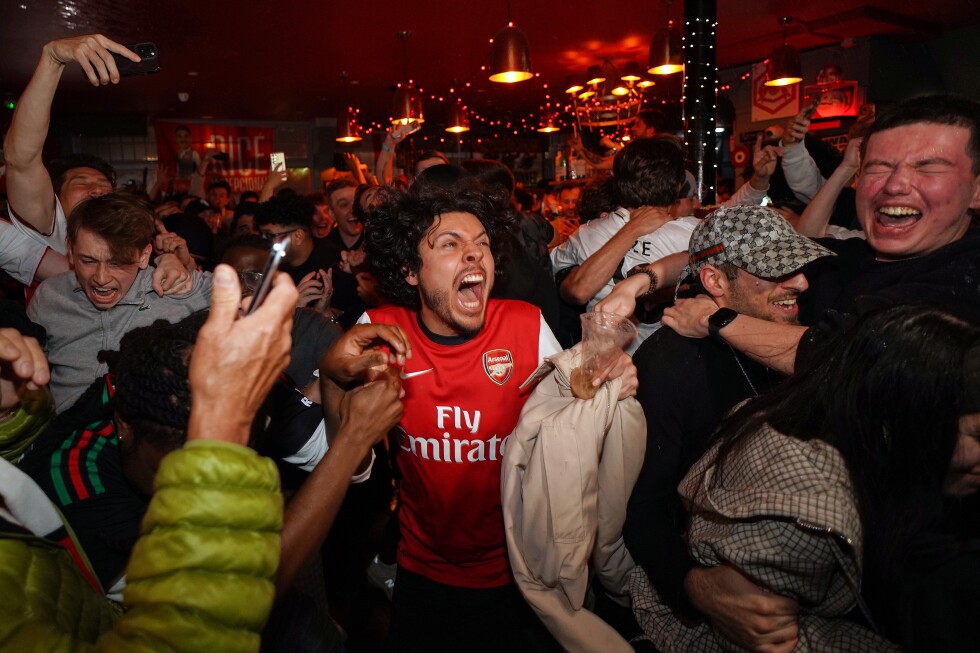
    International football governing body Fifa has launched formal disciplinary proceedings against the Royal Spanish Football Federation (RFEF) following reports of Islamophobic and xenophobic chanting from fans during an international friendly match between Spain and Egypt last month, according to a official statement from the global regulator. The ill-tempered match was held at Barcelona’s RCDE Stadium, where stadium screens had already posted pre-game warnings urging supporters to refrain from xenophobic language and discriminatory chanting. When the reminder was re-broadcast early in the second half, sections of the crowd responded with boos and jeers, highlighting ongoing tensions around discriminatory behavior in the sport. In the wake of the incident, the RFEF moved quickly to publicly condemn the anti-Muslim chants. Spain’s senior men’s national team head coach Luis de la Fuente also spoke out against the behavior, labeling the chants “intolerable” and arguing that bad-faith actors deliberately use football platforms to spread hate and carve out space for extremist views. Fifa confirmed the opening of disciplinary measures in an official media statement issued this week, marking the formal start of the governing body’s probe into the crowd unrest. Spanish law enforcement authorities had launched their own criminal investigation into the incident just one week prior, adding a parallel legal layer to the sports governance process. For its part, the Egyptian Football Association has decried the offensive chants as a “repugnant act of racism” that falls far below acceptable standards of global sporting conduct. However, the federation emphasized that the harmful actions of a small minority of fans would not damage the longstanding warm and cooperative relationship between the Egyptian and Spanish national football bodies. The friendly, which ended in a goalless draw, carried unintended consequences beyond the disciplinary fallout: the result led Spain, one of three co-hosts for the 2030 FIFA World Cup, to drop from the top position in the global men’s national team rankings published after the match. The incident has sparked renewed calls for stronger anti-discrimination enforcement across international football, with stakeholders calling for meaningful action to root out hate speech in stadiums. The case is expected to proceed through Fifa’s disciplinary process in the coming weeks, with potential sanctions ranging from fines to stadium restrictions for future Spanish national team matches.

  • Newly released video undermines ICE account of Minneapolis migrant shooting

    Newly released video undermines ICE account of Minneapolis migrant shooting

    A newly released city-owned surveillance video from Minneapolis has thrown into question the official account provided by U.S. Immigration and Customs Enforcement (ICE) regarding the January shooting of Venezuelan migrant Julio Cesar Sosa-Celis, opening a new rift between local officials and federal immigration authorities amid an ongoing national crackdown on unauthorized migration.

    In the immediate aftermath of the January 14 incident, the U.S. Department of Homeland Security (DHS) claimed that an ICE officer had shot Sosa-Celis in the leg in self-defense, stating the agent had been ambushed by three people and attacked with a snow shovel and broom handle. The confrontation was framed as the conclusion of a high-speed car chase involving Sosa-Celis, who was residing in the U.S. without legal authorization. Based on the officers’ initial statements, federal prosecutors filed charges of assaulting federal officers against both Sosa-Celis and a second migrant, Alfredo Alejandro Aljorna.

    However, those charges were abruptly dropped in February, after ICE officials acknowledged that the two involved agents appeared to have submitted false statements about the encounter. On Monday, Minneapolis city officials released the full CCTV footage of the lead-up to the shooting, a recording that further undermines the federal government’s original narrative.

    The grainy, low-light distant footage does not capture the shooting itself, but it contradicts key claims made by DHS. It shows only a brief struggle between agents and two men, not an ambush by three. Most notably, the footage shows one individual tossing a shovel aside before any physical contact with agents occurs, directly contradicting the claim that an agent was struck with the shovel. The video captures Sosa-Celis running up a residential street, chased by an agent, stumbling before continuing toward a nearby house, followed by a short scrum on the ground before the shooting.

    This shooting was not an isolated incident. It is one of a string of violent encounters involving ICE agents operating in Minneapolis, a city that has been a key target of the Trump administration’s aggressive immigration enforcement push. The string of violent incidents, which also include the fatal shootings of U.S. citizens Alex Pretti and Renee Good, already sparked large public protests against federal immigration operations in the city.

    Crucially, reporting from The New York Times, which first broke the story of the conflicting footage, revealed that federal investigators had full access to the CCTV recording within hours of the shooting. Despite this access, investigators did not review the footage until nearly three weeks after the two men had already been formally charged. The involved officers, who have not been publicly identified, have been placed on administrative leave as the DHS conducts an internal investigation, and a separate criminal investigation into the incident is also ongoing.

    When releasing the video this week, Minneapolis city officials declined to add any further context or comment, stating they had no additional information to share at this time. But Minneapolis Mayor Jacob Frey issued a sharp rebuke of the federal government’s account, saying the video makes clear that the official federal narrative is inconsistent with the facts. Frey noted the discrepancy mirrors other problematic incidents that occurred during Operation Metro Surge, the federal immigration enforcement sweep targeting the Minneapolis region.

  • US journalist Shelly Kittleson to be released after kidnap in Iraq, militia says

    US journalist Shelly Kittleson to be released after kidnap in Iraq, militia says

    Nearly one week after a U.S. freelance journalist was abducted on the streets of Baghdad, an Iran-aligned Iraqi Shia militia has announced plans to free the 49-year-old reporter, with major uncertainty still surrounding her current status and whereabouts.

    Kataib Hezbollah, the paramilitary group that held Shelly Kittleson following her March 31 kidnapping, confirmed Tuesday it would release the journalist on the sole condition that she departs Iraq immediately. In an official statement released by the group’s senior security official Abu Mujahid al-Assaf, the decision to free Kittleson was framed as a gesture recognizing the outgoing Iraqi prime minister’s national positions.

    Multiple major U.S. news outlets, including The New York Times and The Associated Press, have cited anonymous Iraqi government officials claiming Kittleson was released Tuesday, but no verifiable information about her current location has been made public as of this reporting.

    In the immediate aftermath of the abduction, Iraqi security forces launched a manhunt for the kidnappers. The operation resulted in one suspect being taken into custody after one of the perpetrators’ vehicles overturned during the chase. Iraqi Prime Minister Mohammed Shiaa al-Sudani also issued a formal order last week directing all security agencies to track down and hold accountable all individuals responsible for the abduction of foreign nationals in the country.

    In a separate social media post, Assaf added that Kataib Hezbollah would soon publish an audio recording purporting to detail Kittleson’s “activities and role” within Iraq, though the group offered no further context or timeline for the release of the recording.

    Kittleson’s abduction comes against a backdrop of escalating regional tensions, marked by repeated attacks on U.S.-affiliated targets across Iraq and the broader Middle East carried out by Iran and its allied Iraqi Shia militias since the outbreak of the Israel-Hamas conflict, which has strained Iranian-U.S. relations.

    Alex Plitsas, a CNN national security analyst who is Kittleson’s designated emergency contact and close friend, confirmed Tuesday that he had reviewed the militia’s purported release statement, but emphasized that no official confirmation of the release has been issued by the U.S. government.

    Multiple U.S. officials had repeatedly reached out to Kittleson in the months and weeks leading up to her abduction to warn her of specific threats targeting her, Plitsas previously told CBS, the U.S. partner of the BBC. According to Plitsas, U.S. intelligence agencies informed Kittleson that her name appeared on a target list held by Kataib Hezbollah, which had been actively plotting to kidnap or kill female foreign journalists operating in Iraq.

    A veteran conflict reporter based in Rome, Italy, Kittleson has covered major conflicts across Afghanistan, Iraq, and Syria for dozens of international publications, according to her public professional profile on social media platform X. The U.S. State Department has maintained a longstanding Level 4 travel advisory urging all U.S. citizens to avoid all travel to Iraq due to persistent threats of kidnapping, violence, and terrorism targeting foreign nationals.

  • 1 attacker killed, 4 people wounded in shootout near Israeli consulate in Istanbul — official

    1 attacker killed, 4 people wounded in shootout near Israeli consulate in Istanbul — official

    A violent shootout near the Israeli consulate in Istanbul’s upscale Besiktas district left one attacker dead and four people wounded on Tuesday, according to senior Turkish local and national officials. The targeted attack, which unfolded in one of the city’s busiest commercial hubs, sparked a large-scale emergency response that closed off the surrounding Levent neighborhood to civilian traffic.

    Istanbul Governor Davut Gul confirmed to on-site reporters that the assailants specifically targeted police officers deployed to the area for routine security duty. All injured individuals, including the two wounded officers, are reported to have only sustained minor injuries in the exchange of gunfire.

    Turkish Interior Minister Mustafa Ciftci later shared new details about the assailants via the social media platform X. He confirmed the group traveled to Istanbul from the northwestern city of Izmit using a rented vehicle. Official records show one of the two brother assailants classified as terrorists has a prior drug-related conviction, and one of the suspects has documented ties to a religiously exploited extremist organization, Ciftci added.

    Initial reporting from local Turkish broadcaster NTV differed slightly in its casualty count, stating security forces had “neutralized” two suspects and left a third critically injured. Regardless of the discrepancy in early counts, footage aired by NTV showed the immediate aftermath of the incident: dozens of heavily armed police units and emergency ambulances flooded the area, establishing a full security cordon around the site of the shooting amid heightened security alerts across the city.