作者: admin

  • UN’s grim week: 6 peacekeepers and an interpreter killed, while 10 more staffers detained in Yemen

    UN’s grim week: 6 peacekeepers and an interpreter killed, while 10 more staffers detained in Yemen

    The United Nations concludes a devastating year with an unprecedented wave of violence targeting its personnel across multiple global hotspots. In a series of brutal incidents that underscore the deteriorating security environment for international organizations, six UN peacekeepers perished in a drone strike in Sudan’s South Kordofan region, while nine others sustained injuries. Simultaneously, a UN interpreter in South Sudan died under mysterious circumstances while detained by local security forces, and Yemen’s Houthi rebels escalated their crackdown by detaining ten additional UN staff members.

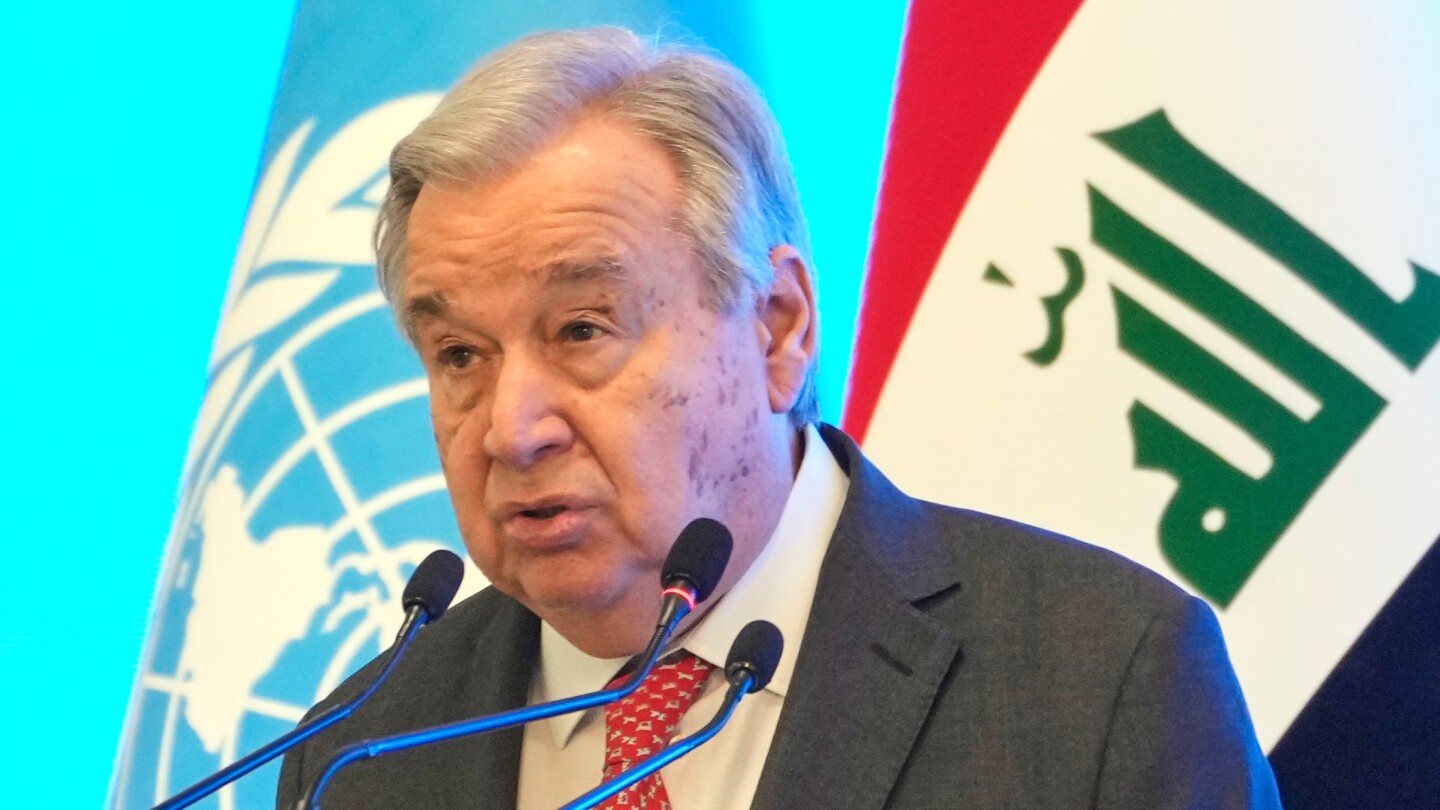
    UN spokesman Stephane Dujarric expressed grave concern about these developments, noting that the iconic UN emblem no longer provides the protection it once guaranteed. ‘We see all too often that the UN flag no longer offers the protection that it should to our colleagues,’ Dujarric stated during a Friday press briefing. He emphasized that UN personnel—whether humanitarian workers, peacekeepers, or political envoys—operate solely for peace and civilian welfare, deserving universal respect and protection.

    The Security Council vehemently condemned the Sudan drone attack as ‘heinous and deliberate,’ characterizing it as demonstrating ‘egregious disregard for international law.’ The council demanded immediate investigations and justice for perpetrators, reiterating that attacks against peacekeepers may constitute war crimes.

    In South Sudan, tragedy struck when Bol Roch Mayol, a long-serving interpreter with the UN mission since 2011, was forcibly removed from a disabled UN vehicle by five soldiers following a routine patrol. Despite engagement with authorities for his release, the mission received notification of his death in custody. South Sudanese police confirmed the arrest of three soldiers, including Army Lt. Lino Mariak Chol, who allegedly confessed to the killing.

    The crisis deepened in Yemen where Houthi rebels, controlling Sanaa and northern territories, detained ten additional UN staffers, bringing the total number of detained personnel to sixty-nine. Secretary-General Antonio Guterres condemned these arbitrary detentions and demanded immediate release of all personnel, including those from NGOs and diplomatic missions. Guterres additionally called for dropping charges against three UN staffers referred to a Houthi special criminal court—the same court that recently convicted seventeen individuals of espionage in a widespread crackdown on Yemenis working with international organizations.

    These incidents follow earlier tragedies including over 300 UN staff fatalities in the Israel-Hamas conflict and more than 300 personnel deaths during Mali’s decade-long peacekeeping mission, which concluded as the world’s deadliest UN operation in December 2023.
  • Bangladesh government urges calm in wake of student leader’s killing, as election looms

    Bangladesh government urges calm in wake of student leader’s killing, as election looms

    Bangladesh’s interim administration has issued urgent appeals for national calm amid escalating violence triggered by the assassination of prominent youth leader Sharif Osman Hadi. The 32-year-old revolutionary figure was fatally shot by masked assailants during his electoral campaign launch in Dhaka last Friday, succumbing to injuries after six days on life support in Singapore.

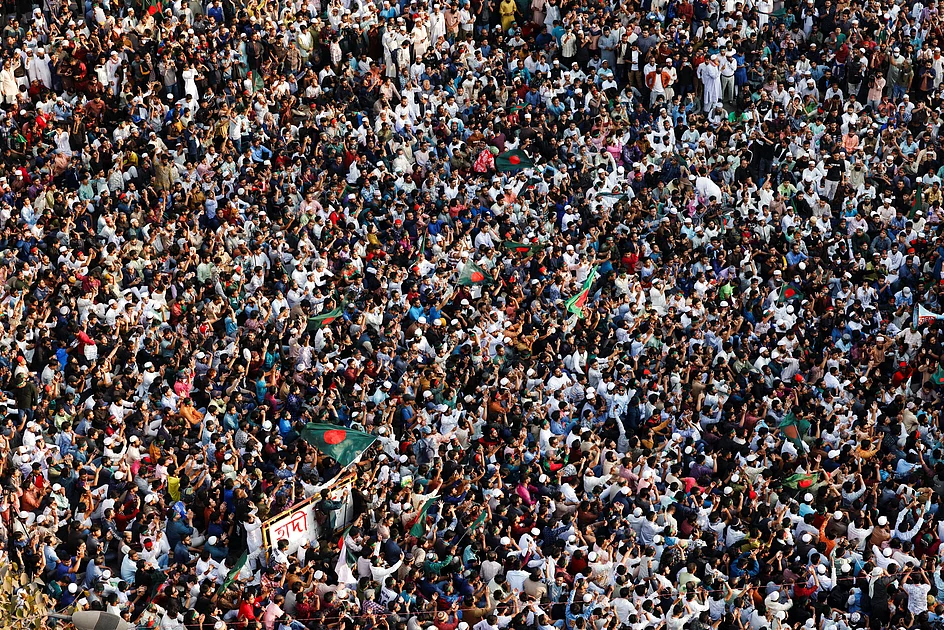
    The killing has ignited widespread demonstrations across major urban centers, with protesters targeting media institutions and diplomatic facilities. The offices of leading newspapers Prothom Alo and Daily Star faced severe vandalism, requiring military intervention to rescue trapped journalists. In Chittagong, demonstrators assaulted the Indian Assistant High Commission, reflecting deteriorating relations with neighboring India since former Prime Minister Sheikh Hasina’s exile to Delhi in August 2024.

    This violence presents the most significant challenge to Nobel laureate Muhammad Yunus’s caretaker government, which oversees the nation during this transitional period. The administration has characterized the unrest as orchestrated by “fringe elements” seeking to destabilize Bangladesh’s democratic transition. With parliamentary elections scheduled within two months, the government emphasizes the critical importance of maintaining stability for the nation’s 175 million citizens.

    The political landscape remains fractured following Hasina’s ouster during student-led protests, with her banned Awami League party threatening further disruptions. Independent human rights organization Ain O Salish Kendra has warned that these coordinated attacks indicate dangerous extremist proliferation, potentially creating permanent crises for democratic institutions and human rights protections unless addressed decisively.

  • Syria hails permanent end to US sanctions, calls on citizens to rebuild

    Syria hails permanent end to US sanctions, calls on citizens to rebuild

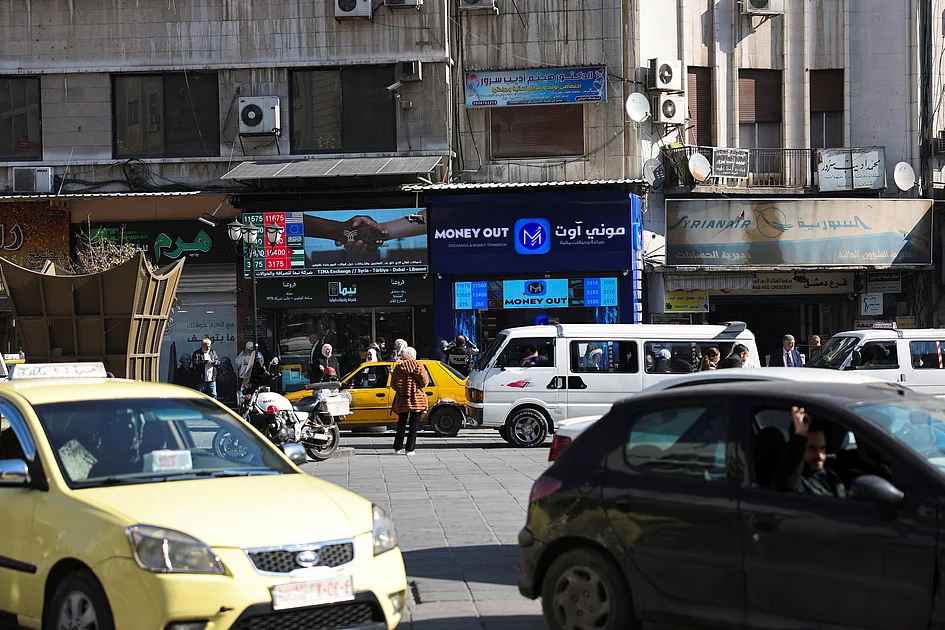
    Damascus has officially welcomed the United States Congress’ decisive move to permanently terminate the stringent Caesar Act sanctions against Syria, marking a pivotal turning point for the war-torn nation’s economic future. The legislative action, finalized on Wednesday, eliminates measures that had crippled foreign investment and severed Syria’s access to international banking networks for years.

    Named after an anonymous photographer who documented human rights atrocities within Syrian detention facilities, the Caesar Act had effectively isolated the Syrian economy through comprehensive restrictions. The Syrian Foreign Ministry released an official statement characterizing this development as ‘the gateway to reconstruction and developmental progress,’ while passionately appealing to all Syrian citizens both domestically and abroad to actively participate in national recovery initiatives.

    The sanctions framework had been temporarily suspended on two previous occasions under the administration of former US President Donald Trump, following diplomatic appeals from key regional allies Saudi Arabia and Turkey. Both nations support the current government led by former jihadist figure Ahmed al-Sharaa, who had persistently advocated for a complete and irreversible revocation of the sanctions.

    Sharaa’s administration argued that the mere existence of the sanctions on legislative record created unsustainable legal uncertainties, deterring international businesses and investors apprehensive about potential repercussions in the world’s largest economy. The permanent removal is now anticipated to unlock substantial foreign capital, facilitate the restoration of banking channels, and accelerate the rebuilding of critical infrastructure devastated by years of conflict.

  • ‘Every border lasts until the next war’: Israel’s settlers gather to ‘raise flag’ in Gaza

    ‘Every border lasts until the next war’: Israel’s settlers gather to ‘raise flag’ in Gaza

    Hundreds of Israeli settlers convened at the Sderot lookout point overlooking Gaza on Thursday for a controversial demonstration organized by the Nachala settlement movement. The gathering, titled “Raising the Flag in Gaza,” explicitly advocated for establishing permanent Jewish settlements within the besieged Palestinian territory and called for the expulsion of Gaza’s Palestinian population.

    The event unfolded against a backdrop of widespread destruction in northern Gaza, where Israeli military operations have systematically flattened entire neighborhoods over two years of conflict. The Sderot viewpoint has ironically become a tourist attraction for Israelis observing the devastation in real-time.

    Organizers distributed traditional Hanukkah pastries as supporters arrived from West Bank settlements and within Israel. The gathering featured speeches from right-wing politicians and settler leaders who declared Gaza part of their “ancestral inheritance” that must be permanently reclaimed. The only dissent came from a small group of left-wing activists from the Standing Together movement, who briefly stormed the stage with shirts proclaiming “We are not returning to Gaza.”

    Settler leader Daniella Weiss asserted that raising Israeli flags in Gaza represented a rejection of international dictates, particularly criticizing potential Turkish or Qatari involvement in postwar governance. The event occurred despite the defense ministry denying permission for activists to physically cross into Gaza, though reports indicate dozens of settlers later breached the border fence at other locations to plant flags.

    Multiple speakers employed the term “voluntary migration” to describe the desired removal of Palestinians from Gaza—a euphemism for ethnic cleansing. Knesset member Limor Son Har-Melech stated that achieving this outcome merely required Israeli “will,” while settler Yehoshua Sokol argued international borders remain fluid “until the next war.”

    The demonstration revealed growing tensions within Israel’s right-wing coalition regarding Gaza’s future, with settlers pressuring the government to resist international agreements and pursue permanent territorial control through population transfer.

  • UAE gears up for next phase of plastic ban despite high costs, need for local raw materials

    UAE gears up for next phase of plastic ban despite high costs, need for local raw materials

    The United Arab Emirates is pressing forward with the second phase of its comprehensive nationwide ban on single-use plastics, set for enforcement by the Ministry of Climate Change and Environment (MOCCAE) starting January. This significant environmental policy expansion targets a specific range of products including beverage cups and lids, cutlery, plates, straws, stirrers, and Styrofoam food containers, while also implementing a full prohibition on plastic bags thinner than 50 microns.

    Despite the clear regulatory direction, the transition presents substantial challenges for local manufacturers. Industry experts identify high production costs and limited availability of locally sourced recycled raw materials as primary obstacles. François de Bie, Chief Commercial Officer of Emirates Biotech, emphasizes that UAE-based manufacturers serve as the crucial ‘engine room’ for this ecological transition. Their role extends beyond production to include adapting machinery for plant-based materials and designing products with environmentally conscious end-of-life considerations.

    The policy strategically exempts products manufactured from PLA biopolymers and other plant-based materials, shifting the national strategy from mere prohibition to promoting restorative and innovative sustainable solutions. Local industry leader Hotpack exemplifies this adaptation, having invested heavily over the past decade in research, development, and advanced machinery capable of utilizing up to 100% recycled materials.

    According to Abdul Jebbar, Group CEO and Managing Director of Hotpack, the company has developed numerous alternatives including green polymers, reusable product ranges, and packaging solutions derived from paper, board, aluminum, molded fiber, and various biodegradable compounds. Notably, they’ve engineered an innovative alternative that reduces material usage by 30% while maintaining full recyclability and physical integrity.

    The economic realities remain challenging, with recycled raw materials costing significantly more than virgin plastics. Additionally, the limited local infrastructure for recycling creates supply constraints. Both industry leaders emphasize the critical importance of public education on waste sorting and the development of domestic supply chains, including local PLA stocks and warehousing, to reduce dependence on imported alternatives with their associated long wait times and high shipping costs.

    While the market remains in a preparation phase as retailers work to break established habits, the emergence of localized supply chains indicates significantly better preparedness compared to a year ago, positioning the UAE for substantial progress in its sustainability objectives.

  • NORAD continues decades-long tradition of tracking Santa’s trip around the world

    NORAD continues decades-long tradition of tracking Santa’s trip around the world

    For seven decades, the North American Aerospace Defense Command (NORAD) has transformed from a Cold War-era defense operation into the world’s most beloved Christmas tracking service. What began as a mistaken phone call in 1955 has evolved into an annual tradition that captivates children and adults worldwide.

    The program operates through a dedicated hotline (1-877-HI-NORAD) staffed by over 1,000 volunteers who field calls from Christmas Eve morning until midnight Mountain Standard Time. Last year alone, approximately 380,000 calls flooded into a specially decorated hangar at Peterson Space Force Base in Colorado Springs—NORAD’s current headquarters.

    This year marks a significant technological advancement: for the first time, Santa seekers outside North America can place calls through the program’s website, which also allows users to monitor Santa’s journey in nine languages, including English and Japanese.

    NORAD employs its sophisticated defense technology—typically used for monitoring aerial threats—to track Santa’s progress starting from the international date line over the Pacific Ocean. According to NORAD spokesperson Colonel Kelly Frushour, Rudolph’s nose emits a heat signature similar to a missile, which is detected by the organization’s satellite network.

    The tradition originated in 1955 when a child mistakenly called the Continental Air Defense Command (NORAD’s predecessor) after seeing a Sears advertisement. Rather than dismissing the call, the duty commander, Air Force Colonel Harry Shoup, played along and instructed staff to begin tracking Santa. This spontaneous decision launched a cultural phenomenon that has endured for generations.

    Heartwarming anecdotes abound from the program’s history. One special needs individual named Henry calls annually, once requesting that jet pilots escorting Santa deliver a note confirming he was ready in bed. Another concerned child worried when Santa appeared headed toward the International Space Station where astronauts were stranded, but was reassured when he changed course.

    Despite its joyful purpose, the program maintains its connection to NORAD’s serious mission—the same radar, satellites, and jets that protect North America from threats simultaneously enable the magical tracking of Santa’s global journey each Christmas Eve.

  • ACM Winter Village brings the magic of a European festive town to Arabian Center with free family experiences

    ACM Winter Village brings the magic of a European festive town to Arabian Center with free family experiences

    Dubai’s Arabian Center has inaugurated an immersive winter wonderland, transporting visitors to the heart of a traditional European festive village without leaving the city. Running from December 18, 2025, through January 4, 2026, the meticulously crafted Winter Village at Entrance B offers complimentary daily access from 2:00 PM to 10:00 PM, creating an accessible seasonal destination for multigenerational families.

    The installation features snow-dusted cottages, castle-inspired architecture, and glowing lanterns amidst rich seasonal décor, establishing a storybook atmosphere that evokes nostalgic European winter celebrations. This visually stunning environment provides numerous photo opportunities and immersive exploration experiences both during daylight hours and under evening illumination.

    Central to the activation are diverse complimentary activities designed for family engagement. The Enchanted Craft Workshop enables children to create winter-themed keepsakes through hands-on artistic expression. The Royal Dress-Up & Photo Booth permits families to transform into royalty and knights, with professional photography services capturing these moments for lasting memorabilia.

    Thematic programming includes regularly scheduled Story Time with the Wizard, where theatrical storytelling sessions bring magical narratives to life three times daily. Interactive elements continue with Medieval Market Mini Games that recreate traditional village fair challenges, while professional face painters provide festive designs enhancing the imaginative experience.

    Additional attractions include daily themed giveaways while supplies last and specially scheduled roaming entertainment on key dates throughout the activation period. On December 19-20, 25-26, 2025, and January 2-3, 9-10, 2026, visitors can experience dynamic performances including winter characters, Christmas entertainers, bubble shows, and vibrant parades at 5:00 PM, 6:00 PM, 7:00 PM, and 8:00 PM throughout the mall complex.

    This comprehensive activation represents Arabian Center’s commitment to creating inclusive community experiences that celebrate festive traditions through imagination and togetherness, offering Dubai families an opportunity to create lasting holiday memories in an accessible urban setting.

  • Over 1,000 patients have died awaiting evacuation from Gaza since July 2024, says WHO

    Over 1,000 patients have died awaiting evacuation from Gaza since July 2024, says WHO

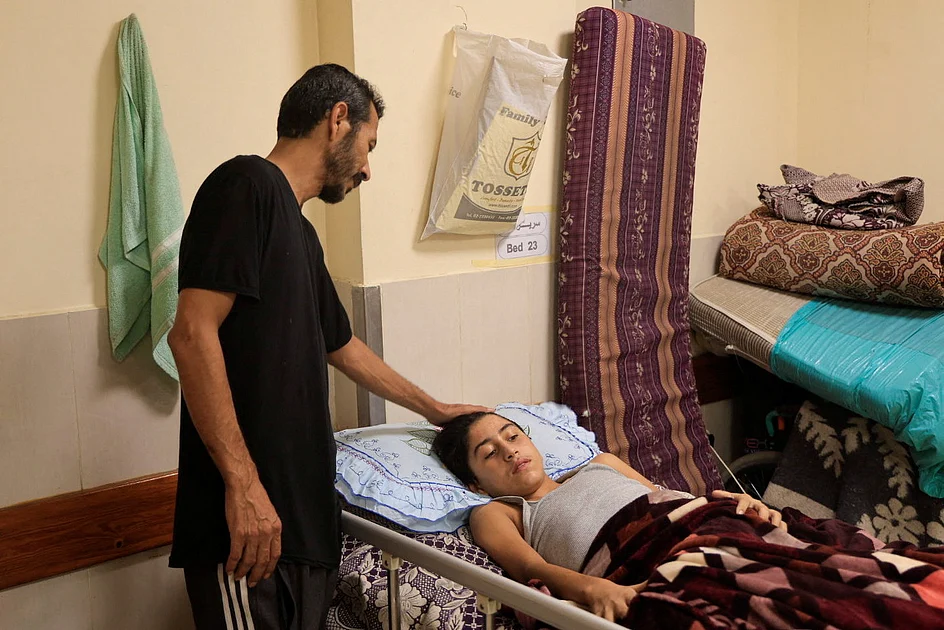
    The World Health Organization has revealed a devastating humanitarian crisis unfolding in Gaza, with more than 1,000 patients having perished while awaiting urgent medical evacuation between July 2024 and November 2025. WHO Director-General Tedros Adhanom Ghebreyesus disclosed these alarming figures through an official statement, emphasizing that the actual death toll is likely significantly higher due to underreporting.

    Despite successful medical evacuations of approximately 10,600 critically ill patients from Gaza—including more than 5,600 children—since the conflict began over two years ago, the situation remains dire. WHO spokesperson Tarik Jasarevic confirmed that an estimated 18,500 patients still require immediate treatment outside Gaza’s decimated healthcare system, with over 4,000 being children.

    The medical evacuation process faces severe challenges, with only about 30 countries having accepted patients from Gaza. Egypt and the United Arab Emirates have borne the brunt of this medical burden, accepting the majority of evacuated cases. The WHO has issued an urgent appeal for more nations to open their doors to Gaza’s medical patients and to restore evacuation routes to the West Bank and East Jerusalem.

    This medical emergency persists despite a US-brokered ceasefire that took effect on October 10, following Hamas’s attack on Israel on October 7, 2023. However, the truce remains precarious, with both sides regularly accusing each other of violations. Medical organizations on the ground, including Doctors Without Borders, warn that the WHO’s figures represent only registered patients, and the actual number requiring emergency evacuation is substantially higher.

    The WHO’s statement underscores the critical nature of timely medical intervention, with spokesperson Jasarevic stressing that ‘many of these people don’t have time to wait’ for the political and logistical obstacles to be resolved.

  • Ministry to launch month-long program aimed at promoting youth employment

    Ministry to launch month-long program aimed at promoting youth employment

    China’s Ministry of Human Resources and Social Security has announced a comprehensive month-long employment promotion program commencing in mid-December 2025, specifically designed to address youth employment challenges. The initiative strategically targets three key demographic groups: impending 2026 university graduates, recent graduates still seeking employment opportunities, and participants in the national ‘Sanzhi Yifu’ program involving grassroots service commitments.

    The program will deliver enhanced employment services through coordinated efforts between local human resources bureaus, employment service agencies, and talent markets. These entities will develop tailored employment opportunities while organizing both digital and physical job fairs to maximize accessibility. Special emphasis will be placed on providing structured campus recruitment services throughout the implementation period.

    A distinctive feature of the initiative involves comprehensive educational components focused on identifying employment scams and fraudulent recruitment practices. The ministry aims to strengthen risk prevention awareness among young job seekers while ensuring orderly conduct throughout the recruitment process. This multidimensional approach represents China’s latest effort to stabilize youth employment markets amid evolving economic conditions.

  • National health body asks consumers to read nutritional information on food labels

    National health body asks consumers to read nutritional information on food labels

    In a significant move to bolster public health awareness, China’s National Health Commission (NHC) has issued a nationwide appeal for consumers to actively scrutinize nutritional information on food packaging. The initiative accompanies the upcoming implementation of revised labeling standards for prepackaged foods, with a strong emphasis on digital innovation to enhance accessibility.

    NHC spokesman Yang Jinrui announced that updated ‘General Rules for Nutrition Labeling of Prepackaged Foods’ are scheduled to take full effect on March 16, 2027. However, food manufacturers are being actively encouraged to adopt these enhanced standards ahead of the mandatory deadline. The revised regulations introduce a critical update by classifying saturated fats and sugars as mandatory core components that must be prominently displayed alongside existing requirements for total fat and sodium.

    A groundbreaking aspect of the new framework involves the integration of digital labeling technology. Food enterprises will be incentivized to incorporate QR codes on packaging, which consumers can scan to access comprehensive product information through digital interfaces. These smart labels will feature adjustable font sizes, voice recognition capabilities, and video playback functions—innovations specifically designed to assist elderly consumers and those with visual impairments.

    Furthermore, the updated labeling standards will provide clearer contextual information by indicating what percentage of the recommended daily intake a single serving of the product contributes for each nutrient. Health authorities emphasize that developing the habit of reading nutritional information represents a fundamental step toward making informed dietary choices and safeguarding long-term family health, particularly as China addresses nutrition-related public health challenges.

    The commission’s announcement reflects China’s broader commitment to utilizing technological solutions and regulatory measures to promote preventive healthcare and consumer empowerment in nutritional decision-making.