作者: admin

  • AI innovations to bolster Xizang’s digital economy

    AI innovations to bolster Xizang’s digital economy

    The Xizang Autonomous Region is embarking on an ambitious technological transformation, with artificial intelligence spearheading its digital economy expansion throughout 2026. This strategic direction was formally outlined in the regional government’s work report presented during the recent legislative session, highlighting a comprehensive push toward technological modernization.

    Regional Chairman Karma Tsetan emphasized the government’s commitment to enhancing computing infrastructure and integrating advanced digital solutions across various sectors. The initiative represents a significant component of Xizang’s broader economic development strategy, combining technological advancement with cultural preservation.

    Leading this digital revolution is Xizang Jueluo Digital Industry Management Co, a pioneering firm specializing in Tibetan-language AI systems and data management. After eight years of intensive research and development, the company has launched “DeepZang” – the first large language model specifically designed for the Tibetan language.

    Company President Tenzin Norbu explained how DeepZang aligns with global AI trends while addressing regional needs. “Our technology applies Tibetan-language AI across critical domains including healthcare, education, and ecological conservation,” Norbu stated. The company has proposed establishing a national open-source data center for Tibetan-Chinese bilingual resources to further cultural preservation efforts.

    The technological achievements are substantial: DeepZang supports bilingual interactions across 140 languages, incorporates a Tibetan-Chinese parallel corpus of 70 million sentences, and achieves speech recognition accuracy exceeding 98%. These innovations have already registered as intellectual property and received national algorithm certification.

    Digital transformation has yielded tangible benefits across Xizang’s public sector. Smart governance and digital education solutions have modernized operations within 14 regional departments, significantly improving administrative efficiency and connectivity.

    Supported by national policies and central government investment, Xizang’s digital infrastructure has experienced rapid growth. During the 14th Five-Year Plan period (2021-2025), the regional digital economy maintained an average annual growth rate of 10%. Preliminary 2025 figures indicate output reaching 14 billion yuan ($2 billion) in the first three quarters, with projections exceeding 20 billion yuan for the full year.

    The region currently hosts 62 large-scale digital enterprises that generated 11.44 billion yuan in revenue through October 2025, alongside 169 national high-tech companies and 22 national-level innovation bases. For 2026, regional authorities aim to establish five additional major digital enterprises and strengthen Xizang’s position as an emerging technology hub.

    Beyond economic metrics, the technology carries profound cultural significance. Chakdor Drolma, a student at Xizang University of Tibetan Medicine, noted: “Tibetan-language AI development helps promote our traditional culture while ensuring the script remains actively used and preserved for future generations.”


  • Snowstorm disrupts travel in US South

    Snowstorm disrupts travel in US South

    A severe winter storm continues to wreak havoc across the southern United States, creating dangerous travel conditions and plunging regions unaccustomed to such extreme weather into a deep freeze. The meteorological onslaught follows closely behind another massive storm system that claimed over 100 lives just one week prior, compounding recovery efforts throughout affected areas.

    Heavy snowfall blanketed North Carolina and surrounding states throughout Saturday, with authorities issuing urgent warnings for residents to avoid road travel entirely. The National Weather Service escalated concerns by cautioning that oceanfront structures faced imminent threat from the intensifying system.

    Winter storm warnings remained in effect across the entire states of North and South Carolina, extending into portions of Georgia, eastern Tennessee, Kentucky, and southern Virginia. The severity of conditions manifested in 750 reported vehicle collisions in North Carolina alone on Saturday.

    Accumulation measurements revealed staggering totals: Faust, North Carolina recorded 37 centimeters of snow, while West Critz, Virginia received 32 centimeters. Harrisburg, Tennessee reported over 23 centimeters of accumulation.

    In Cape Carteret, North Carolina, powerful winds created whiteout conditions with snow blowing horizontally. The National Weather Service characterized travel as “treacherous and potentially life-threatening,” particularly for those who might become stranded.

    Dramatic footage released by Gastonia, North Carolina police captured a high-speed train collision with a semitruck stuck on railway tracks, completely crushing the vehicle. Miraculously, no injuries were reported from the incident.

    Air travel suffered massive disruptions, with Charlotte Douglas International Airport—a major American Airlines hub—canceling over 1,800 flights between Saturday and Sunday according to FlightAware data. The airport deployed a 300-member “snow team” to clear runways, taxiways, and surrounding infrastructure.

    Hartsfield-Jackson Atlanta International Airport, among the world’s busiest aviation hubs, canceled more than 600 flights on Saturday with approximately 50 additional cancellations occurring in Sunday’s early hours.

    The National Weather Service described the system as an “explosively deepening coastal cyclone” that would continue delivering moderate to heavy snow, high winds, and potential blizzard conditions throughout the Carolinas. An intense surge of arctic air trailing the storm pushed subfreezing temperatures as far south as Florida by Sunday morning.

    Power outages compounded the crisis, with approximately 156,000 customers remaining without electricity early Sunday—primarily throughout southern states. Mississippi, Tennessee and Louisiana experienced the most severe power disruptions according to PowerOutage.us.

  • Candidate tough on crime wins Costa Rica presidential election

    Candidate tough on crime wins Costa Rica presidential election

    Costa Rica has ushered in a new political era with the decisive first-round victory of Laura Fernández, the conservative Sovereign People’s Party candidate, in Sunday’s presidential election. With over 88% of ballots tallied, Fernández secured a commanding 48% of the vote, eliminating any requirement for a runoff election as she surpassed the 40% threshold for outright victory. Her nearest competitor, centrist contender Álvaro Ramos, publicly conceded defeat following the results announcement.

    The 39-year-old president-elect ran as the chosen successor to outgoing President Rodrigo Chaves, pledging to intensify his administration’s aggressive anti-crime measures. This platform resonated strongly with voters increasingly alarmed by escalating drug-related violence that has challenged Costa Rica’s historical reputation as one of Central America’s most stable democracies.

    In her victory address, Fernández committed to continuing Chaves’ policies while striking a balance between firm governance and institutional respect. ‘My government will be one of dialogue and national harmony, respectful and firmly based in the rule of law,’ she declared, while simultaneously criticizing opposition parties for what she termed ‘obstruction and sabotage’ during her predecessor’s term.

    Fernández’s approach appears influenced by Salvadoran President Nayib Bukele’s controversial security model, which has dramatically reduced homicide rates through stringent measures. The president-elect has outlined plans to declare states of emergency in gang-dominated territories and complete construction of a maximum-security prison modeled after El Salvador’s Cecot facility.

    Significantly, Fernández’s party captured 30 of 57 parliamentary seats, providing stronger legislative support than enjoyed by Chaves. Constitutional term limits prevented Chaves from seeking reelection, though Fernández has indicated she may appoint him to a cabinet position in her administration, which will be inaugurated on May 8.

    International relations are expected to maintain continuity, particularly regarding migration agreements with the United States. The Trump administration’s designation of Costa Rica as a ‘key global cocaine transshipment point’ underscores the complex security challenges facing the incoming administration as transnational criminal networks expand their regional operations.

  • Mediation to end disputes advocated

    Mediation to end disputes advocated

    In a groundbreaking judicial reform, China’s Supreme People’s Court has established a comprehensive collaborative mediation framework involving twenty national institutions to resolve social and commercial disputes before they enter the courtroom. The initiative, announced on February 2, 2026, represents a strategic shift toward prioritizing mediation over litigation in the Chinese legal system.

    The court has partnered with key institutions including the People’s Bank of China, All-China Women’s Federation, and China National Intellectual Property Administration to create specialized mediation channels for conflicts spanning real estate, labor relations, marital disputes, intellectual property, and financial matters. The guidelines mandate regular monitoring and risk assessment in these sectors to identify and address potential conflicts at their earliest stages.

    Chief Judge Qian Xiaochen of the Court’s case-filing division emphasized that leveraging industry professionals’ specialized knowledge within legal parameters enables more efficient and effective resolution of underlying issues. The system requires nationwide courts to establish qualification standards for mediators while providing legal training to enhance professionalism across sectors.

    This institutional approach has already demonstrated significant success. In Hubei province’s Jianshi county, courts collaborated with housing authorities to mediate a complex dispute involving 1,700 homeowners and a property management company, resolving conflicts over parking spaces, environmental compensation, and maintenance fees through combined legal and policy expertise.

    Professor Liang Yingxiu of Beijing Normal University praised the model for creating win-win outcomes that improve citizen welfare while optimizing business operations. The approach also alleviates judicial burdens, allowing judges to focus on more complex cases. Supporting data reveals impressive results: pretrial mediation efforts grew by 28% quarterly throughout 2025, successfully resolving over 4.32 million cases without litigation. The expansion of online legal services has further reduced time and travel requirements for citizens seeking dispute resolution.

  • Couriers help drive Spring Festival sales

    Couriers help drive Spring Festival sales

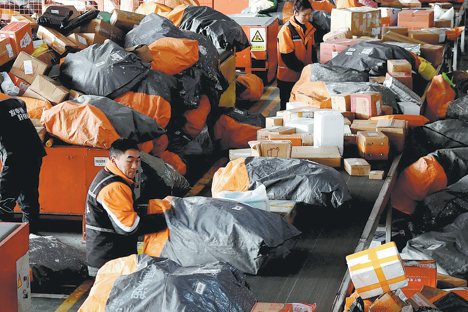
    China’s express delivery sector is demonstrating remarkable resilience and technological sophistication as it manages the unprecedented package volumes generated by Spring Festival consumer demand. With the holiday period (February 15-23) approaching, logistics networks nationwide are operating at multiplied capacity to handle the annual surge of gifts, specialty foods, and seasonal commodities traversing the country.

    The convergence of e-commerce platforms and enhanced delivery capabilities has fundamentally transformed traditional holiday preparations. Case in point: Shao Fang, a provincial migrant worker from Henan now based in Hainan, exemplifies the shifting paradigm. Rather than returning home early for holiday preparations, she shipped nuts, snacks, and cakes via express delivery, noting, ‘I just sent everything ahead, and when I get home, I can focus on being with my family.’

    Operational metrics reveal the scale of this logistical undertaking. At a Luoyang e-commerce warehouse, daily order processing has doubled from the typical 30,000 to approximately 60,000, with projections exceeding 100,000 orders immediately preceding the festival. J&T Express handles over 80% of this volume, employing extended shifts and increased delivery frequencies to manage demand.

    The product composition reflects evolving consumption patterns. Beyond packaged foods, regional specialties like Luoyang peonies have gained prominence through livestream commerce. Farmer Wei Linqiang’s operation expanded from three to eight greenhouses, with 40% of his 6,000-pot peony output now reaching customers across 20 provinces via online platforms.

    This phenomenon represents broader economic transformations. Liu Jiang of the State Post Bureau observes, ‘The Spring Festival shipping surge has become an important force in expanding domestic consumption,’ noting the sector’s 13.6% annual growth in 2025 with 199 billion parcels generating ¥1.5 trillion in revenue.

    Technological integration is critical to managing this scale. J&T Express outlets have deployed autonomous delivery vehicles handling 3,000+ daily packages along fixed routes, alleviating pressure on human couriers. The Bureau has implemented a structured service window (February 2-March 13) mandating volume forecasting, service maintenance, and worker protections including overtime compensation and family reunion arrangements.

    As spokesperson Liu Ying emphasized: ‘Companies must balance meeting delivery needs with respecting workers’ expectations to spend the holiday with their families.’ This equilibrium between operational demands and human considerations underscores how Spring Festival delivery has become both a stress test for logistics infrastructure and a testament to its evolving capabilities in China’s consumption economy.

  • EU-India trade deal faces challenges

    EU-India trade deal faces challenges

    The recently announced free trade agreement between India and the European Union, hailed as a historic achievement after two decades of negotiations, now confronts significant implementation challenges that could delay its full effect until 2027, according to economic analysts and trade experts.

    The breakthrough agreement, signed during European Commission President Ursula von der Leyen’s visit to New Delhi for India’s 77th Republic Day celebrations, aims to eliminate or substantially reduce tariffs on over 90% of traded goods. The pact represents a strategic alignment between the two economies seeking alternative trade partnerships amid increasing US tariff pressures.

    However, the implementation timeline faces a complex multistage legal process requiring formal ratification by the European Parliament, approval from all EU member states, and subsequent endorsement by India’s Parliament. Madhavi Arora, Chief Economist at Emkay Global Financial Services, indicates this ratification process could extend through much of 2026, potentially delaying full implementation by approximately one year.

    Professor Dibyendu Maiti of the Delhi School of Economics detailed the extensive procedural requirements, including legal scrubbing, translation into all official EU languages, and separate parliamentary approvals from both blocs. Given the partners’ historical legal processes, experts suggest the agreement might require years to reach its final operational form.

    Additional challenges include India’s need to prepare its export sectors for the EU’s stringent regulatory environment, characterized by rigorous emissions standards, labor regulations, and the Carbon Border Adjustment Mechanism (CBAM). Biswajit Dhar, former professor at Jawaharlal Nehru University, warned that without adequate preparation, Indian businesses might struggle with compliance costs that could undermine their competitive advantages.

    The timing presents another concern, as noted by Ajay Srivastava of the Global Trade Research Initiative. Indian exporters currently face weak US demand, while benefits from European market access remain at least one year away, creating a concerning near-term mismatch.

    Despite these hurdles, the agreement promises significant long-term advantages for Indian textiles, leather goods, and marine products, potentially elevating the country’s competitive position against rivals like Bangladesh and Vietnam in the European market.

  • China expands high-speed railway pet transport services for Spring Festival travel

    China expands high-speed railway pet transport services for Spring Festival travel

    As the annual Spring Festival travel surge intensifies, Chinese railway authorities have significantly expanded specialized pet transportation services across the country’s high-speed rail network. The initiative, launched on January 28, 2026, enables passengers to transport their animal companions through an enhanced system of dedicated facilities and digital booking platforms.

    At Lanzhou West Railway Station in Gansu province, railway staff now provide continuous monitoring and care for traveling pets housed in specially designed transport crates. These advanced containers feature intelligent monitoring systems that ensure animal welfare throughout the journey. The facility has already accommodated numerous pet passengers since the program’s implementation.

    The expanded service allows travelers to conveniently arrange pet transportation through digital channels including the official 12306 mobile application and WeChat mini-program. This digital integration streamlines the reservation process during peak travel periods, addressing growing demand for pet-inclusive travel solutions.

    This development represents part of China’s broader modernization of railway services, particularly during the Chunyun period when millions of citizens travel for family reunions. The pet transport expansion acknowledges changing societal patterns, including increased pet ownership and the desire to include animals in traditional holiday celebrations.

    The enhanced service network now includes multiple high-speed rail stations across the country, providing safer and more regulated alternatives to previous informal pet transportation methods. Railway officials have implemented comprehensive protocols to ensure animal safety, including climate control, ventilation, and regular welfare checks by trained personnel.

  • Family seeks answers as Kenyan fighting for Russia killed in Ukraine

    Family seeks answers as Kenyan fighting for Russia killed in Ukraine

    A grieving Kenyan family is urgently appealing for governmental assistance to repatriate the remains of their 29-year-old relative, Clinton Nyapara Mogesa, who perished while combatting for Russian forces in eastern Ukraine. Ukrainian defense authorities confirmed Mogesa’s death occurred during a high-casualty offensive operation in the Donetsk region, characterizing the engagement as a devastating ‘meat assault’ tactic.

    Mogesa’s tragic journey began in 2024 when he departed Kenya for anticipated employment in Qatar. His family subsequently discovered he had been recruited from Qatar and transported to Russia under unclear circumstances. Ukrainian intelligence reports indicate Russian forces failed to recover his remains after the battle, and notably, Mogesa was found carrying passports belonging to two additional Kenyan nationals.

    This incident highlights escalating international concerns regarding Russia’s systematic recruitment of Kenyan citizens for military service in Ukraine. Mogesa’s brother, Joel Mogere, revealed the family had liquidated ancestral land holdings to finance his initial voyage to Qatar, describing the deceased as both the household’s primary provider and youngest sibling. ‘His death has profoundly shocked us,’ Mogere stated during a televised interview, emphasizing the emotional and economic devastation wrought by this loss.

    The family’s matriarch, Mellen Moraa, articulated her despair as a diabetic patient who relied entirely on her son’s financial support for medical treatments and sustenance. ‘I earnestly plead with the government for intervention and support,’ Moraa implored, reflecting the helplessness felt by numerous affected families.

    Kenyan governmental records indicate at least 18 citizens previously fighting alongside Russian units were successfully extracted and repatriated last month. However, Foreign Ministry assessments from November suggested approximately 200 Kenyans remain actively enlisted with Russian forces, with recruitment networks continuing operations across Africa.

    Ukraine’s intelligence apparatus estimates over 1,400 individuals from 36 African nations have been recruited into Russian military service. The agency issued renewed cautions against travel to Russia or acceptance of informal employment offers there, warning that such actions ‘carry substantial risks of coercive deployment into assault units without adequate training and minimal survival prospects.’

  • South African singer Tyla edges out Davido to clinch Grammy

    South African singer Tyla edges out Davido to clinch Grammy

    South African music sensation Tyla has captured her second Grammy Award in the Best African Music Performance category, cementing her status as a leading force in African music. The 24-year-old artist triumphed with her track “Push 2 Start” at the Los Angeles ceremony, outperforming formidable contenders including Nigerian stars Ayra Starr, Burna Boy, and Davido, plus Ugandan performer Eddy Kenzo.

    This victory marks a repeat achievement for Tyla, who previously won the same award in 2024 for her international breakthrough single “Water.” Her latest win demonstrates consistent excellence in a category dominated by West African artists.

    Following her emotional acceptance, Tyla expressed overwhelming excitement: “This is insane, this is so insane! I’m just so lucky to be here and I’m so proud to be African. I’m excited to see more of us over here.”

    The celebration extended beyond the ceremony as “Congratulations Tyla” trended across social media platforms. South African fans flooded social media with pride, with one supporter posting on X: “South Africa is proud of you! We are proud of you!” Even fans of competing artists acknowledged her deserving victory, with one user noting: “While I wished that Starr had won, I concede that Tyla worked hard. You deserve it.”

    The Grammy event also featured another South African highlight as comedian Trevor Noah hosted the main ceremony for an impressive sixth consecutive year.

    Nominees in the Best African Music Performance category included:
    – “Love” by Burna Boy
    – “With You” by Davido featuring Omah Lay
    – “Hope & Love” by Eddy Kenzo & Mehran Matin
    – “Gimme Dat” by Ayra Starr featuring Wizkid
    – “Push 2 Start” by Tyla

  • Transfer deadline: Premier League clubs most active with hours left in winter window

    Transfer deadline: Premier League clubs most active with hours left in winter window

    European football’s winter transfer window approaches its decisive finale, with Monday marking the deadline for elite clubs across the continent’s top leagues to finalize their squad reinforcements. The closing hours present a final opportunity for strategic acquisitions and sales that could define team fortunes for the remainder of the competitive season.

    England’s Premier League has emerged as the financial powerhouse of this transfer period, with British clubs collectively investing approximately $450 million in player acquisitions. Manchester City has executed the most significant financial maneuvers thus far, securing the services of winger Antoine Semenyo and center back Marc Guehi for a combined transfer fee of $115 million.

    Several compelling narratives dominate the final hours of negotiation. Liverpool faces pressing questions about reinforcing their defensive line following injury setbacks. Crystal Palace contemplates the potential departure of French striker Jean-Philippe Mateta, with Serie A powerhouse AC Milan reportedly monitoring the situation. Chelsea’s transfer activity remains under particular scrutiny given the club’s historically aggressive approach to both incoming and outgoing transfers.

    The transfer deadline falls simultaneously across multiple leagues at 19:00 GMT for England, France, Germany, and Italy, while Spain’s window remains open until 22:59 GMT, providing La Liga clubs with additional hours for last-minute negotiations.