作者: admin

  • Key moments in the Gilgo Beach serial killings case

    Key moments in the Gilgo Beach serial killings case

    One of the most haunting cold case serial killing investigations in modern U.S. history has reached a pivotal turning point, as architect Rex Heuermann has formally entered guilty pleas for the deaths of eight women whose bodies were discovered scattered along Gilgo Beach on New York’s Long Island between the late 1990s and early 2010s.

    The case first captured national attention more than a decade ago, when investigators began unearthing a series of shallow graves along the remote Ocean Parkway between 2010 and 2011, revealing a pattern of violence that targeted primarily sex workers working along the South Shore of Long Island. For years, the identity of the killer remained a mystery, leaving communities terrified and families of the victims without answers, as law enforcement pursued thousands of leads and employed evolving forensic techniques to crack the case.

    The breakthrough came in 2023, when Heuermann, a Long Island-based architect with a decades-long career and a seemingly ordinary suburban life, was taken into custody and charged with multiple counts of murder. In the weeks leading up to his guilty plea, court documents and investigative reporting had laid out a growing body of evidence linking Heuermann to the crimes, including DNA evidence, cellphone records, and physical evidence recovered from the burial sites.

    By pleading guilty to all eight counts of murder, Heuermann brings a long-awaited measure of closure to the families of the victims, who waited nearly 30 years for justice after their loved ones disappeared. The plea also avoids a lengthy, high-profile public trial that would have retraced the details of the brutal crimes for a national audience. The case stands as a testament to the persistence of law enforcement in cold case investigations, and the impact of decades-long violence on tight-knit coastal communities.

  • ‘Total victory’ or TACO? Trump faces questions on Iran deal

    ‘Total victory’ or TACO? Trump faces questions on Iran deal

    Just 12 hours after issuing an apocalyptic warning that an entire civilization could be wiped out by conflict, U.S. President Donald Trump stood before the public to hail a new ceasefire agreement with Iran as a landmark win for global security. But the triumphant tone has quickly given way to fierce debate, with detractors arguing the shaky two-week truce is just the latest example of a well-documented pattern they have labeled with the viral trader-coined acronym: TACO, short for “Trump Always Chickens Out.”

    Trump, a former real estate developer who built his public brand on the negotiating playbook outlined in *The Art of the Deal*, has built a reputation for leaning into maximalist opening positions to gain maximum leverage over counterparties. In the lead-up to the ceasefire, that style included dire threats to bomb Iranian infrastructure back to the Stone Age, targeting civilian energy facilities and key bridge networks. For the president, that hardline pressure worked exactly as planned.

    In a brief post-announcement phone interview with Agence France-Presse, Trump insisted he had secured “Total and complete victory, 100 percent. No question about it.” White House Press Secretary Karoline Leavitt echoed that narrative, telling reporters that the entire timeline was intentional from the start. The administration’s military campaign, codenamed Operation Epic Fury, was always planned to run four to six weeks, she said, and the success of U.S. military operations created the leverage necessary to open productive negotiations.

    But critics across the political spectrum say the pattern that played out with Iran matches a consistent trend they have observed across Trump’s handling of everything from trade tariffs to territorial disputes to international conflicts: ramp up threats to the brink of major conflict, then back down when market and political pressure builds, all while declaring a premature victory. That pattern has become so predictable that political analysts and even former allies have joined in the criticism.

    “President Trump is proving to be an increasingly unpredictable force and unreliable ally,” said Peter Loge, director of George Washington University’s School of Media and Public Affairs, in an interview with AFP. Loge, who accurately predicted Tuesday morning that Trump would declare a self-proclaimed win and agree to a two-week ceasefire, added: “The only consistent thing President Trump does is declare victory.” For long-time Trump observers, the two-week timeline of the truce is also a familiar marker, one the president has relied on in multiple past crises to pause conflict while claiming success.

    Leading Democratic critics have launched especially sharp attacks, arguing the president stretched executive power far beyond its limits while a largely compliant Congress is out of session. Senate Minority Leader Chuck Schumer has labeled Trump a “military moron” and announced the Senate will hold a vote next week on a new war powers resolution to rein in the administration’s authority. Schumer argued that the ceasefire leaves Iran still firmly in control of the strategically critical Strait of Hormuz, giving the country outsized influence over global energy prices, and has done nothing to roll back Iran’s stockpile of highly enriched uranium or block its path to a nuclear weapon.

    Republican lawmakers are also growing nervous about the political fallout of the conflict, as American households already struggle with rising cost of living ahead of November’s midterm elections that will determine which party controls Congress. “All of this happens when one man…has unchecked power to wage war,” Schumer added.

    Even a former Trump ally in Congress has broken with the president over the deal. Former Representative Marjorie Taylor Greene said Thursday that “Trump, ‘the peace President’, should have never started this war alongside Israel, who clearly doesn’t want peace.” Fears over the truce’s longevity have also grown, as Iran has already threatened to walk away from the agreement if Israel does not halt its military operations in Lebanon.

    Still, Trump’s loyal supporters have defended the deal and his negotiating approach. Fox News host and long-time Trump ally Laura Ingraham argued shortly after the ceasefire announcement that the president’s strategy worked as intended. “It looks like Trump ultimately hits the home run here, takes it to the brink. Iran blinks,” Ingraham said on her show. For now, the truce remains on shaky ground, and the debate over whether Trump secured a historic foreign policy win or caved at the last minute looks set to drag on through the upcoming midterm campaign.

  • Pony.ai launches robotaxi service in Singapore

    Pony.ai launches robotaxi service in Singapore

    Chinese autonomous driving technology firm Pony.ai has entered a new phase of its global growth strategy, launching its first commercial robotaxi passenger service in Singapore in partnership with local transportation giant ComfortDelGro. The service officially went live on Tuesday, April 8 2026, bringing autonomous mobility options to residents and visitors in the Punggol district of northern Singapore.

    According to Pony.ai, the launch represents a major milestone in the company’s ongoing push to expand its footprint in international autonomous mobility markets. The current service covers a 12-kilometer route that connects two major residential communities in Punggol: Punggol Northshore and Waterway Sunrise, providing convenient last-mile and inter-neighborhood travel options for local users.

    This collaboration is the fruit of a strategic partnership signed between the two companies back in September 2025. ComfortDelGro, Singapore’s largest land transport operator, brings deep local market knowledge, regulatory connections and operational experience to the joint project, while Pony.ai contributes its industry-leading autonomous driving algorithm technology and fleet management capabilities.

    “Partnering with ComfortDelGro to launch passenger services marks a solid step forward for our Robotaxi fleet in Singapore,” stated James Peng, founder and chief executive officer of Pony.ai, in a statement following the launch.

    The Singapore launch aligns with Pony.ai’s aggressive 2026 global deployment plan, which the company outlined during its 2025 full-year financial performance review. The Guangzhou-headquartered firm announced it aims to roll out a fleet of more than 3,000 robotaxis across over 20 cities worldwide by the end of 2026, with nearly half of those cities located outside of China. Currently, the company is working closely with local industry partners and government regulatory agencies across its target international markets to facilitate a smooth transition from small-scale pilot testing to full commercial public operation.

    Industry observers note that the successful commercial launch in Singapore positions Pony.ai as one of the first Chinese autonomous driving firms to gain a foothold in the Southeast Asian mobility market, setting a benchmark for future cross-market expansion of Chinese smart mobility technology.

  • What is in the 10-point plan to end US-Israeli war on Iran?

    What is in the 10-point plan to end US-Israeli war on Iran?

    Just hours after US President Donald Trump issued a stark threat to erase Iranian civilization, a startling diplomatic reversal has upended tensions in the Middle East: Trump has announced his acceptance of a two-week ceasefire with Iran, built on the framework of a 10-point peace proposal put forward by the Islamic Republic. The US leader has characterized the Iranian plan as a “workable basis” for future negotiations, with key terms including a proposed fee for commercial vessels transiting the Strait of Hormuz and the full lifting of all international and US sanctions imposed on Iran.

    Notably, discrepancies have emerged between the Persian-language version of the plan released for Iranian audiences and the English-language version distributed to global media, with several high-demand provisions absent from the international iteration. Even as the final outcome of upcoming weeks of negotiations remains deeply uncertain, the tentative agreement already marks a dramatic turnaround for the United States, which joined Israel in a large-scale military offensive against Iran in late February, framed at the time by official rhetoric focused on overthrowing the existing Islamic Republic government.

    The proposal has already sparked furious backlash in Israel, where political leaders have decried the terms as an unprecedented national failure. Opposition leader Yair Lapid has labeled the deal the worst “political disaster in all of [Israel’s] history”, with particular outrage directed at the clause calling for an immediate ceasefire in Lebanon and an end to all Israeli military strikes on the country.

    Eskandar Sadeghi-Boroujerdi, an Iran historian and lecturer at the University of St Andrews, told Middle East Eye that an initial review of the 10-point framework places it far beyond the scope of the 2015 Joint Comprehensive Plan of Action (JCPOA) — the nuclear deal that Trump unilaterally withdrew from in 2018 — “in almost every dimension”. Unlike the JCPOA, which was strictly limited to nuclear restrictions in exchange for partial, reversible sanctions relief, Sadeghi-Boroujerdi argues this new proposal is far more ambitious: “It is not a nuclear deal. It is a comprehensive restructuring of the regional order in Iran’s favour.”

    As global powers react to the news with a mix of cautious relief and deep skepticism, a breakdown of the plan’s core provisions reveals just how far-reaching its implications would be if fully implemented.

    For the Trump administration and the global economy, the most urgent priority has been reopening the Strait of Hormuz, the chokepoint through which roughly 20% of the world’s global oil supplies pass. The waterway was effectively closed shortly after the US-Israel military campaign began, triggering massive disruption to energy markets and inflicting widespread damage on the global economy. The de facto closure spurred intense diplomatic pressure on all sides and even preliminary military planning to force the strait open, making its reopening a non-negotiable starting point for any talks.

    Trump’s conditional ceasefire agreement calls for the strait to be reopened immediately, but the full 10-point plan goes a step further. Under the proposal, Iran would charge a $2 million transit fee for every vessel passing through the waterway, with proceeds split between Iran and neighboring Oman. All funds collected would be allocated to the reconstruction of Iranian infrastructure, much of which has been destroyed by US and Israeli strikes since the offensive began in February. Iran would also take full responsibility for establishing and enforcing rules for safe passage through the strait. If approved, this arrangement would cement the strait as a critical strategic lever for Iran, dramatically strengthening its regional influence over global energy supplies.

    A core demand at the heart of Iran’s proposal is the full lifting of all primary and secondary sanctions imposed on the country. This marks a stark reversal of the policy Trump implemented after his 2018 withdrawal from the JCPOA: at the time, Trump scrapped the nuclear accord, calling it a bad deal, and implemented a harsh “maximum pressure” campaign of sweeping sanctions that crippled Iran’s economy, pushed millions of Iranian citizens into poverty, and inadvertently empowered hardline factions through a booming black market for restricted goods.

    US sanctions have been in place in one form or another since 1987, ahead of the end of the Iran-Iraq War. A full removal would therefore represent the most significant shift in US-Iran relations in nearly four decades.

    Another non-negotiable pillar for Iran is a binding international guarantee that neither the country nor its regional allied groups will face future military attacks. Iranian leaders have long cited Trump’s well-documented unpredictability as a reason to distrust his public commitments, so a permanent security guarantee is central to any long-term peace deal. While the plan does not explicitly name Israel in the text, analysts widely agree the guarantee is intended to cover Israeli strikes as well — a provision that is almost certain to continue fueling Israeli opposition to the plan.

    The proposal also calls for the full withdrawal of all US military forces from “the region” — a vague wording that has sparked debate over its actual scope. The US has maintained a widespread military presence across the Middle East for decades, with many regional allied governments relying on US forces as a core guarantee of their own national security. The version of the plan released to Iranian media references forces deployed specifically to the region near Iran since February’s offensive, but a full withdrawal of all US forces from the entire Middle East would represent an unprecedented change to the regional order that many allied states would oppose heavily. Even after recent Iranian strikes on US assets in the Persian Gulf that have sparked renewed debate over the wisdom of maintaining a forward US presence, a full exit remains a highly contentious outcome.

    A further provision calling for an end to all military attacks on Iran’s regional allied groups, broadly referred to as the Axis of Resistance, has added to Israeli anger. The grouping includes Hamas, the Gaza-based political and armed movement, and Hezbollah, the Lebanese political and military organization. Israeli Prime Minister Benjamin Netanyahu has already publicly rejected the ceasefire call, confirming he has no intention of halting Israel’s ongoing offensive in Lebanon, and Israeli leaders have repeatedly ruled out ending targeted strikes on Hamas.

    Two key provisions included in the Persian-language version of the plan are noticeably absent from the English-language version released to international media: the right of Iran to continue domestic nuclear enrichment, and a demand for war reparations from the United States. According to US-based Iranian human rights group HRANA, the US-Israel offensive has killed more than 3,500 Iranians to date, 1,616 of whom are civilians including at least 244 children. Reparations for the widespread destruction and loss of life would be an extremely popular demand among the Iranian public, but the omission from the English text leaves the status of both provisions unclear ahead of negotiations.

    Sadeghi-Boroujerdi argues that the gaps between the two versions are not accidental, but a calculated strategic move by both sides to appeal to their domestic audiences while opening space for compromise in upcoming talks scheduled to be held in Islamabad. “The Persian version is considerably more ambitious and detailed. This likely reflects both sides signalling to their respective domestic audiences and staking out maximalist opening positions,” he explained. “The gap between the two versions is itself an indication of how much remains to be bridged in [negotiations] in Islamabad.”

  • Beijing targets 4.5-5 percent annual GDP growth through 2030

    Beijing targets 4.5-5 percent annual GDP growth through 2030

    Beijing has laid out an ambitious yet pragmatic economic roadmap for the second half of the 2020s, announcing an average annual GDP growth target of 4.5 to 5 percent for the 2026 to 2030 period as part of its newly released 15th Five-Year Plan. Unveiled to the public on Wednesday, the blueprint projects that this growth trajectory will expand the Chinese capital’s overall economic output by more than 1 trillion yuan, equivalent to approximately $147 billion, over the five-year window.

    The target builds on a strong track record of steady expansion from the previous planning cycle. Over the past five years, Beijing recorded an average annual GDP growth rate of 5.2 percent, pushing the city’s total annual GDP to 5.2 trillion yuan by the end of 2025.

    Officials from the Beijing Commission of Development and Reform noted that the new growth range was formulated after a careful balancing of long-term development needs and practical economic feasibility. The target is aligned with Beijing’s overarching 2035 vision to roughly double the city’s 2020 economic output, while intentionally building flexibility into growth projections to accommodate ongoing structural economic adjustment, deepening reform efforts, and a continued shift toward higher-quality, sustainable growth rather than sheer expansion.

    Of the 13 sector-focused chapters in the plan, the first five are dedicated to reinforcing Beijing’s core role as China’s national capital, with particular focus placed on strengthening its standing as a leading international exchange hub and a national center for scientific and technological innovation.

    On the front of international openness, the plan sets a clear target to raise Beijing’s share of the country’s total cross-border passenger flows from 3.08 percent in 2025 to roughly 3.8 percent by 2030. City planners aim to achieve this by upgrading targeted service improvements designed to position Beijing as the preferred entry point for international travelers visiting China.

    For scientific and technological advancement, Beijing plans to ramp up research and development investment to more than 6 percent of its total annual GDP. Leveraging its existing innovation ecosystem— which currently hosts 145 national key laboratories, accounting for 28 percent of all such facilities across China, alongside a dense network of top-tier research institutions and industry-leading technology companies— the city is positioned to generate a wave of new original scientific and technological breakthroughs in the coming years.

    Beyond economic and innovation goals, the plan identifies expanded social support for elderly and child care as a top policy priority for the 2026-2030 period. As of 2024, Beijing was home to more than 687,000 residents aged 80 or older. To meet growing demand for elder care services, the city aims to build a fully accessible, inclusive care network that will see regional elderly care service centers cover 80 percent of all urban subdistricts and rural townships by the end of the planning period.

    The comprehensive five-year blueprint also includes detailed targets and policy roadmaps for childcare provision, K-12 and higher education, public healthcare improvements, coordinated regional development across the Beijing-Tianjin-Hebei corridor, urban renewal projects, and public safety infrastructure upgrades.

  • ‘Ketamine Queen’ sentenced to 15 years in Matthew Perry overdose death

    ‘Ketamine Queen’ sentenced to 15 years in Matthew Perry overdose death

    More than two years after beloved *Friends* star Matthew Perry was found dead in his Los Angeles home, the ringleader of an illegal drug ring linked to his death has received a substantial federal prison sentence. Forty-two-year-old Jasveen Sangha, the woman infamously labeled the ‘Ketamine Queen’, was handed a 15-year prison term after pleading guilty to federal charges that included distributing the illicit ketamine that contributed to Perry’s October 2023 death.

    Sangha, an American-British dual citizen, entered her guilty plea back in September 2024, reversing her initial not guilty plea just weeks before her trial was set to begin. Prosecutors painted a damning picture of her operation, describing her Los Angeles residence as a full-fledged ‘drug-selling emporium’ that generated massive profits to fund a luxury lifestyle. When federal agents raided her North Hollywood stash house and personal home, they uncovered dozens of vials of injectable ketamine alongside thousands of pills containing methamphetamine, cocaine, and Xanax. Court records also confirm Sangha’s connection to a second fatal overdose: she admitted to selling ketamine to Cody McLaury in 2019, who died just hours after purchasing the drug from her.

    Before the sentencing hearing, Perry’s family made a impassioned plea to the judge for the harshest possible penalty. In a written victim impact statement submitted to the California federal court, Debbie Perry, Matthew Perry’s stepmother, emphasized that Sangha had caused irreversible harm to their family. ‘You who has talent for business enough to make money chose the one way that hurts people,’ she wrote. ‘Please give this heartless woman the maximum prison sentence so she won’t be able to hurt other families like ours.’

    Sangha’s legal team pushed for leniency, noting that she had taken responsibility for her crimes and had no prior criminal convictions. Dozens of letters from her family and friends advocating for a reduced sentence were also submitted to the court. The judge ultimately handed down a 15-year sentence, far below the statutory maximum of 65 years that Sangha faced. She has been in federal custody since August 2024.

    Perry, who captured global audiences for his decades-long portrayal of quick-witted Chandler Bing on the hit sitcom *Friends*, had openly discussed his decades-long battle with substance use disorder. At the time of his death, he was receiving supervised ketamine-assisted therapy for treatment-resistant depression, a legal medical treatment. Investigators later concluded his death was caused by acute ketamine toxicity from the illicit supply of the drug.

    Ketamine is a federally controlled dissociative anesthetic with hallucinogenic effects that is only legally permitted for use administered by licensed medical professionals. Sangha is one of five people charged in connection with the illegal ketamine ring that supplied Perry, with all five co-defendants agreeing to plead guilty. Two medical professionals have already been sentenced: Dr. Salvador Plasencia, who supplied Perry with ketamine in the weeks before his death, received a 30-month prison sentence in December 2024, while Dr. Mark Chavez, who fraudulently obtained ketamine and sold it to Plasencia, was sentenced to eight months of home detention and three years of supervised release. Two remaining co-defendants are awaiting sentencing: Perry’s live-in assistant Kenneth Iwamasa, who assisted in purchasing and injecting ketamine, has requested a postponement for his sentencing scheduled for this month, while Eric Fleming, who obtained ketamine from Sangha to sell to Perry, is scheduled to be sentenced in June 2025.

  • Doctoral defence in Tibetan Buddhism

    Doctoral defence in Tibetan Buddhism

    For practitioners of the Geluk school of Tibetan Buddhism, earning the tradition’s highest academic degree is no simple feat. It demands decades of dedicated, rigorous study of Buddhist scriptures, philosophy, and core doctrines, laying a deep foundational knowledge that candidates must draw on for their final, make-or-break evaluation.

    That final public test, known as the Geshe Lharampa defence, takes place at one of Tibetan Buddhism’s most sacred sites: Jokhang Temple in Lhasa, Xizang Autonomous Region. Unlike typical academic defences in secular higher education, this centuries-old ritual centres on structured, dynamic debate. Candidates must respond to probing, often challenging questions from senior monks and fellow scholar-practitioners, defending their interpretations of Buddhist teachings with sharp logical reasoning, quick critical thinking, and deep mastery of the tradition.

    This public event is far more than a degree requirement. It is a living showcase of the long-standing academic and spiritual traditions of Tibetan Buddhism, bringing together generations of practitioners to uphold centuries of knowledge transmission within the faith. Visible to onlookers, the passionate exchanges between debaters highlight the intellectual rigor that defines the path to earning the tradition’s highest honor, preserving a cultural and spiritual practice that has endured for hundreds of years.

  • Brazil’s Lula argues for ban on online betting platforms

    Brazil’s Lula argues for ban on online betting platforms

    SAO PAULO — In a stark policy shift that has sent ripples through Brazil’s multi-billion dollar online gambling sector, President Luiz Inácio Lula da Silva announced Wednesday he supports a full nationwide ban on digital betting platforms, an industry that generates an estimated $4 billion in annual revenue in Brazil and ranks among the largest global markets for the activity. The 80-year-old incumbent, who is set to run for re-election in October’s general vote, framed the unregulated growth of online gambling as a “massive tragedy” that has driven exponential growth in household debt across millions of Brazilian families.

    In an interview with Brazilian news outlet ICL Noticias, Lula made his position clear: “If it were up to me, we would shut all of them down. I am deeply concerned about the growing indebtedness of the Brazilian people. If these platforms cause widespread harm to our population, why would we allow them to continue operating? We are discussing this proposal with the utmost seriousness.”

    The president acknowledged that any ban or major regulatory overhaul would require legislative approval from Brazil’s congress, where many lawmakers maintain close political and financial ties to betting industry lobbyists. The trajectory of online betting regulation in Brazil has shifted dramatically over the past seven years: sports betting was first legalized in 2018 via legislation signed by then-President Michel Temer. After taking office, Lula’s left-leaning administration blocked a number of unlicensed platforms in 2024 before introducing a formal regulatory framework for the industry in 2025. Currently, the administration is already pushing to raise industry tax rates from the existing 12% of gross income, a proposal that has drawn fierce pushback from operators.

    Betting industry representatives have argued they support clear, standardized regulation to build a more transparent and trustworthy domestic market. But they warn that excessive tax hikes or a full ban would backfire: local licensed operators would be forced out of business, while unregulated offshore platforms would continue to capture a large share of Brazilian consumers without meeting licensing requirements or paying any domestic taxes.

    Data from a leading Brazilian commerce and services confederation, published this past March, underscores the urgency of Lula’s concerns: more than 80% of all Brazilian households currently carry some form of outstanding debt, the highest recorded share since 2010. Independent market analysts have linked a significant portion of this rising household debt burden to the rapid expansion of the online betting sector over the past five years.

    Criticism of online betting has already united a broad coalition of opposition to the industry across Brazil. Most forms of gambling remain illegal under Brazilian law, and major religious groups and social activists have long decried the social harm caused by unregulated online betting. The industry also holds a massive cultural footprint in Brazil: betting companies sponsor nearly every top-flight and second-division professional soccer club in the country, and some of the nation’s biggest soccer stars — including Vinícius Júnior, Ronaldo Nazário, and Roberto Rivellino — serve as high-profile spokespeople for both domestic and international betting brands.

  • Trump to discuss leaving NATO in meeting with Rutte: White House

    Trump to discuss leaving NATO in meeting with Rutte: White House

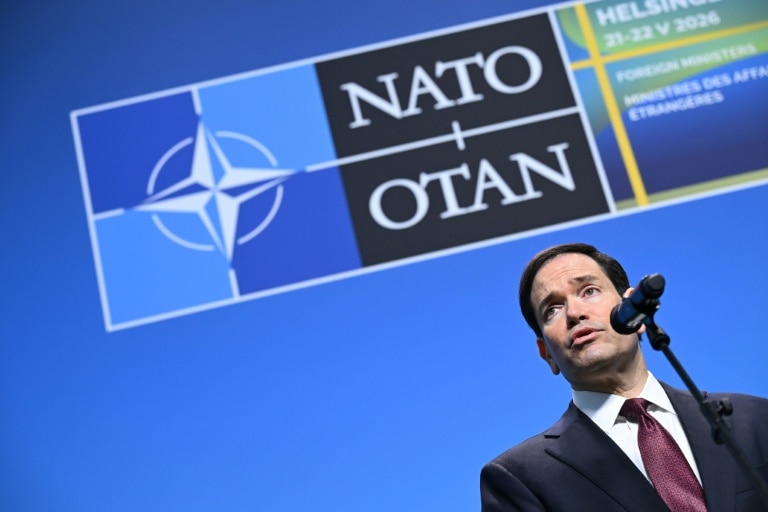
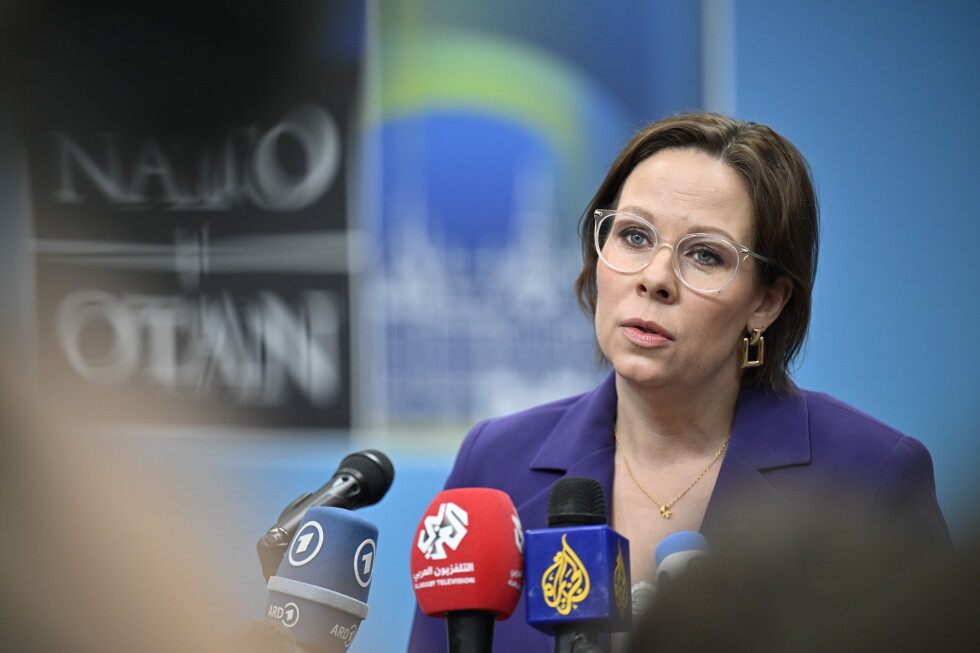
    A high-stakes meeting at the White House on Wednesday is set to bring long-simmering transatlantic tensions to a head, as U.S. President Donald Trump confirmed he will open discussions about the possibility of a United States withdrawal from the North Atlantic Treaty Organization during talks with NATO Secretary-General Mark Rutte. The encounter comes just 24 hours after the U.S. and Iran reached a last-minute two-week ceasefire agreement that averted an all-out American military strike, and it unfolds against a backdrop of deep anger from the Trump administration over what it calls a betrayal by Western NATO allies.

  • Activists ring alarm bells about halt in Poland’s air pollution progress

    Activists ring alarm bells about halt in Poland’s air pollution progress

    Nestled in Central Europe, Poland has long struggled with one of the continent’s worst air pollution crises, driven overwhelmingly by a reliance on coal-fired domestic heating. The threat this poses to both public health and national energy independence has grown starker in recent years, as ongoing geopolitical instability including the Iran war has sent global fuel markets into chaos. Now, environmental advocates are sounding the alarm that Poland’s signature program to tackle this dual crisis is grinding to a halt, putting years of hard-won progress at risk.

    Before the Polish government launched its ambitious nationwide Clean Air program in 2018, persistent violations of strict European Union air quality standards were common across large swathes of the country. Launched to address the root of the problem – coal-powered home heating, which accounts for the majority of Poland’s harmful smog emissions – the initiative provides direct grants to households and small businesses to swap out old coal boilers for cleaner systems running on natural gas, electricity, or wood pellets, as well as fund upgrades to thermal insulation that cut overall domestic energy demand. The ultimate goal of the program is to replace all 3.5 million existing coal-fired heating units in the country.

    Since the program’s 2018 launch, approximately one million out of Poland’s nearly 38 million residents have taken advantage of the grants to upgrade their heating systems, leaving 2.5 million outdated units still in need of modernization. Early results have already demonstrated the policy’s tangible impact: Andrzej Guła, a representative of leading environmental non-governmental organization Polish Smog Alert, notes that the southern city of Krakow, once infamous for chronic severe smog, has seen the number of high-pollution days drop annually from 150 to just 30. While 30 days of dangerous smog remains far too many for public health, the sharp decline proves the program delivers meaningful change when supported.

    That progress, however, has come to an abrupt standstill. In 2024, the initiative hit its peak, with more than 250,000 applications for financing submitted across the country. By the end of that year, the Polish government moved to reform the program to crack down on alleged misuse of public funds, implementing a temporary pause on all new application approvals. That pause, environmental activists argue, triggered a sharp collapse in public trust that has persisted long after the reforms were implemented. Data published by Polish Smog Alert during a Warsaw press conference on March 31 showed that total application numbers in 2025 were just one-fifth of the 2024 peak, and the downward spiral has continued into 2026. The organization warns that progress on cutting air pollution and reducing domestic energy use has now plateaued entirely, with no signs of a rebound.

    Krzysztof Bolesta, Secretary of State at Poland’s Ministry of Climate and Environment, defended the government’s reforms, framing the changes as a necessary step to ensure public funding only goes to eligible, high-impact projects and prevent waste of taxpayer resources. He acknowledged the unique challenge Poland faces in the EU, noting no other member state has such a high share of coal in residential heating. While Bolesta reaffirmed the government’s commitment to improving national air quality, he admitted that the work will remain extraordinarily difficult, and Poland will likely continue to lag behind other EU nations on pollution reduction for the foreseeable future.

    Environmental leaders say the current global energy instability caused by the Iran war should act as a critical wake-up call for the Polish government to revitalize the stalled program. Piotr Siergiej, another activist with Polish Smog Alert, explained that cutting domestic energy demand through the Clean Air initiative directly strengthens Poland’s energy security by reducing the country’s reliance on volatile imported fossil fuels and biomass, even for lower-carbon alternatives like wood pellets. “This program can become an epochal chance to energetically transform our buildings and homes, to make us more independent from those energy crises which we are facing now and whose future we can’t predict,” Siergiej said.