
Nestled in the heart of East Africa, the “Land of a Thousand Hills” Rwanda draws visitors with its sweeping green mountain slopes, but this same dramatic terrain creates unique public health challenges for its population. For millions of Rwandans, daily life requires traversing steep, winding mountain paths for hours at a time, a routine that gradually wears down joints, muscles and musculoskeletal health over years.
作者: admin
-

Pep Guardiola leaving Manchester City after the season: ‘It’s my time’
MANCHESTER, England – After a decade of unprecedented success that reshaped English top-flight football and turned Manchester City into one of the most dominant forces in global soccer, Pep Guardiola has officially confirmed he will depart the club at the end of the current season, ending the most anticipated coaching exit in recent Premier League history.
The Catalan boss, widely regarded as one of the greatest managers of all time, will lead the Sky Blues for his final match this Sunday against Aston Villa, despite having 12 months remaining on his existing contract. In an emotional announcement Friday, Guardiola said he felt the moment had come to step away, declining to share specific reasons for his decision beyond an inner conviction that his time at the Etihad Stadium had come to a natural close.
“Don’t ask me the reasons I’m leaving. There is no reason, but deep inside I know it’s my time,” Guardiola told reporters. The 55-year-old added that he plans to step back from coaching entirely for the foreseeable future, acknowledging he no longer has the consistent high energy required to compete for major honors at the highest level year after year.
Guardiola’s 10-season spell at Manchester City stands as the longest tenure of his entire managerial career, breaking his long-running pattern of never staying in a single role for more than four years. Across his time at the club, Guardiola delivered an unmatched haul of 17 major senior trophies, including six Premier League titles, one Champions League crown (claimed in 2023), four League Cups, and two FA Cups. This season alone, he added a domestic double of the FA Cup and League Cup to his collection, capping his tenure with yet more silverware.
Among his many groundbreaking achievements, Guardiola led City to become the first English club ever to claim four consecutive Premier League titles, set a top-flight record with 100 points in the 2017-18 campaign, and claim a historic full domestic treble (league, FA Cup, League Cup) in 2019. In 2023, he guided the club to an even more remarkable treble, adding the Champions League to Premier League and FA Cup honors to match the iconic feat first achieved by Manchester United in 1999. Across his entire career stints at Barcelona, Bayern Munich and Manchester City, Guardiola has now won 35 major managerial trophies.
Beyond silverware, Guardiola revolutionized the identity of English football with his signature possession-based playing style, centered on building attacks from the back through the goalkeeper and defensive line. This approach has been widely replicated at every level of the game across the country, from grassroots youth teams to top-flight rival clubs. Manchester City chairman Khaldoon Al Mubarak highlighted Guardiola’s far-reaching impact on the sport in a statement following the announcement, noting that the manager’s innovative approach challenged long-held assumptions about how the game should be played.
“The unique approach that he brings to his coaching has allowed him to constantly challenge the accepted truths of our game. It is the reason that in the last 10 years he has not only made Manchester City better — he has also made football better,” Al Mubarak said, adding that Guardiola’s decision to step away now was the right call for both the manager and the club.
In recognition of his unparalleled legacy at the club, Manchester City has announced that Guardiola will take on a new role as a global ambassador for the club, and will provide technical guidance to other clubs under the City Football Group ownership umbrella. The club will also honor his contributions by naming the newly developed stand at the Etihad Stadium after him. Chief Executive Ferran Sorriano emphasized that Guardiola’s lasting impact will be studied and celebrated by future club historians, praising his unmatched consistency in chasing titles year after year.
“If there is something more difficult than winning, it is winning again. It requires incredible persistence, resilience and the humility to start again every year, with the same energy, again and again. This is what Pep did,” Sorriano said.
The leading candidate to replace Guardiola is Enzo Maresca, a former head coach of Chelsea who previously worked as an assistant manager under Guardiola at Manchester City, who now faces the unenviable challenge of filling the shoes of a manager who delivered a decade of unprecedented dominance. Even with Guardiola departing on a high note after another trophy-winning season, this campaign marked the first time in his City tenure that the club failed to claim the Premier League title in back-to-back seasons, and the Sky Blues have been eliminated before the Champions League quarterfinals in both of the last two campaigns.
Throughout his time at Manchester City, Guardiola repeatedly defended the club against lingering financial fair play allegations. The Premier League has brought more than 110 charges against City related to alleged financial breaches between 2009 and 2018, a period when the club won three league titles and recruited many of its star players. Guardiola has repeatedly stated he remains fully convinced of the club’s innocence, which City has consistently maintained.
In a farewell message to City’s global fanbase, Guardiola struck a reflective, proud tone: “We worked. We suffered. We fought. And we did things our own way. Our way.”
-
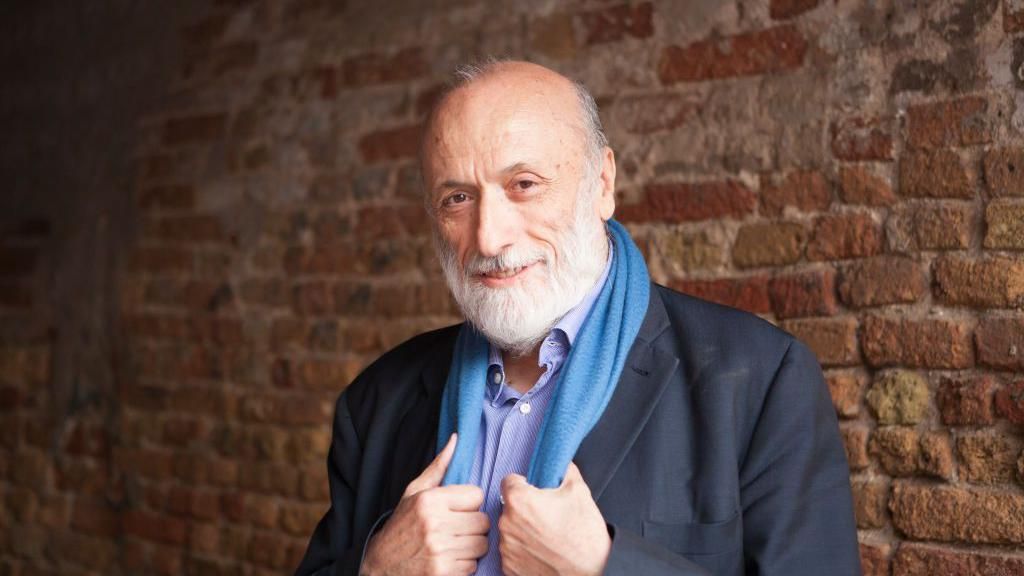
Slow Food founder Carlo Petrini dies aged 76
The global sustainable food movement has lost one of its most influential pioneers. Carlo Petrini, the founder of Slow Food, who dedicated 40 years to advancing eco-friendly food production and protecting centuries-old culinary traditions, passed away at the age of 76 on Thursday in Bra, his hometown in Italy’s northwestern Piedmont region. The Slow Food organization confirmed his death in an official statement, with local media reports noting he had battled cancer in recent years.
Petrini’s journey into global food activism began in 1986, when a then-journalist joined widespread public protests opposing the opening of Italy’s first McDonald’s location in Rome’s iconic Piazza di Spagna. In the wake of those demonstrations, Petrini gathered a small group of like-minded friends in the Italian countryside to launch a grassroots movement initially named Arcigola. What started as a local pushback against the rise of standardized fast food quickly grew into a national phenomenon, and by 1989, more than 20 international delegates gathered to sign the official Slow Food Manifesto. The document laid out the movement’s core mission: to push back against the “tediousness of fast-food” and safeguard cultural food heritage around the world.
Under Petrini’s decades-long leadership as president, the movement expanded far beyond Italy’s borders, establishing a presence in more than 160 countries. Slow Food’s core principles — a commitment to food that is “good, clean, and fair for all” — have reshaped global conversations around food systems, emphasizing quality ingredients, environmental stewardship, and equitable working conditions for small-scale farmers and food producers. Petrini’s work united a diverse global network: from rural farming communities and traditional food artisans to professional chefs, grassroots activists, and young people passionate about food justice.
Throughout his campaigning career, Petrini built close connections with major global figures who shared his commitment to sustainability. He developed a lasting friendship with King Charles III, rooted in their shared dedication to promoting fresh, ecologically responsible food production. The pair were even photographed together during a 2017 visit to Florence’s Sant’Ambrogio Market, when Charles was still the Prince of Wales. Petrini also formed a bond with the late Pope Francis, who surprised the activist with a personal phone call in 2013 after Petrini sent the pontiff a copy of one of his books alongside a letter. Reflecting on the call to Italian newspaper La Repubblica, Petrini noted, “Our phone conversation ended, with wishes of good health and a mutual embrace. A world in which one can fraternally embrace a Pope is truly a beautiful world.”
In tributes following his death, leaders and the Slow Food organization itself have honored Petrini’s far-reaching legacy. The movement released a statement calling Petrini a visionary who “brought to life a global movement rooted in the values of good, clean, and fair food for all.” It added that his work successfully connected diverse groups of food stakeholders across every continent. Italian President Sergio Mattarella echoed those remarks, saying Petrini’s death leaves a “huge void not only in the world of food and wine science, but also in society as a whole, and not just in Italy.”
-

Germany goalkeeper Manuel Neuer to miss the German Cup final for Bayern with calf injury
MUNICH — Veteran Bayern Munich and Germany goalkeeper Manuel Neuer has been forced to withdraw from Saturday’s German Cup final against defending champions VfB Stuttgart, dealing a fresh blow to his fitness ahead of the upcoming FIFA World Cup and reigniting concerns over his match readiness for the national team’s campaign. The 40-year-old, who recently ended a two-year international retirement to earn a spot in Germany’s World Cup squad, is sidelined by muscle issues in his left calf, the Bavarian Bundesliga giant confirmed in a statement released Friday.
The injury, the latest in a string of fitness setbacks that have plagued Neuer throughout the 2024-25 season, occurred during Bayern’s final Bundesliga fixture against FC Cologne last weekend. In the immediate aftermath of the match, the club only noted that Neuer required an immediate break from training and match action, offering no further details on the severity of the problem or a projected timeline for his return. Friday’s announcement formalized his absence from one of the biggest domestic fixtures on the German football calendar, and the club once again declined to specify how long the star goalkeeper will be sidelined.
Neuer’s unexpected return to the German national side was the headline story when head coach Julian Nagelsmann unveiled his official World Cup squad earlier this week. Nagelsmann made clear that the Bayern captain would be the team’s starting number one goalkeeper for the tournament, marking a rapid comeback after two years away from international football. The injury setback comes at a critical juncture for Germany, with pre-tournament preparations set to kick off on May 27 in the Bavarian town of Herzogenaurach. The four-time World Cup champions are scheduled to play warm-up friendlies against Finland in Mainz on May 31 and the United States in Chicago on June 6, before opening their Group E campaign against first-time qualifier Curacao in Houston on June 14. Germany will also face off against Ivory Coast and Ecuador in the group stage as they chase a first World Cup title since 2014.
-

Western Australian government offering scheme offering residents $150 in cash to plant native trees
Thousands of adult residents across Western Australia are currently eligible to receive a one-off $150 cash rebate through a state government environmental initiative designed to boost local native tree populations. Launched one year ago under the name “Treebate,” the incentive program is administered by the WA Department of Water and Environmental Regulation, and has already drawn more than 2,000 participants with two months remaining until its first anniversary.
The core premise of the program is simple: eligible residents 18 years and older can purchase a qualifying native tree from a local garden center or nursery, plant it on their residential property, and submit a rebate claim through the ServiceWA online platform to receive the full $150 purchase incentive. To qualify for the rebate, participants must meet three key requirements: select a native species that will grow to a minimum mature canopy height of 3 meters, provide clear photographic evidence of the tree labeled with its common or scientific name, and retain a tax invoice as official proof of purchase.
The $6.9 million four-year program was developed in direct response to a pressing ecological crisis in Perth, where more than 4,500 native trees have been killed in recent years by invasive shot-hole borer insects. To complement the residential Treebate scheme, the state government has also launched a second complementary initiative, the WA Tree Recovery Program, which offers landowners the same $150 rebate for every native tree they replace after it was lost to the shot-hole borer infestation.
WA Environment Minister Matthew Swinbourn emphasized the far-reaching value of expanding the state’s native tree cover, noting that every new tree planted across Perth and broader Western Australia delivers cascading social, economic, and environmental benefits that lift up the entire community. With more than $4 million in remaining funding allocated for the program, thousands more eligible residents are still able to claim the rebate before the program’s allocated funds are exhausted.
-
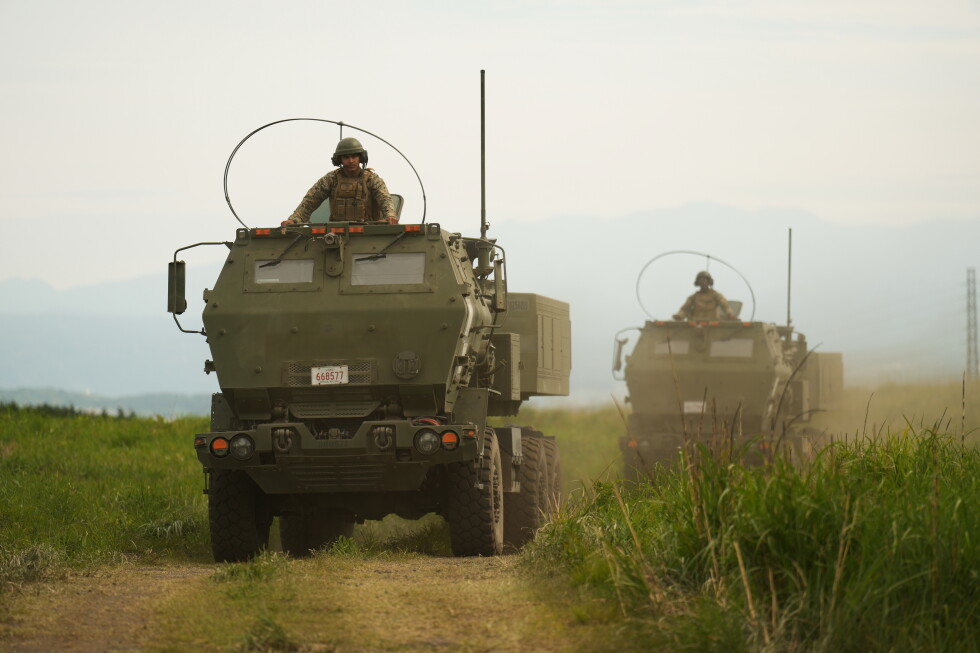
Shoot-and-scoot: Mobile missile launchers play key role in US Pacific deterrence strategy
GOTEMBA, Japan — In a dramatic display of military capability against the quiet backdrop of training grounds tucked into the foothills of Japan’s iconic Mount Fuji, the first rocket launched by U.S. Marines from a mobile launcher tore across the clear blue sky. A burst of flame preceded a thunderous roar that shattered the area’s pastoral calm, the engine’s bright orange glow leaving a sharp, visible trail in its wake. Five additional rockets followed in rapid sequence, before a second High Mobility Artillery Rocket System (HIMARS) truck emerged from its concealed position in a grove of evergreen trees, launched its own six-rocket salvo, and immediately withdrew back into cover.
This week’s brief live-fire drill at the U.S. military’s Camp Fuji East Maneuver Area, which lasted only a matter of minutes, carries outsize strategic weight. As Washington works to deter potential Chinese military action against Taiwan — the self-governing democracy that Beijing claims as its own territory and has not ruled out seizing by force — the exercise serves as a clear signal of American military credibility to regional allies.
The drill also lays bare a deliberate shift in U.S. military tactics across the Indo-Pacific, a change driven by the rapid modernization and expansion of China’s military capabilities over the past decade.
“The United States’ core goal is preventing a Chinese invasion of Taiwan, but it is no longer banking on the traditional large-scale carrier-based attack air wings that defined past conflicts,” explained Euan Graham, senior defense analyst at the Australian Strategic Policy Institute. “During U.S. tensions with Iran, more than 40 American manned and unmanned aircraft were destroyed or damaged by a far less capable adversary. Against China, that vulnerability would be exponentially greater. That is why the U.S. is now prioritizing smaller, dispersed, mobile units.”
According to the Pentagon’s most recent annual report to Congress, the new strategic framework aims to “deny any nation in the Indo-Pacific the ability to dominate the region or overpower our allies,” with a core focus on strengthening deterrence “through strength, not confrontation.”
The core value of the HIMARS system is written into its name. Mounted on a standard military truck, the rocket pod can be easily hidden from drone or satellite surveillance, driven to a firing position to launch its precision GPS-guided missiles, then relocate to a new hidden position almost immediately — a tactic military officials call “shoot-and-scoot.”
“Depending on the crew, we can be in and out in as little as two to four minutes,” said Sergeant Kevin Alvarez, section chief for one of the two HIMARS units from Fox Battery, 3rd Battalion, 12th Marines, 3rd Marine Division that took part in the Camp Fuji exercise.
First introduced roughly 20 years ago, HIMARS saw combat service in Iraq and Afghanistan, but it rose to global public prominence only after Ukrainian forces deployed it to devastating effect against Russian invasion forces. Recent conflicts, marked by the widespread proliferation of surveillance drones that can quickly spot and target static artillery positions, have only underscored the critical advantage of mobile systems like HIMARS.
“Compared to traditional cannon artillery, HIMARS is far quicker, far more maneuverable, and much easier to conceal,” noted Lieutenant Colonel Ryan Anness, commander of the 3rd Battalion. “Combine that with precision strike capability, and it’s easy to see why this system is a priority for so many nations, and for the U.S. military in the Pacific.”
HIMARS is compatible with a range of missile types. Initially, the U.S. only supplied Ukraine with shorter-range munitions, but it later approved the delivery of Army Tactical Missile Systems (ATACMS), which can strike targets roughly 180 miles away. More recently, the U.S. has deployed the even longer-range Precision Strike Missile (PrSM), built by manufacturer Lockheed Martin, which can hit targets more than 310 miles away. According to Air Force General Dan Caine, chairman of the Joint Chiefs of Staff, PrSM saw its first combat use in February during operations against Iran, where HIMARS sank multiple Iranian surface ships and a submarine while docked in port.
Graham explained that when paired with the Army’s Typhon system — another truck-based launcher that fires longer-range Tomahawk missiles, though it is less maneuverable than HIMARS — the two systems can fully cover the Taiwan Strait and the strategically critical Luzon Strait between the Philippines and Taiwan if deployed on Taiwan and nearby Japanese and Philippine islands. Both waterways are central to any potential Chinese invasion or blockade of Taiwan.
“Ahead of any conflict over Taiwan, most large U.S. military assets would likely move outside the range of China’s coastal missile capabilities,” Graham said. “What would remain are highly survivable submarines, and small, dispersed units built around rugged, mobile systems like HIMARS.”
The Wednesday drill at Camp Fuji incorporated strict safety protocols: Japanese military observers oversaw the exercise, and a local road was closed as a precaution against stray projectiles, with some launches using inert, concrete-filled dummy rockets to meet safety requirements. Though the precautions slowed the drill compared to real combat operations, Anness emphasized that the exercise delivered tangible value both for troop readiness and for strengthening alliances in the region.
“Fielding long-range precision strike weapons directly bolsters deterrence here in the Pacific,” Anness said. “Training alongside our Japanese partners as often as we can ensures we are ready to respond if needed.”
-

Large fire causes extensive damage to family business
A devastating large-scale fire has left a well-established local furniture business in County Donegal, Republic of Ireland, facing extensive damage after breaking out on Thursday evening. The blaze broke out at Cherrymore Kitchens & Bedrooms, a family-owned manufacturing and storage facility based in Donegal Town that this year marks three decades of operation.
Emergency response was triggered at 22:46 local time, when authorities received a 999 emergency call reporting the fire. The first crew of firefighters arriving from Donegal Town quickly assessed that the blaze had already spread extensively across the site, prompting an immediate call for additional backup. In total, 58 firefighters from six brigades across Ballyshannon, Bundoran, Killybegs, Stranorlar, Letterkenny and the local Donegal Town area mobilized to bring the fire under control.
Investigations into the cause of the fire remain ongoing as of Friday, with An Garda Síochána, Ireland’s national police service, confirming the incident is still an active investigation. According to Donegal County Council (DCC) officials, the fire was concentrated in a central storage area that held large volumes of raw wood used for the company’s custom kitchen and bedroom production. This core storage zone was “largely destroyed” by the flames, while other parts of the facility suffered widespread smoke damage. Three fire crews remained on site through Friday morning to dampen hotspots and ensure the fire did not reignite.
Fortunately, no workers or members of the public were present at the facility when the fire broke out, and emergency services have not recorded any injuries related to the incident. In an official social media statement released Friday, Cherrymore’s leadership confirmed the absence of on-site staff at the time of the blaze, and extended gratitude to first responders for their rapid, extensive response. The company also thanked workers at the adjacent Donegal Waste site for their on-the-ground support during the emergency, as well as local community members for their patience as emergency access routes were managed.
Widely recognized as one of the most modern and advanced manufacturing facilities in Ireland, Cherrymore employs a large local workforce and holds a prominent place in the County Donegal business community. The Ballybofey and Stranorlar Chamber of Commerce released a statement Friday expressing solidarity with the McLaughlin family, who own the business, as well as their staff, suppliers and customers who have all been impacted by the incident. The chamber emphasized that the loss comes as a particular blow this year, as the company prepares to mark 30 years of operation. Officials confirmed the local business community stands ready to provide any support necessary to help the firm recover.
Donegal County Council also echoed these sentiments, sharing official condolences for the family and everyone affected by the serious incident. As of Friday, investigations into the exact cause of the fire are continuing.
-
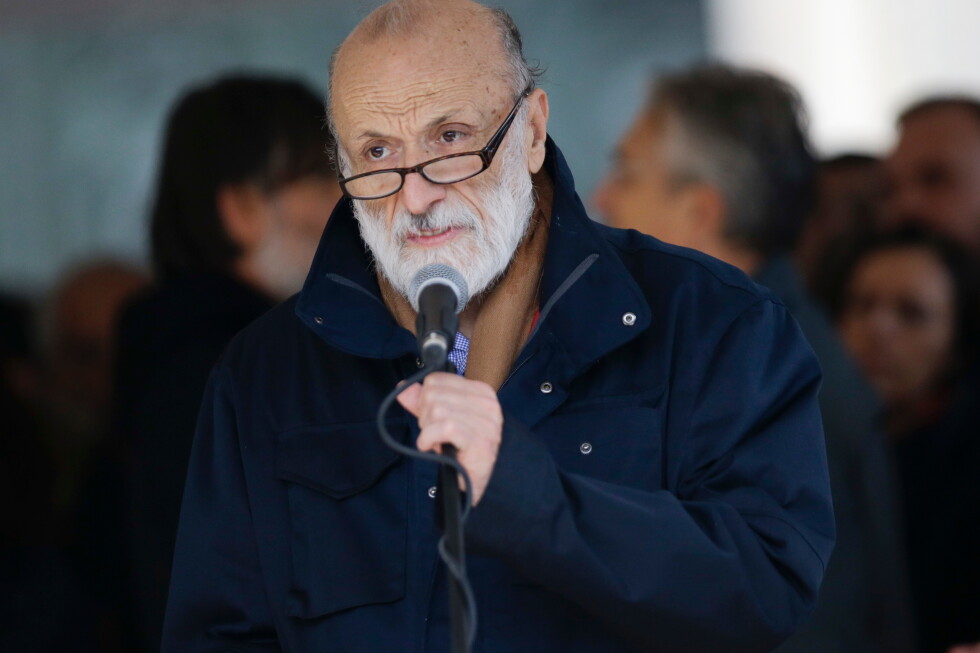
Slow Food founder and advocate of clean eating Carlo Petrini dies in Italy at 76
Carlo Petrini, the trailblazing Italian thinker and activist who built the global Slow Food grassroots movement advocating for sustainable food systems, local heritage cuisine, and ethical agricultural practices, passed away on Friday at his home in Italy’s northwestern Piedmont region at the age of 76. The Slow Food organization formally confirmed his death in an official statement this week.
In paying tribute to Petrini, Slow Food’s leadership remembered him as a far-sighted pioneer and public intellectual whose life’s work was rooted in unwavering dedication to collective well-being, respectful human connection, and stewardship of the natural environment. What would grow into a worldwide food reform movement began as a small but fierce act of resistance in 1980s Italy, when a cohort of food activists led by Petrini pushed back against the rapid spread of fast food culture. The movement’s public launch came in 1986, when Petrini and his supporters held a high-profile protest directly on the steps of a newly opened McDonald’s location at Rome’s iconic Spanish Steps, a moment that first brought their mission to global public attention. Originally named Arcigola, the organization would soon rebrand to adopt the now-famous name Slow Food.
Three years after the Rome protest, in 1989, delegations representing more than 20 countries gathered in Paris to formally endorse the Slow Food Manifesto, and delegates unanimously elected Petrini as the movement’s first president. He would hold this leadership role for more than three decades, stepping down only in 2022.
Under Petrini’s guidance, the movement coalesced around a simple but transformative core philosophy: that all food should be “good, clean and fair” — good in flavor and quality, clean in its production process to protect ecosystems and consumer health, and fair for producers and workers who grow and process it. This accessible, values-driven framework allowed the movement to spread rapidly across Italy before expanding to more than 160 countries around the world. Restaurants that commit to Slow Food’s principles display a recognizable certification sticker, formally called the Snail of Approval, marked by the movement’s iconic snail logo.
Over his decades of leadership, Petrini spearheaded a series of landmark institutional initiatives to embed Slow Food’s values into global food systems. In 2004, he launched Terra Madre, a groundbreaking network that connects small-scale farmers, fishers, chefs, and food academics to share knowledge and advance the movement’s mission across borders. Later, he founded the University of Gastronomic Sciences in northern Italy, the world’s first higher education institution dedicated to the multidisciplinary academic study of food and food culture. This innovative approach earned formal recognition from the Italian government in 2017, when national education officials established an official Bachelor’s degree program in gastronomic sciences modeled on the university’s curriculum. To date, the institution has trained roughly 4,000 food sector professionals from more than 100 countries, according to Slow Food data.
In 2017, Petrini partnered with Bishop Domenico Pompili of Verona to launch the Laudato Si’ Communities, a network of around 80 local groups that translate the environmental principles laid out in Pope Francis’ 2015 environmental encyclical Laudato Si’ into on-the-ground food and sustainability action.
Beyond his activism and institution-building, Petrini shared his philosophy with global audiences through a number of influential published works. His best-known books include *Slow Food Nation: Why Our Food Should Be Good, Clean and Fair* and *Slow Food: The Case for Taste*, the latter of which features a foreword from American farm-to-table movement pioneer Alice Waters.
-

Uganda’s electric buses drive green shift
Across the bustling thoroughfares of Kampala, Uganda’s bustling capital, a quiet but transformative shift is reshaping the city’s daily transit landscape: sleek, domestically manufactured electric buses are now a regular part of urban mobility, pushing the East African nation’s ambitious push for low-carbon, sustainable public transportation forward.
The 40-seater electric buses, finished in a distinctive green-and-gray design, have captured public curiosity since their launch. Fitted with on-board WiFi, they let passengers stream content and share their travel experiences to social media in real time, turning ordinary commutes into shareable moments that have boosted the vehicles’ popularity among local residents.
Uganda’s foray into electric mobility is not a recent development. The country first marked its entry into the sector in 2016, when it unveiled the Kayoola electric bus – Africa’s first solar-powered electric vehicle, whose name translates loosely to “mass carrier” in local languages. Today, that early prototype has evolved into a full-fledged national initiative, led by domestic automotive manufacturer Kiira Motors Corporation (KMC) and its subsidiary E-Bus Xpress Kiira Ltd, which are spearheading efforts to scale electric mobility across the country.
During a recent media tour of KMC’s Kiira Vehicle Plant in Jinja, eastern Uganda, KMC managing director Ian Kyeyune announced that the fleet of electric buses operating on Kampala’s urban routes will expand from 16 to 45 within just one month. Looking ahead, the company has set a target to manufacture more than 1,500 electric buses over the coming 12 months, a milestone that aligns with Uganda’s national e-mobility strategy, which aims to put 15,000 electric vehicles on the country’s roads by 2030.
To clear the way for this green transition, Kampala’s municipal authorities have already begun overhauling urban traffic management. The city has eliminated curbside parking in dense downtown districts and introduced dedicated bus lanes, measures designed to cut through chronic congestion and prioritize public transit in a city where gasoline and diesel-powered private vehicles have long dominated road space. The national government is also encouraging growth in the sector by opening it up to private investment: under a new franchise framework, independent transport operators can own full fleets, while outside investors can purchase stakes in individual buses over fixed contract periods.
Beyond their environmental benefits, KMC technical leaders highlight that the electric buses deliver substantial economic advantages over traditional diesel-powered alternatives, from lower upfront procurement costs to reduced ongoing service and maintenance expenses. “We save over 60 percent of energy costs,” Kyeyune explained. “While an ordinary diesel taxi would spend 1,800 Ugandan shillings ($0.48) per kilometer, we only spend 800 shillings on energy.” Kyeyune added that lower operating costs mean private operators can recoup their initial investment in approximately three years, and the buses’ batteries can be repurposed for grid energy storage paired with solar power systems once they reach the end of their automotive lifespan.
The 12-year lifespan batteries currently used in the buses are sourced from Chinese suppliers, and KMC has built a close collaborative partnership with Chinese automotive firms to build domestic technical capacity in electric vehicle manufacturing. “We are working with a partner from China because their auto industry, in terms of electric vehicles, is the best in the world. We want to learn from the best,” said Richard Madanda, KMC’s director of production.
Uganda is already looking to expand its electric mobility footprint beyond its national borders. In late 2025, the country completed a pan-African demonstration expedition, where a single domestically built electric bus traveled 13,000 kilometers across five Southern and East African nations: Tanzania, Zambia, Botswana, Eswatini, and South Africa, showcasing the viability of Ugandan-built electric transit for markets across the continent.
-

Irish PM to discuss Middle East conflict with Pope
On Friday morning, Irish Taoiseach Micheál Martin touched down in Vatican City to begin a scheduled private audience with Pope Leo XIV, marking a significant high-level diplomatic and faith-based engagement between Ireland and the Holy See. Martin and his spouse Mary were formally welcomed in Vatican’s iconic San Damaso Courtyard by Petar Rajic, Prefect of the Papal Household, alongside members of the papal gentlemen’s delegation.
Ahead of the closed-door meeting, which is scheduled to run for a maximum of 35 minutes, Martin outlined the key priorities he intends to raise during the discussion. Top of the agenda are the ongoing armed conflicts tearing through the Middle East, Ukraine, and Sudan, with the Taoiseach emphasizing a shared commitment between Ireland and the Holy See to advancing peace through dialogue. Martin also noted that Pope Leo XIV has centered his papacy on peace as a defining mission, aligning closely with Ireland’s long-held diplomatic priorities.
“We share many core values: a deep commitment to a rules-based international order, and a belief that dialogue and diplomacy are the only path to lasting peace,” Martin told reporters ahead of the audience. “I look forward to exchanging views with him on how we can collaborate to advance effective multilateralism as the most effective tool to tackle our shared global challenges and bring an end to ongoing conflicts.”
Domestically, Martin plans to update the Pope on the continuing reconciliation process across the island of Ireland, including the sensitive, critical work of addressing the violent legacy of decades of conflict known as the Troubles. The Taoiseach highlighted that faith leaders and clergy from all Christian denominations have played an indispensable role in advancing peace and reconciliation across Ireland, and that this input will be a core focus of the conversation.
The meeting will also create space for a frank reflection on the historical relationship between the Irish government and the Catholic Church, including the ongoing harms and unmet needs of survivors of clerical abuse. Martin confirmed this difficult but necessary topic will not be avoided during the discussion.
Beyond his audience with the Pope, Martin has a full schedule of diplomatic and institutional engagements during his trip. He will hold a separate bilateral meeting with Cardinal Secretary of State Pietro Parolin, the top diplomat of the Holy See, before traveling to the Pontifical Irish College in Rome. During his stop at the college, Martin will meet with members of its community, tour the institution’s historic archives, and announce new Irish government funding to support the cataloguing, digitization, and long-term preservation of the archive collection. This investment is part of a broader project to improve conservation, expand public access, and boost outreach for the college’s historical holdings.
The Vatican visit comes at a key juncture for Irish foreign policy: ahead of Ireland’s assumption of the rotating Presidency of the Council of the European Union, which begins on 1 July. Martin confirmed he will outline Ireland’s policy priorities and planned agenda for the six-month presidency during his discussions at the Vatican.
Following the conclusion of his engagements in Vatican City, Martin will travel to Rome for a meeting with Italian Prime Minister Giorgia Meloni later on Friday. This stop follows a bilateral meeting Martin held with French President Emmanuel Macron at the Élysée Palace in Paris on Thursday, as part of a broader European diplomatic tour ahead of Ireland’s EU presidency.
The meeting marks the latest high-level engagement between Irish leaders and the Vatican. In 2018, then-Taoiseach Leo Varadkar met with Pope Francis during the Pope’s historic visit to Ireland, the first papal visit to the country in 39 years. Speaking in 2025, Varadkar noted that the 2018 meeting took place at a time when relations between the Irish state and the Catholic Church were already strained, amid ongoing reckoning with the clerical abuse crisis.