作者: admin

  • Benin votes for new president with finance minister favored to succeed Talon

    Benin votes for new president with finance minister favored to succeed Talon

    Voters across Benin flocked to more than 17,000 polling stations on Sunday to select a new head of state, bringing a close to 10 years of rule under outgoing President Patrice Talon, whose tenure leaves behind a divided national legacy marked by robust economic expansion, escalating extremist instability in the country’s northern region, and widespread accusations of opposition suppression.

    At the center of the election are two candidates: Romuald Wadagni, the 49-year-old former finance minister and handpicked successor of Talon leading the ruling coalition, and Paul Hounkpè, the only opposition contender cleared to appear on the ballot. A total of nearly 8 million eligible Beninese are registered to participate in the vote for the West African nation, which counted more than 15 million total residents in 2024. Like most sub-Saharan African states, Benin has a predominantly young population. Polling was scheduled to conclude at 4 p.m. local time, with official preliminary projections expected to be released within 48 hours of closing.

    Most political analysts forecast a likely victory for Wadagni, an outcome shaped by the ruling bloc’s total domination of national legislative politics following January’s parliamentary election. During that vote, all opposition parties failed to meet the 20% support threshold required to earn seats in the 109-member National Assembly, leaving Talon’s two allied parties in full control of the legislative branch. Leading opposition figure Renaud Agbodjo, head of the Democrats party, was entirely barred from running in Sunday’s presidential contest after he could not secure the required number of parliamentary endorsements. Critics argue this requirement was deliberately designed to exclude political rivals from the race.

    Wadagni has centered his campaign on his 10-year record leading Benin’s finance ministry, pointing to the country’s consistent economic expansion as proof of his effective governance. Last year alone, Benin’s economy grew by 7%, cementing its position as one of West Africa’s most stable and high-performing economies. “Ten years at the Finance Ministry have given him something rare in African politics: a quantified record — verifiable and difficult to dismantle in a serious debate,” explained Fiacre Vidjingninou, a political analyst at the Lagos-based Béhanzin Institute.

    Despite Benin’s longstanding reputation as one of Africa’s most stable democratic nations, opposition leaders and global human rights groups have repeatedly accused Talon of weaponizing the national justice system to marginalize political opponents. Both Amnesty International and Human Rights Watch have documented a systematic crackdown on dissent during Talon’s tenure, highlighting widespread arbitrary detentions, stricter limits on public protest, and growing pressure on independent media outlets. In recent years, mass public protests over soaring living costs were quickly dispersed and suppressed by government security forces.

    The election also comes amid rising political and security instability across West Africa. In December, just months before the presidential vote, a group of military officers launched an unsuccessful coup attempt to overthrow Talon’s government, the latest in a string of attempted military takeovers across the African continent in recent years. Regional analysts note most recent coup attempts follow a consistent pattern: rooted in disputed election results, constitutional unrest, widespread security failures, and deep youth discontent with ruling governments. A core grievance cited by the December coup plotters was the sharp deterioration of security in northern Benin.

    For years, northern Benin has grappled with spillover extremist violence from neighboring Burkina Faso and Niger, where regional governments have battled Jama’at Nusrat al-Islam wal-Muslimin (JNIM), an al-Qaida-affiliated jihadi insurgent group. The tri-border region where the three nations meet has long been a hotspot for extremist activity, a crisis that has worsened in recent years after both Burkina Faso and Niger fell under the control of military juntas, eliminating much of the cross-border security cooperation that previously limited insurgent expansion.

  • Hungarians vote in closely watched election with Orban’s rule on line

    Hungarians vote in closely watched election with Orban’s rule on line

    On a high-stakes Sunday morning, polling stations opened across Hungary for a parliamentary election that stands as one of the most consequential political moments in modern European history, with the 16-year incumbency of nationalist Prime Minister Viktor Orban — the European Union’s longest-serving leader and self-described “thorn in Brussels’ side” — hanging in the balance.

    With opinion polls consistently placing opposition challenger Peter Magyar’s pro-European Tisza Party ahead of Orban’s ruling Fidesz party, the outcome of the vote has drawn intense international scrutiny from capitals across the continent and beyond. The race has been marked by bitter mutual accusations of foreign interference, dueling endorsements from high-profile American figures, and deep public division over Hungary’s future direction between alignment with the EU and continued closeness to Russia.

    Orban, 62, is vying for an unprecedented fifth consecutive term in office, during which he has reshaped Hungary into what he terms an “illiberal democracy.” Mirroring the rhetorical framing of former U.S. President Donald Trump — who has publicly thrown his full support behind Orban’s campaign — the incumbent has framed mass migration and progressive “woke” values as existential threats to Western civilization. He has centered his campaign on hardline rhetoric against neighboring Ukraine, which is currently defending itself against full-scale Russian invasion, portraying Kyiv as hostile to Hungarian interests. In the lead-up to voting, he also reiterated pledges to expand his crackdown on independent civil society groups, critical media, and opposition political figures.

    Long-simmering tensions between Orban’s government and EU institutions have boiled over in recent years, with Brussels freezing billions of euros in allocated cohesion funding over allegations that Orban has eroded judicial independence, cracked down on political dissent, and undermined the rule of law. U.S. Vice President JD Vance traveled to Budapest earlier this week to hold a rally in support of Orban, where he echoed the prime minister’s attacks on what he called overreach by Brussels bureaucrats. Trump, for his part, has promised to bring American economic leverage to Hungary if Fidesz secures another term.

    Magyar, a 45-year-old former insider within Orban’s government who only emerged as a political force two years ago, has built a rapidly growing movement on promises of a complete “system change” that would return Hungary to full democratic alignment with the European Union. Despite an electoral system widely acknowledged to be structurally skewed in favor of Fidesz, and a backdrop of years of economic stagnation that has left many Hungarian households struggling, Magyar has managed to galvanize widespread discontent with Orban’s rule. He has campaigned on pledges to root out systemic corruption — an issue where Transparency International ranks Hungary as tied with Bulgaria for the worst performance in the EU — and improve access to public services for working Hungarians.

    Outside polling stations on Sunday, voters from across the political spectrum expressed the historic weight of the moment, with many describing the election as a once-in-a-generation choice for the country’s future. “Now is our last chance to choose finally east or west. Do we want to be a normal democracy or turn back east with no point of return?” 18-year-old first-time voter David Banhegyi told AFP after casting his ballot for Tisza in a residential district of Budapest.

    Edit Csillaghegyi, a 58-year-old shop worker who also supported the opposition, cited corruption as her core motivation for ousting Orban. “I have one main problem with this government, what it did, the robbing,” she said.

    But for Orban’s supporters, the incumbent remains a bulwark against outside interference in Hungary’s domestic affairs. “It is so important for us that Viktor Orban stays in power,” said Maria Toth, a 31-year-old stay-at-home mother of two, after casting her ballot. “I feel Hungary is under siege from so many directions and big powers like Brussels are trying to dictate how we live. If he loses, I worry for my children’s future.”

    Andrea Szabo, a senior research fellow at ELTE University’s Centre for Social Sciences, framed the election as a defining turning point for Hungarian democracy. “If Fidesz wins now, that will clearly mean… a shift towards authoritarianism,” she told AFP. “This is the last moment in which this process can be halted, and the pendulum can swing back in a democratic direction.”

    Polling opened at 6:00 am local time (0400 GMT) and is scheduled to close at 7:00 pm local time. Analysts are projecting a record national turnout of roughly 75 percent, which would surpass the previous high of just over 70 percent set in 2002. The National Election Office has noted that while preliminary partial results will be released shortly after polls close, a final official winner may not be declared until next Saturday if the race remains extremely tight.

    In the weeks leading up to voting, the campaign has been roiled by a steady stream of leaks, accusations, and counter-accusations. Recorded phone conversations between Orban and his foreign minister, leaked to the public, triggered alarm across the EU over the pair’s close ongoing ties to the Kremlin. Multiple independent reports have documented an active covert Russian disinformation campaign designed to boost Orban’s chances of re-election, while a recent investigative documentary has alleged that Fidesz and its coalition partners are engaging in widespread vote-buying operations in rural Hungarian districts. Both Orban and the opposition have traded claims of foreign meddling: the opposition has raised concerns about Russian and American interference to benefit Fidesz, while Orban has accused the opposition of colluding with foreign intelligence services and plotting to destabilize the election through chaos.

  • China says it will resume some ties with Taiwan after visit by opposition leader

    China says it will resume some ties with Taiwan after visit by opposition leader

    BANGKOK, Associated Press – More than seven decades after the cross-Strait split, and amid years of rising tensions between Beijing and the ruling Taipei administration, mainland China announced Sunday a series of measures to restore suspended cross-Strait connections, following a landmark meeting between Chinese leader Xi Jinping and the chair of Taiwan’s Beijing-leaning opposition Kuomintang Party (KMT), Cheng Li-wun.

    The high-profile gathering between Xi and Cheng in Beijing on Friday centered on public calls for cross-Strait peace, though no concrete policy details were released by either side. In an official statement released Sunday, the Communist Party of China’s Taiwan Work Office outlined multiple steps to rebuild ties that have been frozen for years: the resumption of direct flights linking Taiwan to mainland cities including Xi’an and Urumqi, the restart of imports of Taiwanese aquaculture goods previously blocked by Beijing, and a plan to explore the establishment of a permanent communication channel between the CPC and the KMT. Beijing also reaffirmed its long-proposed plan to advance the construction of a cross-Strait bridge connecting mainland China to Taiwan’s Kinmen and Matsu islands, which lie just off the Chinese coast.

    Cross-Strait relations have deteriorated sharply since 2016, when pro-independence Democratic Progressive Party leader Tsai Ing-wen won Taiwan’s presidential election. Beijing has cut off almost all official dialogue with Taipei’s ruling government, and increased regular military patrols of warships and fighter jets near Taiwan’s borders in a show of sovereignty. China continues to claim Taiwan as an integral part of its own territory, and has never formally ruled out the use of military force to bring the self-governing island under its control.

    Taiwan’s Mainland Affairs Council, the government body that oversees cross-Strait relations, quickly pushed back on Beijing’s announcement, framing the new measures and proposed cross-party communication mechanism as unilateral political deals between the CPC and KMT that bypass Taiwan’s democratically elected government. The agency reaffirmed Taipei’s long-held position that all cross-Strait affairs involving public authority must be negotiated between the two governments on an equal, mutually respectful footing to deliver tangible benefits that protect the rights and well-being of Taiwan’s people. Critics note that it remains unclear how the new measures announced by Beijing can be implemented without formal approval from Taipei’s government, given existing cross-border travel and trade regulations.

    To provide context for the latest developments: Beijing first banned individual tourism travel to Taiwan for Chinese citizens in 2019, and current Taiwanese entry rules require Chinese passport holders to hold a valid third-country residence visa (issued by nations such as the U.S. or EU member states) to qualify for a Taiwanese visitor visa. On the trade front, Beijing first blocked imports of Taiwanese pineapples in 2021, before expanding restrictions to other agricultural and aquaculture goods, including grouper, squid, and tuna. After the grouper import ban was imposed, Taiwan’s Ministry of Agriculture attempted to negotiate with Beijing to revise production standards to meet Chinese import requirements, but Beijing only approved a small, unelaborated list of individual Taiwanese firms for limited exports.

  • ‘We need real peace’: Easter truce fails to lift grim mood in war-torn Ukraine

    ‘We need real peace’: Easter truce fails to lift grim mood in war-torn Ukraine

    # Fragile Orthodox Easter Truce Collapses Within Hours in Kharkiv, Ukraine

    More than four years into Russia’s full-scale invasion of Ukraine, a bilateral agreement for an Orthodox Easter truce came into force across frontlines on a Saturday afternoon. Just 38 minutes after the ceasefire took effect, wailing air raid sirens cut through the quiet of northeastern Ukraine’s Kharkiv region, shattering any immediate hope of a lasting pause in fighting.

    Since that first alarm, Ukrainian officials and military commanders have confirmed dozens of ceasefire violations along active contact lines, though no long-range missile or drone strikes have been recorded in the immediate hours after the truce began. The 32-hour cessation of hostilities was meant to stretch through Easter Monday, offering civilians and soldiers alike a rare, desperately needed break from four years of constant conflict.

    In a public post on X ahead of the truce, Ukrainian President Volodymyr Zelenskyy emphasized that Easter should stand as a season of safety and peace, while warning that Ukrainian defense forces would respond “strictly in kind” to any hostile action by Moscow. Across Kharkiv, widespread skepticism of any Russian commitment to peace runs deep, with public trust in the temporary truce hovering near zero.

    Moments before the ceasefire was scheduled to begin at 4 p.m. local time, scores of local families gathered at St John the Theologian Church for the traditional annual blessing of Easter fare. Carrying wicker baskets heaped with glazed sweet Easter cakes, hand-painted dyed eggs, and cured sausage, worshippers formed a line wrapping around the church building to receive a sprinkling of holy water from the parish priest.

    This year, the service was moved from its traditional midnight timing, which includes a ceremonial procession around the church grounds, to mid-afternoon to comply with local curfew orders imposed to reduce civilian risk from Russian attacks. The church itself suffered significant damage in the opening weeks of the full-scale invasion, and one entire wall of its windows remains covered with plywood boarding.

    When asked about the meaning of the Russian-proposed ceasefire, parish priest Fr Viktor questioned the very premise of trusting Moscow’s commitments. Parishioner Larisa echoed his caution, noting that past Russian truces have only been followed by more intense offensives. “Maybe there will be a short pause,” she told reporters, “but then Russia will only launch even more intense attacks. We’ve seen that before.”

    Roughly 12 miles from the Russian border, at a rural military training ground, members of the Yasni Ochi strike drone unit—part of Ukraine’s Khartia Corps—spent the holiday weekend testing new explosive drone systems destined for the frontlines. The troops loaded newly delivered kamikaze drones with ordnance and practiced precision diving attacks on ground targets, their training proceeding even as the truce was announced.

    Unit commander Heorhiy issued orders for his troops to hold their positions during the 32-hour truce unless directly attacked, but he says he fully expects Russian forces to break the agreement. “Russia says one thing, then does the other. So you have to be ready,” he explained. For troops on rotating rest, the unit has been dropping care packages of Easter cake and alcohol-free wine to frontline positions via drone delivery.

    The small village the unit now uses for training was occupied by Russian forces in 2022 before being recaptured by Ukrainian troops, and nearly every residential structure in the area lies in crumbled ruins. While open discussion of large-scale territorial recapture, such as the entire Donbas region south of Kharkiv, has become rare among frontline troops, Heorhiy insists Ukraine cannot pause fighting until it secures favorable terms for peace negotiations with Russia.

    “We need real peace talks,” the commander said, adding that he has been encouraged by growing international demand for Ukraine’s drone expertise spurred by new conflicts in the Middle East, where Ukraine is able to share its years of frontline experience and drone technology. However, the US-led peace process for Ukraine has stalled in recent months, with US President Donald Trump’s diplomatic envoys reallocated to handle escalating tensions with Iran.

    Ukraine continues to push for concrete long-term security guarantees from its Western backers, specifically clarity on what support the US would provide if Russia launches another full-scale invasion in the future. “It’s not our choice. I don’t like war, my guys don’t like it. We used to have good civilian life,” Heorhiy said, noting that several members of his unit worked as DJs in Dnipro’s underground electronic music scene before the invasion. “Now we do what we need to do.”

    Back within Kharkiv’s city limits, the main regional ring road is now being draped in anti-drone netting, designed to catch and entangle incoming Russian unmanned aerial vehicles before they can strike vehicles traveling below. But little can be done to protect residential neighborhoods from incoming missile attacks: with Russian positions so close to the city, there is barely enough warning time for air defenses to engage incoming threats.

    In one Kharkiv suburb, entire sections of five-story apartment blocks have been reduced to rubble by recent strikes, while dozens of surrounding buildings remain boarded up and uninhabitable. Last month, an early morning Russian missile strike on the neighborhood killed 11 residents, wiping out an entire wing of a residential building. Walking through the ruins, visitors can still spot a bright red rug pinned to what remains of a living room wall, with portraits of two killed residents laid on the rubble at its base.

    Olha, a neighbor who survived the strike, described huddling in the building’s central corridor with her elderly mother as the missile hit. She shared phone footage showing the building across the street engulfed in bright orange flames, and her own apartment reduced to splinters and debris. Unsurprisingly, she says she craves any break from the constant threat of death. “This truce is only one and a half days. But at least we can rest a bit, because here, you expect to die every second,” she said. “We really want peace. Not for one and a half days. For good.”

    Weeping quietly, Olha questioned the cost of holding the last remaining sliver of Ukrainian-held Donetsk Oblast, saying it is not worth the mass loss of civilian life. “There were children killed in that strike, wonderful people. Will it ever stop?” she asked.

    Zelenskyy has said he is open to turning this flawed temporary truce into a permanent ceasefire, followed by structured peace talks with Russia to reach a lasting settlement. But the Kremlin has already rejected the proposal, confirming that full-scale offensive operations will resume on Monday when the temporary truce is set to expire.

  • Polls open in Hungary in a key election that could unseat populist Prime Minister Orbán

    Polls open in Hungary in a key election that could unseat populist Prime Minister Orbán

    Voters across Hungary headed to polling stations on Sunday to cast their ballots in what political analysts across the globe have dubbed the most politically consequential European election of 2025. A single question hangs over the contest: will 16-year incumbent Prime Minister Viktor Orbán, a polarizing populist icon and close ally of former U.S. President Donald Trump, be unseated by his unexpected challenger?

    For observers in Brussels, Washington and capitals worldwide, the outcome of this vote carries far-reaching implications for the future of European Union cohesion, transatlantic relations and the global rise of far-right populism. Orbán, the EU’s longest-serving sitting head of government, has evolved dramatically over his decades in public life: from a young liberal firebrand who pushed back against Soviet influence in the 1990s to a Russia-aligned nationalist leader whose model of illiberal governance has become a blueprint for conservative anti-globalization movements across the Western world.

    Polling locations opened to voters at 6 a.m. local time, with doors scheduled to close at 7 p.m. Both Orbán and his top rival, Péter Magyar, were scheduled to cast their ballots later Sunday morning. The intense global attention surrounding the race underscores Orbán’s outsize influence on modern right-wing politics: followers of Trump’s “Make America Great Again” movement hold up Orbán’s Fidesz party and his administration as a gold standard for conservative anti-globalist policy, while proponents of liberal democracy and the rule of law have long condemned his leadership.

    Since returning to the prime ministership in 2010, Orbán has reshaped Hungary’s political and social landscape fundamentally. His administration has overseen sweeping crackdowns on minority rights and independent media freedom, systematically weakened core democratic institutions, and faced repeated allegations of diverting public funds to connected business elites — claims Orbán has consistently denied. He has also repeatedly clashed with EU leadership, leveraging Hungary’s veto power to block key bloc initiatives, most recently a 90-billion-euro ($104 billion) EU aid package for Ukraine, a move that drew widespread accusations from European partners of holding critical assistance hostage for political gain.

    After four consecutive election victories that delivered Fidesz a two-thirds parliamentary supermajority, new signs suggest Orbán’s unbroken grip on Hungarian politics may finally be vulnerable. That vulnerability comes in the form of 45-year-old Péter Magyar, a former Fidesz insider who split from the party in 2024 and rapidly built a new opposition force, the center-right Tisza party. Magyar has quickly emerged as Orbán’s most formidable challenger to date, with independent polling placing Tisza ahead of Fidesz.

    Magyar’s campaign has centered on kitchen-table issues that resonate with ordinary Hungarian voters: a collapsing public health system, underfunded and unreliable public transportation, and what he frames as rampant systemic corruption under the Orbán administration. In the weeks leading up to election day, he carried out a grueling cross-country campaign blitz, holding rallies in cities and small towns alike and visiting as many as six communities a day to connect with voters. In an early April interview with The Associated Press, Magyar framed the election as a stark national referendum: “Hungarians will decide whether we continue drifting toward Moscow under Orbán, or reclaim our place in Europe’s community of democratic nations.”

    Despite his polling lead, Magyar faces a steep uphill battle to unseat Orbán. The incumbent maintains near-total control of Hungary’s public media, which has been converted into a relentless Fidesz propaganda mouthpiece, and controls large segments of the country’s private media market, giving him an overwhelming advantage in reaching voters. Fidesz’s unilateral restructuring of Hungary’s electoral system and aggressive gerrymandering of the country’s 106 voting districts also means Tisza needs to win roughly 5% more of the national vote than Fidesz to secure a parliamentary majority. Additionally, hundreds of thousands of ethnic Hungarians residing in neighboring countries retain voting rights in Hungarian national elections, and this demographic has historically voted overwhelmingly for Fidesz.

    In the lead-up to Sunday’s vote, both sides have raised alarms about potential irregularities, with speculation growing over external interference and internal voter fraud. Both Fidesz and Tisza have launched independent platforms to collect reports of electoral abuse, each accusing the other of planning to manipulate the result. Multiple media outlets, including The Washington Post, have reported that Russian intelligence services have plotted to interfere in the election to tilt the result in Orbán’s favor. Orbán, meanwhile, has pushed back by accusing neighboring Ukraine and EU leadership of plotting to meddle to install a pro-Kyiv government.

    These geopolitical divides have played out openly in international support for both candidates. Most EU leaders, who view Orbán as a persistent threat to the bloc’s democratic cohesion and policy agenda, are openly rooting for an Orbán defeat, hopeful that a Magyar-led government would return Hungary to being a constructive European partner. Across the Atlantic, however, Trump and his MAGA movement have thrown their full weight behind Orbán’s re-election. Trump has issued multiple public endorsements of the Hungarian prime minister, and U.S. Vice President JD Vance traveled to Hungary for a high-profile two-day campaign visit last week to boost Orbán’s chances ahead of election day. As polls closed Sunday evening, all sides awaited a result that will reshape the future of Hungary and send ripples across global politics.

  • Iran war diverts US military and attention from Asia ahead of Trump’s summit with China’s leader

    Iran war diverts US military and attention from Asia ahead of Trump’s summit with China’s leader

    Fifteen years after former U.S. President Barack Obama first announced his landmark “pivot to Asia” strategy — a plan intended to wind down long-running wars in Iraq and Afghanistan and refocus American power to counter China’s growing global influence — a new conflict with Iran has once again pulled U.S. military resources and political attention away from the Indo-Pacific, stoking widespread fears that Washington is ceding strategic ground to Beijing.

    Obama’s 2011 framework was built on a clear core vision: after a decade of costly conflict in the Middle East, the U.S. would turn toward the Asia-Pacific’s massive economic potential and cement American leadership as China’s influence expanded across the region. But from the very start, the strategy faced repeated setbacks: the signature Trans-Pacific Partnership trade agreement collapsed in the U.S. Senate, President Donald Trump withdrew Washington from the deal shortly after taking office in 2017, and successive administrations have repeatedly been pulled back into Middle East tensions.

    Today, the pattern is repeating. As the U.S. escalates operations to counter Iran’s nuclear and missile programs, it has reallocated critical military assets from the Asia-Pacific to the Middle East. This shift has already forced Trump to delay a much-anticipated trip to Beijing, pushing back a high-stakes summit with Chinese President Xi Jinping that was set to address pressing economic and strategic tensions. Critics warn that the distraction from the Iran conflict is undermining longstanding U.S. deterrence efforts against China, particularly as Beijing speeds up its plans to assert control over the self-governing island of Taiwan.

    “This is precisely the wrong time for the United States to turn away and be sucked into another intractable Middle East conflict,” said Danny Russel, a distinguished fellow at the Asia Society Policy Institute. “Rebalancing to Asia is highly relevant to America’s national interests, but it has been undercut by many bad decisions.”

    Lawmakers who recently traveled to the region have confirmed deep unease among U.S. allies. A bipartisan delegation led by Senate Foreign Relations Committee top Democrat Jeanne Shaheen visited Taiwan, Japan and South Korea earlier this year, where local leaders raised alarm over the withdrawal of key U.S. military capabilities, including a rapid-response Marine unit from Japan and missile defense systems from South Korea, as well as the impact of the Iran conflict on global energy prices.

    Shaheen told the Associated Press that Chinese leadership has already accelerated its timeline for potential military action against Taiwan, and global conflicts in Ukraine and the Middle East are directly shaping Beijing’s strategic calculations. “Failure is not an option,” she said, noting that U.S. defense industries are already stretched thin to replenish munitions expended in the Middle East, leading to delayed weapons deliveries to Indo-Pacific allies. Even so, Shaheen added she is encouraged by moves from Taiwan, Japan and South Korea to expand their own defense capabilities.

    Independent analysts echo these concerns. Kurt Campbell, who served as deputy secretary of state under the Biden administration, warned that the critical military capabilities the U.S. spent years building up in the Indo-Pacific may never return to their full strength even after the Iran conflict concludes. Zack Cooper, a senior fellow at the American Enterprise Institute specializing in U.S. Asia strategy, added that extended conflict in the Middle East will not only drain ongoing resources and attention from the region, but also harm future U.S. arms sales to Indo-Pacific allies.

    “The United States has expended substantial numbers of munitions in the Middle East and will have to keep an increased force presence there, some of which has been redirected from Asia,” Cooper explained. “Meanwhile, Xi Jinping’s preparation of a ‘wartime’ economy through stockpiling and expanding alternate energy sources has proven strategically advantageous for Beijing.”

    Not all observers criticize the current U.S. approach, however. Supporters of Trump’s policy argue that confronting Iranian and Venezuelan aggression actually serves the broader goal of countering China globally, noting that Beijing is a key backer of the adversarial regimes Washington is targeting. “Beijing is the chief sponsor for the adversaries that President Trump is dealing with sequentially, and it’s wise to do this sequentially,” said Matt Pottinger, who served as deputy national security adviser in Trump’s first term, in a recent podcast appearance.

    NATO Secretary General Mark Rutte has also framed the multi-theater challenge as an inherent reality of great power competition. Speaking Thursday at the Ronald Reagan Institute in Washington, Rutte noted that China could leverage its partnerships across regions to divert U.S. attention if it moves against Taiwan, meaning any crisis will not be limited to the Indo-Pacific. “Most likely it will not be limited, something in the Indo-Pacific to the Indo-Pacific,” he said. “It will be a multi-theater issue.”

    The current state of U.S. strategy lays bare just how elusive Obama’s original pivot vision remains after 15 years and three presidential administrations. After Trump took office for his second term, his 2025 national security strategy reaffirmed that deterring Chinese aggression in the Taiwan Strait and along the First Island Chain — the string of U.S.-aligned islands off China’s coast that block Beijing’s access to the Western Pacific — is a core national priority. The document explicitly stated that Washington’s historic reasons for heavy engagement in the Middle East would recede as U.S. domestic energy production ramped up. Just months later, the Iran conflict upended that plan.

  • Remember the Titans: Gold Coast heap more misery on the battered Eels as star fullback puts on attacking show

    Remember the Titans: Gold Coast heap more misery on the battered Eels as star fullback puts on attacking show

    In a dominant NRL round six matchup at CommBank Stadium on Sunday, the Gold Coast Titans delivered one of the most impressive performances of the young season, crushing the Parramatta Eels 52-10 to extend the home side’s losing streak and secure a rare victory on Sydney turf. The lopsided win, which marked the Titans’ second-highest single-game score in NRL history, was anchored by a career-defining 80-minute display from young fullback Keano Kini, putting to rest any lingering debate over the club’s starting role at the position.

    When interim Titans coach Josh Hannay took charge of the side earlier this season, he openly anointed Kini as his first-choice fullback, turning down calls to shift incumbent Jayden Campbell into the starting 1 spot. On Sunday, the pint-sized speedster turned that vote of confidence into a stat line that would look more at home in a video game than a professional rugby league matchup. Kini played a pivotal role in the Titans’ opening four tries, setting up all three of the side’s first-half tries and breaking the game open within the opening quarter. His most memorable play came on a brilliant spin pass that sent AJ Brimson over the line for a try, before he broke away on a 70-metre run off an Eels kick to set up rookie winger Sialetili Faeamani, pushing the Titans’ lead to 18-0 after just 15 minutes of play. Early in the second half, he burst through Parramatta’s soft middle defence to set up Campbell for another try. By full time, Kini finished the match with 226 running metres, four try assists, three line breaks and nine tackle busts, a performance the official NRL social media team described as unstoppable.

    Kini was far from the only Titans playmaker to produce a standout attacking display. Winger Jojo Fifita pounced on a loose Eels pass to spark a blistering 85-metre counterattack, linking up with Phil Sami to finish the long-range try that left the crowd stunned. Campbell later put the final cherry on top of the result when he intercepted an errant Parramatta pass to score another late Titans try, capping off a day where everything went right for the Gold Coast side.

    For the Parramatta Eels, the result marks yet another devastating low point in a disastrous start to the 2026 season. The Eels slumped to second-last on the ladder after six rounds, after conceding nine tries and missing a staggering 43 tackles against a Titans side that had struggled for attacking momentum heading into the round. Parramatta’s defensive woes have become the worst in the entire competition this season, with the club already conceding 226 points across the opening six weeks. On Sunday, both the edge and middle defensive lines were repeatedly exposed by Gold Coast’s dynamic attack, leaving head coach Jason Ryles with major questions to answer. Ryles will particularly be frustrated by the ease with which Cooper Bai barged over from close range for a second-half try, one of many soft tries the Eels conceded on the day.

    Parramatta’s attack was little better on Sunday. The side’s only first points came from a try that appeared to come off a clear forward pass, and by the time the Titans hit the 50-point mark late in the match, the home fans at CommBank Stadium voiced their anger with a raucous chorus of boos that rang out across the ground.

    Making matters far worse for the Eels is a worsening injury crisis that has gutted the club’s playing squad ahead of their upcoming fixture. Powerhouse forwards Sam Tuivaiti and Kelma Tuilagi both suffered head knocks during Sunday’s match and will be forced to miss next week’s game, joining a growing list of sidelined stars. The club is already missing starting lock J’maine Hopgood, edge forward Matt Doorey and winger Bailey Simonsson for the entire 2026 season, while Isaiah Iongi and Jonah Pezet are among other key players currently sidelined with injury. Tuivaiti’s injury came just 10 minutes after he came onto the field as a reserve, when his head collided with Arama Hau’s hip while making a tackle, and he was ruled out of the rest of the match immediately after the incident.

  • Vance says talks failed to reach agreement with Iran

    Vance says talks failed to reach agreement with Iran

    After 21 hours of closed-door negotiations hosted in Islamabad, Pakistan, United States Vice President JD Vance announced Sunday that direct talks with Iranian representatives have concluded without reaching a binding consensus, though Washington’s so-called “final and best offer” remains under consideration by Tehran.

    The negotiations came amid a fragile two-week pause in joint US-Israeli military strikes against Iranian sensitive sites, a truce that went into effect Tuesday to create space for diplomatic negotiations. Vance emphasized that the core sticking point throughout the discussions remained Iran’s long-term nuclear ambitions, a dispute that has fueled escalating tensions across the Middle East for years.

    Speaking to reporters at the luxury Islamabad hotel where the negotiations were held, Vance outlined Washington’s non-negotiable core demand: a clear, long-term commitment from Iran that it will abandon all efforts to develop a nuclear weapon, and will also forgo access to the materials and infrastructure required to build a nuclear device rapidly. “The simple question is, do we see a fundamental commitment of will for the Iranians not to develop a nuclear weapon — not just now, not just two years from now, but for the long term?” Vance said. “We haven’t seen that yet. We hope that we will.”

    Iran has consistently maintained that its nuclear program is exclusively for peaceful purposes, including energy production and medical research, a claim that successive US administrations have rejected. Tensions escalated further after the US and Israel launched a new wave of attacks on Iranian infrastructure on February 28, following earlier strikes on Iranian sites last year.

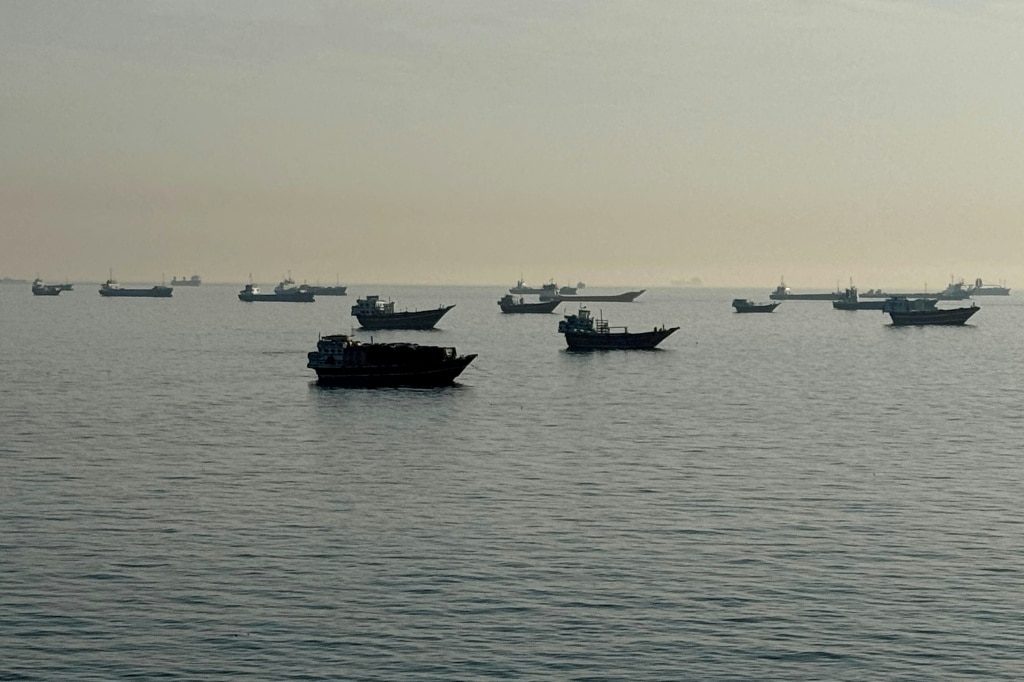
    Vance declined to elaborate on disagreements over a second critical issue: the reopening of the Strait of Hormuz, the strategic chokepoint through which roughly one-fifth of the world’s global oil supplies transit daily. The strait has been a flashpoint for regional tensions for decades, with disruptions to shipping through the waterway capable of sending global energy prices soaring.

    The Vice President pushed back against any suggestion that the White House took an inflexible stance, noting that President Donald Trump instructed the negotiating team to approach the talks in good faith and prioritize flexibility. Just one day before Vance’s announcement, Trump made unorthodox comments in Washington saying he did not have a personal stake in whether a deal was ultimately reached. Despite the lack of progress to date, Vance reaffirmed that the US side is leaving the final offer on the table to give Iranian leadership time to review the proposal and respond. “We leave here with a very simple proposal, a method of understanding that is our final and best offer. We’ll see if the Iranians accept it,” he added.

  • Long running legal stoush between miners Gina Rinehart, Angela Bennett over billions in mining royalties nears climax

    Long running legal stoush between miners Gina Rinehart, Angela Bennett over billions in mining royalties nears climax

    One of Australia’s longest-running and highest-stakes business disputes is poised to reach a critical turning point this week, as the Western Australian Supreme Court prepares to issue a landmark judgment in a multi-billion-dollar battle between two of the nation’s most powerful mining figures. At the center of the clash is Gina Rinehart, Australia’s wealthiest individual and head of Hancock Prospecting Pty Limited (HPPL), and Angela Bennett, an influential mining heiress who controls Wright Prospecting Pty Limited (WPPL), the family firm of her late father Peter Wright.

    The roots of the disagreement stretch back to the 1950s, when Wright and Rinehart’s father, Lang Hancock—two pioneers of Western Australia’s Pilbara region iron ore industry—first discovered the mineral deposits that would become the productive Hope Downs mining complex. Decades after their joint exploration, the two families that built their fortunes from that discovery are now fighting over who holds legal rights to critical royalties and assets at the site.

    Today, Hope Downs is operated as a 50-50 joint venture between global mining giant Rio Tinto and HPPL, producing roughly 50 million tonnes of iron ore annually. The project generates hundreds of millions of dollars in annual royalty income, with HPPL currently receiving a 2.5% cut of all production revenue. WPPL, however, argues that a historic agreement between Wright and Hancock entitles the Wright family to half of that 2.5% royalty stream, as well as a 25% stake in three specific Hope Downs tenements that hold the high-value East Angelas deposits, which have been in operation since 2013.

    If the court rules in WPPL’s favor, the firm would be entitled to 1.25% of all royalty payments backdated to the start of commercial mining at Hope Downs in 2007. Industry analysts value that retroactive payout alone at hundreds of millions of dollars, and the total value of the disputed assets is estimated to exceed $1 billion. Under a successful WPPL claim, Rio Tinto would retain its 50% stake in the project, while HPPL and WPPL would each hold 25% of the remaining share.

    Rinehart’s HPPL has pushed back aggressively against the claims, contending that the firm has taken on all financial and operational risks to develop the Hope Downs project, and thus holds exclusive rights to the assets and royalty stream outside the terms of the original Hanwright partnership agreement.

    The case has drawn extra attention due to the addition of other interested parties beyond the two main billionaire combatants. Rinehart’s own children, John Hancock and Bianca Rinehart, have joined the proceedings, as they already have an ongoing separate dispute with their mother over control of family trust assets established by Lang Hancock. The pair claim Rinehart improperly transferred trust shares meant for them to benefit herself. DFD Rhodes, a firm controlled by associates of the late Lang Hancock, has also laid claim to a 1.25% stake in the Hope Downs royalties, making the judgment’s outcome far-reaching for multiple stakeholders. Even joint venture partner Rio Tinto is impacted, as the ruling will reallocate which parties receive profit distributions from the mine.

    While Wednesday’s judgment will determine whether any of the claimants hold valid rights to the disputed royalties and assets, legal proceedings will not end there. Any follow-up dispute over the exact monetary value of what is owed will be settled in a separate, future trial, extending what has already been one of the most drawn-out legal battles in Australian mining history.

  • Why this disillusioned Trump voter spends hours searching Epstein files

    Why this disillusioned Trump voter spends hours searching Epstein files

    Nearly a decade after Jeffrey Epstein’s first arrest and years after his controversial prison death, the trove of court and investigative files tied to the disgraced convicted sex offender remains a raw, dividing issue within former President Donald Trump’s Make America Great Again movement—even as top headlines have shifted to pressing international crises like the ongoing conflict in Iran. For 19-year-old Cayden McBride, a Rome, Georgia college student and self-identified lifelong Trump supporter, digging through thousands of pages of declassified documents released by the U.S. Department of Justice has become a daily routine. After wrapping up his classes each day, McBride opens his laptop and spends hours sifting through flight logs, witness transcripts, photos, and video footage, chasing new details about Epstein’s crimes and his long-rumored connections to powerful figures across U.S. politics and public life.