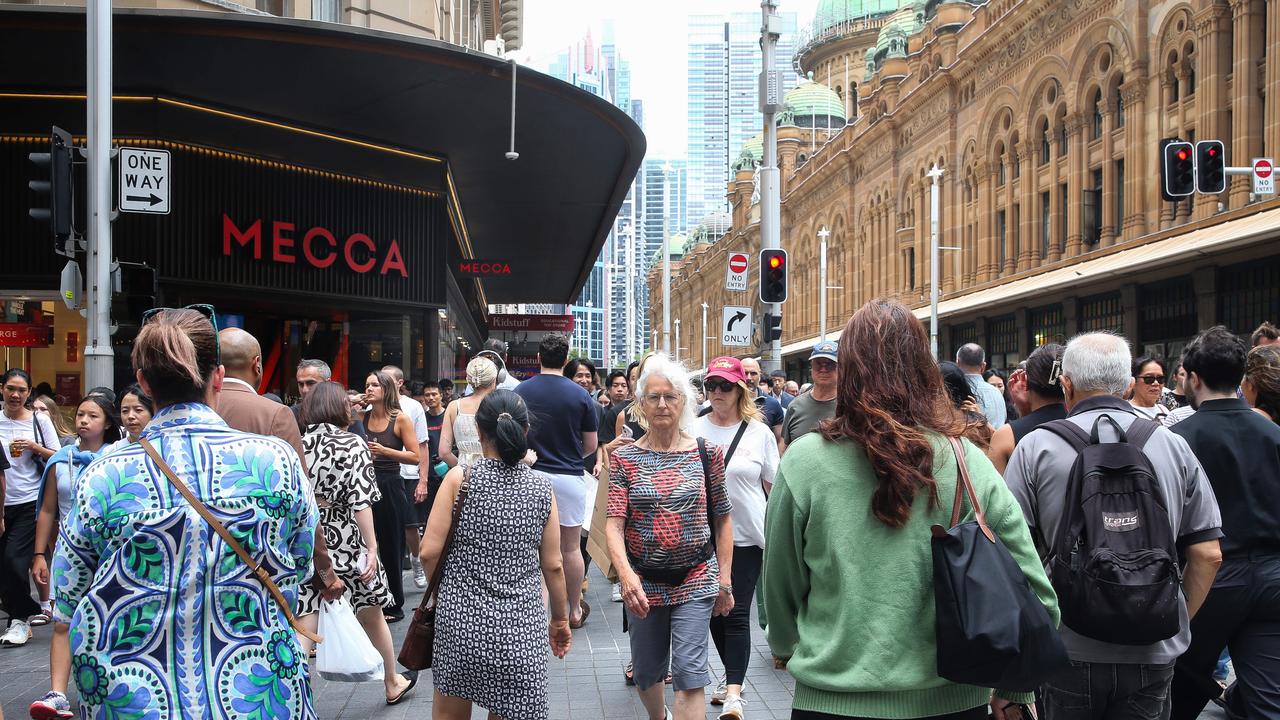
In a surprising turn that underscores growing financial strain on Australian consumers, national household spending posted its sharpest decline in three years during April 2024, new data from the Australian Bureau of Statistics (ABS) reveals. The 1.1% month-on-month plunge follows a solid 1.6% expansion in March, with multiple overlapping factors — from temporary federal tax policy to the ongoing Middle East conflict and persistent cost-of-living challenges — combining to pull overall spending lower.
The single largest contributor to the overall drop was a 4.7% collapse in transportation spending, a shift directly tied to the federal government’s temporary halving of the national fuel excise, alongside state and territory governments forgiving associated GST revenue. The policy change, which took effect on April 1, delivers an average saving of 26 cents per litre at the pump through the excise cut, plus an additional 5.7 cents per litre from the returned GST, pushing down total nominal spending on fuel even as consumption rose.
“Even though Australians purchased more fuel volume in April compared to March, the tax cut offset that increase,” explained Callam Pickering, senior economist at Indeed APAC. “Ultimately, consumers drove more but spent less out-of-pocket on fuel for the month.” Beyond fuel savings, transportation spending also fell as Australians scaled back air travel, with some trip cancellations tied to market uncertainty stemming from the Middle East conflict further reducing discretionary travel expenditure.
Beyond transportation, discretionary spending across multiple key sectors also pulled back, with declines recorded in out-of-home dining, recreation, and retail categories including clothing and footwear. Industry analysts note this pullback reflects a broader trend of Australian households tightening their budgets in response to mounting financial pressures.
“Consumers are increasingly retreating to spending only on essentials and hunkering down against a growing list of economic headwinds, including mortgage stress, softening consumer confidence, rising unemployment, and lingering uncertainty following the release of the recent federal budget,” said Marc Jocum, senior product and investment strategist at Global X. “Discretionary spending has become the first casualty of this more cautious approach.”
The Middle East conflict that erupted in late February has driven extreme volatility in global oil markets, pushing prices from roughly $US56 per barrel in pre-conflict January to a temporary peak of $US120 per barrel. Prices moderated to around $US110 per barrel by the end of April, but the volatility has created ongoing uncertainty for domestic fuel prices. Every $US10 increase in global crude prices translates to an extra 10 cents per litre for Australian motorists, adding consistent pressure to household budgets.
A key wildcard for coming months is the upcoming expiration of the temporary fuel excise cut on July 1. Treasurer Jim Chalmers has all but confirmed the policy will not be extended, meaning fuel prices are set to rise sharply just as households are already pulling back on spending. Economists warn that the combination of expiring tax relief, elevated global oil prices, lingering high inflation, and recent interest rate hikes will continue to weigh on household spending in the short to medium term.
The Reserve Bank of Australia has implemented three consecutive interest rate hikes, lifting the official cash rate to 4.35% to curb persistent inflation. Jocum notes that these higher borrowing costs are already reshaping household behavior, particularly for mortgage holders. “For the RBA, the core risk is that even while inflation remains sticky in some parts of the economy, households are already behaving as if an economic slowdown has arrived,” he added.
Pickering echoed this cautious outlook, noting that ongoing headwinds will continue to pressure spending in coming months. “If fuel prices stay elevated, that gradually erodes the ability of many households to spend on non-essential items, likely dragging down discretionary spending growth further,” he said. “Higher interest rates are also weighing heavily on household budgets, and the overall economic outlook is far less positive than it was just a few months ago.”