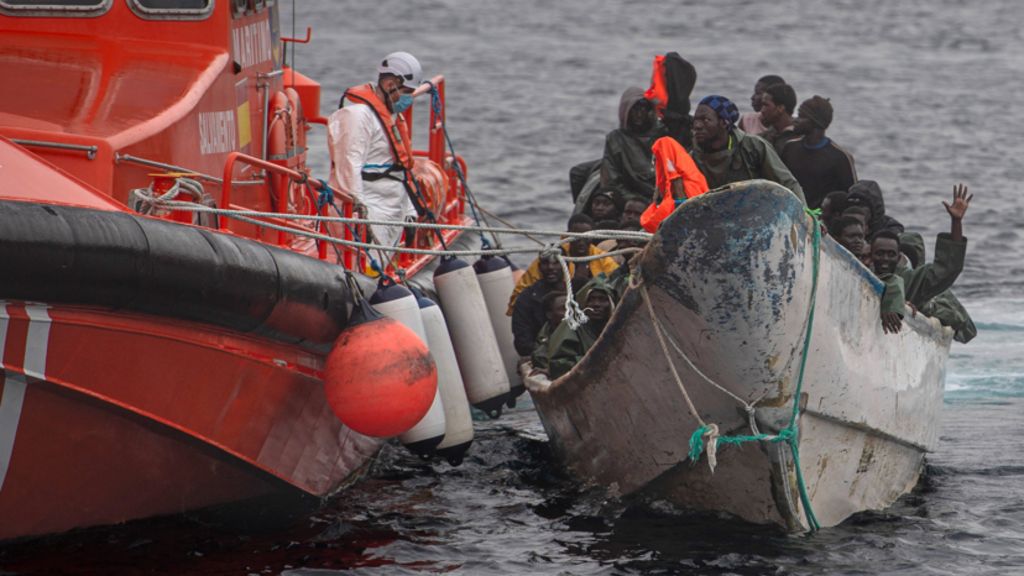
A devastating maritime tragedy unfolded off the Senegalese coast this week, as a small overloaded wooden migrant vessel capsized mid-journey, claiming at least 34 lives according to official statements relayed by the Senegalese Press Agency (APS). The ill-fated craft was traveling between the Senegalese capital Dakar and the northern coastal city of Saint-Louis, en route to Spain’s Canary Islands, one of the most heavily trafficked irregular migration entry points to the European Union. As of the latest update, only one survivor has been pulled from the waters, while the full count of unaccounted passengers remains unknown as search and rescue teams continue scouring the Atlantic coastline. Local Senegalese migrant support organization Boza Fii, founded by Saliou Diouf, confirmed that all recovered remains to date are Senegalese nationals, with the nationalities of missing passengers yet to be verified. This latest disaster arrives as grim new data from Spanish migrant rights watchdog Walking Borders reveals that 635 people lost their lives on the Atlantic Canary Islands route between January and May 2026, marking the highest fatality rate of any monitored Mediterranean and West African migration corridor. The group’s ongoing assessments indicate that roughly 21 out of every 100 people who attempt the crossing and successfully reach the Canary Islands perish during the perilous voyage, a statistic that underscores the extreme risk undertaken by travelers. In response to the sinking, Senegalese President Bassirou Diomaye Faye issued an official public statement via his X social media account, offering formal condolences to the grieving families of the victims and issuing a direct plea to Senegalese citizens to avoid risking their lives on unregulated sea journeys. Faye, who won widespread support from Senegal’s large youth population during his 2024 election campaign, pledged to ramp up cross-border enforcement operations to dismantle illicit human smuggling networks that facilitate the dangerous trips, while simultaneously rolling out targeted domestic programs to expand economic opportunity for young people. “We will pursue unrelenting action against the criminal gangs that organize these deadly crossings, while building the pathways that give our young people tangible reasons to build their futures right here at home,” Faye stated. The sinking is not an isolated incident: Senegalese law enforcement announced they intercepted a separate overcrowded migrant vessel on Friday carrying 142 travelers bound for Spain, including 23 women, two infants, and two additional minor children, representing a mix of nationals from Senegal, The Gambia, Guinea-Bissau, Guinea, and Nigeria. Across the Atlantic in Spain’s Canary Islands, local authorities declared a formal state of emergency on the small island of El Hierro on Saturday, after more than 3,300 irregular migrants arrived on roughly 30 small boats since the start of November, overwhelming local shelter and public service capacity. The Canary Islands route has emerged as a dominant migration corridor in recent years, as tightened border enforcement and expanded bilateral cooperation between EU member states and North African nations have diverted large volumes of irregular travel away from the central Mediterranean crossing. The International Organization for Migration notes that a confluence of factors drives West African travelers to attempt the dangerous voyage, including widespread limited formal employment, family economic pressures, and well-established transnational smuggling networks. Senegal’s national statistics agency reports that nearly one in four young Senegalese people were classified as unemployed in the second quarter of 2026, a stark economic reality that presents a major governing challenge for the Faye administration, which has prioritized job creation for the country’s youth majority. Senegal’s interior ministry released a follow-up statement on Sunday confirming it will expand collaborative anti-smuggling operations with neighboring West African states to disrupt human trafficking rings at their source.