A devastating maritime disaster has left at least 250 people — a group including both Rohingya refugees and Bangladeshi nationals — unaccounted for after their overcrowded migrant vessel capsized in the Andaman Sea while attempting to reach Malaysia, United Nations refugee and migration agencies confirmed.
Details of the incident remain fragmented in its immediate aftermath, but Bangladesh Coast Guard spokesperson Lieutenant Commander Sabbir Alam Suzan shared preliminary information with the Associated Press on Wednesday, confirming that nine passengers have been pulled from the water alive. The rescue, which took place April 9, was carried out by the crew of the M.T. Meghna Pride, a Bangladesh-flagged cargo ship that spotted the survivors adrift after the shipwreck. Among those rescued are three Rohingya refugees and six Bangladeshi citizens, eight men and one woman, all reported to be in stable condition after being transferred to local police in Teknaf, the departure point for the ill-fated voyage.
Unlike coordinated official search efforts, this rescue was an unscheduled act of goodwill by the merchant vessel’s crew, a senior Bangladesh Coast Guard media official told the AP Wednesday on condition of anonymity per government protocol. The capsizing occurred outside Bangladesh’s territorial waters, so the Coast Guard had not launched an official search operation at the time of the rescue. As of Wednesday, the exact timeline of the sinking and the status of any expanded search operations for the hundreds of missing passengers remains unconfirmed.
In their joint statement released Tuesday, the Office of the United Nations High Commissioner for Refugees (UNHCR) and the International Organization for Migration (IOM) outlined the known context of the disaster: the wooden trawler departed from Teknaf, located in Bangladesh’s southern Cox’s Bazar district, where the world’s largest refugee camp is based, carrying a large contingent of passengers bound for Malaysia. The vessel sank after extreme sea conditions — combined with dangerous overcrowding — left it unable to navigate, with strong winds and rough seas causing the boat to lose control and capsize.
Shari Nijman, a UNHCR communications officer based in Cox’s Bazar, confirmed Wednesday that the agency had no additional updates to share beyond the initial joint statement.
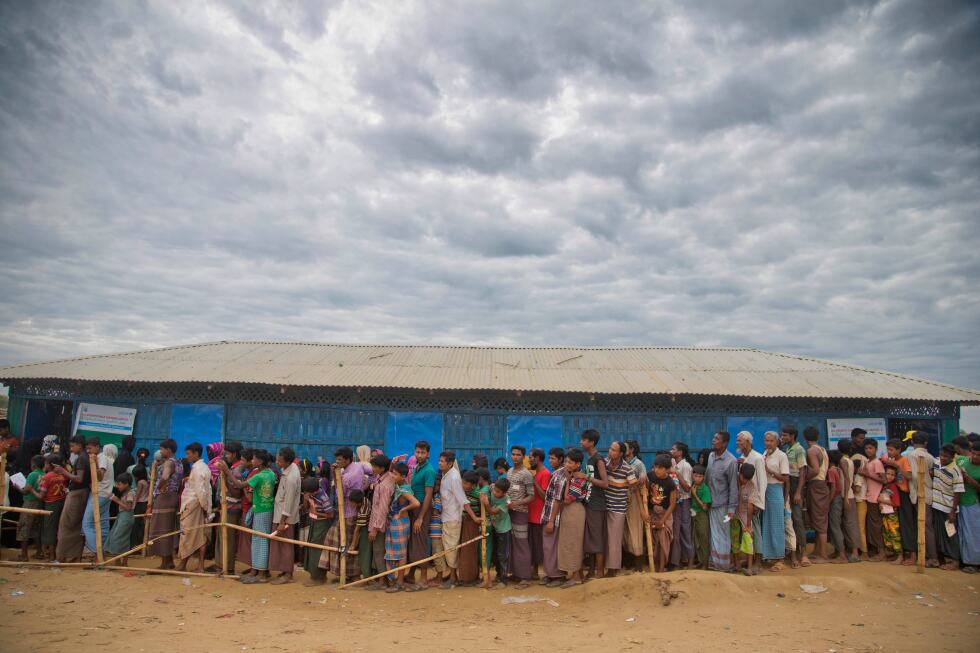
The two UN agencies emphasized that the tragedy is not an isolated incident, but a direct consequence of the years-long protracted displacement of the Rohingya people, for whom durable, long-term solutions remain out of reach. Decades of systemic persecution and ongoing violence in Myanmar’s Rakhine State have made safe, voluntary repatriation impossible for most of the more than 1 million Rohingya now sheltering in Bangladesh. Within Bangladesh’s overcrowded refugee camps, limited access to humanitarian aid, formal education, and legal employment leaves thousands of vulnerable people in desperate conditions, pushing many to accept dangerous offers from people smugglers who falsely promise steady work and improved living standards in Malaysia or other Southeast Asian nations.
In the wake of the disaster, UNHCR and IOM issued an urgent call for the international community to increase financial support and show greater solidarity with Rohingya refugees and the government of Bangladesh, which has hosted the displaced population for more than six years.