Forty years after Iraq’s last World Cup appearance, Mustafa al Saadi had every reason to believe he would cheer on his national team in person this June. The 32-year-old oncology lab technician from Mosul General Hospital had traveled the world alongside three colleagues to follow Iraq’s national soccer side, and when the team clinched its 2026 World Cup spot — the first in al Saadi’s lifetime — the group immediately planned their trip to the co-hosted North American tournament.
Only three of the four friends boarded a flight to the United States. Al Saadi’s visa application remained stuck in processing, forcing him to watch Iraq’s opening match against France from a makeshift outdoor fan zone in Mosul’s al Muthanna neighborhood, less than a mile from the crumbling ancient fortification walls of Nineveh. As red signal flares painted the night sky over the crowd, he tried repeatedly to call his friends inside Philadelphia’s Lincoln Financial Field, but the calls never went through. “It is a very sad feeling to see your close friends present with the national team in every country in the world, but I am not,” al Saadi told reporters at the gathering.
Al Saadi’s disappointment is far from unique. For decades, FIFA has positioned the World Cup as a tool to bring global soccer communities together, expanding the tournament’s reach to give more small and developing nations a shot at qualification. The 2026 iteration, co-hosted by the U.S., Canada, and Mexico, delivered on that promise in historic fashion, with four nations — Cape Verde, Jordan, Uzbekistan, and Curaçao — making their World Cup debuts. But qualification for the tournament did not guarantee entry for the teams’ supporters, journalists, and even official personnel, as immigration rules remain the exclusive domain of the three co-host governments.
Data from pre-tournament advocacy efforts shows that fans from roughly one in four qualified nations faced travel bans, strict entry restrictions, or dramatically high U.S. visa refusal rates. These inequities were impossible to miss in the tournament’s stands. During a group stage match outside Boston between Haiti and Scotland, two sides returning to the World Cup after decades-long absences, tens of thousands of Scottish supporters took to the city streets in bagpipe-led processions, with their chant of “Flower of Scotland” measured at 125 decibels — roughly the volume of an incoming jet taking off. By contrast, only a small cluster of Haitian fans waving the national red-and-blue flag were present in the stands, as Haitian citizens have been subject to strict U.S. travel restrictions since the Trump administration.
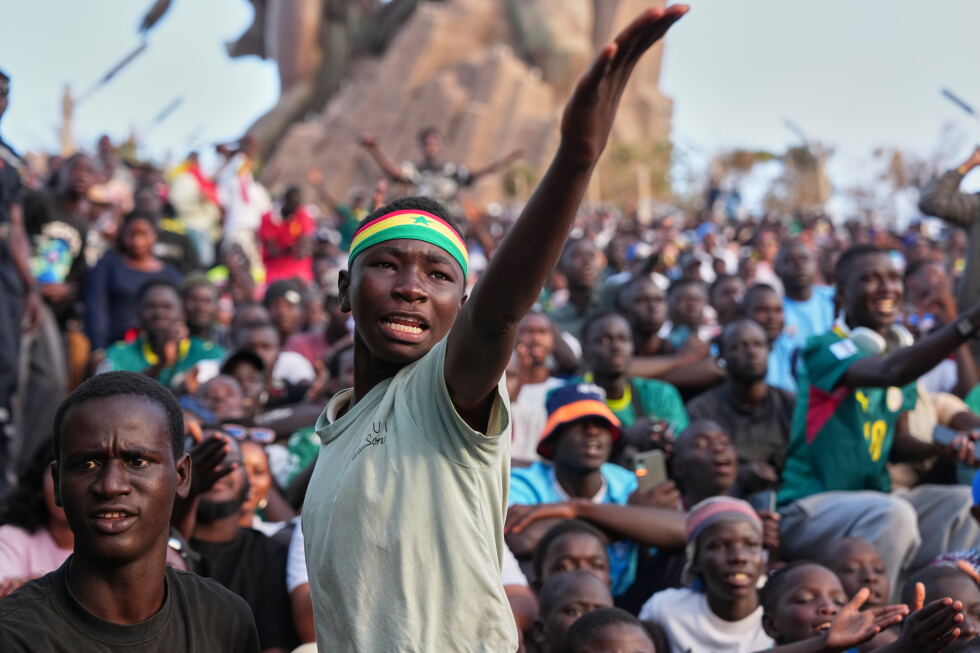
For the hundreds of thousands of fans locked out of North American stadiums, the 2026 World Cup unfolded in hometown fan zones, local restaurants, and diaspora communities across the globe. Hundreds packed in front of a giant outdoor screen in Mosul to watch Iraq’s long-awaited return. In Brockton, Massachusetts, home to one of the largest Cape Verdean diaspora communities outside the island nation, supporters packed local restaurants to watch their team face Spain before spilling into the streets in celebration, setting off fireworks while waving national flags from car windows. In Dakar, Senegal, hundreds of fans climbed university balconies and perched on window ledges just to catch a glimpse of the giant screen airing their team’s opening match.
Iraq’s tournament ended in disappointment: after three consecutive heavy defeats, including a 5-0 loss to Senegal in their final group stage match, the 10-man side exited the tournament without earning a single point, leaving local fans shocked and heartbroken. But the conversation around the 2026 World Cup has centered far more on the off-field barriers that have divided the global soccer community than on on-field results.
Weeks before the tournament kicked off, United Nations High Commissioner for Human Rights Volker Türk warned that existing U.S. immigration policies would undermine equal access to the World Cup, calling for a “massive rethink” of enforcement rules to protect “human rights and human dignity.” As part of a broader immigration crackdown launched during the Trump administration, the U.S. introduced a requirement last year that visitors from 50 designated countries post visa bonds of up to $15,000 to enter the country. After formal requests from FIFA for a World Cup exemption, the administration only waived the bond requirement for ticket holders from five participating African nations — Algeria, Cape Verde, Ivory Coast, Senegal, and Tunisia — leaving all other fans subject to the rule, and all supporters still required to complete the standard, often lengthy, visa application process.
Unlike previous 2018 and 2022 World Cups hosted by Russia and Qatar, which created streamlined, tournament-specific entry systems to ease international travel for fans, the three North American co-hosts opted to rely entirely on their existing national immigration frameworks, rather than rolling out special entry permits for World Cup attendees. Canada required all qualifying international fans to apply through its standard visitor visa process, while Mexico maintained its existing visa policies for foreign visitors.
Even experienced sports journalists have not been spared from visa denials. Ghanaian reporter Prince Ayim Brown spent months saving extra money, took on additional freelance assignments, and even completed a special U.S. Embassy training program for journalists covering the tournament, only to have his visa application rejected without explanation by the same embassy. “World Cup is the pinnacle of football — every journalist and every football fan wants to be there,” he said.
A U.S. State Department spokesperson defended the agency’s processing efforts, noting that the final list of qualified teams had been public for months, giving fans who required visas adequate time to submit applications. The spokesperson added that the department deployed more than 600 additional consular staff, added millions of extra visa appointment slots, and used the FIFA PASS program to prioritize World Cup-related applications, all while maintaining existing national security screening standards.
For fans like Assane Ly, a salesman in Dakar who was denied a U.S. visa, the lost opportunity extends far beyond watching a match from stadium seats. Watched Senegal’s opening match from the same Cheikh Anta Diop University fan zone, Ly said he grieves the chance to connect with fans from across the globe that makes the World Cup unique. “The World Cup is supposed to be a moment when geopolitics are on hold, when the host country welcomes people from all nationalities, skin colors and religions to come together to celebrate football,” he said.
For diaspora communities, the 2026 World Cup has still brought unanticipated joy, even when few native fans could make it to stadiums. For Cape Verde’s first-ever World Cup appearance, the small Brockton diaspora community got the chance to cheer for their home nation for the first time, after decades of supporting other countries with stronger historical and cultural ties. Jaysen Gonçalves, a Cape Verdean-American who had attended two previous World Cups, bought his tickets as soon as the nation qualified, and was inside the stadium when Cape Verde held powerhouse Spain to a historic scoreless draw. Still, he noted that Spanish fans outnumbered Cape Verdean fans roughly 9 to 1 inside the arena — a gap driven by financial and travel barriers. “It shows,” he said. “That is financial.”
Back in Brockton, where Jaysen and his mother Amelia own Luanda Restaurant, the celebration was far more vibrant. For more than 20 years, the restaurant’s World Cup watch parties have been dominated by fans wearing jerseys of Portugal and Brazil, reflecting Cape Verde’s colonial history, shared language, and widespread family ties to both nations. This year, however, every screen in the restaurant is tuned to Cape Verde matches, and every fan is wearing the national blue-and-red. When Cape Verde held Spain scoreless, patrons pulled out sparkling wine to celebrate, Amelia Gonçalves said. “It was like we won the World Cup,” she said, adding that she was too emotional to sleep after watching goalkeeper Vozinha make seven game-saving stops. “That means he gives us a lot of visibility to the world. People can see us now. ‘Yes, there is a country — an island — called Cape Verde.’”
For al Saadi, his stalled visa ended up reshaping his World Cup experience in an unexpected way. His application, submitted a full month before the tournament kicked off, still has not received a response, with no explanation for the delay. Complicating the process for Iraqi applicants, the U.S. suspended routine consular services within Iraq years ago, forcing applicants to travel to neighboring countries just to secure an in-person interview, adding layers of cost and complexity that many cannot overcome.
Instead of traveling to Philadelphia, al Saadi stepped up to help local organizers build the al Muthanna fan zone, bringing the World Cup to his hometown of Mosul, a city still recovering from years of conflict and isolation. On match nights, the square comes alive: a performer in an Iraqi national jersey walks the crowd on stilts, teenage boys dance with national flags draped over their shoulders, spotlights sweep over the crowd, and soccer anthems echo off the surrounding buildings. “By having this event, we brought the World Cup from America, Mexico and Canada to the city of Mosul,” al Saadi said. “Now Mosul is a global city.”