The 2026 FIFA World Cup’s final showdown between Spain and Argentina is far more than a battle for soccer’s biggest global prize — it is an unexpected emotional test for hundreds of thousands of people with deep ties to both Spanish-speaking nations, whose shared histories and cultures have bound their communities together for centuries. This historic match, set to take place in New Jersey, marks the first time two Spanish-speaking countries have met in a World Cup final since the very first tournament in 1930, where hosts Uruguay defeated Argentina 4-2 in Montevideo.
The bond between Argentina and Spain stretches back to the founding of Argentina’s capital, Buenos Aires, by Spanish explorer Pedro de Mendoza in the mid-1500s. Even after Argentina won its independence from Spanish rule, the Iberian Peninsula’s cultural influence persisted and grew, amplified by massive waves of Spanish immigration to Argentina in the first half of the 20th century. Today, millions of Argentines can trace their lineage to Spanish ancestors, while reverse migration over the past 50 years has made Spain home to more than 450,000 Argentine-born people, according to 2025 Spanish census data. This interconnectedness extends to soccer itself: Argentine legends Alfredo Di Stéfano and Lionel Messi became global icons playing for Spain’s most storied clubs, Real Madrid and FC Barcelona respectively.
Unlike many high-stakes international soccer matchups, this final does not grow out of a long-standing bitter rivalry. In fact, the two nations have only faced off once before in World Cup history, a 1966 group stage match that ended in an Argentine victory. That lack of history has not eased the internal conflict for fans with split loyalties, however.
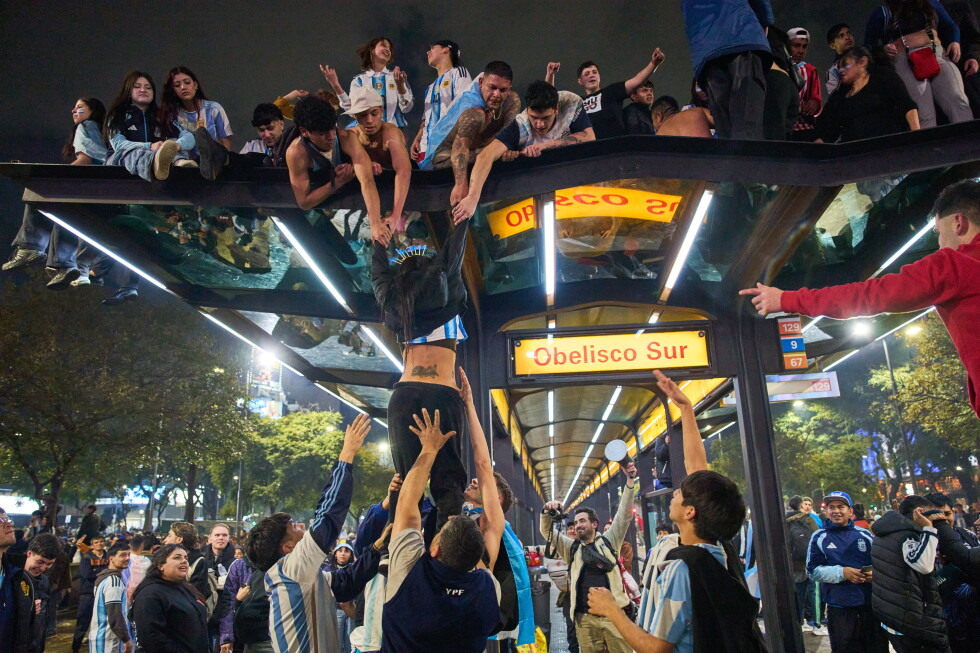
For long-term Argentine residents born in Spain, the choice between supporting La Furia Roja (Spain’s national team) or La Albiceleste (Argentina’s national team) feels like an impossible choice between two family members. Juan Manuel Posada, a 75-year-old originally from Asturias who moved to Buenos Aires in 1968, summed up the conflict: “It feels like being caught between a rock and a hard place.” Though his heart remains tied to his native Asturias and the Spanish national team — and he supports Spanish club Sporting de Gijón alongside Argentina’s Independiente de Avellaneda — he says he will not be heartbroken if Argentina claims the trophy. Posada laughed as he recalled a deal he struck with his Argentine grandson: the pair will celebrate no matter who wins, but he doubts they would risk wearing a Spanish jersey to celebrate at the Obelisk, Buenos Aires’ iconic central gathering spot for Argentine national team victory parties.
Eighty-one-year-old Manuel Fernández Acevedo, who moved from Galicia in northern Spain to Argentina as a young child, echoed that balanced perspective. “May the best team win. If Spain wins, that’s great, and if it’s Argentina’s turn, that’s fine too,” he said.
The same divided excitement holds for the hundreds of thousands of Argentines who have built new lives in Spain, driven to leave their home country by decades of political instability and repeated economic crises. Nineteen-year-old Nahuel Barreta, who has lived in Málaga for a year, says he views the match as a respectful contest between family. “It feels like home here. We’re going to watch the match at a downtown bar with friends — it’s our usual ritual. I’ve never experienced a World Cup like this,” he said.
In recent days, this unique final has spawned viral humor across social media, with thousands of users sharing stories of Argentine-Spanish couples declaring temporary “divorces” until the final whistle, and playful battles to convince children to root for their preferred side. For a match that pits two deeply connected nations against each other for soccer’s highest honor, there is no doubt: this is a World Cup final that feels like a truly family affair.