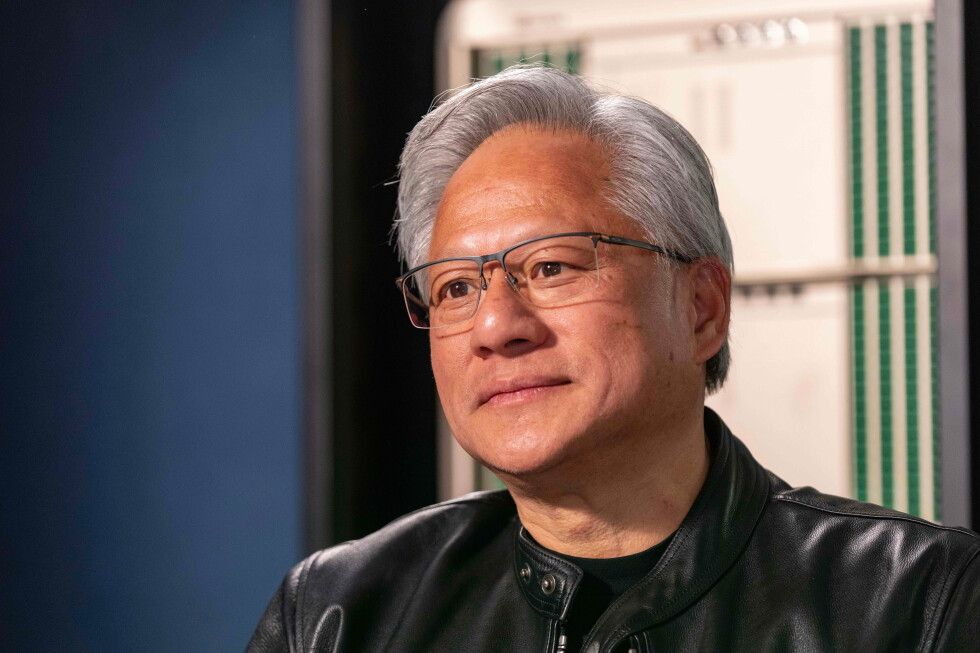
SHERMAN, Texas — As the leader of the firm that ignited the global artificial intelligence boom, Nvidia Chief Executive Jensen Huang laid out a comprehensive vision for AI’s integration into modern life Tuesday during an exclusive interview with the Associated Press, arguing that widespread embrace of the transformative technology will deliver broad societal benefits while calling for deliberate adaptation to new norms and targeted regulation.
Huang, whose company’s explosive growth fueled by AI demand has pushed its market capitalization past $5 trillion to make it the world’s most valuable publicly traded company, has long voiced unbridled optimism about AI’s ability to reshape economies and accelerate scientific discovery. But as public anxiety grows over the technology’s potential harms — from mass layoffs to existential safety risks — the industry’s most prominent executive has stepped forward to address critics, pushing back against fears while acknowledging the need for proactive change.
“We need to create new social norms,” Huang said during the interview. “I would advocate that everybody use AI. Just go engage it.”
His remarks come at a moment when AI has become a contentious political flashpoint across the United States. Communities have pushed back against plans to build new AI-focused data centers over environmental and infrastructure concerns, while workers across sectors worry that rapid adoption will leave millions jobless without adequate social safety nets. These growing concerns have eroded public support for the technology even as the U.S. faces intensifying AI competition with China — a race Huang says the U.S. can only win by maintaining an open, globally engaged approach to AI development.
Huang pushed back against narratives that AI will leave non-technical workers behind, noting that the technology has already narrowed the digital divide by enabling people without coding or software development skills to complete complex tasks ranging from website design and dense document analysis to cutting-edge scientific research and home renovation planning.
Drawing a historical parallel to the introduction of automobiles, Huang argued society will adapt to AI just as it adjusted to the new technology of a century ago. “Cars were once portrayed as killing children, but the world changed its norms by having sidewalks and crosswalks and stopping kids from playing in the streets,” he explained, framing current anxiety as a natural part of integrating a transformative new technology.
On the topic of regulation, Huang acknowledged that targeted government oversight and baseline safety standards are necessary, stressing that national security must remain a top priority for a technology that has been a key driver of recent U.S. stock market gains and economic growth.
He voiced skepticism over a recent cross-ideology proposal that would have the U.S. government take equity stakes in AI companies to ensure the public broadly shares in the sector’s windfall profits, an idea floated by former and current President Donald Trump, independent Sen. Bernie Sanders, and even OpenAI CEO Sam Altman. Huang noted that American companies already deliver broad benefits to the public through multiple channels: “Their success benefits the stock price, of which many Americans are investors in. It generates taxes, which helps many Americans. It creates a lot of jobs.” He added that growth in the AI sector also lifts profits for connected industries including energy, construction and hardware manufacturing, meaning Americans already hold a natural stake in AI firms’ success across the economy.
Huang addressed the Trump administration’s recent shift toward stricter AI regulation, including new export controls on Anthropic’s latest AI models that forced the company to suspend public access to the tools, and a new executive order requiring voluntary government screening of high-impact AI models before release. He agreed that national security must be the top priority for all emerging technologies, but called for clear, targeted policy: “you have to be very specific about the risk that you’re concerned about, before setting up policies for export controls.”
This is not Huang’s first run-in with AI export controls: during the Biden administration, Nvidia pushed back against restrictions on chip sales to China, rejecting the argument that a ban would protect U.S. AI advantages. Huang warned at the time that broad restrictions would undermine the development of a global U.S.-led AI ecosystem, as China would respond by accelerating development of its own advanced chips.
Huang also identified energy supply as one of the most critical vulnerabilities for U.S. AI development, noting that AI training and inference data centers require massive amounts of electricity that risks straining the national power grid and raising household utility costs. “The United States is woefully behind in energy production,” he said. “We just suffocated energy production for too long.” Without expanded energy output, he warned, the U.S. will struggle to capitalize on its leading position in AI chips, models and infrastructure. Huang complimented Trump’s policy of expanding domestic fossil fuel production, declining to comment on Trump’s rejection of large-scale solar and wind energy development.
The interview took place during a visit to Sherman, Texas, for the expansion of a Coherent factory building new laser systems that transmit data between chips, a technology that could cut AI power consumption by as much as 50%.
Huang’s close public friendship with Trump has drawn criticism from Democrats, and Huang shed new light on how the relationship began. The pair first connected last year, when Huang was in South Florida to accept the Edison Achievement Award for his work on AI, and Trump invited him and his wife Lori to dinner at his Mar-a-Lago private club. “He was incredibly engaging, incredibly charismatic, conversational, asked a lot of questions,” Huang recalled of the meeting. “From the moment that I met him, the only thing that he’s ever talked to me about is creating more jobs, reindustrializing the United States, protecting national security, winning.” Huang added that Trump often calls him unexpectedly to discuss policy around these priorities, and arranged for Huang to be picked up by Air Force One in Alaska during Trump’s recent state visit to China.
Sen. Elizabeth Warren was among the Democratic critics who attacked Huang for declining to testify before a Senate panel while attending the high-profile Mar-a-Lago dinner, which reportedly had a $1 million per person admission price. Huang pushed back on the political criticism, noting that he supports presidential success regardless of party affiliation: “We could differ with politics, but we should want him to succeed. Because when President Trump succeeds, our country succeeds.”
Huang also reaffirmed that AI’s long-term impact will be overwhelmingly positive, arguing that full engagement with the technology rather than fear-driven restriction will position the U.S. to lead the world in delivering shared growth and progress.