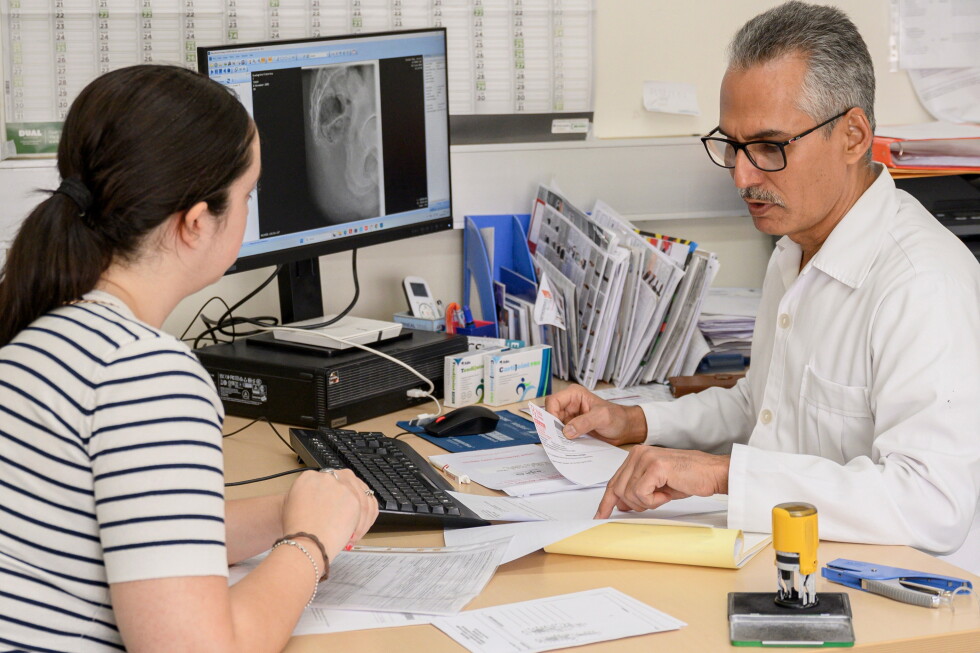
In the sunbaked, underdeveloped toe of Italy’s boot, a quiet standoff over geopolitics and public health is playing out. Calabria, Italy’s poorest region, has become an unlikely exception to a growing global trend: it continues to host hundreds of Cuban medical professionals, defying long-running U.S. efforts to shut down Cuba’s iconic international medical program. For decades, Cuban doctors have brought their specialized experience delivering care in low-resource settings to developing nations across the globe, but Calabria is one of the few places in Europe where the program still operates under mounting American pressure.
Calabria’s decades-long struggle with healthcare access creates the urgent need for foreign medical staff. For 17 years until April, the region operated under special national administration due to persistent budget shortfalls, compounded by systemic corruption and Mafia infiltration that gutted planned investments in public health. Young Italian medical graduates overwhelmingly leave for higher-paying careers in the wealthy, industrialized north, leaving gaping staffing shortages that shuttered entire hospital departments by the early 2020s. Before the first cohort of Cuban doctors arrived in Polistena Hospital in January 2023, chief physician Francesco Moschella told the Associated Press he was single-handedly keeping the facility’s emergency room open. At one point, patients faced waits of up to 12 hours just to see a provider.
Today, more than 200 Cuban doctors work across remote Calabrian hospitals, filling half of all emergency room staffing in some facilities. Zoila Yakelin Arevalo Cruz, an emergency medicine specialist who left her young son in Cuba to take up her post in mid-2023, works in Polistena’s ER, which treats 30,000 patients annually. The 38-year-old, who now speaks fluent Italian and even picked up the local Calabrian dialect from visiting patients, said she and her colleagues had no idea how severe the doctor shortage was in a European first-world region. Thanks to the addition of Cuban staff, she said, wait times have dropped from multiple hours to under 60 minutes. Local residents echo that praise: 72-year-old Maria Morano, a regular patient at Polistena, said the Cuban doctors bring a rare combination of skill, empathy and humility that many local patients don’t see from Italian providers. “We are lucky they came, otherwise our hospital would have been closed entirely,” she said.
The U.S. government has spent years targeting Cuba’s medical program, which it labels a lucrative revenue stream for Cuba’s socialist government and accuses of operating as a form of human trafficking, citing the Cuban state’s practice of collecting a portion of doctors’ salaries and claims of passport confiscation. Under successive U.S. administrations, Washington has pressured allied nations to cut ties with the program, and many have complied: in March, Jamaica ended its 50-year medical cooperation agreement with Cuba, displacing nearly 300 healthcare workers, while Honduras expelled more than 150 Cuban medical staff this year. But not all nations have bowed to pressure: Mexican President Claudia Sheinbaum publicly defended the program in March, noting it delivers critical care to underserved populations that would otherwise go without treatment.
Cuba says it currently deploys 22,000 medical personnel across 55 countries, framing the program as a global mission of solidarity rooted in the country’s longstanding commitment to universal healthcare. In February, U.S. officials including charge d’affaires to Cuba Mike Hammer traveled to Calabria to meet with regional governor Roberto Occhiuto to press for an end to the arrangement. The meeting was cordial, but Hammer made clear Washington would prefer Calabria source foreign staff from other countries. Occhiuto, a senior member of a strongly anti-communist Italian political party who was even featured in the official newspaper of Cuba’s Communist Party, is an unlikely defender of the program. But he makes no apologies for prioritizing his region’s people over geopolitical pressure: he told the AP that while he shares Washington’s opposition to Cuban socialism, his first responsibility is keeping local hospitals open. “I’ve faced pressure during the Biden administration, but it grew much more intense under Trump,” Occhiuto said. “I told U.S. officials we are working on incentives to lure local Italian doctors back to Calabria, but right now, we need these doctors to keep care accessible. I intend to keep all currently deployed Cuban doctors in their posts.” Occhiuto added that he would even like to triple the number of Cuban medical staff in the region to roughly 1,000, but has held off to avoid escalating conflict with Washington.
To address U.S. concerns, Calabria structured its agreement with the Cuban doctors unusually: rather than sending payments to the Cuban government agency that runs the country’s international medical missions, the region signs individual contracts with each doctor and deposits their full salary directly into Italian bank accounts. Even so, many Cuban doctors told the AP they voluntarily send up to half of their earnings back to the Cuban government, as a contribution to the state that trained and educated them. Daisy Luperon Loforte, a Cuban cardiologist working in Calabria, rejected the U.S. claim that doctors are forced into the program and exploited. “We do not consider ourselves modern-day slaves at all, as somebody has called us,” she said. “We love our country, we give an economic contribution, and we are happy to do so. Sixty-three Cuban doctors, many with prior experience in the country’s international missions, have already applied to extend their stays in Calabria and take up independent roles in the regional health system, according to the governor. The Cuban government has not commented on the applications, and the U.S. State Department declined to answer questions about its meeting with Occhiuto. For patients and local leaders, however, the arrangement is not about geopolitics—it is about keeping critical healthcare open for a neglected region that has few other options.