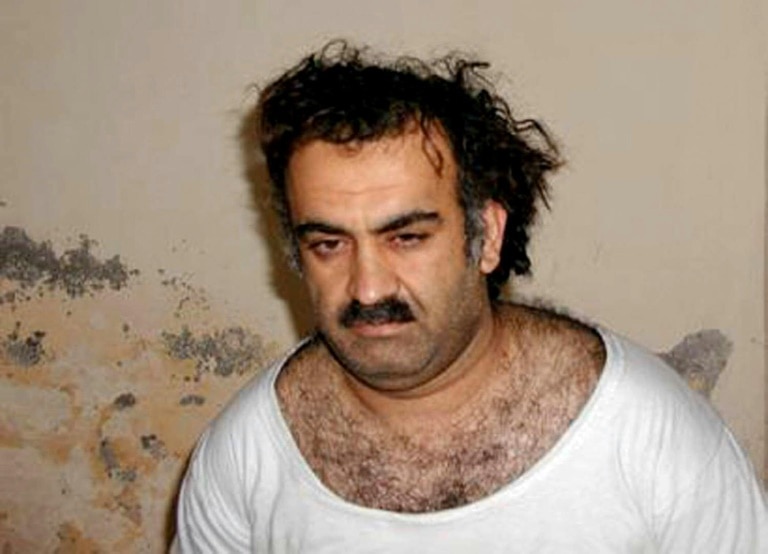
Nearly 27 years after the deadliest terrorist attack on U.S. soil, the long-running legal saga of the alleged architect of the September 11, 2001 attacks has hit a new milestone: a confirmed trial date. A U.S. court official announced Thursday that Khalid Sheikh Mohammed, the self-proclaimed mastermind of the attacks that killed nearly 3,000 people, will appear before a U.S. military court at the Guantanamo Bay Naval Base in Cuba starting June 5, 2028, alongside three co-accused plotters: Walid bin Attash, Ali Abdul Aziz Ali and Mustafa Ahmed al-Hawsawi.
The timeline marks a delay from the prosecution’s requested January 2027 start date, after the presiding military judge ruled additional time was required to resolve lingering pretrial disputes. This procedural hold-up is just the latest in a string of delays that have stretched on for nearly two decades, as the case has been bogged down by legal, political and ethical debates surrounding the defendants’ detention.
Khalid Sheikh Mohammed, widely known by the initials KSM, was once a top lieutenant to Al-Qaeda leader Osama bin Laden. He was captured during a raid in Pakistan in March 2003, and spent three years held in secret CIA black site facilities before being transferred to the notorious Guantanamo Bay military prison in 2006. A trained engineer who studied at a U.S. university, Mohammed has openly claimed he planned the 9/11 attacks “from A to Z”, and has also admitted involvement in numerous other anti-U.S. plots, including the 1993 bombing of the World Trade Center that killed six people, and the 2002 beheading of American journalist Daniel Pearl.
The 9/11 attacks remain the deadliest terrorist act in modern U.S. history: 19 al-Qaeda hijackers crashed four commercial passenger planes, two into New York’s Twin Towers, one into the Pentagon outside Washington D.C., and a fourth into a rural field in Pennsylvania, leaving 2,977 victims dead.
The most recent major push toward a trial collapsed in 2023, when a proposed plea deal that would have spared the four defendants the death penalty was withdrawn after intense public backlash from family members of 9/11 victims. For years, the central legal battle in the case has centered on whether the defendants can receive a fair trial, after it was confirmed they were subjected to systematic torture by CIA interrogators while in secret custody. Evidence obtained through torture is inadmissible in U.S. legal proceedings, creating a major legal hurdle that has slowed the case for decades.
The Guantanamo Bay detention facility was opened by the U.S. government in the wake of the 9/11 attacks to hold militants captured during the global War on Terror. The base’s isolated location outside the continental United States was intentionally chosen to prevent detainees from claiming full constitutional rights under U.S. domestic law. At its peak, the facility held roughly 800 prisoners, but most have since been transferred to other countries for detention or release, leaving only a small fraction of the original detainee population still in custody today.