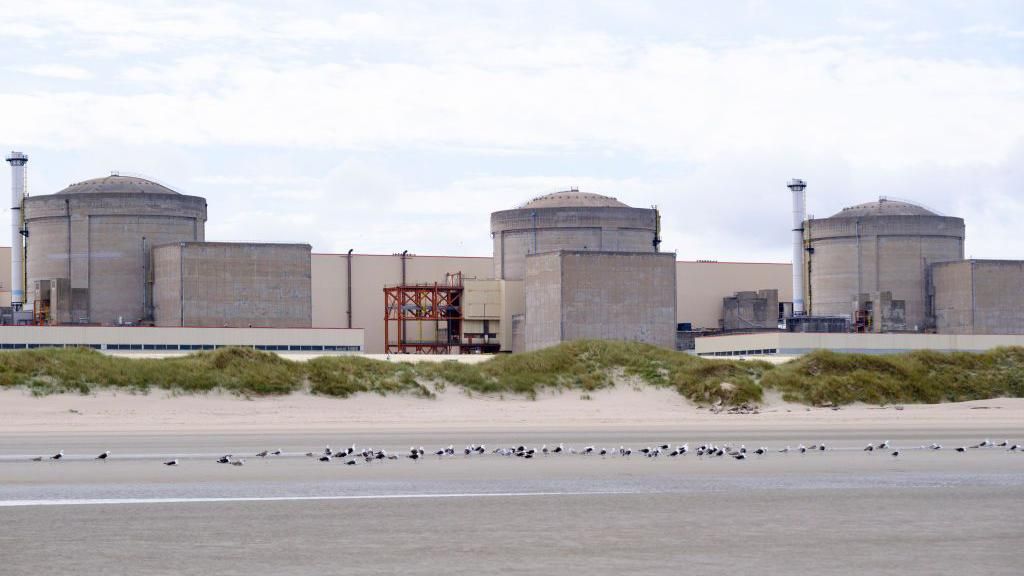
A record-breaking surge of jellyfish congregating in coastal waters has forced widespread operational disruptions at one of France’s largest nuclear power facilities, the Gravelines plant in northern Hauts-de-France. State-owned energy operator Électricité de France (EDF) confirmed that three of the site’s six 900-megawatt reactors have been taken offline due to jellyfish blockages in the seawater cooling system, with two additional reactors running at reduced capacity as a precautionary measure. The plant draws cooling water from a man-made canal connected directly to the North Sea, leaving its intake filters vulnerable to marine wildlife incursions during warm summer months. The shutdown sequence unfolded gradually: one reactor was taken offline on August 10, followed by two more between Wednesday and Thursday of this week. Notably, the August 10 shutdown came just eight days after that same reactor was reconnected to the national grid following an earlier jellyfish intrusion earlier this month. A fourth reactor has been out of service for unrelated scheduled inspections. This is not the first time the Gravelines plant, situated between the coastal cities of Dunkirk and Calais, has faced this issue: a nearly identical disruption linked to jellyfish blockages shut down operations at the site in August 2024. Marine biologists explain that this annual summertime pattern is driven by rising North Sea water temperatures, which boost plankton populations near the surface and draw large swarms of jellyfish inshore to feed. Local authorities and plant operators have rolled out targeted mitigation strategies to reduce the risk of repeated incursions. According to French regional news outlet Ici, one key initiative is a partnership with local commercial fishermen, who deploy nets to catch large jellyfish blooms and relocate them further offshore, away from the plant’s cooling intake. While jellyfish-related shutdowns make headlines, industry data shows such events are extremely uncommon globally. The last documented major incidents date back more than a decade: Scotland’s Torness nuclear plant was partially shut down by a jellyfish bloom in 2011, and Sweden’s Oskarshamn facility faced the same issue in 2013. For France, which relies on nuclear power for roughly 70% of its national electricity generation, unplanned reactor disruptions during peak summer demand — when air conditioning use pushes grids to capacity — add unexpected strain to the country’s energy system. The current shutdown removes 2,700 megawatts of generation capacity from the grid, enough to power roughly 2.7 million average French households. EDF has not yet announced a clear timeline for when the affected reactors will be fully cleared and brought back online.