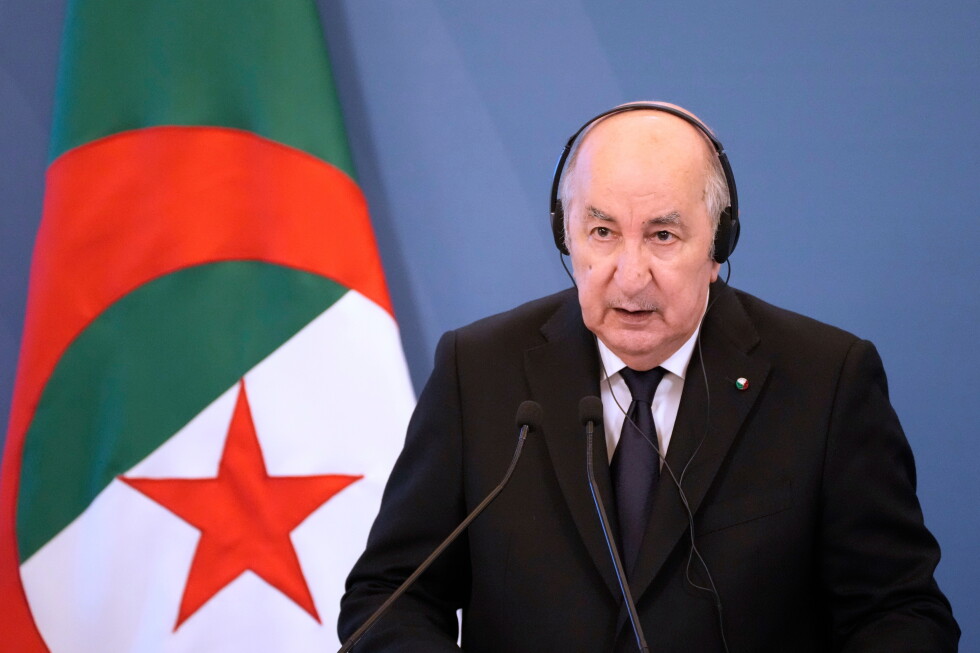
ALGIERS, Algeria — North Africa’s largest nation is holding long-awaited lower house parliamentary elections Thursday, a vote unfolding against a backdrop of widespread public apathy, mounting economic strain, and deep controversy over restrictions placed on opposition candidates.
Close to 25 million eligible Algerian voters are casting ballots across the country’s sprawling territory, selecting 407 representatives to serve five-year parliamentary terms from a field of just 1,235 approved candidates. The legitimacy of the vote has been thrown into question, however, after electoral authorities barred 269 hopefuls from running — a group that includes prominent former leaders and activists from the 2019 Hirak pro-democracy movement that forced long-ruling autocratic president Abdelaziz Bouteflika to step down. Many current and former members of the Islamist MSP party, the second-largest bloc in the outgoing parliament, were also excluded from the candidate pool.
Algeria’s electoral commission justified the bans by claiming the rejected candidates had ties to “illicit financial networks” and engaged in “suspicious political activities,” a justification that critics dismiss as a politically motivated crackdown on dissent. Since President Abdelmadjid Tebboune took office following Bouteflika’s ouster, the government has steadily narrowed political, media, and trade union freedoms. Tebboune, who ran against largely sidelined opposition candidates, won a second five-year term in a 2024 election that drew low turnout.
Turnout has emerged as the central question of this year’s parliamentary vote, after most voters largely ignored campaign events across the country. In an unusual effort to boost participation, the government declared election day a paid national holiday, and moved up the schedule for end-of-year school exams to free up classrooms and recruiting teaching staff to work at polling stations, a standard practice that offers daily stipends to poll workers.
Adaptations to accommodate voters have also been rolled out across remote regions. In southern Algeria’s Sahara Desert, voting began 48 hours early to let nomadic communities cast ballots, with ballot boxes transported via government-owned off-road vehicles escorted by armed police. For the 854,225 registered Algerian voters living abroad, most of whom reside in France, voting was held last weekend at consular locations across the globe. State news agency APS reported high turnout and a calm “family atmosphere” among diaspora voters.
Security forces deployed additional personnel around polling stations in the capital Algiers on Wednesday ahead of voting, pre-empting potential unrest or protests over the candidate bans. On the ground, candidates have struggled to draw voter interest as most Algerian voters prioritize immediate daily struggles over electoral politics. Skyrocketing living costs and eroding purchasing power, paired with steady declines in the quality of public services, have dominated public conversation, instead of campaign promises. Compounding the distraction, many Algerian sports fans are shifting their attention to the Qatar World Cup, where the national men’s soccer team is set to face Switzerland in a knockout round match scheduled for early Friday.
With traditional campaign rallies drawing almost no attendees, parties and independent candidates have shifted to informal grassroots outreach, holding small meetings in city streets, public markets, and neighborhood popular cafes. A widely shared video from last week highlighted the scale of voter apathy: it shows a major party leader failing to convince a young Algerian man to participate in the vote.
Still, major political blocs have pressed forward with campaigning. The outgoing pro-government presidential majority, led by the long-ruling National Liberation Front (FLN) party, currently holds roughly 300 of the 407 parliamentary seats, and has framed high turnout as critical to strengthening Algeria’s domestic stability amid ongoing regional geopolitical tensions. On the opposition side, the Trotskyist Workers’ Party has centered its campaign on demands for higher public pensions and minimum wages, and opposition to a proposed mining sector reform that would open more of the country’s natural resources to foreign investment. The Socialist Forces Front, the leading party of Algeria’s democratic opposition movement, has called for the immediate release of all political prisoners and expanded press freedoms, and urged voters to reject calls for an election boycott — arguing that staying home would only benefit the ruling government.