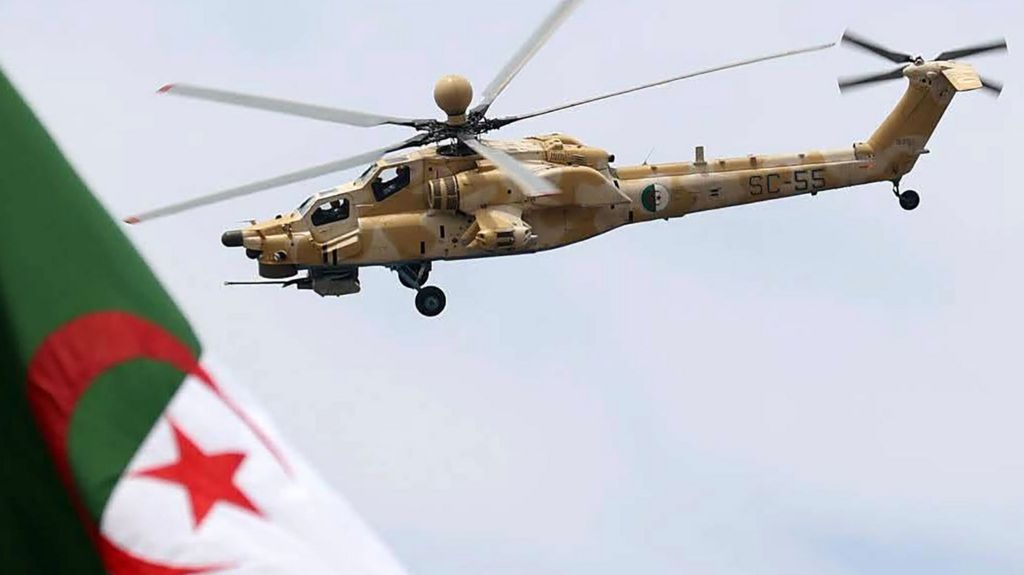
In a landmark shift away from its decades-long non-intervention military policy, Algeria has formally approved the deployment of its armed forces to Niger, marking the country’s first foreign troop dispatch since it committed personnel to Egypt during the 1973 Arab-Israeli War. The historic decision was greenlit after consecutive emergency sessions of Algeria’s two parliamentary chambers: the upper house voted 148 out of 174 senators in favour of the measure on Sunday, with the lower house subsequently ratifying the proposal. The deployment also represents the first time a 2020 constitutional clause permitting overseas military missions has been activated in the North African nation.
The deployment framework was laid following a recent official visit by Niger’s defence minister to Algiers, as the Sahel state grapples with a persistent wave of violent extremist activity, including insurgent factions affiliated with al-Qaeda and Islamic State operating across remote border zones. Algerian legislator Belkacem Boulghiti clarified to reporters in the aftermath of the parliamentary vote that the operation is not an offensive combat mission, but a targeted assignment to safeguard high-priority economic assets across northern Niger, in territories adjacent to the Libyan border. No official timeline for the troop rollout, nor the total number of personnel to be deployed, has been publicly disclosed by either government to date.
The move is underpinned by deepening economic and strategic ties between the two neighbouring nations, which only recently emerged from a major diplomatic falling out in 2025. That rift erupted after Algeria shot down a Malian drone that violated its airspace, prompting Niger to withdraw its ambassador to Algiers in a show of solidarity with its military-ruled Malian ally. The two states’ relationship had already been strained earlier in the decade, when Algeria publicly condemned the 2023 coup that ousted Niger’s democratically elected president Mohamed Bazoum and installed the military junta led by General Abdourahamane Tchiani.
Bilateral relations have undergone a rapid thaw in 2026, however: Tchiani made an official state visit to Algiers in February, and as recently as late August, Algerian President Abdelmadjid Tebboune deployed fighter jets to Niger to help quash an attempted counter-coup, followed by a donation of four military helicopters to Niger’s armed forces. The security collaboration is closely tied to Algeria’s multi-billion-dollar energy interests in its southern neighbour, most notably a planned trans-Sahel gas pipeline that would transport Nigerian natural gas through Niger’s territory to Algerian export terminals on the Mediterranean coast. State-owned Algerian energy giant Sonatrach has also recently signed a formal exploration partnership with Niger’s petroleum ministry to drill for crude oil in the remote Kafra region, where preliminary geological surveys by Reuters indicate two identified wells hold estimated reserves of 168 million and 100 million barrels respectively.