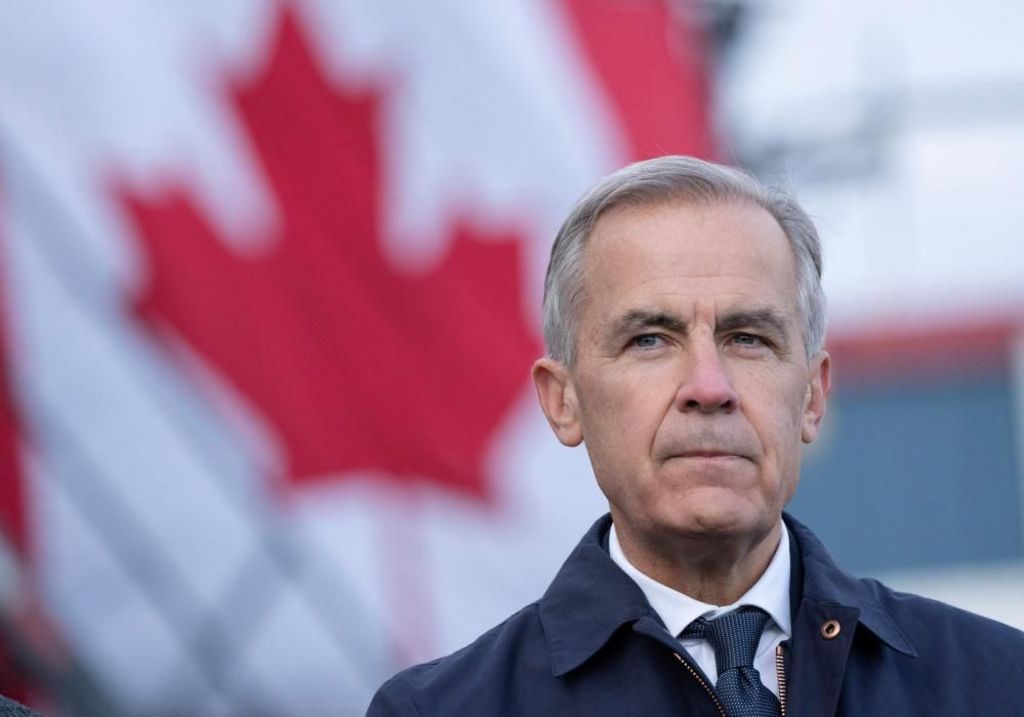
Last week, Canadian Prime Minister Mark Carney stood before cheering crowds in Calgary, his stage decorated with bold red-and-white “Forever Canadian” banners, urging voters to “Vote like Canada depends on it.” That call appears to have resonated deeply with Alberta’s electorate: preliminary referendum results show more than two-thirds of the province’s voters cast their ballots in favor of remaining part of the Canadian federation.
While the vote settles immediate questions of separatism, the future of Canada’s federation still hinges on this, the country’s most economically prosperous province. Home to the vast majority of Canada’s proven oil reserves, plus abundant natural gas and mineral reserves, Alberta plays a critical role in Ottawa’s strategy to weather a bruising trade war with the United States by diversifying global trade partnerships, strengthening domestic economic resilience, and forging new alliances across the Indo-Pacific and beyond.
Carney, a former central banker who grew up in Alberta, has positioned himself as Canada’s lead nation-builder, both at home and on the global stage. Within hours of Monday’s referendum result confirming the scale of the unity victory, Carney emphasized the mandate Albertans had delivered: “They chose unity, to build together, and to take care of each other.” That overwhelming mandate for national unity also gives Carney a solid political foundation to advance his domestic and international policy agenda.
Thomas Lukaszuk, a former provincial lawmaker who spearheaded the pro-union Forever Canadian campaign widely credited with shaping the referendum outcome, warned, “Don’t mess with Canada.” Speaking to jubilant supporters in Edmonton, Alberta’s capital, as pro-union votes continued to roll in, Lukaszuk stressed that the referendum “will send a very strong message to the rest of the world.” It is an open secret that the message is aimed primarily at Canada’s southern neighbor, particularly former U.S. President Donald Trump, who has repeatedly joked about annexing Canada as the 51st U.S. state.
Coincidentally, Trump delivered his own message to Canada during a Kansas rally held the same day as Alberta’s vote, just weeks ahead of U.S. midterm elections. “I will let you keep ice hockey, and I will let you keep your ‘O Canada’ national anthem,” he promised the crowd, before adding, “We’re only kidding.” For Canadians, however, the repeated threats and overtures are no laughing matter.
In the lead-up to the referendum, Carney repeatedly warned that “there are some outside our borders who are working to break us, so they own us” — he never named the actors in question, but no clarification was needed for Canadian voters. The separatist camp made little effort to hide its own ties to the U.S. Several of the movement’s most prominent leaders admitted they had traveled to Washington three times in the previous year to meet with U.S. State Department officials, and laid out potential concessions an independent Alberta could offer, including a new cross-border oil pipeline to the Pacific Coast.
While the historic vote sparked widespread national debate and concern across Canada’s 10 provinces and three territories, most of the international community has paid it little more than passing attention. Janice Stein, founding director of the University of Toronto’s Munk School of Global Affairs and Public Policy, notes that “short of a vote to separate, most foreign governments, with the exception of the United States, have little interest in domestic Canadian politics.” For foreign investors, she explains, the key priorities remain the timeline for completing major infrastructure projects, expected return on investment, and stable, predictable regulation — all central to Carney’s ambitious agenda of large-scale infrastructure projects designed to drive long-term Canadian economic growth. All are costly, and many will take decades to complete.
One of the most high-profile projects is a proposed new oil pipeline to British Columbia’s Pacific Coast, which would open new direct export routes for Alberta’s crude oil to growing Asian markets. This project also addresses longstanding grievances from Albertans, who have long argued that federal environmental and energy policies have stifled the province’s economic growth. At a recent Alberta rally, Carney’s statement that the pipeline “will reduce our dependence on the United States” drew the loudest and longest applause of the entire event.
Following the unity vote, Carney, who previously served as UN Special Envoy for Climate Action and Finance, framed the result as a step toward “unleashing our full potential as a global energy superpower with Alberta as its core.” Political observers note that this focus on energy growth has increasingly overshadowed the prime minister’s previous environmental commitments. “Build Canada Strong” has been Carney’s mantra since he entered politics as a political outsider just over a year ago.
Domestically, the referendum included nine additional questions on issues ranging from expanded provincial autonomy to immigration policy to potential constitutional amendments. The final results on these questions are expected to have far-reaching consequences, sparking intense debate and new negotiations — or breakdowns — with Canada’s other nine provinces and three territories, all of which hold their own longstanding policy grievances against the federal government.
Carney has also faced questions from journalists about his frequent foreign travel, undertaken to build new political alliances and trade partnerships, including an unprecedented and still uncertain push for Canadian associate membership in the European Union. The prime minister has pushed back firmly against criticism: “I can do both and I need to do both,” he recently responded in his characteristic straightforward style, before pointing to more than 16 major bills passed in the last parliamentary session covering everything from tax reform to public safety to fuel price regulation.
For now, Carney is enjoying soaring approval ratings across Canada — even in Alberta, a province that has traditionally not supported his Liberal Party — in an extended political honeymoon that many veteran politicians can only envy. His firm, unapologetic response to Trump’s threats, including the implementation of retaliatory tariffs, has also boosted his profile on the global stage. This is an unexpected shift for a country that has long been sidelined in major global forums and even dismissed as “boring” by many international observers.
This week, The Economist featured Carney on its cover, with a red maple leaf positioned between his teeth. One headline reads, “Mark Carney shows middle powers how to handle a dangerous world,” and the accompanying article also examines Canada’s underlying vulnerabilities, including the tensions exposed by Alberta’s referendum.
Political scientist David Moscrop, author of the forthcoming book On Nationalism, argues that “the broader takeaway from this vote might be that Canadian unity is in fine shape.” But he poses a pressing question for the future: “But what happens after Donald Trump is gone and Canada no longer has a single, bombastic target which drives Canadians to rally around the flag?”
Carney’s recent decision to walk away from contentious trade talks with the U.S. sparked a new wave of Canadian national pride. But if the ongoing trade war with the U.S. — which still absorbs 70% of Canada’s exports — drags on, Canadian households will face increasing economic pain in their daily lives. For the moment, however, Canada is celebrating its unity. As CBC journalist Janyce McGregor put it during the public broadcaster’s live coverage of the historic vote: “It’s a win for Team Canada and its resilience.”