Organizers of an upcoming international academic conference focused on Tibetan studies have confirmed the event has been scrapped, following an abrupt order from Nepal’s central government that offered no public justification for the cancellation. The quadrennial seminar organized by the International Association for Tibetan Studies was slated to run from August 23 to 26 in Kathmandu, hosted by Kathmandu University’s Himalaya Centre for Asian Studies. The gathering had drawn registered academic delegates from dozens of countries across the globe, ready to gather for discussions on Tibetan history, culture, and social development.
Professor Sagar Raj Sharma, a senior faculty member at the hosting center, confirmed Thursday that organizers reluctantly agreed to call off the meeting after receiving the request from senior Nepalese government officials. To date, the government has not released any formal statement or explanation for why it asked for the conference to be canceled.
While Nepalese officials have declined to comment on the specific cancellation, the decision lines up with Nepal’s long-standing diplomatic policy of maintaining strong bilateral relations with China, which has consistently prohibited international activities related to Tibet that it deems contrary to its sovereign interests. Nepal has maintained a formal policy of barring any pro-Tibetan political activity within its borders for decades.
China has administered Tibet as an autonomous region since 1951, when Chinese military forces entered the Himalayan territory. In the decades that followed, the Chinese government has carried out widespread policies that critics label political repression, including the demolition of hundreds of Buddhist religious sites and restrictions on all political and cultural expression that falls outside the oversight of the Chinese Communist Party.
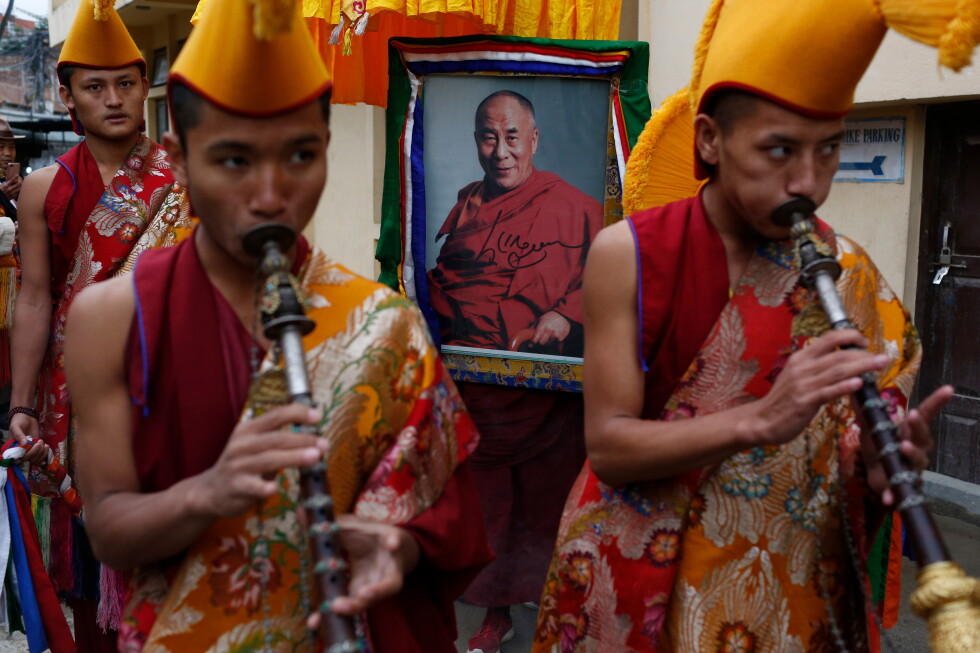
Nepal currently hosts a large community of Tibetan refugees, many of whom use the country as a transit point en route to Dharamshala, India, where the Dalai Lama, Tibet’s exiled spiritual leader, resides. Nepalese law has long explicitly prohibited any public protests, gatherings, or activities that are deemed hostile to any of Nepal’s friendly neighboring nations, including China.
In past years, Tibetan refugee communities in Nepal have held small public demonstrations that local law enforcement has stepped in to disperse. The annual birthday celebration of the Dalai Lama, which is marked by the local Tibetan community, is only permitted to be held within the private grounds of monasteries or Tibetan schools in Nepal, with uniformed police maintaining a heavy security presence at all such events to prevent any unauthorized public activity.