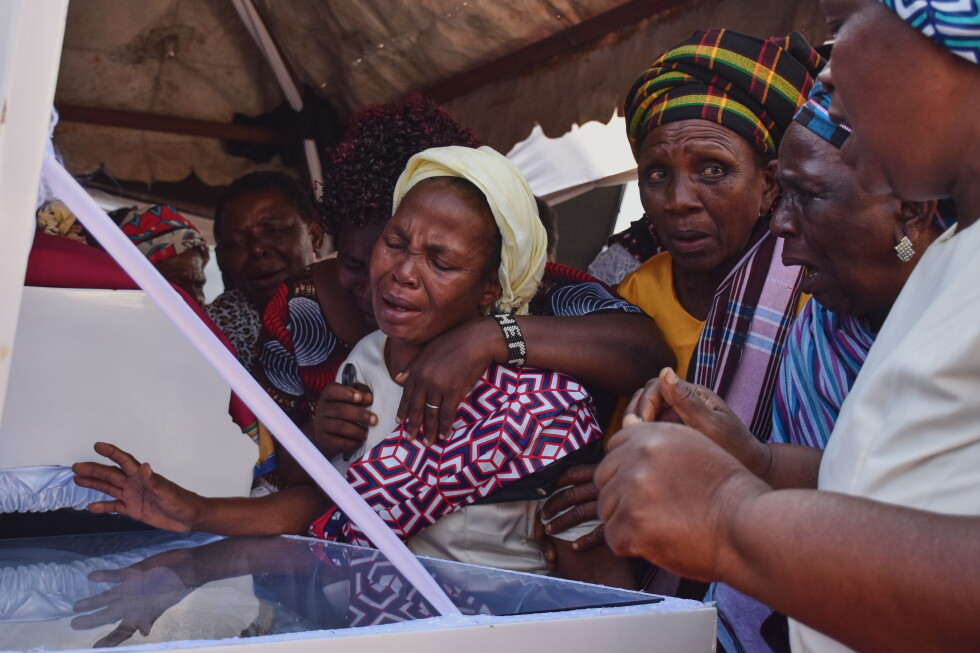
Along the sun-drenched white sand shores of Kenya’s Indian Ocean coast, Kilifi County draws millions of tourists annually to its thriving hospitality industry. But just a short distance from luxury beach resorts and busy coastal boardwalks, a quiet public health crisis unfolds: rural communities here suffer some of the highest maternal mortality rates in the country, leaving grieving families and broken lives in its wake. The case of 29-year-old Penina Zawadi, who died from complications of childbirth in late June, lays bare the systemic gaps that continue to claim hundreds of maternal lives in the region each year.
As Zawadi was wheeled into the operating theater at Malindi Hospital for an emergency cesarean section, she handed her jewelry to her mother Esther Bendera for safekeeping, confident she would return with her newborn. An hour later, Bendera held her healthy grandson, but Zawadi never came back. The young mother, who had enjoyed an uneventful, healthy pregnancy, suffered severe postpartum hemorrhage. Instead of receiving urgent emergency care immediately, she waited four hours at Malindi Hospital for a referral to the higher-level Kilifi County Referral Hospital, a 60-minute drive along a crumbling, potholed highway. By the time she arrived for a last-ditch hysterectomy to stop the bleeding, the damage was irreversible. She spent several days in intensive care before succumbing to her injuries on June 23.
“She was bleeding so much, you would think it was water gushing out,” Bendera recalled. “After the second surgery, she never opened her eyes again.”
Zawadi’s story is far from unique. Sub-Saharan Africa is home to the world’s fastest-growing population, and accounts for 70% of all global maternal deaths, with roughly 180,000 pregnancy-related deaths recorded across the continent each year. In Kilifi County, the latest 2022 Kenyan government data puts the maternal mortality rate at 532 deaths per 100,000 live births — far above the national average of 355. Reproductive health organizations identify the leading causes of death as severe hemorrhage, obstructed labor, hypertension-related conditions including preeclampsia, and complications from unsafe abortions. But beyond medical causes, systemic failures and chronic shortages drive most of these preventable deaths: local clinics lack basic life-saving medical equipment, emergency transport to advanced care is often unavailable, and critical health information rarely reaches pregnant women and their families in time.
Halima Ramadhan, a 27-year-old mother, became another statistic in March when she died a week past her due date while delivering twins. Staff at Malindi Hospital recommended an emergency C-section, and handed the healthy twins to Ramadhan’s mother-in-law Mariam Kazungu an hour later, saying the new mother was stable in recovery. They then sent Kazungu to a private pharmacy to purchase required medication, with no explanation of Ramadhan’s declining condition. Over three weeks of intensive care, Kazungu was repeatedly told to buy more medication, but still received no updates on her daughter-in-law’s health. Only after she showed AP the hospital discharge summary, which cited heart failure brought on by uncontrolled hypertension, did her family finally learn the official cause of death. Kazungu, who quit her job as a chef to care for the orphaned twins, says she still struggles to reconcile what happened.
“I never thought a big government hospital would lack medicine. I’d rather have taken her to a private hospital and even called for a fundraiser so she could receive better care,” Kazungu said. Today, Ramadhan’s oldest child, not yet three years old, still kisses her twin siblings’ cheeks and recognizes her mother’s photo, believing she will come home soon. “She never got to see her children grow up,” Kazungu said, her eyes filling with tears.
Kilifi County officials claimed in June that the 81 maternal deaths recorded over the prior 18 months represented progress, pointing to efforts to expand the number of local healthcare facilities to bring care closer to expectant mothers. But on the ground, many small rural clinics remain little more than basic outposts serving scattered communities of mud-walled homes, stocked with little more than painkillers and antacid. Recent funding cuts from international donors including the Trump administration have deepened these gaps, hitting Kenya’s poorest communities the hardest.
For Zawadi’s family, the grief is still raw. After her coffin was lowered into the grave and covered in traditional coral stones, her 5-year-old firstborn son was led to the site and wailed for his mother. Under local Giriama cultural traditions, Zawadi’s newborn son is considered a bad omen and was barred from the funeral, requiring traditional cleansing rituals before he can be fully accepted by the community. Zawadi’s husband, who had no stable income before her death, now relies on community support to raise their two sons, with additional help from Zawadi’s father Nixon Charo, a civil servant who already sends regular money for food. Charo says the family was left in the dark about the severity of his daughter’s complications, and is calling on the government to fix broken systems that put expectant mothers at risk.
“We never got to know how serious the complications were,” Charo said, urging officials to ensure hospitals are fully equipped to handle obstetric emergencies and keep families informed when crisis strikes.
Community groups and local nonprofits are now stepping in to fill gaps left by government failure. Chadi Karisa operates a community health center in Gongoni, an area where residents previously had to travel 90 kilometers for even basic prenatal care. Karisa, who has witnessed multiple maternal deaths during his work assisting deliveries, says widespread underpayment and overwork leave many frontline health workers demotivated, and some even view questions from patients as an unwelcome nuisance. At the same time, many expectant mothers skip critical prenatal appointments that can catch life-threatening complications like anemia and hypertension before they become emergencies.
“In most cases, pregnant women arrive very late because some of the mothers are still ignorant and lack information on maternal health,” he said.
Local NGO Youth Voices and Action Initiative is working to close this information gap by hosting community education forums and launching a podcast targeted at women and girls. CEO Leila Abdulkheir says working with trusted local community leaders and health promoters is key to reaching women who may not access formal healthcare services.
“We really need to have these conversations with community gatekeepers, especially the community health promoters,” Abdulkheir said. “These are the people that the women prefer to talk to and are trusted within the community.”
At Zawadi’s funeral, community members held a fundraiser to help the family cover unexpected medical and funeral costs, but most attendees could only contribute roughly one dollar each. For families already living on the edge of poverty, the maternal mortality crisis does not just end with a mother’s death — it leaves surviving children and relatives to pick up the pieces of fractured lives amid a system that has failed to protect the most vulnerable.
The Associated Press receives financial support for global health and development coverage in Africa from the Gates Foundation. AP maintains full editorial control over all content.