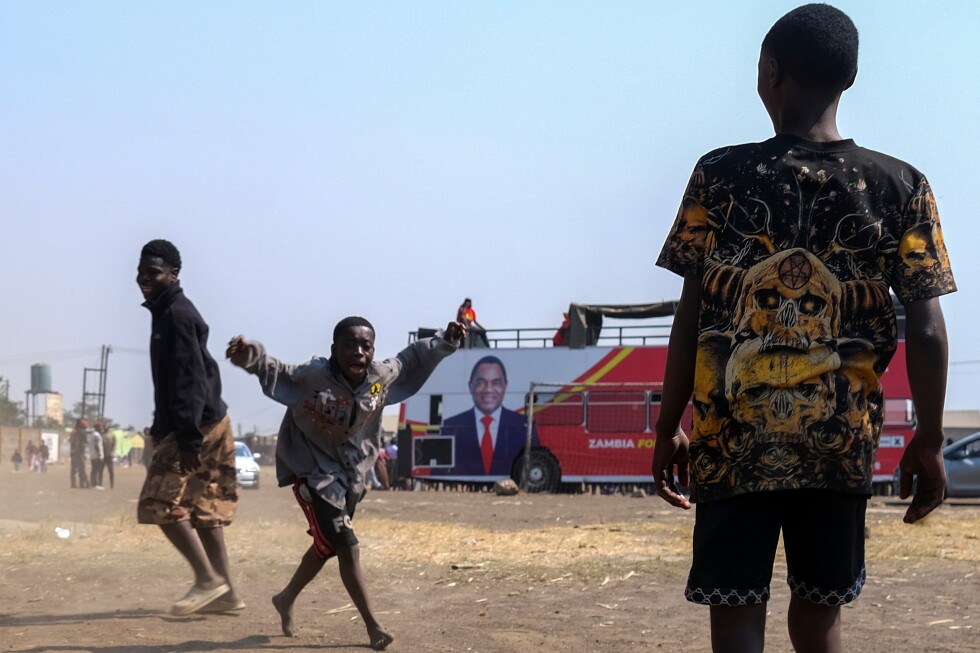
On Thursday, voters across Zambia head to the polls to decide whether incumbent President Hakainde Hichilema will earn a second five-year term, capping a contentious electoral race centered on the southern African nation’s slow progress post-debt crisis and its untapped potential as a global leader in critical mineral production. As one of the world’s top copper exporters — a commodity increasingly vital to global electric vehicle and renewable energy supply chains — Zambia’s election outcome carries both domestic and international ramifications.
The road to this 2026 vote began in 2020, when Zambia became one of the highest-profile developing nations to default on sovereign debt repayments to China and other international creditors, a collapse exacerbated by the economic shock of the COVID-19 pandemic that put global debt sustainability for low-income countries under the international spotlight. Hichilema, who had unsuccessfully run for president five times between 2006 and 2020, won the 2021 election on a platform of economic renewal, and over his first term delivered on key structural reforms: under his leadership, Zambia successfully restructured more than $12 billion in owed debt to foreign governments and private creditors, reined in sky-high inflation, and stabilized the volatile kwacha currency. If re-elected, Hichilema has pledged to scale up Zambia’s copper production from current levels to 3 million metric tons annually by 2031 — a more than threefold increase that would push Zambia ahead of both the United States and China to become one of the world’s top copper producers.
A total of 14 candidates are vying for the presidency, but political analysts widely identify 55-year-old Brian Mundubile, leader of the main opposition coalition Tonse Alliance, as Hichilema’s most formidable challenger. A law graduate, Mundubile was not a household name in Zambian politics until earlier this year, when he emerged as the coalition’s leader following months of internal infighting that shook the opposition bloc.
While Hichilema’s administration can claim macroeconomic stability after years of chaos, many ordinary Zambians — in a landlocked nation of 22 million people — say they have yet to feel the benefits of recovery. Food and energy prices remain stubbornly high, and critics argue that trickle-down growth has failed to reach working-class households. “You expect a minimum of three years to be able to drive an economic agenda and turn around a country,” explained Trevor Hambayi, a leading Zambian economist. “That has passed and they’ve had five years. But these effects have not yet trickled down to the Zambian people.” During his final campaign push this week, Hichilema attempted to counter these criticisms by pledging to expand infrastructure investment in new schools, hospitals and roads to drive job growth, telling supporters, “We love you so much and this is why we are working round the clock to lower the cost of living.”
Another key line of attack from the opposition centers on claims of shrinking democratic space. On Tuesday, the Tonse Alliance accused Hichilema’s government of orchestrating a politically motivated raid on its headquarters, where law enforcement seized campaign vehicles, communication equipment and other materials — an action the alliance says is designed to disrupt its final days of campaigning. The election has also been overshadowed by a lingering, macabre political dispute between Hichilema’s government and the family of his late predecessor, former President Edgar Lungu. The two leaders shared a deeply bitter rivalry that stretched across years: when Lungu was president, Hichilema — then opposition leader — spent four months in prison on treason charges in 2017 after his motorcade failed to yield to Lungu’s motorcade. Before Lungu’s death last year, he claimed he was effectively placed under house arrest by Hichilema’s administration and was forced to sneak out of Zambia to receive emergency medical care in South Africa.
After Lungu died in South Africa in June 2025, a year-long legal battle erupted over where his body would be buried. Hichilema’s government demanded the body be repatriated for a state-led funeral, while Lungu’s family insisted one of the former leader’s final wishes was to avoid a state ceremony overseen by his rival. The dispute, which dominated national headlines for months, eventually went to South Africa’s Supreme Court of Appeal, which ruled in the family’s favor — no burial plans have been announced publicly as of election day.
Beyond domestic politics, the election draws acute international interest from major global powers competing for access to Zambia’s rich copper and cobalt reserves, minerals that are core components of electronics, electric vehicle batteries and other clean energy technologies. China is already Zambia’s largest foreign investor, holding extensive stakes in the country’s mining sector. In recent years, the United States has also sought closer ties to access these critical minerals, though Zambia has accused the U.S. of tying approval for a proposed $2 billion bilateral health deal to mineral access concessions — a claim U.S. officials have rejected.
Thursday’s vote is not limited to the presidency: 8 million registered Zambian voters will also cast ballots for members of the national Parliament and local government council seats. Zambia uses a 50% plus one electoral system for the presidency, meaning a candidate must win an outright majority to claim victory on the first ballot. If no candidate crosses the 50% threshold, the country will hold a second round runoff between the top two contenders in the coming weeks.