Nestled along the sparkling emerald waters of southeastern Brazil’s Ilha Grande Bay, a small fishing community has undergone a profound shift in its relationship with one of the ocean’s most misunderstood predators: the blacktip shark. Where locals once viewed these sharks as a readily available source of food, a groundbreaking scientific discovery has transformed the region into a unexpected hub for global shark conservation efforts.
The turning point came when a team of researchers uncovered that Piraquara de Fora, a sheltered local cove, serves as a regular gathering ground for dozens of pregnant blacktip sharks. This finding launched the Sharks of Ilha Grande Bay project, run under the Brazilian Institute for Nature Conservation, which is working to turn community attitudes toward shark protection.
Brazil holds a uniquely important position in global shark conservation: it boasts the highest national shark meat consumption in the world, while its extensive coastline supports an extraordinary diversity of shark species and hosts critical habitats for many populations already classified as threatened. The International Union for Conservation of Nature (IUCN) warns that sharks rank among the most at-risk groups of vertebrates on the planet, with more than one-third of all species facing extinction due to overfishing, habitat destruction, and climate change. That makes protecting Brazilian shark habitats a global priority.
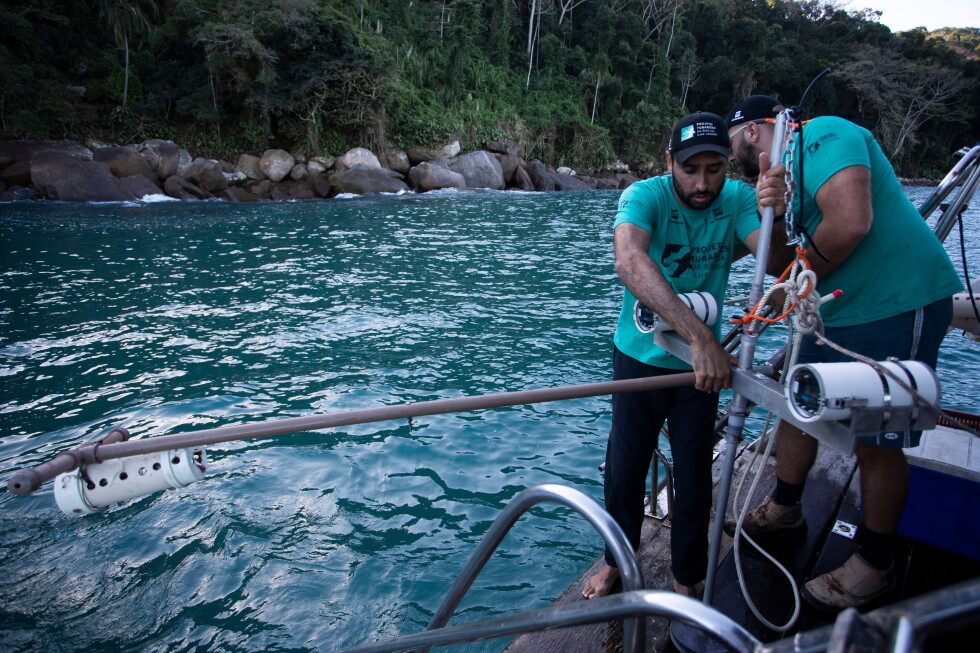
Experts leading the project emphasize that identifying and safeguarding shark nurseries is the backbone of effective long-term conservation. Unlike most bony fish, sharks have extremely slow reproductive rates, producing far fewer offspring per breeding cycle, which leaves their populations especially vulnerable to population collapse. “Breeding areas are fundamental to ensuring the species survives throughout this Atlantic ecoregion,” explains Leonardo Mitrano Neves, who leads the project’s scientific team. To build robust data to support protection efforts, Neves and his team recently conducted on-site monitoring, submerging camera-equipped monitoring devices across the cove, baited to attract sharks, before analyzing collected footage and drone imagery in a laboratory.
While blacktip sharks are the most common species in the cove, the project also extends conservation work to other at-risk local species, including sand tiger sharks and hammerhead sharks. Beyond scientific research, the initiative focuses on deep, community-centered engagement, including rolling out environmental education programs in local schools to reframe sharks as a valued part of the region’s natural heritage, rather than prey. Outreach materials also stress that local shark species pose no threat to humans, noting that no unprovoked shark attacks have ever been recorded in the area.
The project also addresses a key regulatory gap that continues to threaten shark populations across Brazil. While Brazilian law bans targeted fishing of protected shark species, incidental bycatch of non-protected sharks is still permitted, and loose labeling rules allow unregulated shark meat to be sold under the generic market name “cação”, making it almost impossible for consumers to identify what they are buying. Conservation teams are working to educate locals about the dual risks of eating shark meat: the harm it causes to already endangered populations, and the direct health hazards for consumers. As apex predators, sharks accumulate dangerous levels of toxic heavy metals including mercury, arsenic, and lead in their tissues over their lifetimes; a 2024 study even detected traces of cocaine in some Brazilian sharpnose sharks tested off the country’s coast.
Project coordinator José Truda Palazzo reports that these community outreach efforts are already delivering tangible results. “We hope that more and more people come to understand that cação is shark, and shark meat is toxic, in addition to the fact that sharks are endangered animals,” he said.
Beyond conservation, the project is opening up new economic opportunities for the remote, resource-limited local community. Conservation leaders predict that shark watching—from coastal vantage points on forested mountains, from boats, or even for underwater diving excursions—could grow into a sustainable ecotourism industry that provides consistent alternative income for residents.
Marlene Fernanda do Nascimento Martins, a 35-year-old local community leader who currently fishes and sells ice to support her three children, said the prospect of ecotourism is a welcome development for the area. “We’re a remote community with very limited resources. So anything that comes along that can help us preserve our village is a good thing,” she explained.
For long-time locals, the shift in attitudes has become intergenerational. Reinaldo Dias da Rocha, another resident of the community, noted that his father already encouraged him to avoid hunting sharks, but the project has reinforced the importance of protecting the animals. “We pass the information on to our nephews, to tourists who come to discover this place and enjoy our beautiful beaches, and further labor the point that what we call cação isn’t to be eaten,” he said.