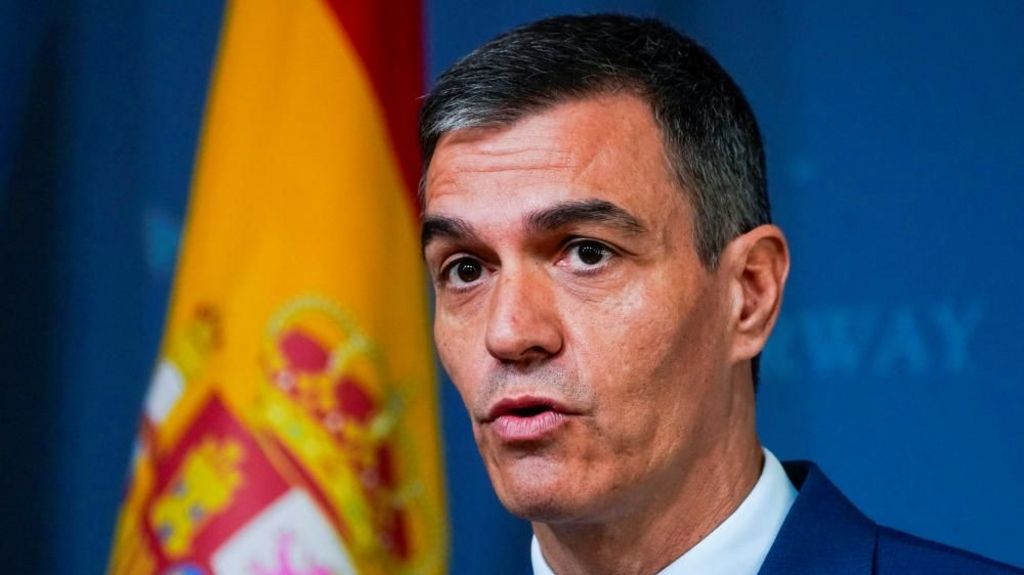
Voting is now underway across Spain for a surprise early general election, called eight months ahead of the scheduled polling date by Socialist Prime Minister Pedro Sánchez after national legislators blocked his administration’s flagship housing reform package earlier this year. The snap poll has unfolded into one of the most tightly contested electoral races in the country’s recent democratic history, pitting Sánchez’s ruling Spanish Socialist Workers’ Party (PSOE) against the conservative Popular Party (PP) led by veteran politician Alberto Núñez Feijóo. Pre-election opinion tracking has consistently shown Sánchez trailing Feijóo’s center-right bloc by a slim margin, though the prime minister struck an upbeat tone at his final campaign rally last Friday, telling gathered supporters he remained fully convinced his party could pull off an upset victory. Millions of eligible Spanish voters will have until 8 p.m. local time (7 p.m. GMT) on Sunday to submit their ballots, with preliminary provisional vote tallies projected to be released roughly one hour after polling stations shut. Full, certified official results will be rolled out gradually through the overnight hours, with final counts expected to be finalized by Monday. The single most defining issue of the entire campaign cycle has been the country’s deepening affordable housing shortage, which has pushed rental and property purchase costs out of reach for a large share of young and working-class households, followed closely by widespread public anxiety over soaring cost-of-living pressures and divisive national debates over immigration policy. Sánchez, who has held the prime ministerial office since 2018, has built a significant international profile over his tenure, most notably through his outspoken criticism of Israeli military operations in Gaza and his public opposition to former U.S. President Donald Trump’s hardline policy stances. But his domestic political standing has been eroded in recent months by a string of damaging high-profile corruption allegations linked to members of his administration, as well as two fatal railway accidents that sparked widespread public backlash over perceived failures in transport safety oversight. Even if PSOE manages to secure the largest share of parliamentary seats on election night, analysts widely note Sánchez will face steep, potentially insurmountable hurdles to cobble together a functional left-leaning governing coalition. For Feijóo’s PP to secure a governing majority, the party will almost certainly require the support of the far-right Vox party, led by Santiago Abascal. The two parties have already formed shared regional administrations in four Spanish autonomous communities, but a formal power-sharing arrangement at the national level would mark a historic shift for Spanish national politics, with ripple effects that could reshape the broader ideological balance of power across the European Union. Vox’s core policy platform includes a controversial “national priority” framework that would reserve access to core welfare benefits exclusively for Spanish citizens, as well as a proposed “remigration” policy targeting foreign residents deemed not to be making a meaningful contribution to the national economy. Multiple political and human rights groups have drawn public parallels between Vox’s ideological positions and repressive policies from the decades-long authoritarian rule of former Spanish dictator Francisco Franco, a characterization the far-right party has repeatedly rejected. All formal campaign activities wrapped up nationwide last Friday, followed by the traditional mandatory “day of reflection” on Saturday, a legally mandated 24-hour period that bans all electoral campaigning to allow voters to make their final decisions free from last-minute political appeals.