With less than 24 hours before Spanish voters head to the polls for the national general election, the country’s top party leaders have staged raucous, high-stakes final campaign rallies, trading sharp accusations while positioning themselves as the viable choice to steer the 39 million eligible voters toward a stable governing future.
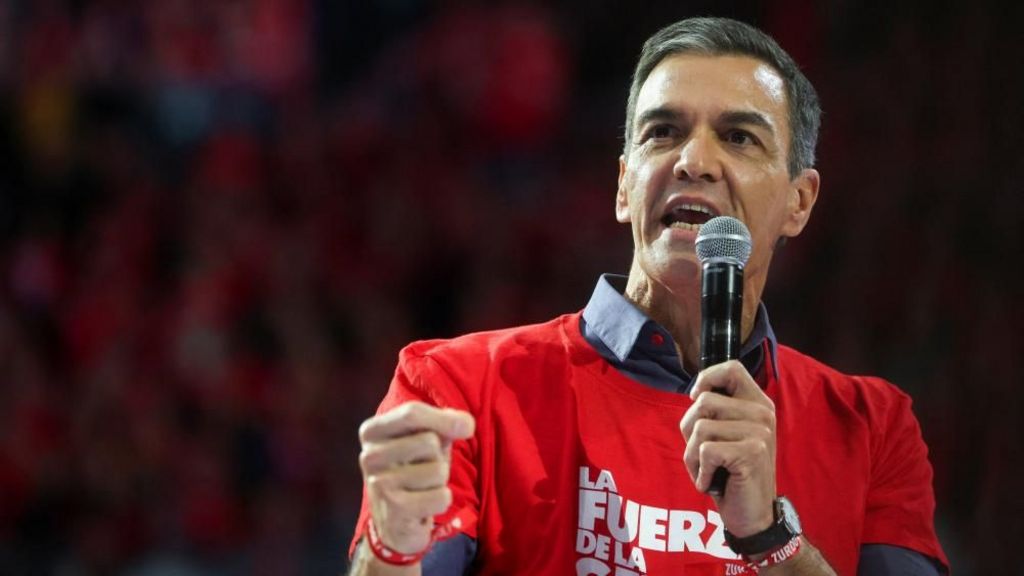
Incumbent Socialist Prime Minister Pedro Sánchez, who leads one of Europe’s remaining few left-wing national administrations, exuded unshakable confidence during his Madrid rally, where he posed for selfies with crowds of supporters clad in the party’s signature red apparel. Rejecting widespread polling that puts his conservative rival narrowly ahead, Sánchez declared he could not fathom a defeat at the ballot box, launching a scathing critique of Popular Party (PP) leader Alberto Núñez Feijóo that painted his opponent as set on forming a governing coalition with the far-right. Sánchez also seized on a viral moment from the prior night’s four-way televised leadership debate, where Feijóo used the condescending, gendered Spanish diminutive “calladita” — often deployed to tell women to stay quiet — to chide left-wing Frente Amplio leader Ada Colau for remaining silent during a past Valencia flood disaster. Sánchez called out Feijóo for blatant sexism, demanding he show basic respect for female political leaders, while Colau rallied her own base by vowing “we will not stay quiet, we will win” and pushing for a renewed progressive governing coalition that frames housing as a universal right rather than a vehicle for speculative profit. Sánchez’s wife Begoña Gómez joined him on stage as he wore a red t-shirt emblazoned with “power of the people”, lauding Colau’s campaign efforts to galvanise progressive voters.
Feijóo, whose PP holds a narrow lead in all pre-polling (no new surveys have been permitted under Spanish electoral law since the prior Monday), crisscrossed two major Spanish cities in the final stretch of campaigning, first stopping in Barcelona before wrapping up his tour in Seville, the capital of Andalusia — the country’s most electorally valuable region, which holds 61 of the 350 total seats in the national parliament. Andalusia is already governed by a PP-Vox coalition, alongside three other regional administrations across Spain, making the southern territory a critical battleground for conservative gains. The PP leader struck a pledge to deliver a new political era defined by “truth, decency and good governance”, while levelling counteraccusations that Sánchez had spent his entire term evading scrutiny on high-profile crises including widespread corruption allegations, fatal rail disasters, unmanaged border immigration flows, and Spain’s ballooning national debt. In a clear nod to his 2020 failed attempt to form a government despite winning the most seats in that election, Feijóo told cheering supporters “this time, yes, we’re going to do it”. He attempted to walk back the backlash over his debate comment, claiming he was accusing Colau of silence on years of corruption under the Sánchez administration rather than targeting her gender. Feijóo has repeatedly insisted he has never held talks with far-right Vox leader Santiago Abascal to offer Vox cabinet ministerial roles, framing any collaboration between the two parties as loose parliamentary support agreements to help him secure a working governing majority.
Abascal, for his part, delivered fiery addresses to his base, first in the Madrid-adjacent town of Tarancón before headlining a final rally in a Valencia bullring, where he told supporters the Sánchez government had “betrayed us, robbed us and lied to us”. Vox is projected to nearly double its 2019 seat count of 33, running on a hardline platform of “national priority” that reserves welfare benefits exclusively for Spanish citizens, alongside a controversial “remigration” policy that seeks to deport foreign residents deemed non-contributory to the national economy.
Political analysts have noted that the tight race carries major ripple effects for European politics: with French presidential elections scheduled just five months out, two of the European Union’s largest economic powerhouses could swing to conservative leadership in rapid succession, reshaping the bloc’s policy trajectory on migration, social welfare and climate action for years to come. Commentators are projecting record high voter turnout, but all available pre-election data points to an exceptionally close finish that could take hours, or even days, to resolve definitively.
Spanish PM and rivals rally supporters in final pitch for votes