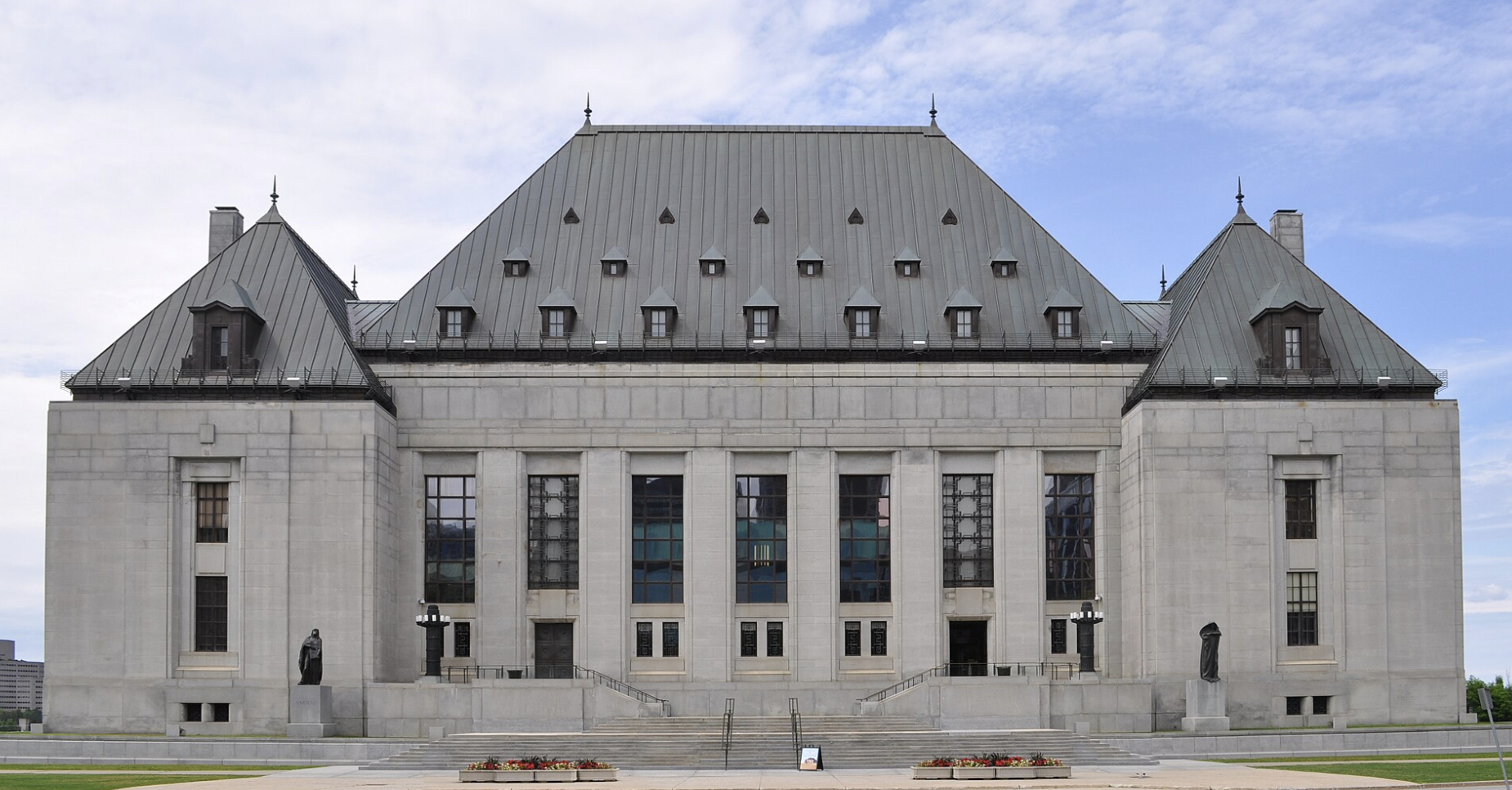
On a recent Friday, the Supreme Court of Canada issued a landmark ruling that upheld Quebec’s deeply divisive 2019 provincial legislation, widely known as Bill 21, which prohibits public sector workers across the province from wearing overt religious symbols while on duty. Targeted most prominently at hijab-wearing Muslim women, the sweeping ban also imposes restrictions on Sikh turbans, Jewish kippahs, Catholic crosses and other faith-based attire worn by a broad spectrum of religious minority groups. 2021 national census data shows that Muslim residents make up 5% of Quebec’s population, the second-largest Muslim demographic share among all Canadian provinces, surpassed only by Ontario.
The verdict drew scathing condemnation from Amira Elghawaby, Canada’s first and former special representative for combating Islamophobia, whose federal oversight office was abruptly shut down earlier this year. Elghawaby, now leading the newly founded Muslim Communities Research Observatory, described the ruling as “devastating” in an official public statement. She emphasized that the decision shatters the foundational promise enshrined in Canada’s Charter of Rights and Freedoms, creating a dangerous precedent that erodes long-guaranteed protections for religious freedom, equal treatment and fundamental human rights for all Canadian residents. Citing peer-reviewed local research, Elghawaby warned that 71% of hijab-wearing Muslim women surveyed in Quebec have considered relocating out of the province, a population exodus that would cost Quebec an estimated $3.2 billion in lost annual income. She further cautioned that the ruling could open the floodgates to cascading future violations of core Charter-protected rights across provincial jurisdictions.
Legal analysts note that the top court’s decision hinged on narrow technical interpretations of Section 33 of Canada’s Constitution, the rarely invoked and historically stigmatized “notwithstanding clause”. This unique constitutional provision, explicitly recognized by the Canadian Department of Justice as a one-of-a-kind mechanism among global liberal democracies, allows federal or provincial legislative bodies to temporarily override select Charter protections, including fundamental freedoms under Section 2, legal rights under Sections 7 to 14, and equality rights under Section 15. The clause does not extend to voting rights, cross-province mobility rights or official language protections. Once formally invoked, the notwithstanding clause blocks courts from striking down covered legislation on the grounds that it conflicts with the listed Charter rights, and any such invocation remains legally valid for a five-year term that can be indefinitely renewed by the passing legislature.
Delivering the majority ruling, Supreme Court Chief Justice Richard Wagner framed the decision as a defence of Quebec’s long-standing, democratically supported commitment to state secularism, or laicity, within a free and democratic society. The original Bill 21 was tabled and passed in 2019 by the ruling right-leaning Coalition Avenir Quebec government, which held a strong majority in the provincial National Assembly, passing the final vote by a margin of 73 to 35. The government immediately invoked the notwithstanding clause at the bill’s introduction to curtail prolonged parliamentary debate and pre-empt anticipated legal challenges. At the time of the bill’s passage, then-Quebec Premier Francois Legault framed the legislation as a long-awaited milestone for Quebec residents, asserting that clear public polling showed overwhelming local support for banning religious symbols for all public employees in positions of state authority.
Within 24 hours of the bill receiving royal assent, civil society advocacy groups including the National Council of Canadian Muslims and the Canadian Civil Liberties Association launched formal legal challenges, filing for an emergency injunction at Quebec Superior Court to halt the law’s implementation on the grounds that it was unconstitutional and would cause irreversible, life-altering harm to religious minority communities across the majority-French-speaking province. Nearly two years after the initial challenge, the Quebec Superior Court released a 242-page lower-court ruling that acknowledged Bill 21 inflicted severe, negative consequences on residents who wear religious symbols in public, but ultimately concluded the legislation did not break Canada’s overarching constitutional framework. The lower court did, however, carve out two limited exemptions: public English-language school boards in Quebec were excluded from the ban, and elected members of the provincial National Assembly were permitted to wear face-covering religious attire such as the niqab while carrying out their official duties.
The high-profile legal battle is the latest chapter in decades of fierce public and political debate in Quebec over the balance between state secularism and minority religious rights, which dates back at least to 2017, when the provincial legislature passed Bill 62, a separate law that barred residents from receiving or delivering public state services while wearing face coverings. Bill 62 triggered widespread, cross-province public protests, and was eventually suspended after a niqab-wearing Muslim woman in Quebec filed a successful legal challenge arguing the law violated her constitutional rights. Former Canadian Prime Minister Justin Trudeau repeatedly spoke out against such legislation, stating in 2022 that the Charter of Rights and Freedoms “cannot become a suggestion”, and previously describing efforts to legitimize religiously targeted discrimination against Canadian citizens as “unthinkable”.