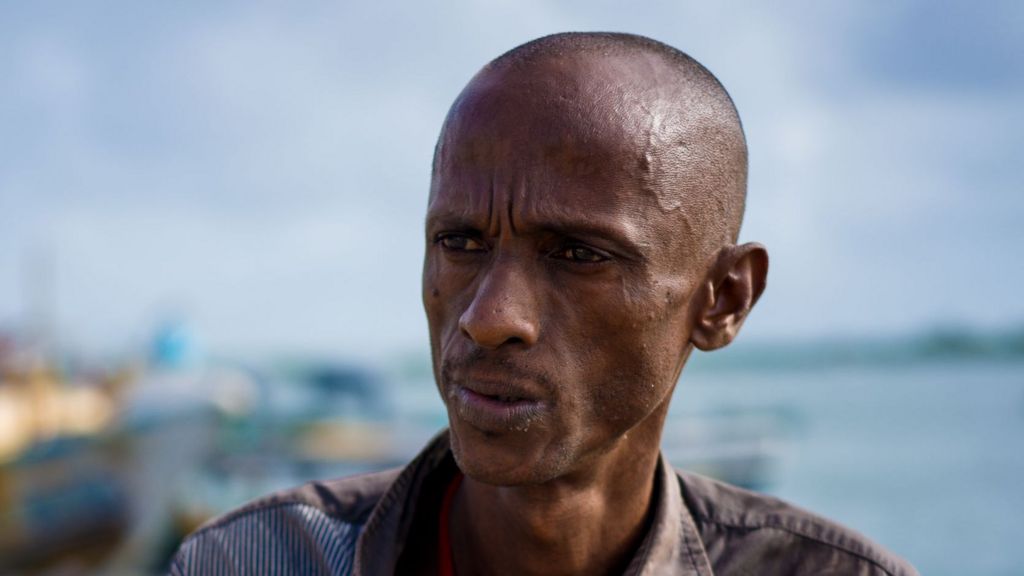
On the sun-dappled, donkey-traversed stone streets of Lamu, a historic Swahili island off Kenya’s northern coast, Ali Kololo stands on the very jetty where he was once dragged ashore in handcuffs 11 years prior. The 50-something former woodcutter, whose wrongful death sentence over a 2011 Somali militant attack on a British tourist couple was only overturned in 2023, is speaking publicly for the first time about a 15-year ordeal he says was orchestrated by London’s Metropolitan Police, leaving him with nothing of the stable family life he once built.
The chain of events began in September 2011, when armed Somali gunmen breached the beachfront holiday bungalow of David and Judith Tebbutt, who were on a long-awaited dream vacation in Kenya. The attackers shot David Tebbutt dead on the scene, then abducted Judith, holding her captive in Somalia for six months before she was eventually released. Within 24 hours of the raid, local Kenyan law enforcement had arrested Kololo, a part-time former resort groundskeeper who earned a living felling trees in nearby forests to support his wife and three young children. Kololo, who is illiterate, says officers tortured him for days with beatings and cigarette burns, forcing him to press his thumbprint on a pre-written false statement claiming he had led the armed militants to the Tebbutts’ property. Kenyan police later told the BBC they have always operated in line with legal protocols, though Kololo has not filed a civil suit against the force.
Days after the attack, a Met Police team led by then-Detective Superintendent Neil Hibberd flew to Kenya to assist local investigators, with explicit UK government orders not to accept any evidence obtained through torture of detainees. Despite this directive, Hibberd formally requested Kololo’s coerced thumbprint statement and relied on it as core prosecution evidence during Kololo’s 2013 trial, where the Kenyan woodcutter was handed a death sentence. Hibberd also testified in court that a type of shoe Kololo was alleged to have been wearing matched footwear impressions left in the sand at the attack site, but failed to disclose two critical exculpatory details: the arresting Kenyan officer had confirmed Kololo was completely barefoot when taken into custody, and the Met’s own internal forensic analysis could not verify the shoe had made the marks at the scene. Compounding the injustice, Kololo had no legal representation for the early stages of his trial, and was forced to cross-examine all prosecution witnesses — including Hibberd — through an interpreter who spoke a Swahili dialect not native to him.
Kololo, the only person ever convicted in connection with the Tebbutt attack, spent three years on death row before his sentence was commuted to life in prison. For over a decade, he was held in an overcrowded, bedbug-infested cell with seven other inmates, where he contracted tuberculosis twice and nearly died. His wife divorced him while he was incarcerated, and his young children were barred from visiting, dropping out of school as the family fell into destitution. It was only after years of pro bono advocacy from legal charity Reprieve and Kenyan human rights lawyer Alfred Olaba — who were later joined by Judith Tebbutt herself, who publicly stated Kololo had been scapegoated by Scotland Yard and was nowhere near the resort the night of the attack — that Kenya’s High Court formally quashed his conviction in April 2023, citing pervasive, unresolved flaws in the prosecution’s evidence.
A subsequent investigation by the UK’s Independent Office for Police Conduct (IOPC) found Hibberd had deliberately withheld critical forensic evidence at trial, and that he would have faced gross misconduct charges had he not retired from the Met in 2017. Hibberd’s legal team has repeatedly rejected all the IOPC’s findings as unsubstantiated. Today, Kololo is far from rebuilding his life: the physical and psychological toll of torture and long-term imprisonment has left him too frail to return to the woodcutting work he once relied on for income, and he scrapes by growing small amounts of food on a patch of land near his isolated mud hut, at the mercy of Kenya’s increasingly erratic rainfall patterns. His children only recently began to reconnect with him, after years of barely remembering the father who vanished when they were toddlers.
Kololo has now filed a civil claim against the Met Police seeking formal accountability and compensation, a case the force is actively contesting in UK courts with no timeline for resolution. The Met has refused to issue an apology or admit any wrongdoing, only issuing a brief statement noting its sympathies for all parties affected by the original 2011 attack, and reaffirming its commitment to supporting Kenyan authorities in pursuing justice for the Tebbutt family. Preetha Gopalan, head of UK litigation at Reprieve, has called the Met’s conduct throughout the entire case “egregious”, accusing the force of spending over a decade evading accountability and prolonging Kololo’s trauma through drawn-out legal proceedings. For Kololo, even a large financial settlement will never undo the irreversible damage done: “Even if I were awarded a billion Kenyan shillings, I will never be the man I was before. But if I get the justice I deserve, at least I can care for my children and support myself when I am old.”