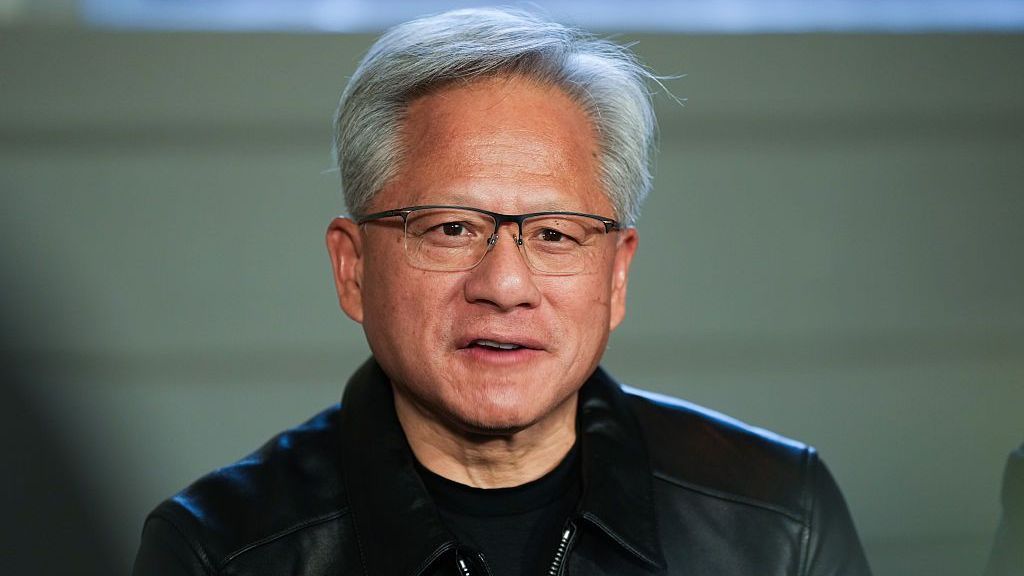
Jensen Huang’s high-profile reinstatement as the leader of global AI chip giant Nvidia has sent cascading shocks through global tech and financial markets, delivering an immediate $1 trillion surge in the firm’s New York-listed valuation that rippled across Asia’s tech-heavy economies before fresh political and regulatory concerns triggered a sharp pullback in regional equities this week. For East and Southeast Asian economies that have anchored large swathes of their national growth strategies on the booming AI sector, Nvidia has evolved from a key industry supplier to a de facto “symbolic bellwether” for the entire AI trade, according to Dylan Loh, an international studies lecturer at Nanyang Technological University in Singapore. Unlike traditional semiconductor manufacturers that invest billions in in-house fabrication facilities, Nvidia built its dominant market position by outsourcing nearly all chip production to Taiwanese foundry titan TSMC, tying Taiwan’s broader economic fortunes directly to global AI demand. East Asia Econ founder Paul Cavey notes that nearly all of Taiwan’s above-trend real GDP expansion since 2024 can be traced directly to explosive growth in AI-related exports, with Huang having previously announced plans for roughly $150 billion in annual Nvidia investment on the island, where local fans have coined the viral cultural phenomenon “Jensanity” to celebrate the Taiwan-born executive. South Korea and Japan are also deeply integrated into Nvidia’s supply chain, with industry giants Samsung and SK Hynix supplying high-performance memory chips that form a critical component of every Nvidia AI processor, alongside Japanese firms that produce specialized testing and manufacturing equipment for the sector. Beyond hardware supply chains, Nvidia has earned the informal moniker “the bank of AI,” acting as a major financier and backstop for hundreds of firms across the global AI supply chain, while its industry-leading hardware powers nearly 70% of the region’s rapidly expanding data center infrastructure. Market research firm CBRE reports that Asia-Pacific data center investment, overwhelmingly driven by demand for Nvidia-powered AI facilities, hit a record $11.6 billion in 2025, with major global tech players including Google, Microsoft and Oracle planning a 60% year-over-year increase in regional AI infrastructure spending. Singapore’s government even raised its 2025 official GDP growth forecast this week, citing the AI sector’s outsized contribution to domestic expansion, though the city-state has also been caught up in recent US regulatory scrutiny after local AI firm Megaspeed – once the region’s largest commercial buyer of Nvidia chips – was accused of smuggling high-end hardware to China, with Washington moving to ban the firm from all US market access. For weeks, both the Biden and Trump administrations have steadily tightened export controls on Nvidia’s most advanced AI chips to China, and last week unveiled sweeping new rules that impose unprecedented scrutiny on data center operators across Singapore, Malaysia, Thailand, Indonesia and Brazil, restricting not just physical chip sales to Chinese entities but also their ability to rent cloud computing power abroad to train large AI models. The new regulations have already prompted Nvidia to temporarily pause some chip shipments to Southeast Asia while it works to verify compliance, according to reporting from the Financial Times, with no official comment issued by the chipmaker to address the development. While regional investors greeted news of Huang’s return with widespread jubilation – with Taiwanese retail investors sharing viral posts on Line messaging groups joking that “Old Huang is back to save the village” – local analysts have also flagged growing systemic risks of over-reliance on a single US firm for the core technology underpinning national growth. The euphoria is also tempered by rising bipartisan political pushback in Washington: former President Donald Trump publicly claimed he personally brokered the deal that convinced Nvidia’s board to reinstate Huang, a move that has drawn sharp criticism from Democratic lawmakers who are set to take control of both chambers of Congress in the upcoming new year. Huang is scheduled to testify before US congressional committees next week, with analysts warning that ongoing political scrutiny could introduce significant volatility for both Nvidia and the dozens of Asian economies whose growth is now tightly tied to the firm’s performance. “Jensen’s return may resolve the immediate leadership crisis, but it does not resolve the legal and political overhangs,” noted Charu Chanana, chief investment strategist at Saxo Bank, adding that the unprecedented concentration of market power in a single AI firm poses unacknowledged systemic risks for global supply chains.