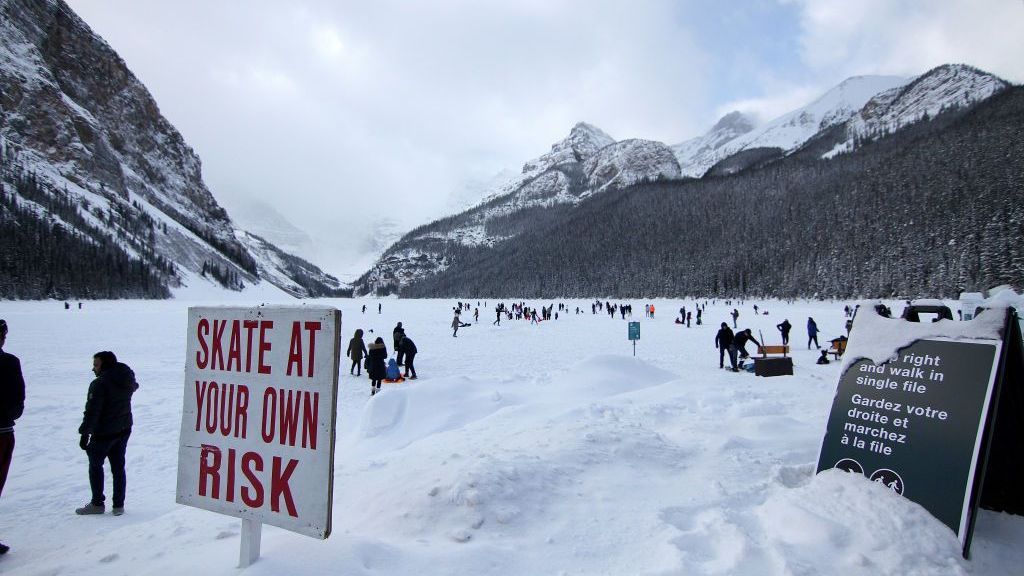
A 70-year-old Banff, Alberta, local resident has lost his life after plunging through thin, untested ice on the iconic Lake Louise, a world-renowned winter skating hotspot nestled in Banff National Park. The tragedy unfolded on a Tuesday evening when the unidentified man was skating alone on the lake’s natural surface, triggering a two-hour intensive search by local rescue teams that recovered him from the frigid waters, before he was pronounced dead on arrival at a nearby medical facility. This fatal incident follows closely on the heels of a separate near-miss 24 hours prior, when two other recreational skaters fell through the lake’s unstable ice but managed to survive the ordeal. In response to the string of high-risk events, Parks Canada has issued a sweeping public advisory to all visitors of the protected national park, emphasizing that it does not conduct proactive safety inspections of natural ice surfaces, nor does it mark hidden hazards across frozen bodies of water. The official notice urges all outdoor enthusiasts to exercise extreme caution before stepping onto any unmaintained ice, noting that early-season frozen layers are inherently unpredictable, and that anyone who chooses to engage in activities on natural ice bears full personal responsibility for their own safety, including being fully equipped to execute self-rescue in the event of a break-through. The Royal Canadian Mounted Police has extended formal condolences to the grieving family of the deceased 70-year-old, while reinforcing public warnings about the life-threatening dangers of venturing onto unvetted frozen water bodies. The recent spate of ice-related accidents is directly tied to historically anomalous warm temperatures sweeping across much of Canada this November, according to Environment Canada meteorologist Alysa Pederson. In Alberta alone, average November temperatures are running 3°C higher than long-term historical benchmarks, with the coldest day of the month so far hitting only -6°C, a stark contrast to the typical pattern of multiple days where temperatures drop well below -10°C. Even further east, the country’s most populous city Toronto has recorded unseasonable highs of 15°C (59°F) this month, conditions that drastically slow the formation of thick, stable ice across lakes and waterways. Pederson confirmed that the ongoing weather disruption is being fueled by an exceptionally strong El Niño event, a Pacific climate pattern that releases stored ocean heat into the atmosphere to drive widespread global weather shifts, and which is on track to potentially become one of the strongest El Niño events on record when it peaks in the coming two months. The national weather agency’s seasonal forecast predicts that the majority of Canada, spanning from the Pacific coast city of Vancouver all the way to the Atlantic port of Halifax, will experience above-average temperatures for the full upcoming winter. Beyond the immediate risk of thin, unstable ice, Pederson also warned that the unseasonably mild conditions elevate avalanche danger across mountainous regions of the country, urging all winter outdoor recreationists to remain hyper-vigilant about rapidly shifting, high-risk conditions that deviate from typical seasonal norms. She noted that while ice-related accidents are a perennial hazard in the Banff region, the cluster of back-to-back incidents in such a short window was unexpected and deeply unfortunate.
‘Think twice’: Banff officials issue warning over thin ice after skater’s death