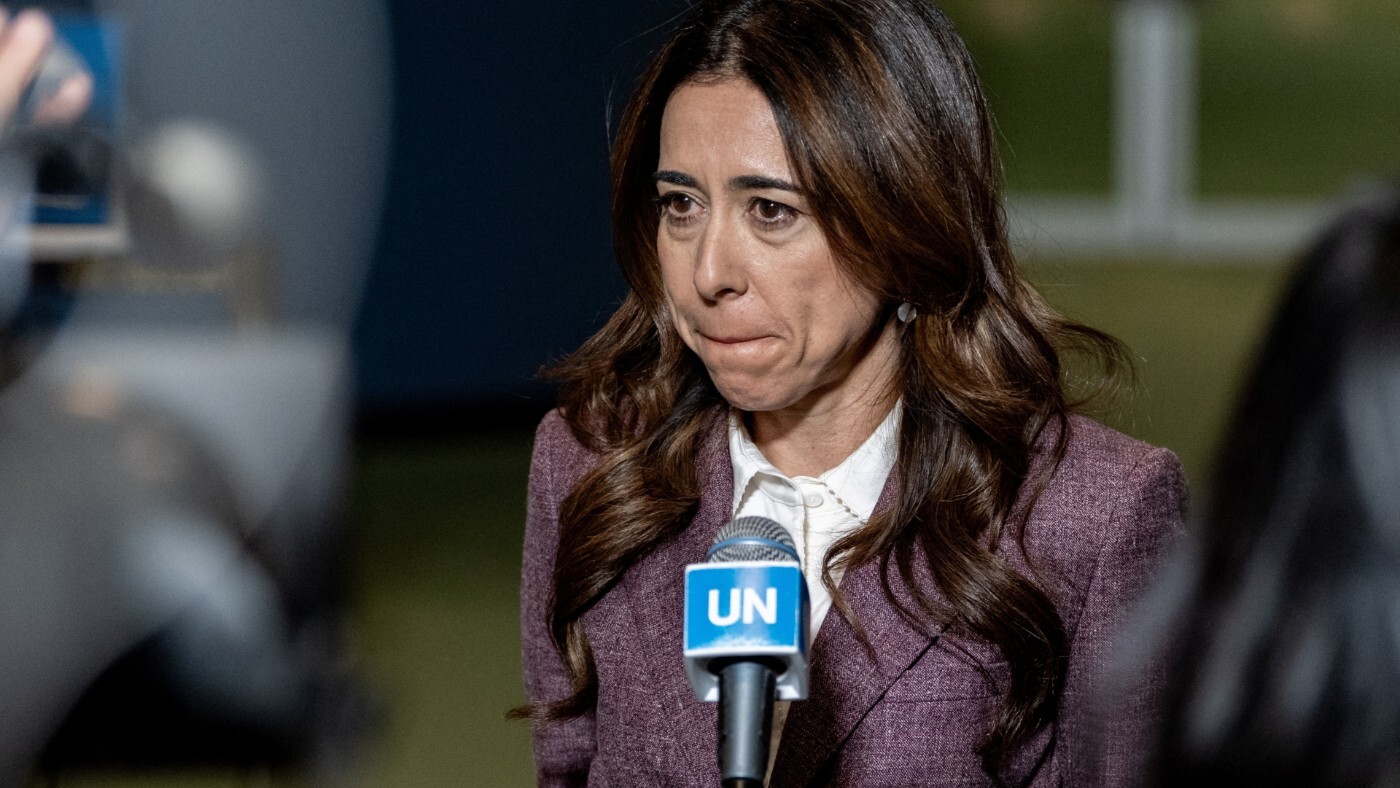
Struck with a seasonal cold that she wryly attributes to London’s notoriously brisk climate, seasoned Emirati diplomat Lana Nusseibeh has spent over a month waging an intensive, globe-spanning campaign to secure the top post of United Nations Secretary-General, as the current tenure of incumbent Antonio Guterres draws to a close. The high-stakes selection process has hit a critical impasse following the latest informal straw poll, where three permanent UN Security Council members holding veto power — China, France, and the United Kingdom — cast votes to “discourage” Nusseibeh’s candidacy, throwing her path to the leadership into significant uncertainty. Sensing that the UK’s formal opposition to her bid may not be fully consolidated, Nusseibeh has set up camp in the British capital to conduct targeted lobbying of parliamentary figures, engage with media outlets, and make her case directly to civil society stakeholders. The UK’s policy landscape on the candidacy is notably fractured: while the Foreign Office, led by Ed Miliband, is widely reported to view Nusseibeh unfavorably, the UK Treasury — described by former Conservative Party leader Iain Duncan Smith, who held a private meeting with Nusseibeh during her London visit, as the most influential department in the British government — is hesitant to strain ties with the UAE, a strategically vital and economically affluent ally that Prime Minister Andy Burnham has publicly labeled a “huge” bilateral partner. On the evening of 25 November 2026, Nusseibeh took the stage alongside renowned BBC host Jeremy Bowen at a public event hosted by the United Nations Association-UK, held in a historic Whitehall building that has stood at the epicenter of British governance for nearly 500 years. The packed audience, which included Sudanese survivors who lost family members to violent attacks carried out by the Rapid Support Forces (RSF) paramilitary, repeatedly pressed Nusseibeh to address the unspoken, defining issue hanging over her campaign: the well-documented involvement of the United Arab Emirates in the ongoing brutal war in Sudan. These questions cut deeply into Nusseibeh’s professional track record: during her tenure as the UAE’s long-serving ambassador to the United Nations, and later as minister of state for foreign affairs, she repeatedly rejected formal reports from UN Panel of Experts that explicitly named Abu Dhabi as a key state sponsor of the RSF, a paramilitary group that UN investigators have formally accused of perpetrating genocide in the Darfur region. Multiple European parliamentarians have also confirmed that Nusseibeh previously lobbied legislators in Strasbourg to remove all references to the United Arab Emirates from a draft European Parliament resolution that called for an immediate end to the Sudan conflict. Throughout the tense exchange, the polished, unflappable diplomat repeatedly told the skeptical crowd that she no longer held any official position with the UAE government — a claim that drew audible murmurs of disbelief and quiet laughter from many attendees, who quickly pointed out the fine print of her employment status. Public records confirm that Nusseibeh, a Palestinian-Emirati who joined the UAE foreign service in 2006, served as the UAE’s UN ambassador from 2013 to 2024 before being appointed minister of state for foreign affairs, a post she says she left only in October 2026 via a formal leave of absence. A 1995 graduate of the University of Cambridge, whose official dictionary defines a leave of absence as a formally approved period away from duties that retains full official employment status, Nusseibeh also has a well-documented history of advocating for the UAE’s 2020 Abraham Accords normalization deal with Israel, and her official CV lists the 2017 UAE Prime Minister’s Government Excellence Award, also known as the UAE Medal of Pride, as a top career honor. When approached by Middle East Eye for a one-on-one interview following the UNA-UK event, Nusseibeh stated she was still weighing her professional options if her UN bid failed, and noted that she would only be able to answer questions about UAE policy related to the Sudan conflict if she returned to her post at the UAE foreign ministry. Pressed to clarify whether she would follow through on a prior campaign pledge to launch UN-backed fact-finding missions and hold all perpetrators of Sudanese war crimes accountable — including investigating the extensively documented role of the UAE in arming and supporting the RSF — Nusseibeh offered carefully calibrated remarks. “I have taken a formal leave of absence, as I have repeatedly stated, and in this campaign I have committed that I will speak out against all perpetrators and violators of international human rights law in every global conflict, Sudan included,” she told MEE. “I will fully back the work of UN special rapporteurs and formal UN accountability mechanisms, and I will publicly call out any government that violates international humanitarian law.” When directly asked if she still denied that the UAE had supplied weapons to the RSF, Nusseibeh declined to comment, saying she would refer all questions about UAE government actions to Abu Dhabi’s official representatives, and noted that as UN Secretary-General she would review all upcoming expert panel reports and publicly condemn any party that supplied arms to warring military factions in Sudan. Earlier that month, Middle East Eye had obtained a confidential quarterly report from independent UN investigators that “conclusively establishes” that the UAE recruited and deployed Colombian mercenaries to fight on the front lines for the RSF in Sudan. Despite official denials from Abu Dhabi, a massive body of corroborating evidence — including intercepted documentation, commercial flight tracking data, satellite imagery, matching weapons serial numbers, and hundreds of on-the-ground witness accounts — confirms the UAE has been funneling military supplies to the RSF via transit routes in Ethiopia, and through allied proxy forces operating in Libyan and Chadian territory. The Sudan conflict, which erupted in April 2023 between the RSF and the Egyptian and Turkish-backed Sudanese Armed Forces (SAF), has spiraled into the world’s largest ongoing humanitarian crisis, displacing more than 80% of Sudan’s population and leaving 25 million people in urgent need of life-saving aid. Nusseibeh closed her London pitch by highlighting two signature policy priorities of her campaign: a global push to elevate women’s representation in UN leadership structures, and a proposed peace initiative that would leverage the mediation expertise of respected “African elders” to broker a lasting ceasefire in Sudan. Just days ahead of the next scheduled UN informal straw poll set for Monday, Nusseibeh’s lobbying blitz continued with a private meeting with Sarah Champion, Labour MP and chair of the UK’s House of Commons International Development Committee. Champion publicly noted after the meeting that while Nusseibeh is clearly an exceptionally skilled, highly experienced career diplomat, her long track record of advancing UAE national interests — including publicly rejecting UN Panel of Experts findings linking Abu Dhabi to Sudan war crimes — means her full independence and impartiality as UN Secretary-General cannot be reliably guaranteed. As she departed the packed Whitehall event, Nusseibeh maintained her signature composure, smiling and shaking hands with every attendee who approached her, as her uphill battle for the UN’s top leadership post enters its final critical stretch.