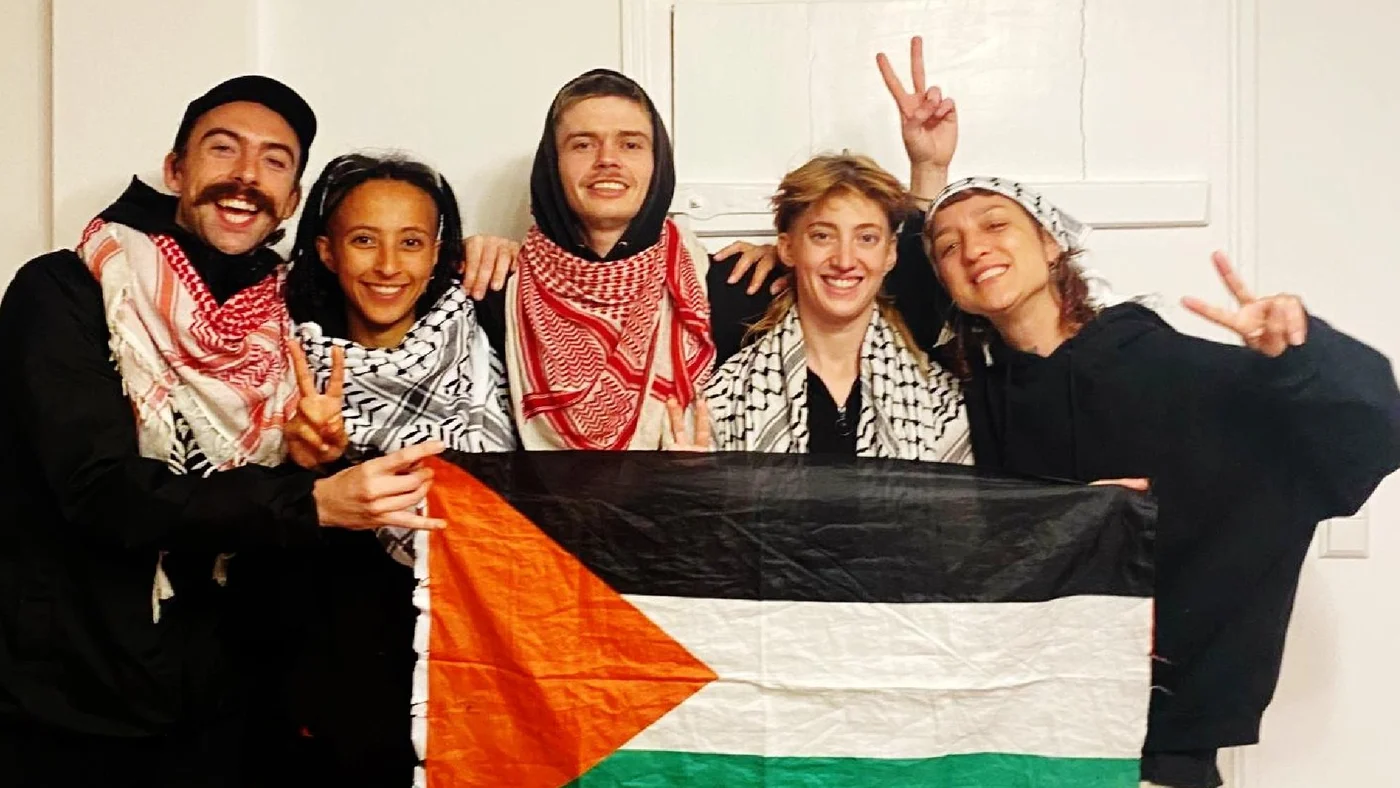
A broad international coalition of elected representatives and prominent legal advocacy organizations, including high-profile figures such as former UK Labour Party leader Jeremy Corbyn and U.S. Congress member Rashida Tlaib, has issued urgent public condemnations of the ongoing legal treatment of pro-Palestine activists detained in Germany, warning that the case sets a dangerous precedent for suppressing political dissent against arms trade and military conflicts. The two open letters, released publicly on a Wednesday, carry signatures from 26 sitting politicians spanning national and supranational legislatures across Europe and the Americas, alongside 31 independent legal associations from around the world, all demanding immediate action to address what they describe as severe due process violations. The case at the center of the outcry revolves around five activists now widely referred to as the “Ulm Five”: Daniel Tatlow-Devally, Zo Hailu, Crow Tricks, Vi Kovarbasic, and Leandra Rollo, who hail from Germany, Spain, Ireland, and the United Kingdom. The group was taken into custody on September 8 last year, following an alleged unauthorised entry to the Ulm offices of Israeli defense contractor Elbit Systems, where authorities say the activists damaged the property’s glass facade and destroyed office equipment including computers, display screens, and telephones. While the initial charges against the group cover trespass and criminal property damage, prosecutors have added the far more serious allegation of “membership in a criminal organisation” under Section 129 of the German penal code, targeting their affiliation with the protest network Palestine Action Germany. This legislation was originally drafted to prosecute transnational organized crime syndicates, carrying a maximum possible prison sentence of five years, and allows for pretrial detention of suspects for up to six months before trial commencement — a timeline that legal advocates confirm has now been drastically extended for the five detainees, who have already spent more than 14 months in restrictive pretrial custody. In their joint letter, the cross-border group of elected officials, which includes members of the German Bundestag, European Parliament, U.S. Congress, Irish Parliament, and dozens of other national and regional legislative bodies, called for the immediate unconditional release of all five activists. They went on to frame the case as part of a larger global trend, warning that the prosecution “forms part of an international effort to discipline opposition to war and to place the interests of arms manufacturers above the rights of peoples and the obligations of international law.” The separate letter signed by 33 leading legal organisations — among them the U.S.-based Center for Constitutional Rights, Punjab Bar Council, European Democratic Lawyers, American Association of Jurists, Irish Council for Civil Liberties, and German Association of Democratic Lawyers — raises specific alarms that the conduct of the ongoing trial violates both domestic German legal standards and binding international human rights norms. The trial, which launched on April 27, is being held in a maximum-security courtroom within the historically notorious Stammheim prison complex. Legal advocates point to the court’s restrictive security protocols, which force defendants to remain handcuffed at all times during proceedings and sit behind a thick glass partition that blocks private, confidential communication between the detainees and their legal counsel, directly undermining the core legal principle of the presumption of innocence. The legal coalition also condemns the court’s repeated rejection of defence applications to call key expert witnesses: two specialists, weapons expert Dr. Shir Hever and international law expert Isabel Feichtner, were barred from testifying on evidence relating to Elbit Systems’ documented role in Israeli military operations in Gaza and Germany’s formal obligations under international humanitarian law. The signatory organisations emphasized that the use of Section 129 to target the Palestine Action Germany network constitutes a dangerous conflation of minor property damage allegations with the full criminalization of legitimate political protest. They stressed that a fair criminal trial must evaluate all relevant facts impartially, and cannot dismiss politically inconvenient evidence simply because it relates to the operations of a powerful multinational arms corporation or the conduct of a state engaged in an active armed conflict.
Jeremy Corbyn and Rashida Tlaib join politicians and legal groups condemning Ulm 5 prosecution