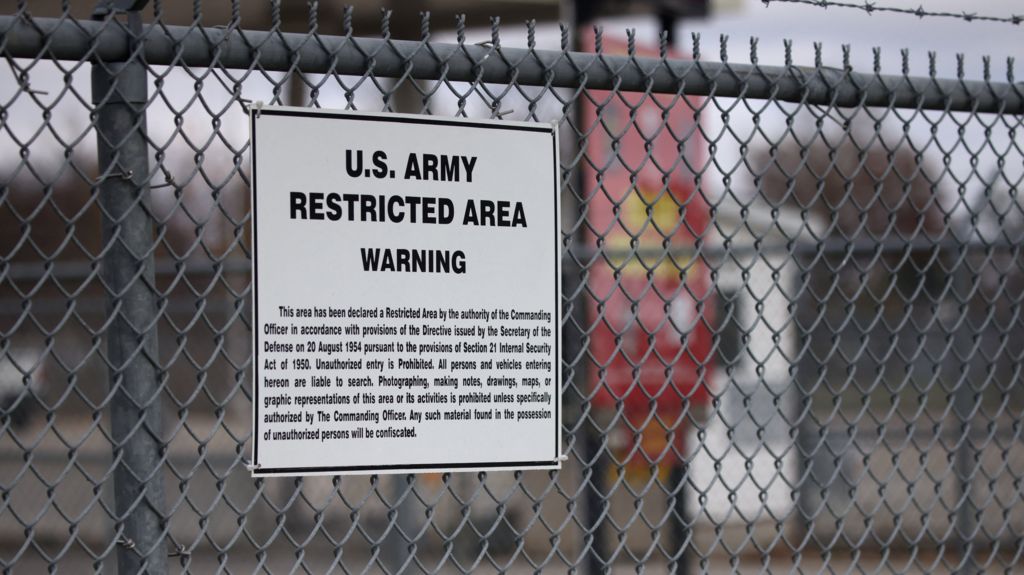
Residents across southeastern Iowa are navigating a wave of conflicting emotions and last-minute safety preparations ahead of a planned Wednesday controlled detonation orchestrated by the US Army, set to dispose of five tonnes of severely degraded lead azide, a highly shock-sensitive explosive compound used as a primary detonator, at the Iowa Army Ammunition Plant in Middletown. The operation was cleared to move forward after a federal appeals court overturned a prior lower court injunction that had paused the blast over documented public concerns about long-term lead contamination risks to local air, soil, and water supplies.
Army officials have framed the controlled detonation as a critical public safety imperative, warning that plummeting seasonal temperatures forecast for the coming days will increase the structural instability of the 68 stored barrels of lead azide, raising the risk of an unplanned, unconfined explosion that could pose far greater harm to nearby communities. The military has outlined tiered public safety guidance: a voluntary 5-mile evacuation zone surrounding the blast site, a mandatory 20-mile shelter-in-place advisory during detonation operations, and public warnings that wind patterns could carry fine airborne lead particulates as far as 100 miles from the site. Residents opting to remain in their homes have been instructed to seal all indoor windows and doors during the blast, and prepare for predictable temporary disruptions including loud explosive noise, measurable ground vibration, and a visible dust plume containing trace lead particles.
The planned operation has exposed deep rifts across the tight-knit, multi-generational rural communities surrounding the ammunition facility, where many families have worked in local farming, manufacturing, or at the Army plant itself for more than a century. For residents living 20 miles or more from the site, the looming detonation has sparked profound anxiety about irreversible harm to their livelihoods and health. Seventy-one-year-old Donnelson-area farmer Margo Sprenger, whose land lies directly in the projected path of the lead dust plume, noted that her family’s century-old farm now faces an uncertain future, with no clear independent process to verify if her soil and crop production will remain safe for consumption in the months after the blast. Nearby resident Beth Howard, a local pie maker, has opted to travel 150 miles to Des Moines to spend Thanksgiving away from the contamination risk, while her partner remains behind to guard his family’s 150-year-old farm, expressing deep fear that the detonation could permanently end their family’s agricultural legacy.
By contrast, many residents living in Middletown itself, the community located just half a mile from the planned blast site, have adopted a far more relaxed stance, with many stating they are eager for the operation to be completed to eliminate the lingering risk of an accidental unplanned detonation. Trisha Klaus, a 49-year-old Middletown resident whose grandfather worked at the Iowa Army Ammunition Plant for 50 years, plans to shelter at a local Army Reserve Center alongside her 99-year-old grandfather and their pets, noting that a controlled, pre-planned blast is far preferable to a sudden, unexpected explosion. Middletown Mayor Rodney Johnson, who survived a childhood case of lead poisoning, noted that many local residents are far more concerned about regular aerial crop dusting operations that release unregulated chemicals into local air on a biweekly basis, and predicted that most of the town’s 360 residents would be angry if the detonation was delayed a second time. Local church pastor Andrew Wiese added that while many locals are tired of months of uncertainty, undercurrents of unaddressed fear still run through the community.
Critics of the operation have raised sharp objections to the US Army’s poor transparency and last-minute notification protocols. Laura Leigois, city manager of Fort Madison located 20 miles from the blast site, stated that her municipal government received only three days of advance notice of the originally scheduled detonation on November 17, leaving local officials scrambling to implement emergency protective measures such as sealing the town’s public water tower vents to prevent lead dust from contaminating the municipal water supply. Retired locomotive engineer and former state representative Jeff Kurtz, who helped organize the earlier legal challenge that temporarily paused the detonation alongside a team of independent civilian scientists, argued that the Army’s claims of imminent spontaneous detonation risk are unsubstantiated, and that far safer alternative disposal methods are available. Kurtz has stated he will continue advocacy efforts up until the final moment of the blast to halt the operation, warning that the long-term public health and ecological consequences of the detonation could be catastrophic for the entire region.
‘This could be apocalyptic’ – Iowans hunker down for controlled blast of explosives stockpile