A landmark five-year investigation from UK-based human rights organization Korea Future has laid bare the Kim Jong Un regime’s sweeping, brutal crackdown on unauthorised religious practice in North Korea, drawing on testimonies from 570 defectors across the isolated nation to document widespread surveillance, state violence, and intergenerational discrimination targeting people of faith, particularly Christians. The report confirms that despite years of international diplomatic and advocacy pressure, violations of religious freedom remain rampant as recently as 2023, with documented cases of beatings, torture, and arbitrary detention of suspected worshippers.
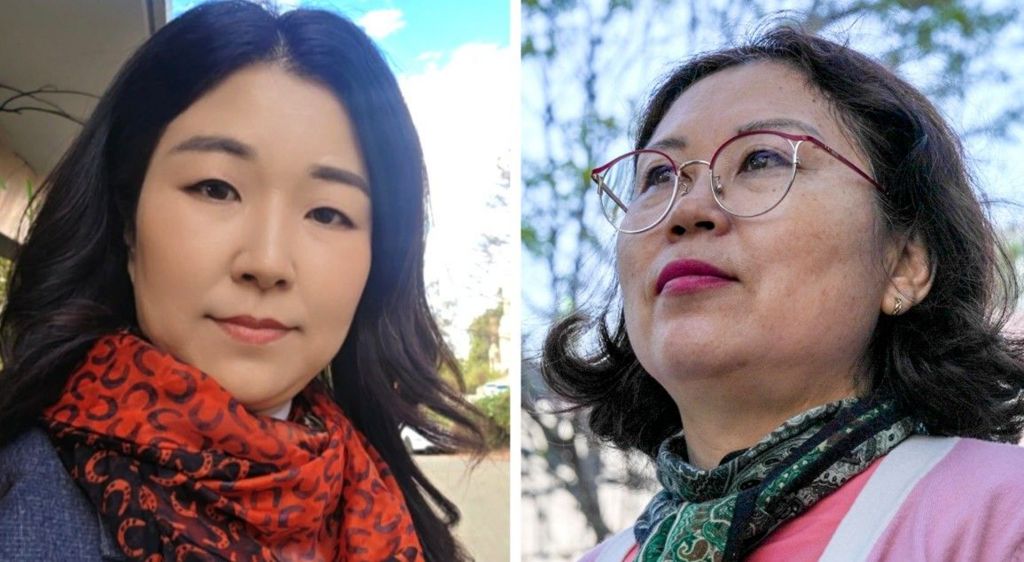
For 44-year-old Kim Bo-bin, who fled North Korea 15 years ago and now resides outside Seoul, secret Christian worship was a daily act of survival during her decades living under the dictatorship. She mastered elaborate, near-silent rituals to avoid detection: mouthing hymns without sound, clapping only with two fingers to muffle noise, and only closing her eyes to pray when lying flat on her bedroom floor. “In North Korea, if there are three people in a room, you are being spied on,” she recalled to the BBC. Any unapproved display of faith carried the immediate risk of imprisonment, a reality she experienced firsthand after being deported from China in 2007, when secret police beat her for 23 days and sentenced her to three years of hard labour.
North Korea’s official government policy claims full religious freedom for all citizens, but the handful of churches operating openly in Pyongyang are fully state-controlled, widely regarded by external observers as a carefully curated facade to project a false image of tolerance to the outside world. As Dong-a University professor Kang Dong-wan explains, the Kim regime’s foundational ideology frames the ruling Kim family as holding a near-godlike authority that cannot coexist with any competing system of spiritual allegiance: “They cannot allow gods whose authority is above him. Religious freedom is seen as an existential threat to the regime’s very survival.”
Christianity first took root on the Korean peninsula in the late 1700s, and flourished across what is now North Korea after Protestant missionaries arrived in the 1880s, earning Pyongyang the historic nickname “the Jerusalem of the East”. Today, the UN estimates between 200,000 and 400,000 Christians practise their faith in secret across the country, though the North Korean government releases no official demographic data on religious adherents. Surveillance and punitive controls over spiritual life have tightened dramatically since Kim Jong Un succeeded his father Kim Jong Il in 2011. Between 2013 and 2014, three South Korean missionaries operating along the Chinese border were arrested on fabricated espionage and coup-plotting charges and sentenced to life in prison; South Korean officials say Pyongyang has refused to share any updates on their status, and it remains unknown if they are still alive.
In 2020, the regime codified its crackdown on foreign cultural and spiritual influence with the passage of the Reactionary Ideology and Culture Rejection Act, which imposes harsh penalties for religious activity: owning Bibles or hosting private worship services can result in long prison terms, while distributing religious media or texts carries a maximum punishment of death. State indoctrination against faith begins as early as kindergarten, where children are forced to attend mandatory self-criticism sessions that label all unapproved spiritual practice, including Christianity and millennia-old Korean shamanism, as dangerous “superstition”. State curricula deliberately omit the well-documented history that North Korea’s founding leader Kim Il Sung was born into a devout Christian family. Every citizen is required to memorise the regime’s 10 core foundational principles, which demand absolute loyalty to the Kim family and explicitly forbid any action that could challenge their unchallenged authority.
The Korea Future report also documents the regime’s pervasive network of civilian informants embedded in every neighbourhood, who are tasked with reporting any suspicious behaviour linked to unauthorised worship. Former police informants interviewed for the study confirmed they were explicitly instructed to flag Christian activity as “anti-socialist” behaviour worthy of state punishment. The regime also maintains intergenerational blacklists that penalise the children and grandchildren of known Christians, barring them from access to higher education, desirable jobs, and permission to live in Pyongyang, trapping entire families in the lowest tier of the state’s rigid social hierarchy. As James Burt, co-author of the report, notes, the regime’s sprawling system of control over belief operates “from cradle to grave,” spanning schools, police surveillance, and generational punishment. Even amid this pervasive repression, many North Koreans turn to faith as a lifeline, as the state’s rigid, disconnected political ideology fails to address the precarity of daily life for millions of ordinary citizens.
Kim Bo-bin grew up in North Hamgyong province, a remote, impoverished region on the Chinese border reserved for citizens the state classifies as part of the “hostile class,” including landowners and known Christians, who are permanently barred from social advancement. It was there that 10-year-old Kim first encountered faith, watching an elderly exiled woman she called “crazy grandma” sneak into a coal shed every morning to chant prayers, a secret she only understood 12 years later when she found her first Bible after crossing into China during the devastating 1990s Arduous March famine that killed millions of North Koreans. After being trafficked into a forced marriage in China, she met a missionary while picking up a free stroller for her newborn daughter, and began practising the Christian faith in earnest. After her deportation and release from prison, she continued to worship in secret, converting her younger sister and other relatives in her home, using the thick walls of her aunt’s home to muffle the sound of their quiet hymn singing.
Fellow defector Lee Young-joo, who met Kim while both were serving prison terms for unauthorised religious activity, recalled that guards would yell at any inmate who closed their eyes, accusing them of praying. She avoided being labelled a Christian during interrogation, a choice that spared her transfer to a remote political prisoner camp where inmates are typically worked to death. After fleeing to South Korea in 2010, Lee now attends a small Seoul church for North Korean escapees, praying daily in open freedom for her daughter’s future and to give thanks for small, ordinary joys like chicken soup and walks along the city’s riverside. Kim Bo-bin finally escaped to South Korea in 2012, and now sings louder than any other congregant at her Sunday church services, a deliberate act of celebration of the religious freedom she was denied for decades in her homeland.